
Chapter 7 bankruptcy in Florida offers a fresh start, but navigating the process without proper guidance can cost you thousands in mistakes. The legal requirements are strict, and one wrong move can jeopardize your assets or delay your discharge.
At Harnage Law, PLLC, we help clients understand what Chapter 7 legal help actually means and why it matters for your specific situation. This guide walks you through the process and shows you what to look for when choosing representation.
What Chapter 7 Bankruptcy Actually Does in Florida
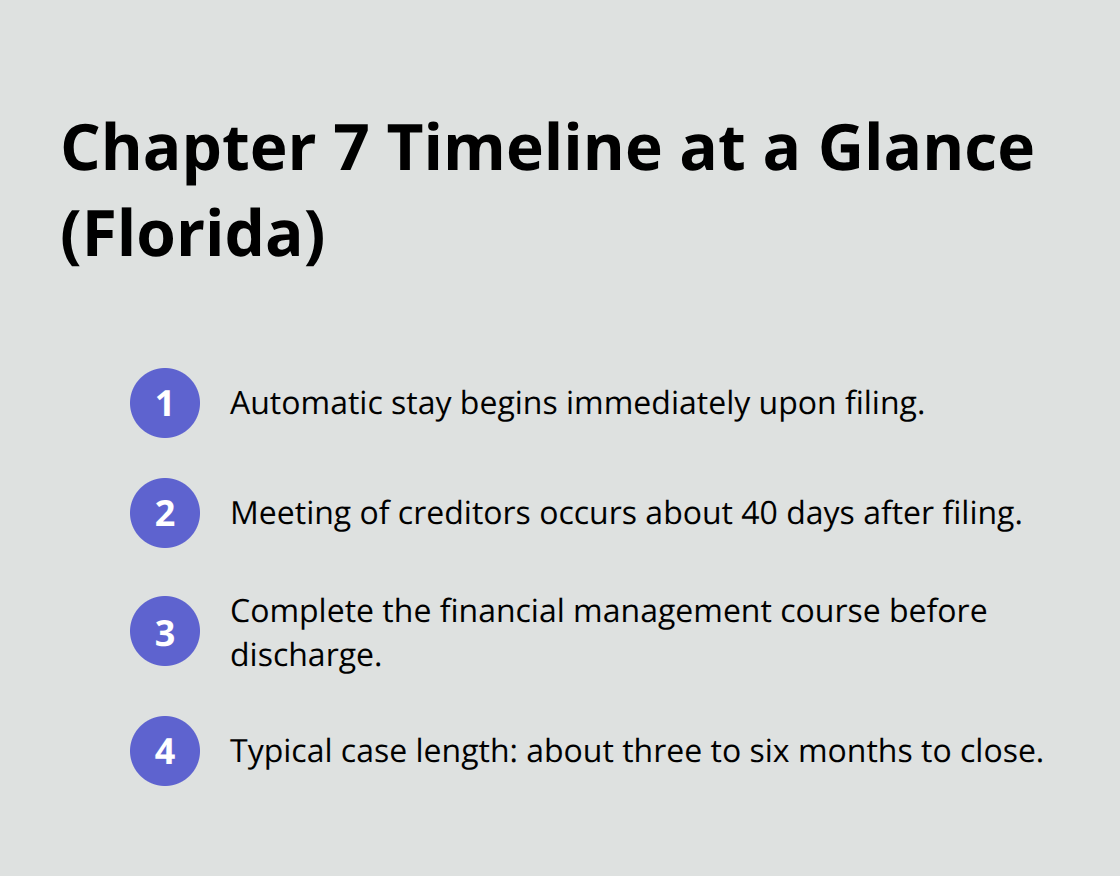
Chapter 7 bankruptcy in Florida works by liquidating nonexempt assets to repay creditors, then discharging remaining qualifying debts. The process typically concludes in three to six months, which is significantly faster than Chapter 13’s three to five year repayment plan. When you file, an automatic stay takes effect immediately, stopping wage garnishments, foreclosures, collection calls, and lawsuits. The U.S. Bankruptcy Court for the Middle District of Florida (or Northern District, depending on your location) appoints a trustee who manages your case and any asset sales. You must attend a meeting of creditors, typically held about 40 days after filing, where you answer questions under oath. Before discharge, you complete a personal financial management course from an approved agency. The entire timeline matters because the sooner your case closes, the sooner you can rebuild credit and move forward financially.
Which Debts Actually Disappear
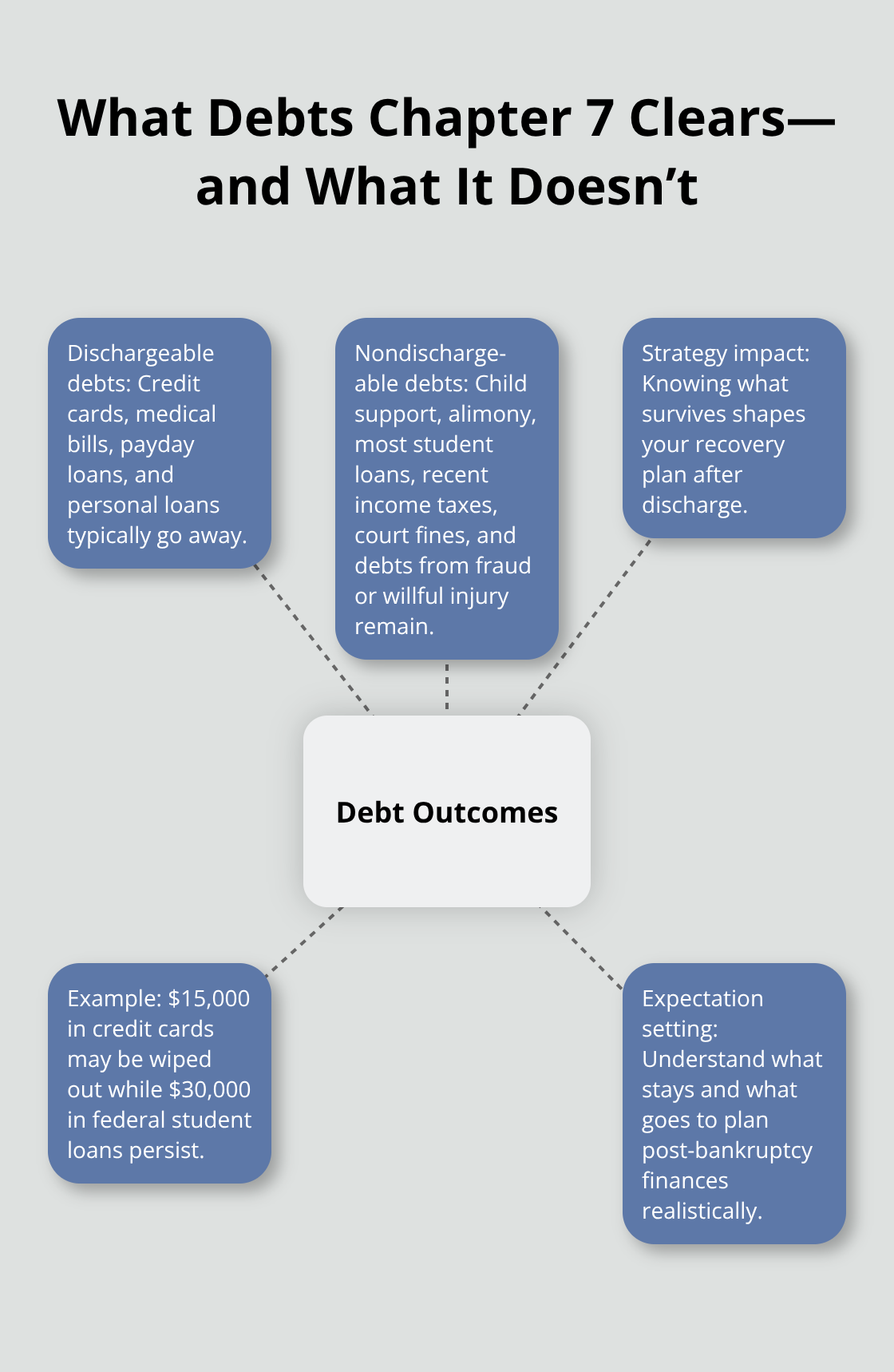
Credit card balances, medical bills, payday loans, and personal loans discharge in Chapter 7. However, certain debts remain permanent: child support, alimony, most student loans, recent income taxes, court fines, and debts from fraud or willful injury cannot be eliminated. This distinction directly affects your financial recovery strategy. If you owe $15,000 in credit card debt but $30,000 in federal student loans, Chapter 7 eliminates the credit cards but leaves student loans intact. Understanding what stays and what goes prevents false expectations and helps you plan post-bankruptcy finances realistically.
The Means Test Determines If You Qualify
The means test, established in 2005, compares your household income to Florida’s median income for your family size. If your income falls below the median, you pass and can file Chapter 7. If you exceed the median, the test calculates your disposable income over six months to determine whether you have funds available for a Chapter 13 repayment plan instead. The test uses your last six months of income and expenses, not your current situation, so timing matters. High earners with substantial expenses might still qualify if their disposable income is low. This calculation is complex, and mistakes here can result in case dismissal or forced conversion to Chapter 13.
Understanding these three components-the liquidation process, dischargeable versus nondischargeable debts, and the means test-shapes your entire Chapter 7 strategy. The next section explains why professional legal guidance becomes essential when navigating these requirements.
Why Legal Help Matters for Chapter 7 in Florida
Bankruptcy Law Creates a Complex Compliance Landscape
Bankruptcy law in Florida operates under federal rules that interact with state exemption laws, creating a system where small errors produce major consequences. The means test calculation alone requires precise income documentation from the last six months, accurate expense categorization, and correct application of Florida’s median income thresholds. One miscalculation can push you into Chapter 13 when Chapter 7 was available, or trigger case dismissal entirely. The U.S. Bankruptcy Code Section 727 lists specific reasons courts deny discharge, including incomplete schedules, failure to explain asset transfers, and inadequate record-keeping. Court staff cannot advise you on these requirements, and the U.S. Trustee’s office focuses on case administration, not legal strategy. When you file without representation, you personally bear responsibility for compliance with Federal Rules of Bankruptcy Procedure, local court rules for the Middle District of Florida, and the detailed form requirements the court enforces.
Common Filing Mistakes Cost You Thousands
Most filing mistakes involve incomplete asset disclosure, improper valuation of property, missed deadlines for the personal financial management course, and inadequate documentation of income sources. The automatic stay provides immediate protection from creditors, but only if your petition survives the trustee’s scrutiny. A single omission on your schedules can lead to the trustee reopening your case months after you thought the matter closed, potentially reviving debts you believed discharged.
Florida Exemptions Require Strategic Planning
Asset protection under Florida law offers substantial benefits that require strategic planning to maximize. Florida’s homestead exemption allows up to $215,000 in home equity protection for individuals, making your primary residence largely safe during Chapter 7, but only if you file correctly and claim the exemption explicitly on your schedule. Retirement accounts receive strong protection under federal law, but only if properly documented as exempt property. Vehicle exemptions in Florida allow up to $4,000 in equity protection, which means if your car has $3,000 in equity and you claim the exemption, the trustee cannot seize it. However, failing to claim an exemption or claiming it incorrectly forfeits the protection entirely.
The Trustee Reviews Every Asset and Exemption Claim
The trustee’s job involves liquidating nonexempt assets to repay creditors, and they review every asset you list and every exemption you claim. Without proper guidance, debtors frequently understate their exemptions or fail to identify available protections, resulting in unnecessary asset loss. The difference between a properly filed Chapter 7 and a poorly filed one often equals thousands of dollars in asset protection. Understanding these exemption rules and ensuring assets receive maximum legal protection throughout the process separates successful cases from those that leave money on the table. When you move forward with Chapter 7, the next section covers how to identify the right legal representation to handle these complex requirements.
How to Choose the Right Bankruptcy Attorney in Florida
Evaluate Case Volume and Local Court Knowledge
Finding a bankruptcy attorney in Florida requires looking beyond credentials and examining how firms handle your specific situation. Start by asking whether the firm handles Chapter 7 cases regularly, not just occasionally. A firm that processes dozens of Chapter 7 cases monthly understands the Middle District and Northern District of Florida courts far better than one handling bankruptcy sporadically. Ask directly how many Chapter 7 cases they filed in the last twelve months. Firms handling 50+ cases annually know the local trustees, understand court expectations, and recognize patterns that affect your case strategy.
Understand Fee Structures and Hidden Costs
When you call, ask whether they charge flat fees or hourly rates. Most reputable Florida bankruptcy firms charge flat fees between $1,200 and $2,500 for Chapter 7 representation, which covers all filing fees, document preparation, and court appearances. Hourly billing creates misaligned incentives because the attorney profits from delays. Ask what happens if complications arise, such as a trustee objection to your exemptions or an adversary proceeding. The best firms include these scenarios in their flat fee rather than treating them as surprise charges.
Assess Their Means Test Approach
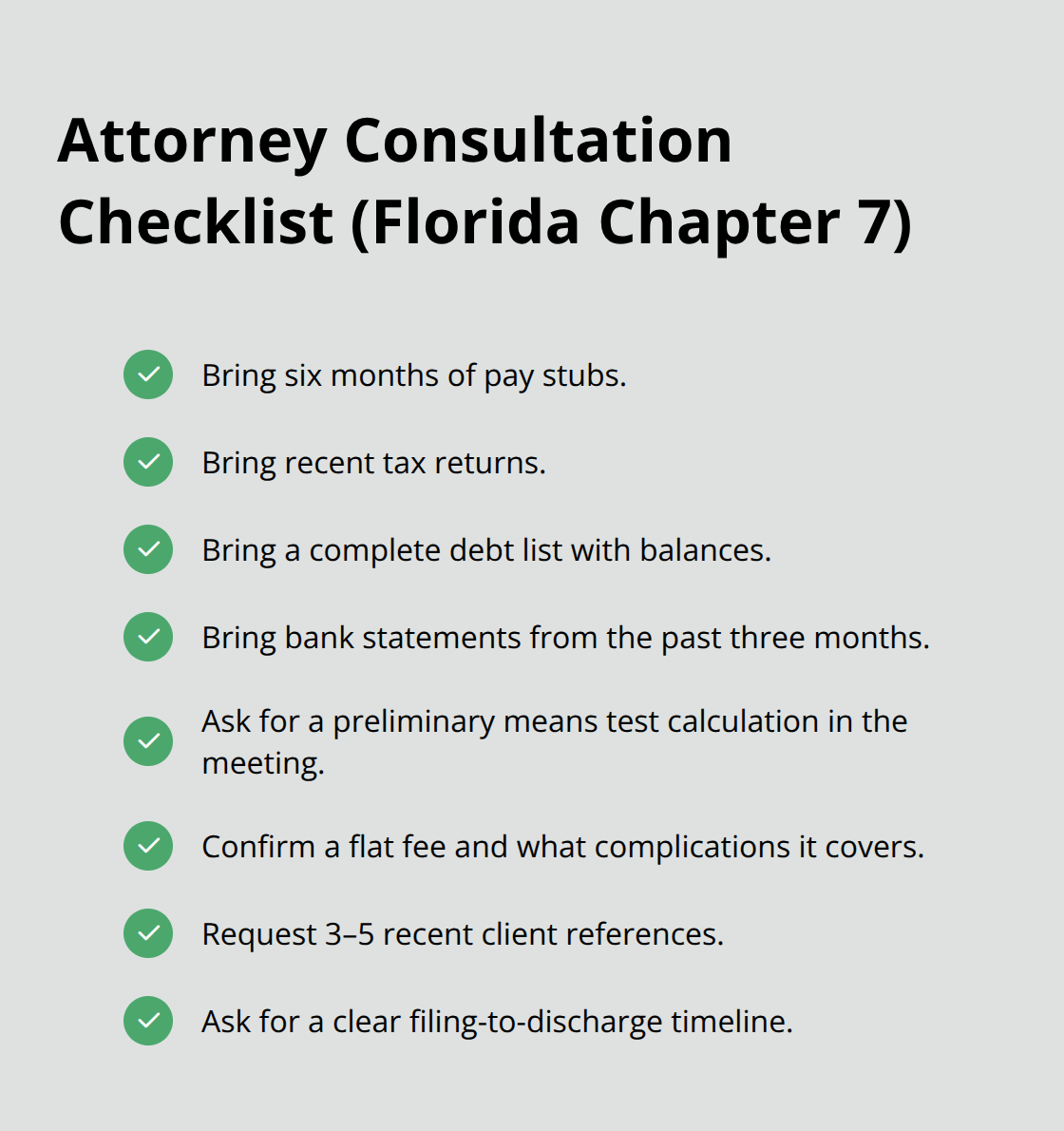
Inquire about their approach to the means test specifically. Ask them to walk you through how they calculate your disposable income and whether they’ve successfully helped clients pass the means test when income initially appeared too high. This conversation reveals whether they understand the nuances or simply plug numbers into software. During your initial consultation, bring your last six months of pay stubs, recent tax returns, a list of all debts with balances, and bank statements from the past three months. This documentation allows the attorney to run a preliminary means test calculation during the meeting rather than scheduling a follow-up. A firm that cannot assess your Chapter 7 eligibility in the first consultation is wasting your time.
Verify Asset Protection Knowledge and Timeline Clarity
Ask the attorney to explain your Florida exemptions in plain language, specifically addressing your home equity, vehicle, and retirement accounts. If they cannot articulate exactly how much equity you keep in your primary residence under the homestead exemption or what happens to your car, keep looking. Before you leave the consultation, confirm the timeline. Chapter 7 cases in Florida typically close within four to six months from filing, but the attorney should explain when the trustee’s meeting occurs, when you must complete your financial management course, and when you can expect discharge. Finally, ask for references from recent Chapter 7 clients. Any firm confident in their work provides three to five names of people who successfully discharged debts in the past six months. Contact those references and ask specifically whether the attorney explained the process clearly, responded to questions promptly, and delivered the promised outcome without surprise fees.
Final Thoughts
Chapter 7 bankruptcy in Florida eliminates qualifying debts and stops creditor harassment within three to six months, but only when you navigate the process correctly. The means test determines your eligibility, Florida exemptions protect your assets, and the trustee’s review of your case depends entirely on how thoroughly you document everything. Missing deadlines, miscalculating disposable income, or failing to claim available exemptions costs thousands in unnecessary asset loss or case dismissal.
Your next step involves gathering six months of pay stubs, recent tax returns, a complete debt list, and bank statements, then scheduling a consultation with a Florida bankruptcy attorney who handles Chapter 7 cases regularly. During that meeting, ask them to calculate your means test eligibility, explain your specific exemptions, and provide a clear timeline from filing through discharge. Request references from recent clients and verify their flat fee structure covers complications like trustee objections.
We at Harnage Law, PLLC provide Chapter 7 legal help to individuals and families who want to discharge qualifying debts, stop creditor harassment, and protect their assets throughout the bankruptcy process. Contact us at https://chapter7florida.com to schedule your initial consultation and take control of your financial recovery.
