
Filing Chapter 7 bankruptcy in Florida stops creditors immediately and sets you on a clear path toward debt relief. The chapter 7 discharge timeline typically spans three to six months, though understanding each phase helps you prepare mentally and financially.
At Harnage Law, PLLC, we guide clients through every step of this process so you know exactly what to expect and when.
The Immediate Impact When You File
The moment you file Chapter 7 in Florida, the automatic stay activates and creditors lose their right to contact you. This is not a request or a courtesy-it is a federal court order that takes effect instantly. Collection calls stop, wage garnishments halt, foreclosure proceedings pause, and lawsuits freeze. The U.S. Bankruptcy Court for the Eastern District of Louisiana confirms that this protection kicks in immediately upon filing, giving you breathing room before the formal process begins.
Stopping Creditor Contact and Collection Activities
If a creditor continues calling after filing, you should document the date, time, and caller information, then report it to your attorney. Most collection companies know the law and stop within days, but some test the boundaries. The automatic stay is powerful enough that violating it can result in creditors paying damages to you.
What Happens in Your First Week
Within seven days of filing, the court assigns a Chapter 7 trustee to your case and you receive a Notice of Chapter 7 Bankruptcy Case with your case number, the trustee’s contact information, and the date of your 341 meeting of creditors. This notice also lists critical deadlines you must meet. The trustee will request documents immediately-your last 60 days of pay stubs, recent bank statements, and federal tax returns from the prior year. You should provide these documents quickly to prevent delays and show the trustee you are cooperating.
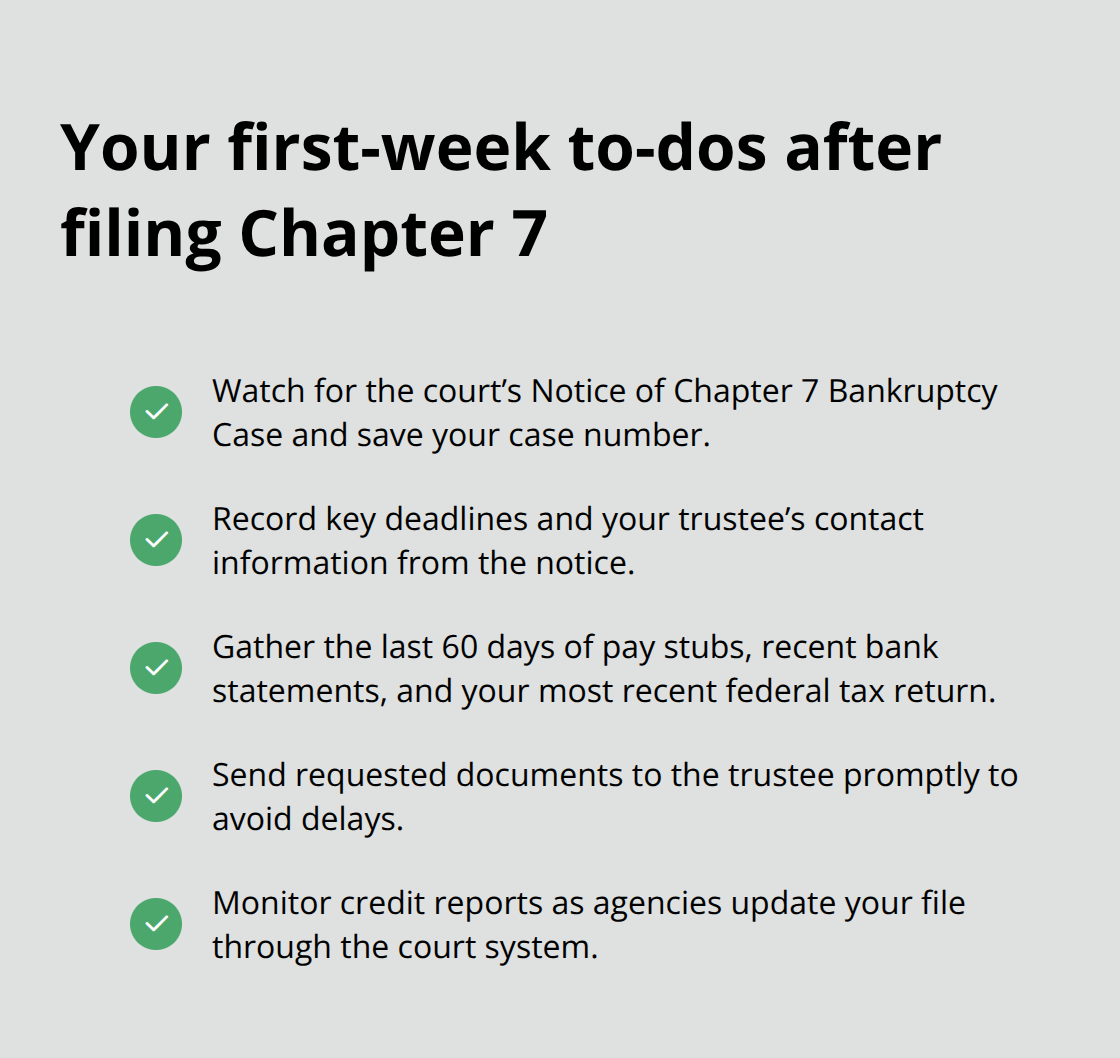
Credit reporting agencies receive notice of your filing and begin updating your credit reports to reflect the bankruptcy through the court system automatically.
The 341 Meeting of Creditors
Your 341 meeting of creditors takes place between 21 and 40 days after filing. This meeting occurs outside a courtroom and creditors rarely attend. The trustee will ask you questions about the accuracy of your schedules, any recent windfalls, property transfers in the past four years, and unlisted assets. You should bring a government-issued photo ID and your Social Security card. The meeting typically lasts under 15 minutes. If you cannot attend on the scheduled date, you must contact the trustee immediately to request a reschedule. Missing the meeting without approval can lead to dismissal of your case, which would eliminate your discharge and leave you unprotected from creditors. The trustee can reschedule for valid reasons, but you must request it in advance.
What Happens Between Filing and Your Discharge
The Trustee Takes Control of Your Case
The period after filing is when the trustee takes control of your case and examines everything you reported. Within days of filing, the trustee’s office will request documents from you. These requests are not optional-you must respond quickly with your last 60 days of pay stubs, bank statements from the past two to three months, and your most recent federal tax return. The trustee uses these documents to verify the information in your schedules and identify any assets that may be liquidated to pay creditors.
Why Document Submission Matters
Providing documents promptly demonstrates cooperation and keeps your case moving forward. If you delay or ignore requests, the trustee may file a motion to dismiss your case, which eliminates your discharge protection and leaves you vulnerable to creditor collection again. The trustee verifies the information in your schedules and identifies any assets that may be liquidated to pay creditors.
What the Trustee Examines at Your 341 Meeting
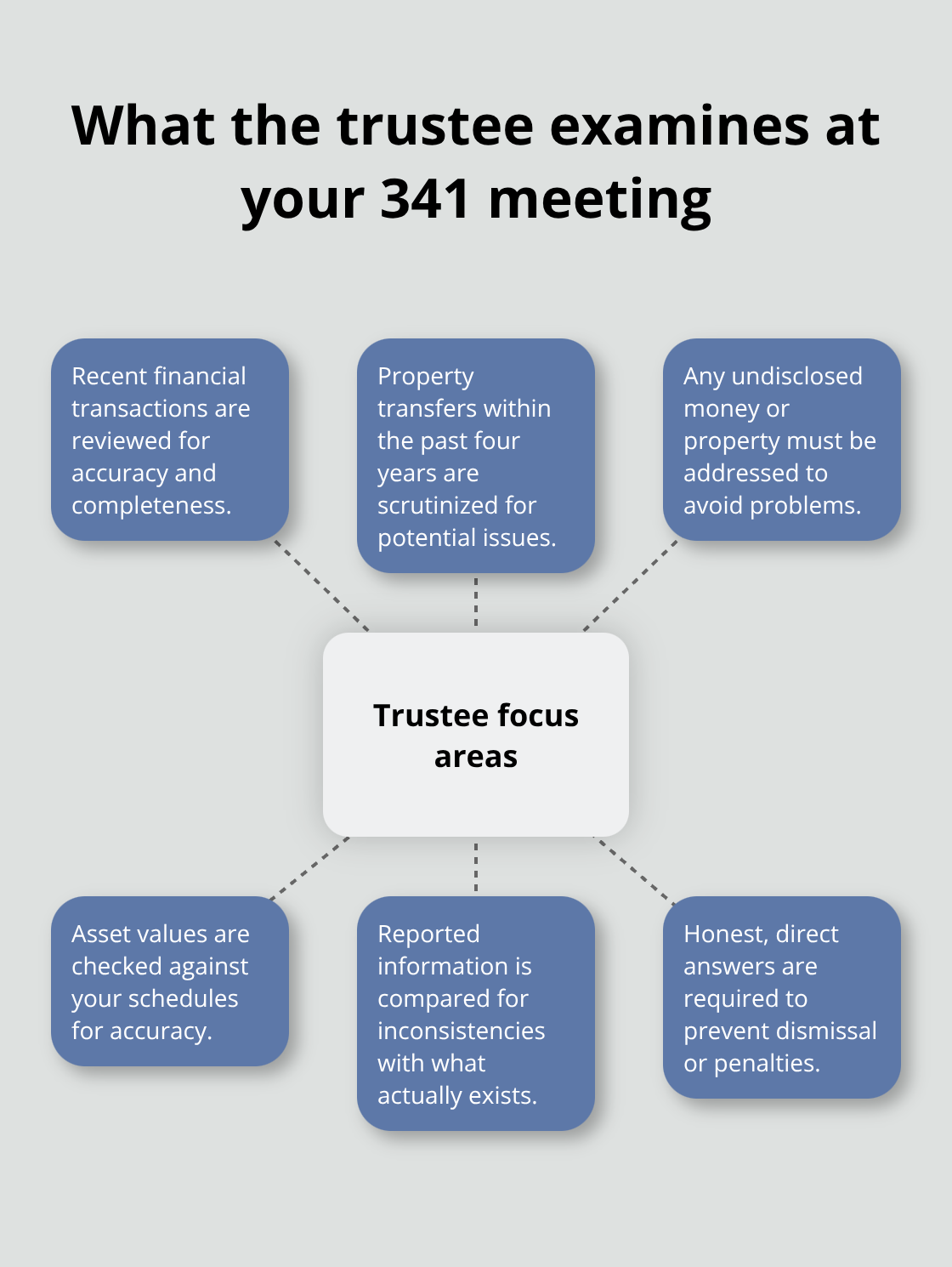
At your 341 meeting between 21 and 40 days after filing, the trustee will ask specific questions about recent financial transactions, property transfers within the past four years, any money or property you received that you did not disclose, and the accuracy of your asset values. The trustee looks for hidden assets, fraudulent transfers, or inconsistencies between what you reported and what actually exists. You must answer honestly and directly-dishonesty can result in dismissal or even criminal charges.
The Path to Your Discharge Order
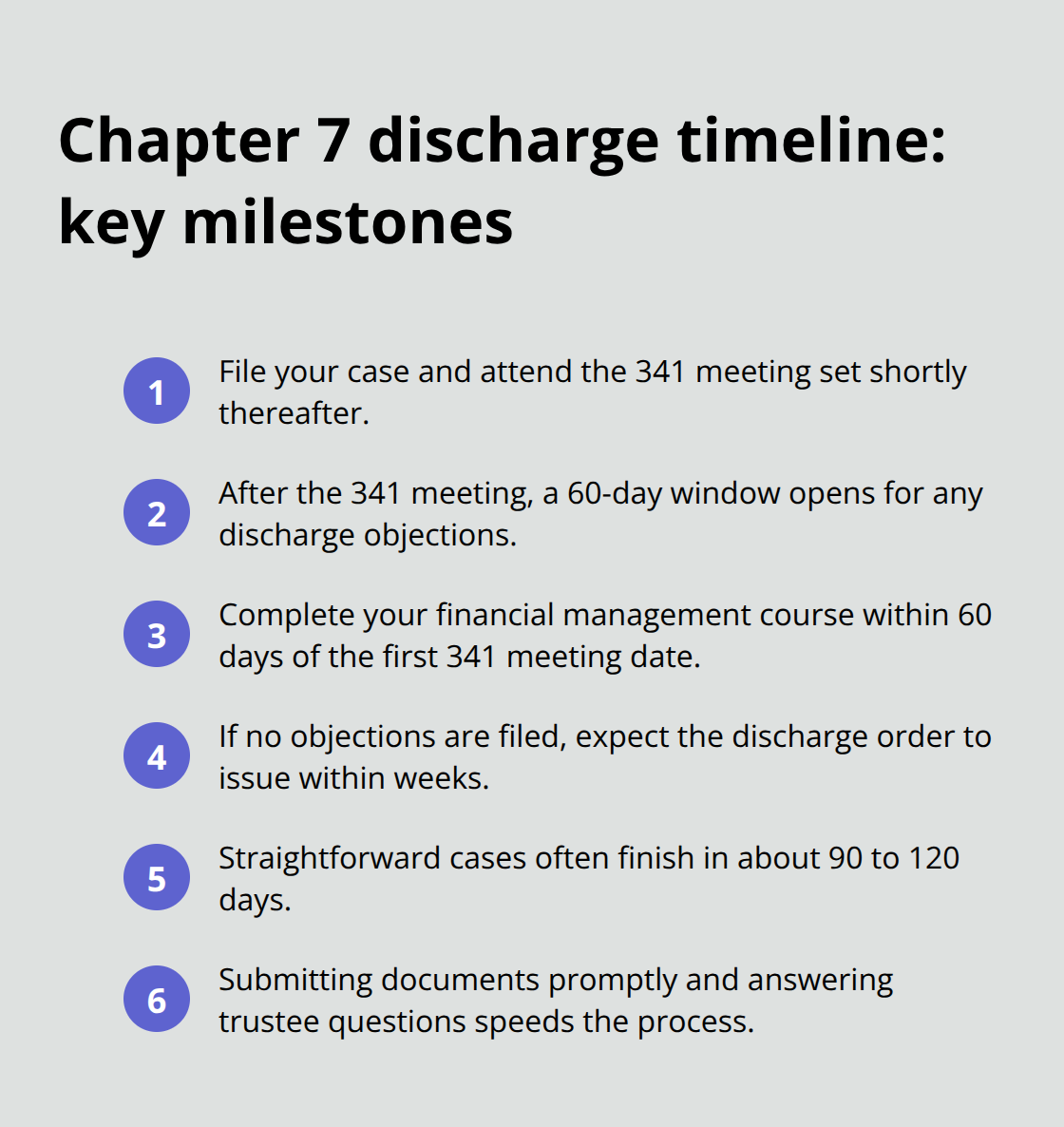
After the 341 meeting, the trustee has 60 days to object to your discharge if problems arise. If no objections are filed and you complete your required financial management course within 60 days after the first date set for the meeting, your discharge order typically follows within a few weeks. The entire process from filing to discharge generally takes 90 to 120 days for straightforward cases without complications or creditor objections. Once the trustee completes their review and confirms that no issues exist with your petition, the court moves toward finalizing your fresh start.
How Long Until Your Discharge Arrives
The timeline from filing to discharge in Florida Chapter 7 cases typically runs 90 to 120 days for straightforward situations, though the U.S. Bankruptcy Court system confirms that most cases conclude within three to six months. The 60-day window after your 341 meeting is the critical period where the trustee decides whether to object to your discharge. If no objections surface and you complete your required financial management course within 60 days after the first date set for your 341 meeting, the discharge order usually follows within weeks. Cases that move this quickly share one common trait: clients submit all requested documents promptly and answer the trustee’s questions directly and completely.
What Delays Actually Look Like in Practice
Complications that extend your timeline beyond six months almost always stem from missing paperwork, incomplete financial disclosures, or creditor objections. The most frequent delay occurs when clients fail to submit their last 60 days of pay stubs, recent bank statements, or prior year tax returns within the trustee’s requested timeframe. The trustee cannot proceed without these documents, and delays compound quickly. Another common issue involves failure to complete the financial management course by the 60-day deadline. The court will not issue your discharge until you file Form B423 showing course completion from an approved provider. Creditor objections, while less common in Florida Chapter 7 cases, can add 30 to 90 days if a creditor disputes whether certain debts should be discharged or if the trustee questions asset valuations. Hidden assets or recent property transfers discovered during the trustee’s review trigger the most serious delays and can result in case dismissal rather than discharge.
The Moment Your Discharge Takes Effect
Once the court issues your discharge order, you are no longer personally liable for qualifying debts covered by the discharge. Credit card balances, medical bills, personal loans, and most unsecured debts disappear completely. The discharge is permanent and creditors cannot legally pursue you for these debts afterward. If a creditor attempts collection after discharge, report it immediately because violating the discharge order can result in damages paid to you. The discharge order itself appears on your credit report and remains visible for up to ten years (though that notation matters far less than the actual relief it provides). Rebuilding begins immediately after discharge, and many clients secure credit within months through secured credit cards or by becoming authorized users on accounts with positive payment history.
Your Fresh Start Begins Now
Your discharge order marks the end of the Chapter 7 discharge timeline and the beginning of genuine financial relief. Most debts covered by your discharge-credit cards, medical bills, personal loans, and unsecured debts-vanish permanently. You are no longer personally liable for these obligations, and creditors cannot pursue collection afterward. This elimination is absolute and final.
Rebuilding your credit starts immediately after discharge, even though the bankruptcy notation remains on your credit report for up to ten years. Many clients secure credit within months by applying for secured credit cards, which require a cash deposit but report to credit bureaus and help establish positive payment history. Becoming an authorized user on someone else’s account with strong payment habits also accelerates credit recovery. Your credit score typically improves within 12 to 24 months if you pay bills on time, keep credit card balances low, and avoid new debt accumulation.
Financial stability after discharge depends on the habits you build going forward. Create a realistic monthly budget that accounts for essential expenses first, then allocate remaining income toward savings and modest debt repayment if needed. Monitor your credit report regularly through annualcreditreport.com to catch errors and track your progress, and avoid the patterns that led to your original financial crisis-excessive credit use, missed payments, or living beyond your means. Contact us for a personalized consultation about your path forward after discharge.