
Filing for Chapter 7 bankruptcy in Florida comes with real costs that catch many people off guard. Understanding Florida Chapter 7 costs upfront helps you plan financially and avoid surprises during the process.
At Harnage Law, PLLC, we break down exactly what you’ll pay-from court fees to attorney charges to hidden expenses. This guide walks you through every cost involved so you can make informed decisions about your financial future.
What You’ll Pay for Florida Chapter 7 Bankruptcy
Court Filing Fees
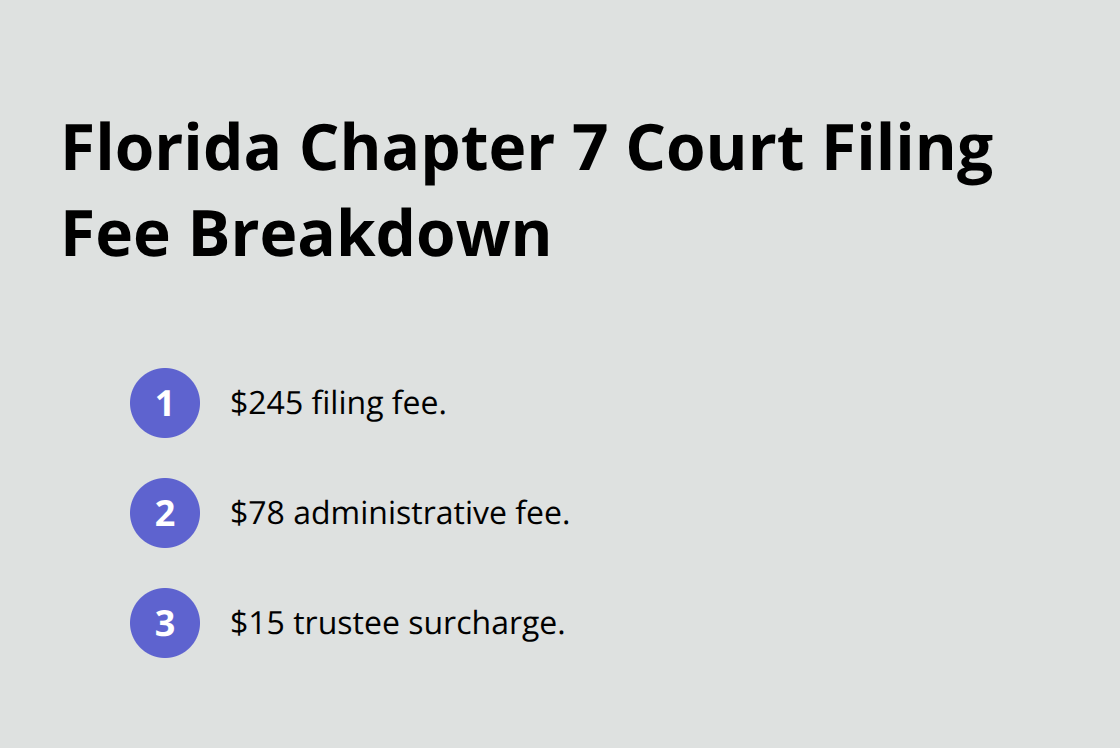
The court filing fee for Chapter 7 in Florida is $338, which breaks down into a $245 filing fee, a $78 administrative fee, and a $15 trustee surcharge. This fixed amount, set by the U.S. Courts, does not change based on your income or debt level. You must pay this fee by money order or cashier’s check made payable to the Clerk, U.S. Bankruptcy Court-cash, personal checks, and credit cards are not accepted.
Attorney Fees and Payment Structures
Attorney fees represent your largest expense in the filing process. In the Tampa Bay area, Chapter 7 attorneys typically charge between $1,200 and $2,000, though fees can range from $1,000 to $3,500 depending on case complexity and whether a means test is required. Most Florida bankruptcy attorneys require the full fee upfront before filing your petition, though some firms offer payment plans to spread costs over time.
Mandatory Counseling and Additional Expenses
Credit counseling is mandatory before you file and costs under $100, with courses available online or by phone. After filing, you must complete a debtor education course, typically costing under $15. Additional costs include ordering credit reports, obtaining certified copies of documents, and mailing materials to the trustee-these modest expenses add up to roughly $50 to $150 combined. When you total everything together, you should budget between $1,500 and $2,500 for the complete filing process.
Fee Waivers and Payment Plans
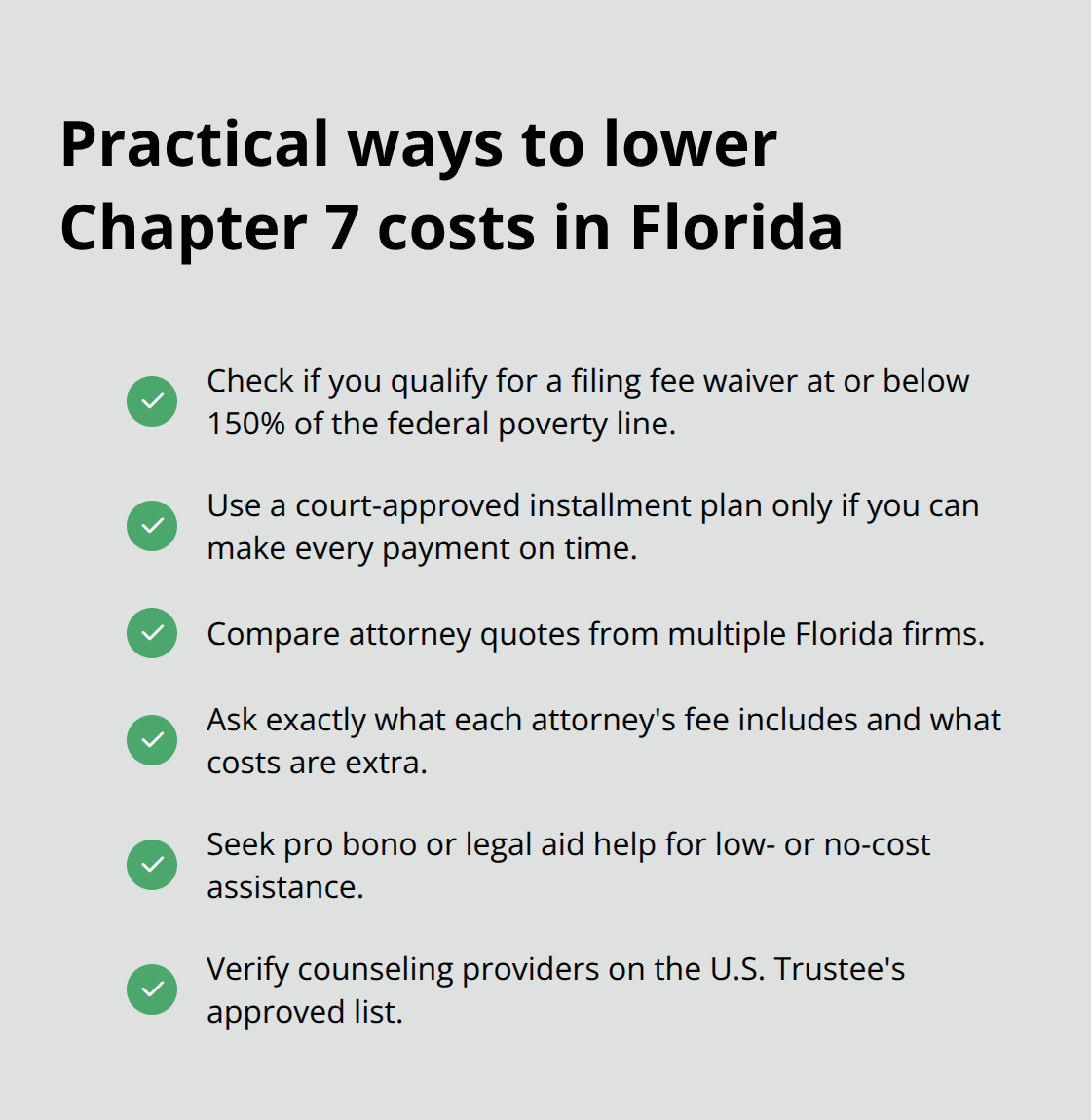
If your income falls below 150% of the federal poverty line, you can apply for a filing fee waiver that eliminates the $338 court cost entirely. Florida allows filing fees to be paid in installments through a court-approved payment plan, though you’ll need a down payment and must make all scheduled payments-missing even one can result in case dismissal. Low-income filers should also explore pro bono bankruptcy help available in Florida and nonprofit debt counseling resources that provide free or low-cost assistance.
Understanding Your Investment
These costs function as investments in discharging potentially tens of thousands in unsecured debt, making Chapter 7 financially practical for most people. Comparing these expenses to the debt relief you receive reveals why many people find Chapter 7 cost-effective. Understanding your specific fee structure and payment options allows you to plan your budget with complete clarity about what’s included and when payments are due-information that becomes critical as you explore ways to manage and reduce your overall Chapter 7 costs.
How to Lower Your Chapter 7 Filing Costs in Florida
Identifying Fixed Versus Flexible Costs
Reducing your Chapter 7 costs in Florida starts with understanding which fees never change and which ones offer real flexibility. The court filing fee of $338 remains fixed regardless of your income or debt level, but attorney fees and counseling costs vary significantly. Separating fixed costs from variable ones helps you focus your cost-reduction efforts where they actually work. The $338 court fee, combined with mandatory counseling under $100 and debtor education under $15, totals roughly $450 in unavoidable expenses. Everything beyond that amount depends on choices you make about legal representation and payment strategies.
Claiming Fee Waivers and Payment Plans
If your household income falls below 150% of the federal poverty line, you qualify for a filing fee waiver that eliminates the $338 court cost entirely. The U.S. Department of Health and Human Services publishes updated poverty guidelines annually, so verify your household size against current thresholds before assuming you don’t qualify. Many Florida filers overlook this option and pay the full fee when they could have avoided it completely.
Florida also allows you to pay filing fees through court-approved installment plans, though you’ll need a down payment and must make every scheduled payment on time. Missing even one installment triggers case dismissal, so only commit to a payment plan you can actually follow. Pro bono bankruptcy assistance is available across Florida through nonprofit organizations and legal aid societies that provide free or low-cost help with petition preparation, fee reduction strategies, and representation guidance. These resources exist specifically for people with limited budgets, and using them costs you nothing.
Shopping for Attorney Fees
Attorney fees represent the largest variable in your total cost, so shopping for pricing makes real financial sense. Chapter 7 attorneys in the Tampa Bay area typically charge between $1,200 and $2,000, but fees can range from $1,000 to $3,500 depending on case complexity and means test requirements. When comparing quotes, ask each attorney exactly what their fee covers and what costs are extra. Some firms include credit counseling in their fee while others charge separately. Verify whether the quote includes representation at the creditors’ meeting with the trustee or if that incurs additional charges.
Evaluating Payment Arrangements
Many Florida bankruptcy attorneys offer payment plans, allowing you to spread costs over time rather than paying everything upfront. However, some firms require substantial down payments before filing. Discussing payment arrangements during your initial consultation helps you find an attorney whose fee structure matches your financial situation. Avoid any firm advertising fees significantly lower than the $1,000 to $3,000 range, as suspiciously cheap pricing often signals inexperience or hidden charges that appear later.
Moving Forward With Cost Clarity
The total investment of $1,500 to $2,500 from filing through discharge becomes manageable when you understand each component and explore options to reduce what you actually pay. With fixed costs identified, waivers explored, and attorney fees compared, you’re ready to examine the hidden expenses that many filers discover only after the process begins.
Hidden Costs of Chapter 7 Bankruptcy in Florida
Mandatory Counseling Fees Add Up Quickly
Credit counseling and debtor education represent mandatory expenses that many Florida filers budget incorrectly. You must complete a credit counseling course before filing, which costs under $100 and typically runs between $10 and $50 depending on the provider. After your case is filed, you face a second mandatory requirement: the debtor education course, which costs under $15. These courses help you rebuild after discharge, and while the fees seem modest individually, they add real dollars to your total Chapter 7 investment. The U.S. Trustee maintains an approved provider list, so verify you’re using a legitimate counselor rather than falling for scams that promise lower costs with unlicensed operators. The certificate of completion becomes part of your official case file, and failure to complete either course risks case dismissal despite paying all other fees.
Asset Liquidation and What It Costs You
Chapter 7 is a liquidation bankruptcy, meaning the trustee can sell non-exempt assets to pay creditors, though Florida exemption laws protect most property for typical filers. If you own valuable assets without exemption protection, liquidation costs reduce proceeds the trustee distributes. The trustee’s commission and sale expenses eat into what creditors ultimately receive, which means your non-exempt property generates less recovery than its market value. Understanding which assets face liquidation risk allows you to plan accordingly before filing and potentially restructure your holdings to maximize exemption protection.
Credit Rebuilding Demands Years of Higher Costs
Rebuilding your credit after Chapter 7 discharge takes years of disciplined financial behavior. Credit reports show the bankruptcy for seven to ten years, and secured credit cards with deposits of $300 to $500 become necessary initial tools for credit reconstruction. Many lenders charge higher interest rates for borrowers with recent bankruptcies, meaning your cost of credit rises substantially for several years post-discharge. The real financial impact extends far beyond the $1,500 to $2,500 filing cost; you’ll pay higher rates on auto loans, mortgages, and credit products for years.
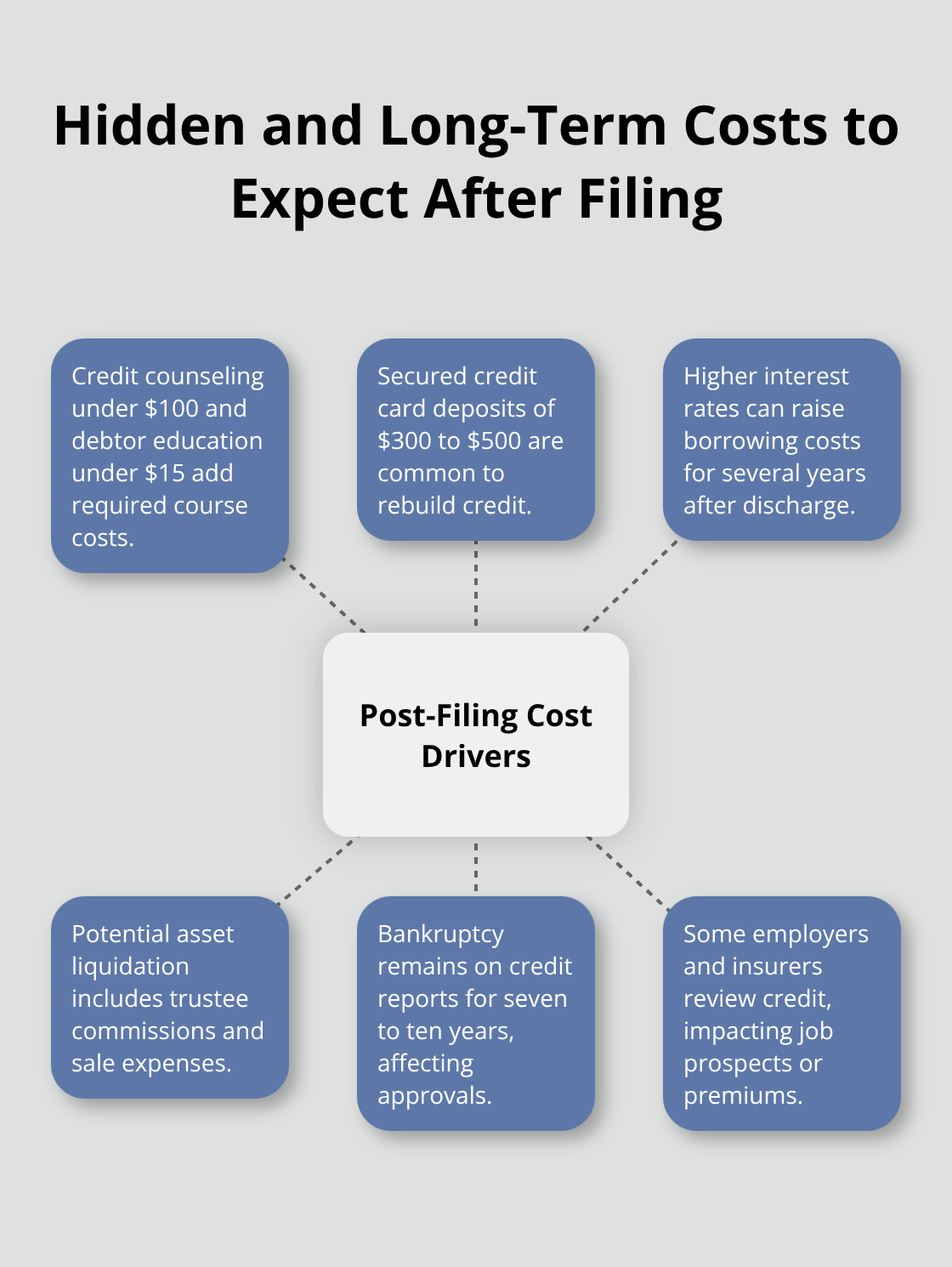
Some employers and insurers review credit reports, potentially affecting job opportunities or insurance premiums.
Long-Term Financial Planning Beyond the Courtroom
Planning for these long-term costs means setting aside emergency savings before filing and committing to strict budgeting that prevents future debt accumulation. The hidden expenses transform Chapter 7 from a simple legal filing into a comprehensive financial reset that demands commitment beyond the courtroom. Your post-discharge financial discipline directly determines how quickly you rebuild credit and reduce the higher borrowing costs that follow bankruptcy. Anticipating these expenses (rather than discovering them later) positions you to make informed decisions about whether Chapter 7 aligns with your long-term financial goals.
Final Thoughts
Filing for Chapter 7 bankruptcy in Florida requires upfront planning around real costs, but the financial relief often justifies the investment. Your total Florida Chapter 7 costs typically range from $1,500 to $2,500 when you combine the $338 court filing fee, attorney fees between $1,200 and $2,000, and mandatory counseling expenses under $115. Understanding these fixed and variable costs allows you to budget accurately and avoid surprises as you move forward.
If your income qualifies, pursue a filing fee waiver that eliminates the $338 court cost entirely. Compare attorney pricing across multiple firms to find representation that matches your budget, and ask detailed questions about what each fee includes and when payment is due. Explore payment plans if paying the full amount upfront creates hardship, but commit only to arrangements you can actually maintain.
Beyond the immediate filing costs, prepare for the long-term financial impact of rebuilding credit after discharge, as higher interest rates on loans and credit products will affect your borrowing costs for several years. The hidden expenses of credit counseling, debtor education, and years of credit rebuilding transform Chapter 7 from a simple legal filing into a comprehensive financial reset. Contact Harnage Law, PLLC to discuss your specific situation and explore how Chapter 7 can provide the financial relief you need.