Credit counseling for Chapter 7 bankruptcy isn’t optional-it’s a legal requirement before you can file. The U.S. Trustee Program mandates that you complete an approved counseling session to understand your financial situation and explore your options.
At Harnage Law, PLLC, we’ve seen how this requirement actually benefits our clients. The right counseling session can reveal spending patterns you’ve missed, teach you practical budgeting skills, and help you decide if bankruptcy is truly your best path forward.
What Happens During Your Pre-Filing Counseling Session
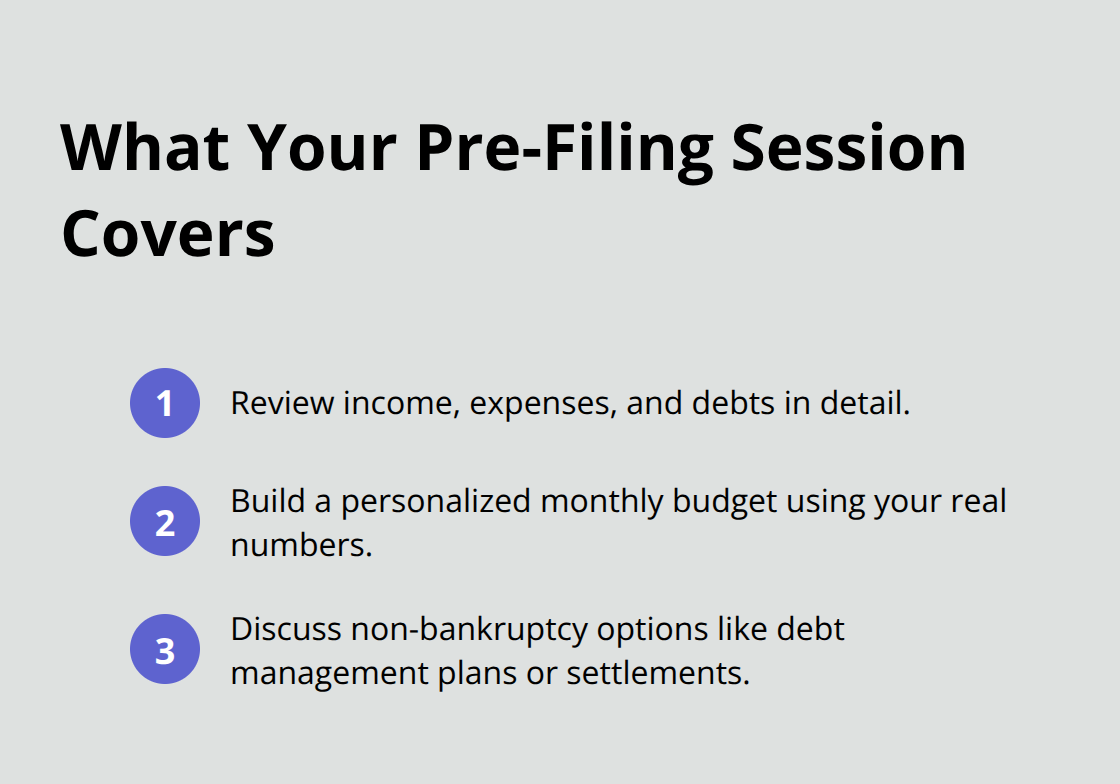
Federal law requires you to complete credit counseling with a U.S. Trustee Program-approved agency before filing Chapter 7 in Florida. This isn’t paperwork theater-it’s a structured conversation about your actual finances. The session typically runs 60 to 90 minutes and covers three core areas: reviewing your income, expenses, and debts; creating a personalized budget; and discussing alternatives to bankruptcy like debt management plans or settlement negotiations. The counselor cannot tell you whether to file or not file, but they will walk through what happens if you do. You must complete this counseling within 180 days before filing your petition, and you’ll receive a Certificate of Credit Counseling immediately (if online or phone) or within one business day (if in-person).
The court will dismiss your case automatically if you don’t submit this certificate with your petition.
Preparing Documents That Actually Matter
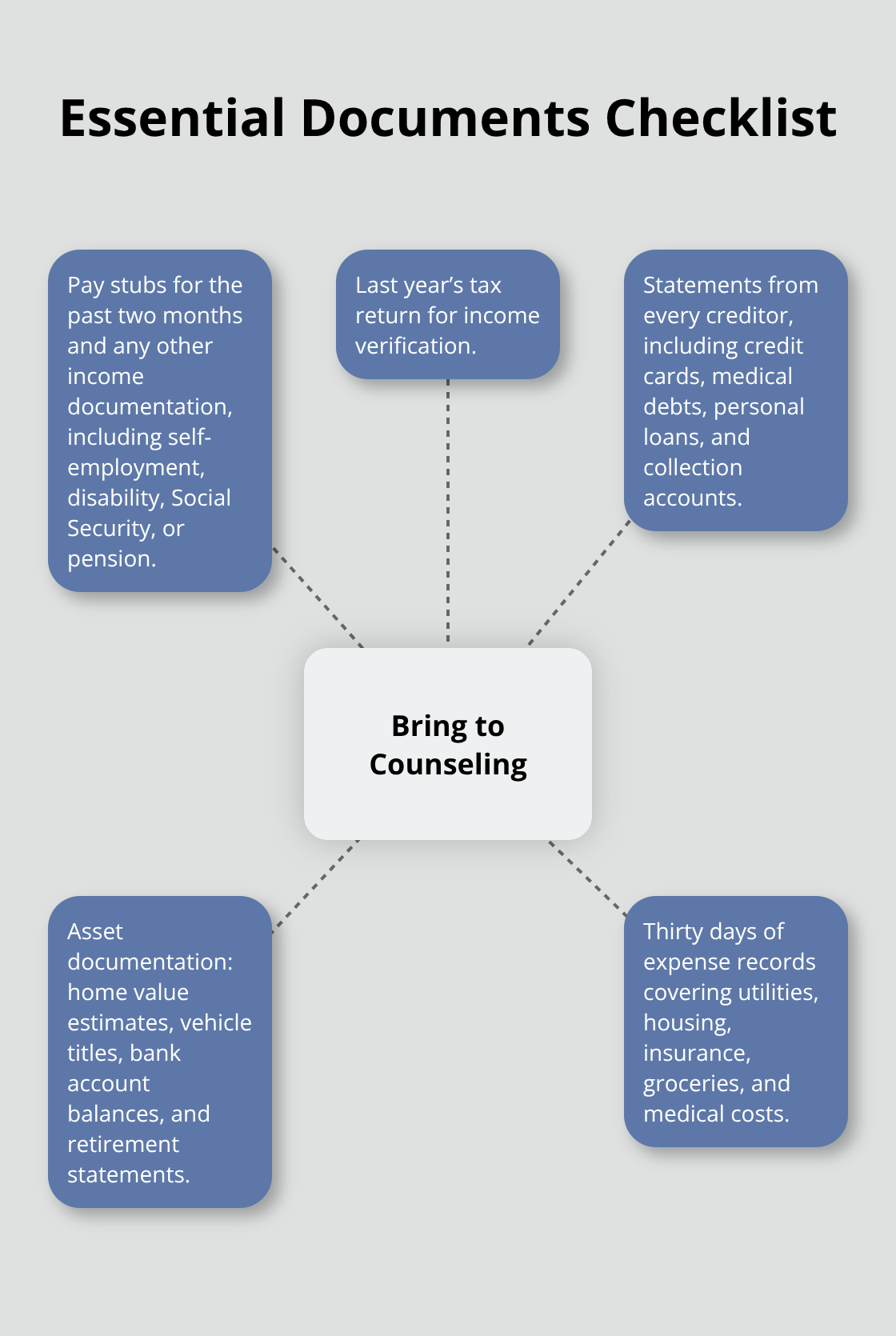
Bring specific paperwork to your session. You need two months of recent pay stubs, your last year’s tax return, and any income documentation if you’re self-employed, receiving disability, Social Security, or pension payments. Gather statements from every creditor-credit cards, medical debt, personal loans, collection accounts-because the counselor needs to see the full picture of what you owe. Include documentation of your assets: home value, vehicle titles, bank account balances, and retirement account statements. Finally, bring 30 days of expense records showing utilities, rent or mortgage, insurance, groceries, and medical costs. The counselor will use this real data to build an accurate budget, not estimates.
Finding an Approved Agency That Fits Your Schedule
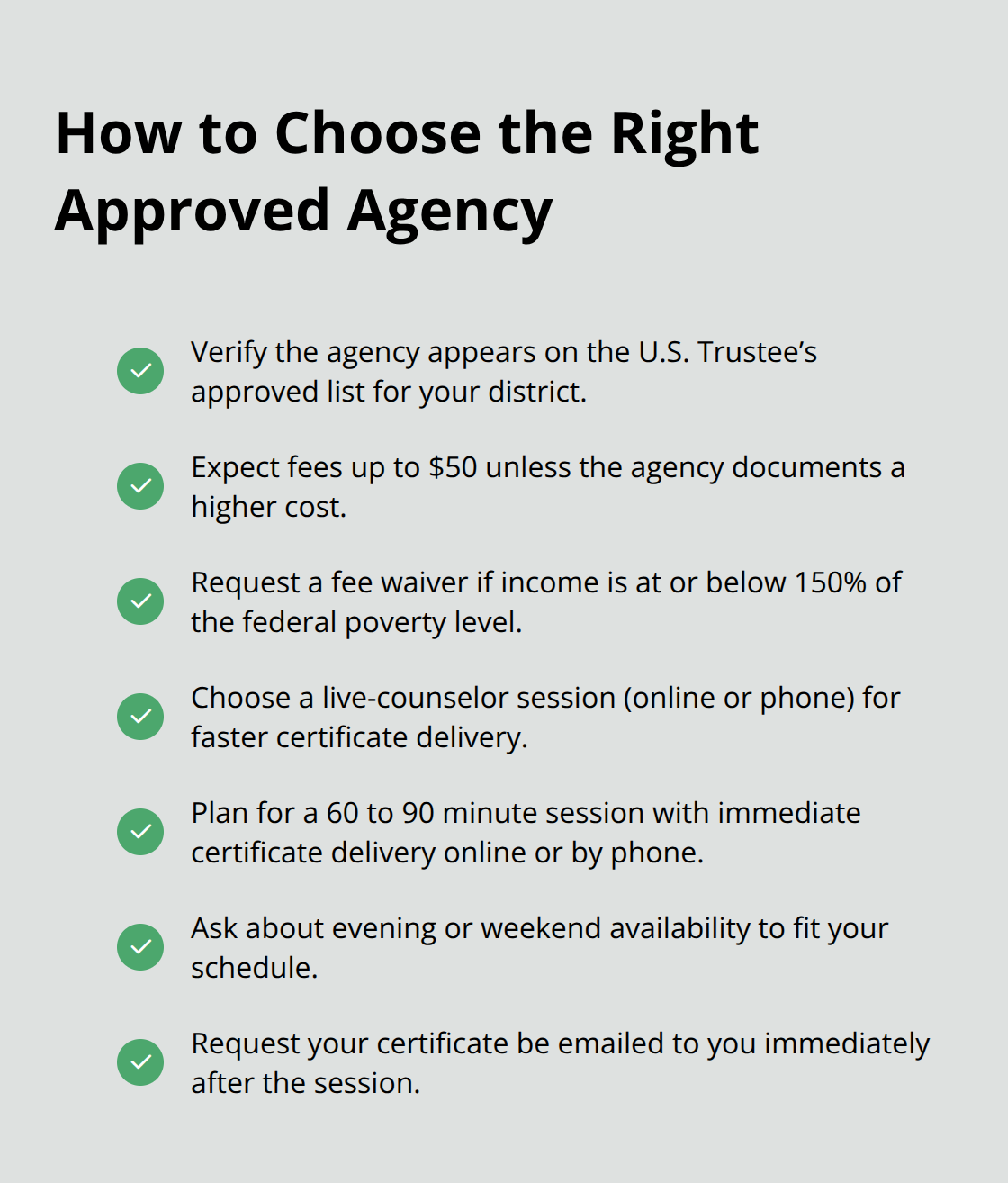
Approved agencies like Cambridge Credit Counseling, GreenPath, and Money Management International operate across Florida and often offer online sessions, which speeds up certificate delivery. Fees are capped at $50 unless the agency documents a reason for higher charges, and households at or below 150 percent of the federal poverty level can request a waiver or reduction. The U.S. Trustee Program maintains the official list of approved providers by district, so verify your chosen agency appears there before scheduling. Online and phone counseling sessions require a live counselor and typically run 60 to 90 minutes, making them convenient for those with work or family obligations. The certificate arrives immediately after online or phone sessions, reducing delays between counseling completion and your filing date.
How Credit Counseling Reveals What You’ve Been Missing
The counseling session forces you to confront numbers you’ve probably been avoiding. When you sit down with a counselor and list every debt, every monthly expense, and every source of income, patterns emerge that feel invisible when you’re just paying bills. Most people discover they’re spending far more on subscriptions, dining out, or convenience purchases than they realized.
Building Your Actual Budget
The counselor builds a detailed budget showing exactly where your money goes each month, and this clarity alone changes how you approach the next steps. You’ll see which debts carry the highest interest rates, which ones are growing fastest, and which ones could potentially be negotiated down through a settlement before bankruptcy becomes necessary. This isn’t theoretical budgeting advice-it’s analysis of your actual spending based on the documents you bring. The counselor might show you that debt management plans, where creditors agree to lower interest rates and consolidate payments, could work if you have stable income. Or they might reveal that your debt-to-income ratio is so high that Chapter 7 is genuinely your only viable option. Either way, you make that decision with real data, not guesses.
Identifying Spending Patterns You Missed
The counselor works through your 30 days of expense records to identify where you can cut spending without destroying your quality of life. This analysis reveals habits that drain your budget month after month. You’ll learn how to redirect that money toward rebuilding after bankruptcy. The counselor cannot recommend bankruptcy or any other path, but they will ensure you understand every option available to you, which means your final decision to file Chapter 7 is informed rather than desperate.
Learning Skills That Prevent Future Debt
The counseling session teaches practical money management that applies to your specific situation, not generic rules. You’ll learn how to rebuild credit after discharge, what credit score recovery timeline to expect, and which financial habits actually prevent returning to debt. The education covers responsible credit use with real examples, not lectures. When you complete the session, you’ll have a written budget plan and concrete strategies for the months after your case closes. Households at or below 150 percent of the federal poverty level often qualify for fee waivers, so cost shouldn’t prevent you from getting this education.
Once you’ve completed your counseling session and received your Certificate of Credit Counseling, the next critical step is selecting the right agency to work with-one that fits your schedule and meets the U.S. Trustee Program’s strict approval standards.
Which Agency Should You Choose
Verify Approval Status on the Official List
The U.S. Trustee Program maintains an official list of approved credit counseling agencies organized by state and judicial district, and this list serves as your only reliable source for vetting providers. Visit the U.S. Trustee’s website and search for agencies approved in your Florida district-verify the agency name matches exactly what appears on the official list, because using an unapproved provider will result in automatic case dismissal. Cambridge Credit Counseling, GreenPath, and Money Management International operate across Florida with strong online availability, but you must confirm their approval status in your specific district before scheduling.
Understand Fees and Eligibility for Waivers
Fees cap at $50 for most filers, though agencies can charge more if they document legitimate reasons for higher costs. Households earning at or below 150 percent of the federal poverty level automatically qualify for fee waivers or reductions, so cost should never prevent you from completing this requirement. Online and phone counseling deliver certificates faster than in-person sessions-your certificate arrives immediately rather than within one business day, which matters if your 180-day window before filing is tight.
Select an Agency That Prioritizes Real Dialogue
The counselor you work with cannot recommend bankruptcy or push you toward any particular path, so choose an agency known for thorough analysis rather than quick processing. Verify the agency provides live counselor sessions rather than automated phone trees or pre-recorded content, because you need actual dialogue about your specific numbers. When comparing agencies, ask about their counselor credentials, whether they provide a written budget plan you can keep, and whether they offer sessions outside business hours (many reputable providers have evening and weekend availability specifically for working people).
Request Immediate Certificate Delivery
Request that the agency email your certificate immediately after the session ends so you can forward it to your attorney without delay-this prevents the common problem of missing filing deadlines because certificate delivery took longer than expected. Some agencies offer multi-language counseling beyond English and Spanish; if you need language support, contact the U.S. Trustee’s Credit Counseling Unit at ust.cc.help@usdoj.gov before scheduling.
Final Thoughts
Credit counseling for Chapter 7 bankruptcy serves a purpose beyond legal compliance. The session forces you to examine your finances with clarity, identify spending patterns you’ve overlooked, and understand whether bankruptcy truly fits your situation. You’ll walk away with a written budget, concrete money management strategies, and the knowledge that your decision to file rests on real data rather than desperation.
After your counseling session ends and you receive your Certificate of Credit Counseling, your timeline becomes critical-you have 180 days to file your petition. Submit that certificate to your attorney immediately so they can attach it to your bankruptcy petition, because the court will dismiss your case automatically if it’s missing. The counseling requirement exists because bankruptcy carries lasting consequences, and the session ensures you’ve explored alternatives like debt management plans or settlement negotiations before filing.
Once you’ve completed credit counseling Chapter Seven and filed your petition, you’ll attend a 341 meeting with the trustee within 21 to 40 days, then complete debtor education through another approved provider focused on financial habits post-bankruptcy. The entire Chapter 7 process typically takes 4 to 6 months from filing to discharge. Contact Harnage Law, PLLC to discuss your Chapter 7 bankruptcy options in Florida and let us guide you through every step of this process.