Chapter 7 bankruptcy filing involves specific steps and timelines that can feel overwhelming without guidance. We at Harnage Law, PLLC help clients navigate each milestone from initial preparation through final discharge.
This guide walks you through the four major phases of the process in Florida, including what documents you’ll need, what happens at your creditor meeting, which debts disappear, and how to rebuild afterward.
Getting Your Financial Records and Courses in Order
Organize Documents Before You File
Start gathering documents now, not later. You need bank statements from the past two months, pay stubs from the past 60 days, tax returns from the past two years, and a complete list of all creditors with account numbers and balances. The U.S. Courts require exact figures, and approximations will delay your case.
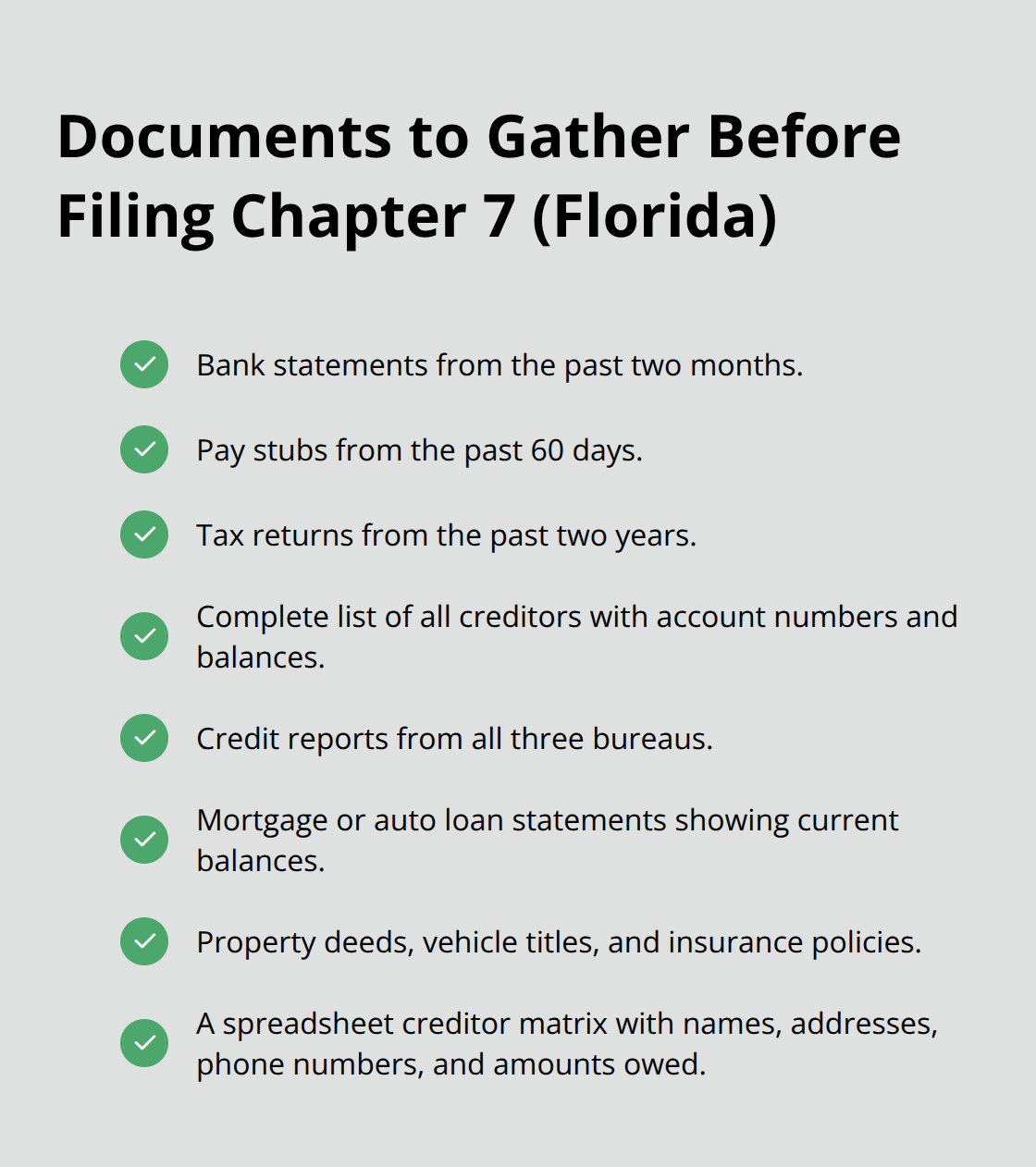
Pull your credit reports from all three bureaus to verify what debts appear and catch errors before filing. Many people uncover accounts they forgot about during this step, which actually helps you file accurately.
Create a spreadsheet with creditor names, addresses, phone numbers, and amounts owed. This becomes your creditor matrix, and the court rejects filings with incomplete or inaccurate information. If you own a home or car, gather the mortgage statement or loan documents showing the current balance and lender details. Property deeds, vehicle titles, and insurance policies matter too. Organizing these documents in a folder before meeting with an attorney speeds up the process significantly.
Complete Credit Counseling Within the Required Timeframe
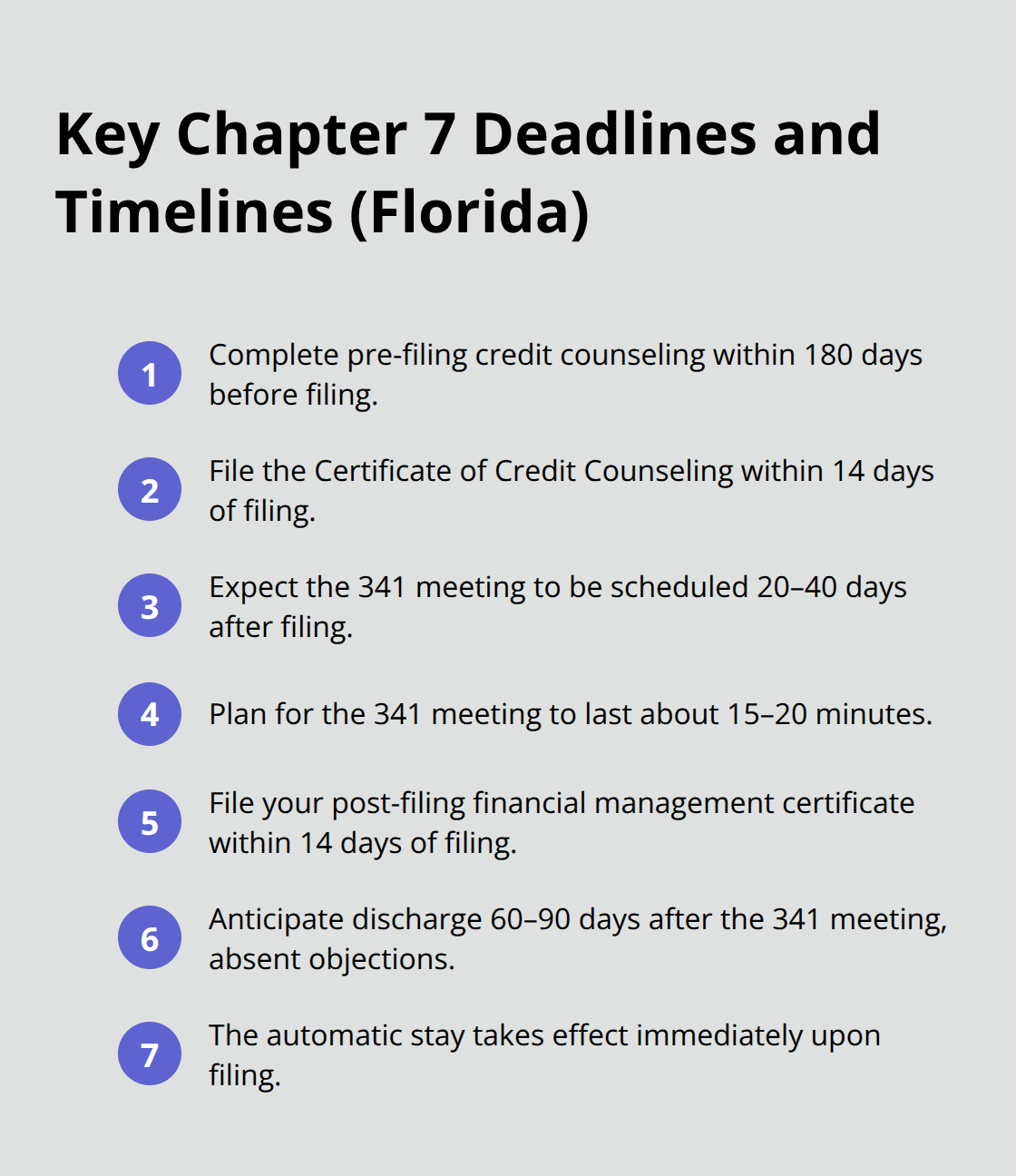
Federal law requires you to complete credit counseling from an approved agency within 180 days prior to filing. The U.S. Department of Justice maintains the official list of approved providers, and courses typically last 60 to 90 minutes. You’ll receive a Certificate of Credit Counseling that you must file with your petition within 14 days of filing. This certificate proves you met the mandatory requirement and moves your case forward without delays.
Calculate Your Income and Expenses Accurately
The filing fee in federal court is $338, though you can request installment payments if you cannot pay the full amount upfront, or apply for a fee waiver if your income falls below 150 percent of the poverty level according to local court rules. Calculate your average monthly income over the past six months and list all household expenses, including rent or mortgage, utilities, food, transportation, insurance, and child support or alimony if applicable.
The means test calculation determines whether your income qualifies you for Chapter 7 or whether the court might push you toward Chapter 13 instead. Courts use a specific formula involving your current monthly income compared to the state median income for your household size. If your income exceeds the median, the means test applies additional calculations to determine abuse. Florida’s median income for a single person was approximately $55,000 annually as of recent data, though this figure changes yearly. Getting these numbers right the first time prevents objections from the trustee and keeps your case moving forward.
Once you have your financial documents organized and your counseling certificate in hand, you’re ready to move into the actual filing phase-completing the petition forms and submitting them to the federal court.
Filing Your Petition and Navigating the Federal Court Process in Florida
Prepare and Submit Your Complete Petition Package
Your petition is not a single form but a comprehensive package that includes your voluntary petition, schedules of assets and liabilities, statement of financial affairs, means test calculation, and statement of current monthly income. Federal bankruptcy courts require original signatures on all documents-not photocopies or electronic signatures-so you must sign everything in person or via notary. The filing fee is $338, due at the time of filing, though you can request to pay in installments with a minimum of half due upfront, or apply for a complete waiver if your income qualifies under the poverty guidelines set by your local court.
Once you submit your petition package to the clerk, the court assigns you a case number and schedules your 341 meeting of creditors, typically 20 to 40 days after filing according to federal rules. This timing matters because multiple deadlines stem from the filing date, and missing even one can result in dismissal without a discharge.
Attend Your 341 Meeting of Creditors
The 341 meeting of creditors is not a courtroom hearing but rather a mandatory meeting where the bankruptcy trustee appointed to your case will examine you under oath about your financial affairs, property ownership, and the accuracy of documents you filed. Bring your government-issued photo ID, copies of your filed schedules, and any recent pay stubs or bank statements the trustee requests. The meeting typically lasts 15 to 20 minutes unless complications arise, and creditors may attend to ask questions, though in practice they rarely do. Your attorney should accompany you to this meeting and can object if questions fall outside proper scope.
Complete Your Post-Filing Financial Management Course
Within 14 days of filing your petition, you must file a Certificate of Personal Financial Management showing completion of your post-filing financial management course (this differs from the pre-filing credit counseling you already completed). Failure to file this certificate can result in case dismissal, so mark this deadline on your calendar and complete the course through an approved agency well before the deadline arrives.
Understand How the Automatic Stay Protects You
The moment your petition is filed, the automatic stay goes into effect, immediately halting wage garnishments, foreclosure proceedings, collection lawsuits, and creditor phone calls. This stay is powerful: any creditor who violates it by continuing collection efforts faces potential sanctions and damages. If you receive calls or letters after filing, document everything and report it to your attorney, as creditors are prohibited from contacting you once the stay is in place.
With your petition filed and the automatic stay protecting you from creditor action, the next phase focuses on what happens to your debts and which assets you can protect under Florida law.
Debt Discharge and Asset Protection in Florida
Unsecured Debts That Disappear in Chapter 7
Chapter 7 discharge eliminates most unsecured debts when the court enters your discharge order. Credit card balances, personal loans, medical bills, and deficiency judgments from repossessed vehicles vanish completely. The discharge releases you from personal liability, meaning creditors cannot pursue collection efforts after the order becomes final. This elimination forms the core benefit of Chapter 7 filing and provides the fresh financial start many filers seek.
Debts That Survive Discharge
Certain debts remain on your shoulders regardless of your Chapter 7 filing. Child support and alimony obligations never disappear in bankruptcy according to 11 U.S.C. § 523(a)(5). Student loans stay with you unless you can prove undue hardship, which courts interpret strictly and rarely grant. Recent tax debts remain your responsibility, though older tax obligations may discharge depending on when you filed your return and owed the amount.
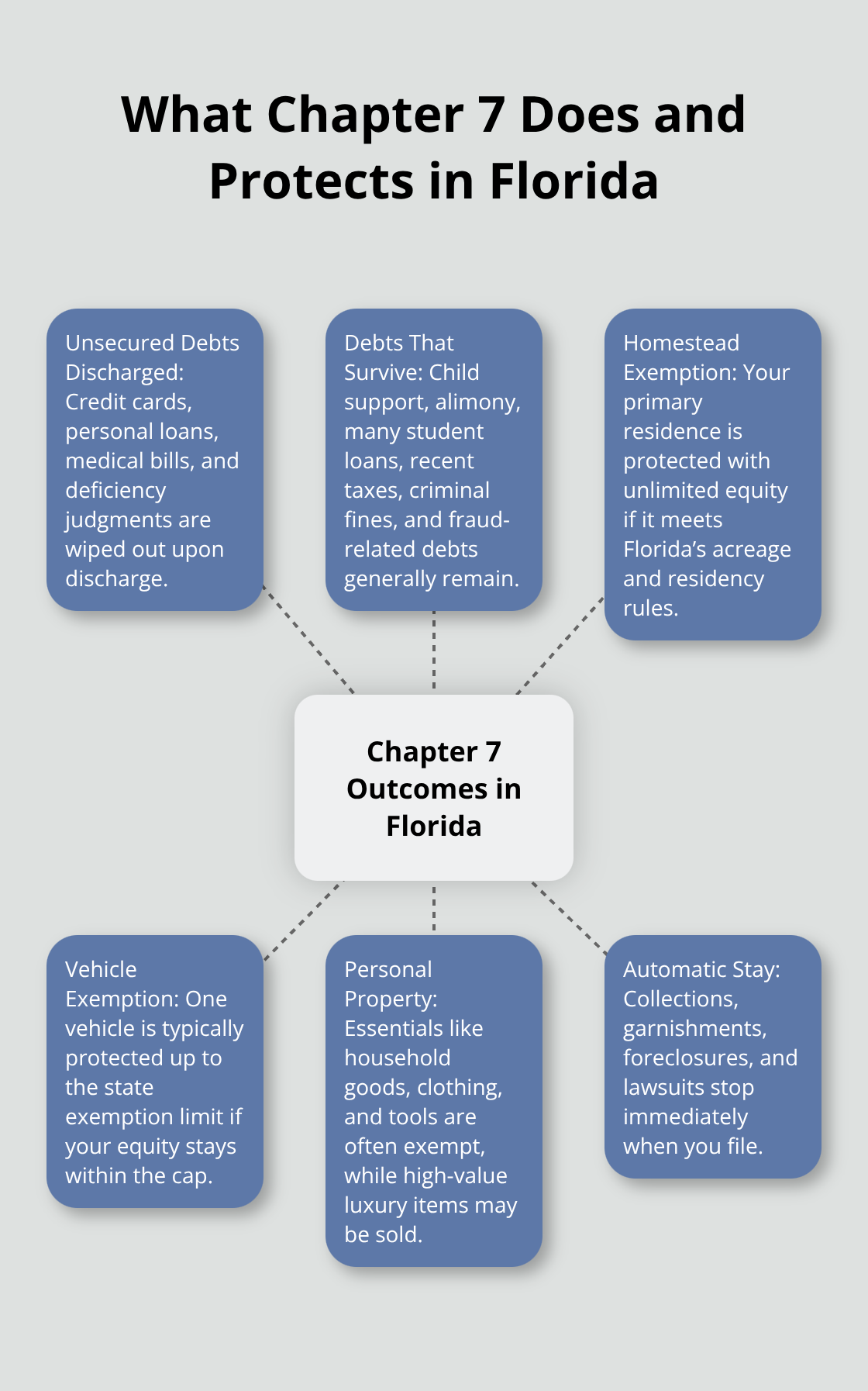
Criminal fines, DUI-related judgments, and willful or malicious injury claims also survive discharge. If you owe a debt for fraud or embezzlement, that liability persists. Identifying which debts will actually disappear before filing helps you understand your true fresh start and plan accordingly.
Florida’s Homestead Exemption Protects Your Home
Florida’s homestead exemption ranks among the strongest in the nation, protecting your primary residence from liquidation even if you own significant equity. Under Florida law, you can shield an unlimited amount of home equity as long as the property serves as your primary residence and the land does not exceed half an acre within city limits or 160 acres outside city limits. The trustee cannot force a sale of your home to pay creditors under this protection. Your vehicle receives protection up to a certain value under Florida exemptions, typically allowing you to keep one car if the equity falls within the exemption limit.
Personal Property and Luxury Items
Personal property like household furnishings, clothing, and tools receive exemption protection in Chapter 7. Luxury items such as expensive jewelry, artwork, or collectibles may face liquidation if their value exceeds exemption limits. The court evaluates each asset individually to determine whether it qualifies for protection or becomes part of the estate available for creditor distribution.
Timeline for Your Discharge Order
The discharge order typically arrives 60 to 90 days after your 341 meeting, though this timeline varies based on whether creditors file objections or the trustee identifies complications with your case. Once the discharge order is entered and becomes final, creditors lose all legal power to collect the discharged debts, and your liability ends completely.
Moving Forward After Your Chapter 7 Discharge
Your discharge order marks a turning point, not an ending. Check your credit report within 30 days of discharge to verify that all discharged debts now show a zero balance, as creditors sometimes report accounts incorrectly even after discharge. Request free reports from all three bureaus at annualcreditreport.com and dispute any inaccuracies immediately, since your credit score recovers faster when your report reflects the truth about what was discharged.
Secured credit cards help rebuild your score without requiring approval based on past bankruptcy. Start with one card and keep the balance low, paying it off monthly, and after 12 to 18 months of responsible use, you’ll qualify for unsecured cards with better terms. An auto loan from a credit union can also accelerate rebuilding if you need transportation, and the goal is demonstrating consistent, on-time payments over time.
Create a realistic monthly budget that accounts for your actual spending patterns, not what you wish you spent. Track expenses for three months to identify where money goes, then allocate amounts for necessities, savings, and discretionary spending (this buffer of $500 to $1,000 prevents future reliance on credit when unexpected costs arise). Contact us at Harnage Law, PLLC to discuss how your Chapter 7 bankruptcy filing leads to lasting financial health and to receive support as you rebuild.