
Your phone rings constantly. Creditors demand payment, threaten legal action, and call at all hours-leaving you exhausted and anxious.
We at Harnage Law, PLLC know how relentless this harassment feels. The good news: Chapter 7 bankruptcy offers a legal path to stop creditor calls in Florida and reclaim your peace of mind.
How Creditor Calls Damage Your Health and Finances
Stress Takes a Physical Toll on Your Body
Constant creditor calls wreck your physical and mental health. Research from the American Psychological Association shows that debt-related stress ranks among the top causes of anxiety and depression in America. When your phone rings multiple times daily with threats of lawsuits and wage garnishment, your body stays in fight-or-flight mode, elevating cortisol levels and blood pressure. This chronic stress leads to insomnia, headaches, and weakened immunity. The Fair Debt Collection Practices Act prohibits calls before 8 AM or after 9 PM, yet many collectors ignore these rules, knowing most people won’t fight back.
How Harassment Destroys Your Work Life
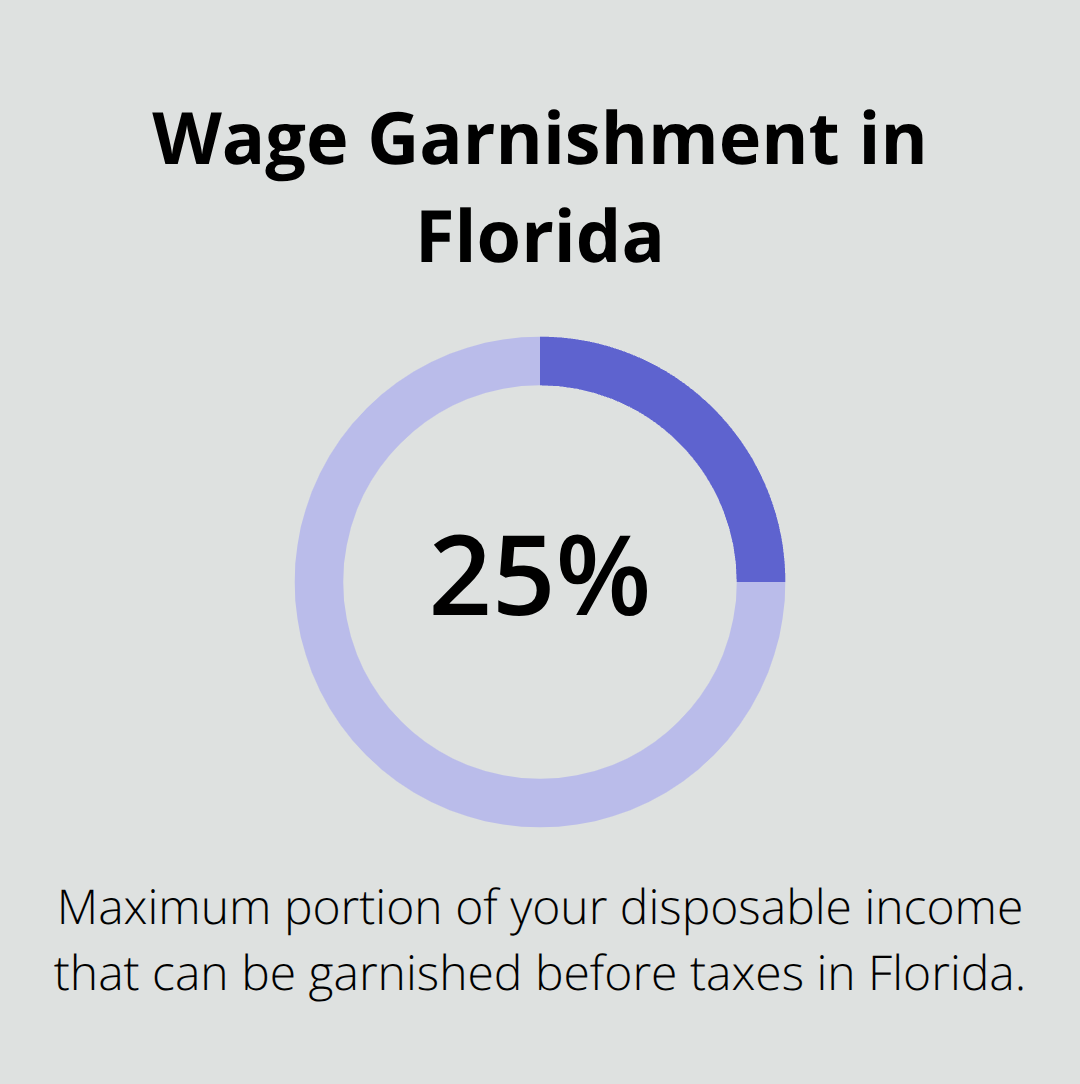
Florida residents lose focus at work and miss deadlines because they’re mentally exhausted from harassment. Your relationships suffer too-spouses argue about money, children pick up on the tension, and family dinners become uncomfortable when the phone rings again. Creditors don’t just call; they pursue wage garnishment in Florida, which can take up to 25% of your disposable income before taxes. This directly reduces what you bring home each week, making it harder to pay rent, buy groceries, or cover childcare.
The Wage Garnishment Trap
The stress of knowing your paycheck is being seized affects job performance measurably. You make mistakes because you’re distracted, miss meetings because you’re on calls with creditors, and your manager notices the decline. Some employers even terminate workers after repeated creditor calls disrupt the workplace, though the Fair Debt Collection Practices Act technically prohibits collectors from calling your job if your employer has a policy against it.
A Temporary Fix That Doesn’t Solve the Problem
Many people don’t know they can send a written cease-and-desist letter to stop calls entirely-a single certified letter with return receipt forces collectors to stop contacting you except to confirm they received the letter or to inform you about a lawsuit. Yet even this temporary relief doesn’t erase the debt or stop lawsuits. The calls may pause, but the underlying financial crisis remains, and creditors can still pursue legal action to recover what you owe. Chapter 7 bankruptcy stops all of this immediately through the automatic stay, which halts wage garnishment, lawsuits, and creditor calls the moment you file-offering permanent relief rather than a temporary pause.
How Chapter 7 Stops Creditor Calls Immediately
The Automatic Stay Takes Effect Right Away
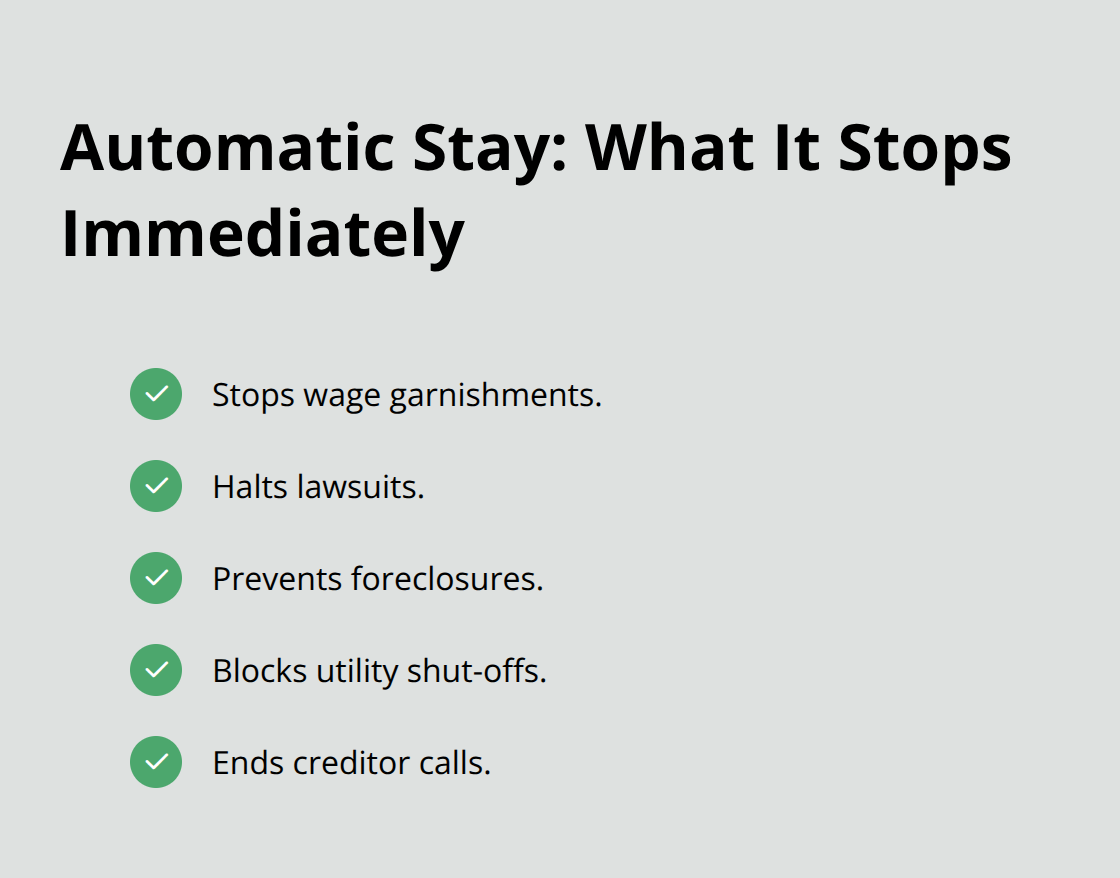
Filing Chapter 7 bankruptcy triggers the automatic stay the moment your petition reaches the court, and this federal injunction halts nearly all creditor collection efforts in Florida instantly. The automatic stay stops wage garnishments, lawsuits, foreclosures, utility shut-offs, and creditor calls-all at once. Creditors who violate the stay after your filing date face serious penalties, including paying your attorney fees and damages awarded by the judge.
This is not a temporary pause or a request; it’s a federal court order with teeth.
How Long the Protection Lasts
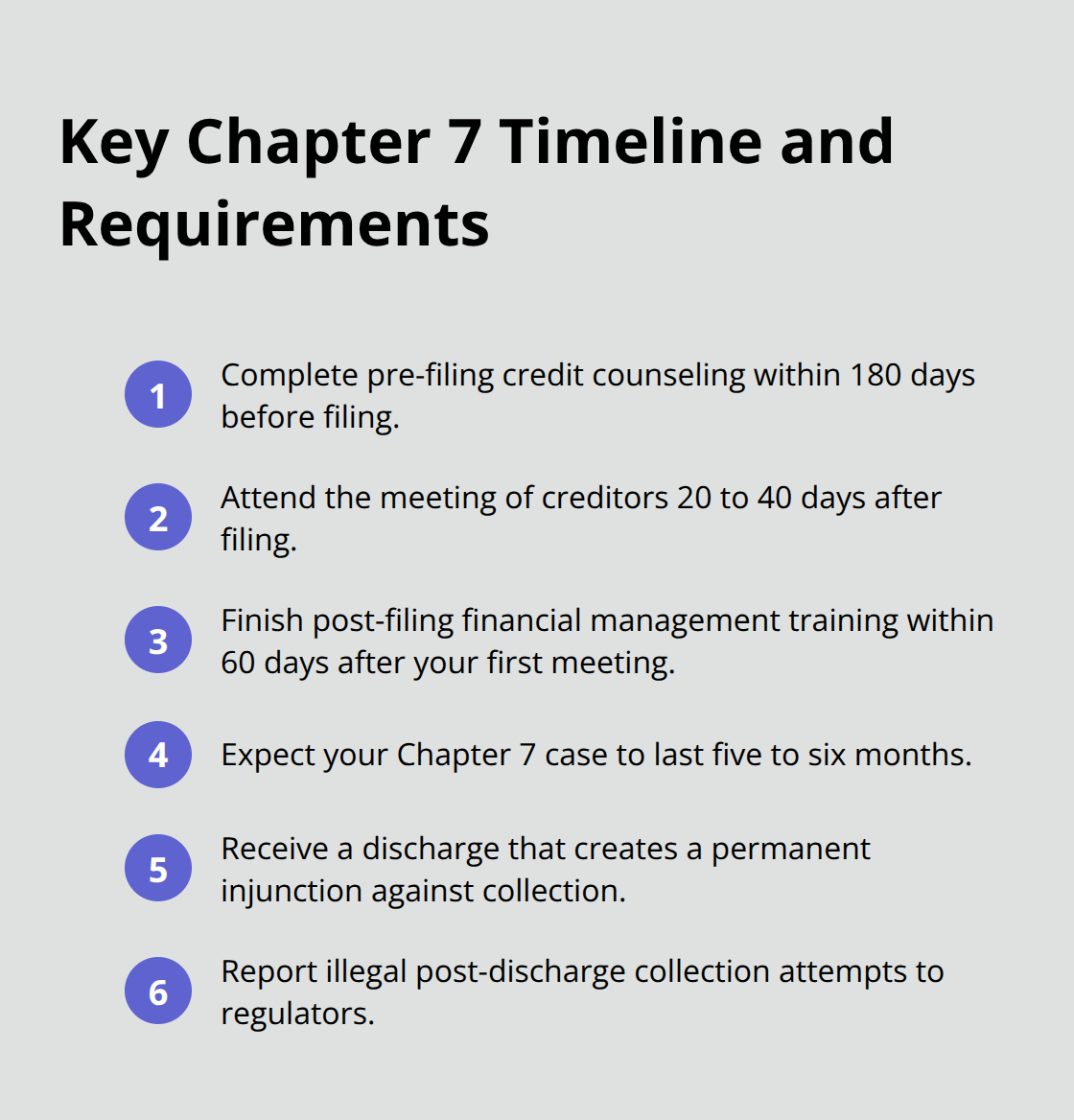
Most Chapter 7 cases in Florida last between five and six months, meaning you get protection from harassment during the entire process. When your case closes with a discharge, the automatic stay ends, but a permanent discharge injunction takes its place, protecting you from collection efforts for the rest of your life. If a debt collector tries to collect a discharged debt after your case closes, you can pursue federal law violations and file complaints with the Federal Trade Commission or Florida’s Attorney General. The discharged debt cannot legally be collected, and the collector who ignores this faces sanctions.
What Happens to Your Debts During Chapter 7
During your Chapter 7 case, the trustee appointed to administer your case gathers your financial information, liquidates non-exempt assets if necessary, and distributes proceeds to creditors according to bankruptcy law. You’ll attend a meeting of creditors roughly 20 to 40 days after filing-this is led by the trustee and is not a courtroom hearing, though creditors can attend and ask questions. Most creditors don’t show up because they know the case is moving forward and their chances of recovery are slim.
Meeting Court Deadlines Protects Your Discharge
You must complete pre-filing credit counseling within 180 days before you file and post-filing financial management training within 60 days after your first creditor meeting; both must come from approved providers through the U.S. Department of Justice. Missing these deadlines delays your discharge and leaves you vulnerable. Your next step involves understanding exactly what rights you have during this process and how the law protects you from further harassment.
What Creditors Can and Cannot Do When Calling You
Federal Rules Limit When Collectors Can Contact You
The Fair Debt Collection Practices Act sets strict boundaries on when and how collectors can contact you, yet most people never learn these rules until they’ve already suffered months of harassment. Creditors cannot call you before 8 AM or after 9 PM in your time zone, and they cannot contact you at work if your employer has a policy prohibiting such calls. The moment you send a written cease-and-desist letter via certified mail with return receipt, collectors must stop calling you entirely except to confirm they received the letter or to notify you about a lawsuit.
Document Every Violation to Build Your Case
Write down the date, time, caller’s name, company, and what they said for each call you receive. If a collector calls you at 6 AM or leaves threatening voicemails, that constitutes a violation. If they continue after your cease-and-desist letter arrives, that represents another violation. You can report these violations to the Federal Trade Commission or your state attorney general, and you can file complaints that create a record of the collector’s behavior.
The Harsh Reality of Cease-and-Desist Letters
Sending a cease-and-desist letter does not erase your debt, and collectors often ignore the rules because they bet you won’t pursue legal action. Many collectors still attempt collection on discharged debts simply because some accounts pay, making the harassment continue even when they have no legal right to collect. A letter offers temporary relief at best, not permanent protection.
The Automatic Stay Provides Real Enforcement
Filing Chapter 7 bankruptcy triggers the automatic stay, a federal court order that stops all creditor calls at once, not through a letter but through a legal injunction backed by court sanctions. Violating the automatic stay after your filing date exposes collectors to paying your attorney fees and court-ordered damages. The automatic stay lasts through your entire Chapter 7 case, typically five to six months, and when your discharge is granted, a permanent discharge injunction replaces it, protecting you indefinitely.
Why the Automatic Stay Outperforms Other Methods
Unlike a cease-and-desist letter that collectors might ignore, the automatic stay is enforced by the federal bankruptcy court, and creditors know the consequences of violations. If a collector ignores the stay and keeps calling after your filing date, you have grounds to sue them in bankruptcy court for damages. This enforcement mechanism separates a temporary pause from permanent relief, and it’s why Chapter 7 offers real protection rather than a hope that collectors will follow the rules.
Final Thoughts
Chapter 7 bankruptcy delivers what cease-and-desist letters cannot: permanent relief from creditor harassment. The automatic stay stops creditor calls the moment you file, and this federal court order carries real enforcement power that collectors respect. When your case closes with a discharge, the protection continues indefinitely through a discharge injunction that shields you from collection efforts for life.
Taking action now means reclaiming your peace of mind before more months pass under the weight of constant harassment. Every day you delay is another day your stress levels remain elevated, your work performance suffers, and your family relationships strain under financial pressure. Chapter 7 offers a legal reset that stops wage garnishments, halts lawsuits, and eliminates qualifying debts entirely.
Contact Harnage Law, PLLC to schedule a free consultation and learn how to stop creditor calls Florida through Chapter 7 bankruptcy. We guide you through every step of the process, from your initial consultation through discharge and beyond, and we help you understand your rights under Florida law. If creditors continue calling after your filing, we pursue violations and hold them accountable.