
Creditors calling before dawn, threatening lawsuits they’ll never file, and contacting you at work-these tactics cross legal lines in Florida. Chapter 7 creditor harassment violates federal law, and you have real protections available.
Filing for Chapter 7 bankruptcy triggers an automatic stay that stops collection calls and letters immediately. We at Harnage Law, PLLC help clients understand how this legal shield works and what happens when creditors ignore it.
What Counts as Harassment Under Florida Law
Florida’s Clear Legal Boundaries
Florida law draws clear lines around what debt collectors can and cannot do, and creditors regularly cross them. The Florida Consumer Collection Practices Act prohibits calls before 8 AM or after 9 PM, yet many collectors ignore this rule entirely.
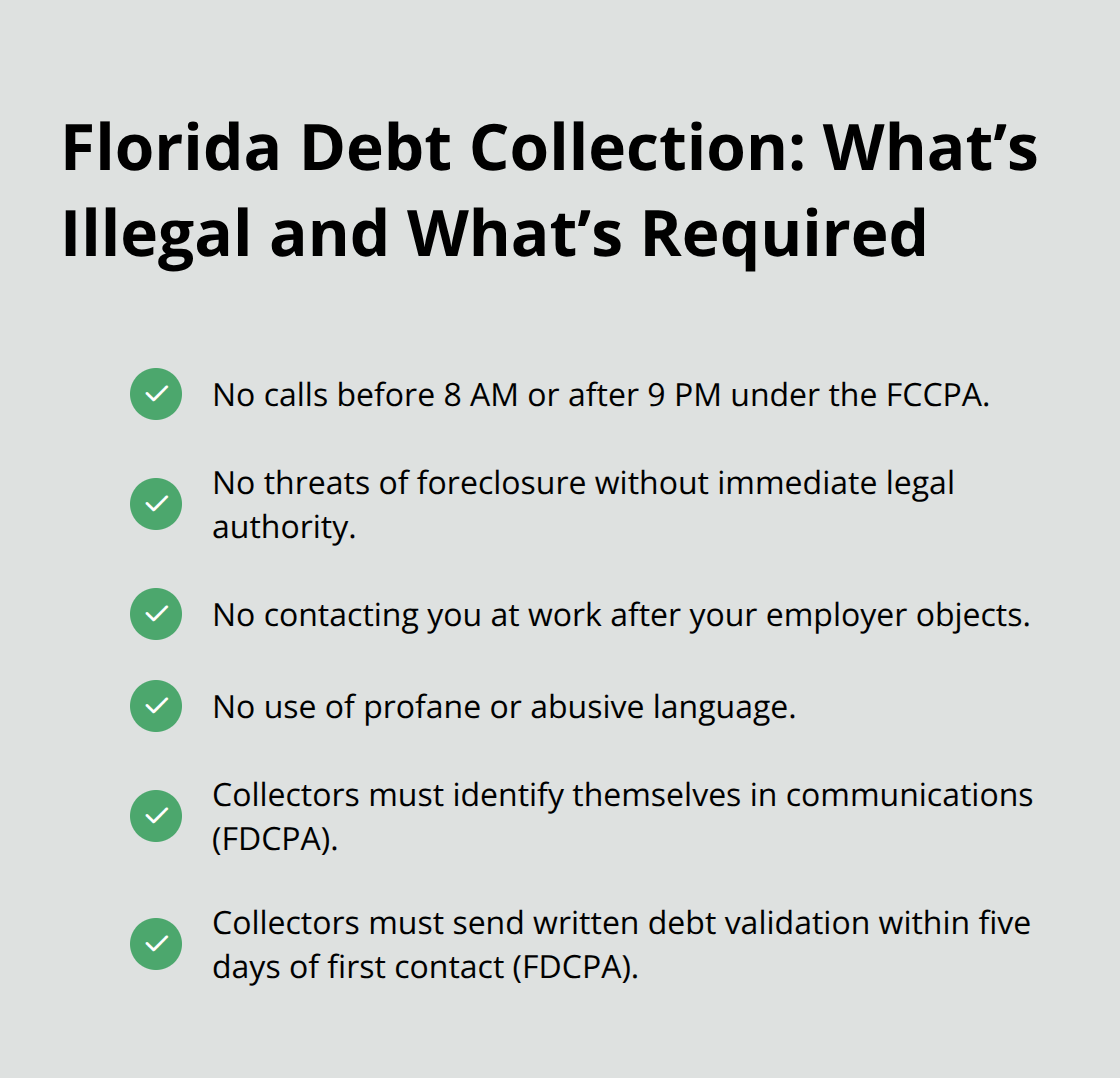
Threatening foreclosure when they lack immediate legal authority to proceed, contacting you at work after your employer has objected, or using profane language all violate state law. The federal Fair Debt Collection Practices Act adds another layer of protection, requiring collectors to identify themselves and provide written validation of the debt within five days of first contact.
Violations That Trigger Legal Liability
Collectors break the law when they misrepresent the amount you owe, threaten actions they cannot legally take, or continue calling after you request they stop in writing. Under Florida Statutes Section 559.77, you can sue violators for actual damages, statutory damages up to $1,000, court costs, and attorney’s fees within two years of the violation. This statute applies to original creditors as well as third-party collectors, strengthening your protections significantly.
Building Your Documentation Arsenal
Many Floridians don’t realize they hold documentation power on their side. Keep a detailed log with the date, time, caller number, caller name, and exact content of each call or message. Save all letters, emails, and text messages creditors send you. Florida’s two-party consent law prevents you from recording calls without permission, but written records carry substantial weight in court. Document how the harassment affects your health, work performance, and finances, and gather names of witnesses who have seen or heard the abuse.
Using Your Records Strategically
This documentation becomes powerful if you need to file a complaint with the Consumer Financial Protection Bureau or pursue a claim under the Fair Debt Collection Practices Act. Creditors who ignore these state and federal rules count on you not knowing your rights; that calculation shifts when you have solid proof of their violations and a clear understanding of what the law actually protects. Once you file for Chapter 7 bankruptcy, the automatic stay provides immediate relief that stops these violations at their source.
What Happens to Creditors When You File Chapter 7 in Florida
The moment you file Chapter 7 bankruptcy in Florida, federal law activates an automatic stay under 11 U.S.C. Section 362. This legal shield stops creditors from calling, writing, garnishing wages, freezing bank accounts, or pursuing foreclosure and repossession. Creditors must cease all collection activities immediately, and violations carry real financial consequences. If a collector ignores the automatic stay and contacts you after filing, you can pursue damages under Section 362(k), which allows you to recover actual damages plus statutory damages.
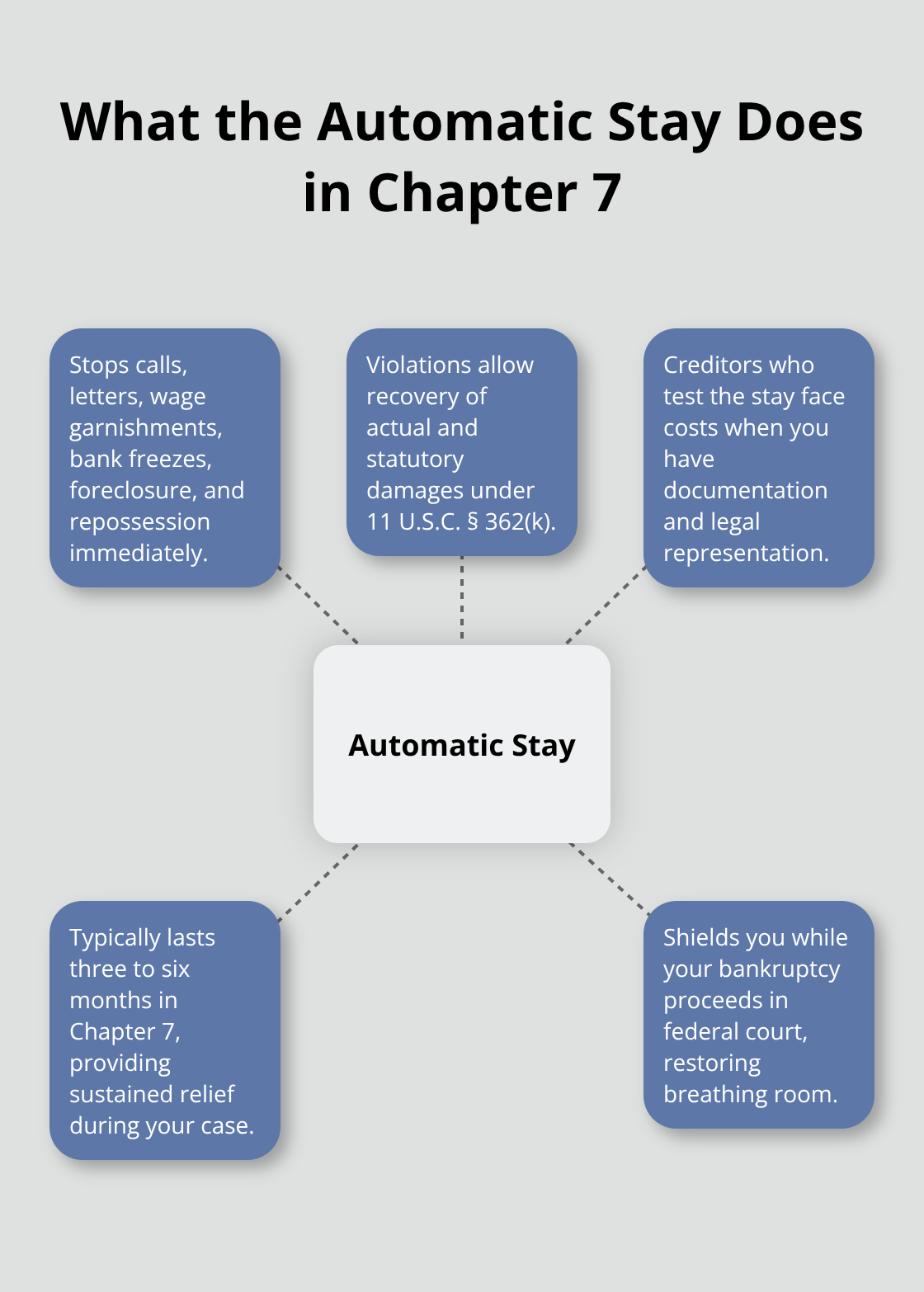
Many creditors test this protection because they assume debtors won’t fight back, but that assumption becomes costly when you have documentation and legal representation. The automatic stay remains in effect throughout your bankruptcy case, typically lasting three to six months for Chapter 7, providing extended relief from harassment that harassment laws alone cannot guarantee.
How Creditors Lose Contact Rights Instantly
Once your Chapter 7 petition reaches the federal bankruptcy court, creditors lose the legal right to contact you directly about the debt. The Fair Debt Collection Practices Act and Florida’s Consumer Collection Practices Act both become irrelevant because the automatic stay supersedes them entirely. Creditors can only contact your bankruptcy attorney, not you, and they must cease all independent collection efforts. Some creditors violate this rule deliberately, betting you won’t notice or won’t pursue action. Others simply fail to update their systems fast enough, but ignorance does not excuse the violation. If a creditor contacts you after your attorney notifies them of the filing, document that contact with the date, time, caller information, and content, then report it immediately to your bankruptcy attorney.
Collecting Damages From Creditor Violations
When creditors violate the automatic stay, you hold leverage in federal court. Under Section 362(k), you can recover actual damages-real harm you suffered such as lost wages from time spent dealing with calls or emotional distress documented by medical or psychological records. You can also recover statutory damages of up to one hundred dollars per violation, and many cases involve multiple violations from repeated calls or letters. Attorney’s fees become recoverable as well, meaning the creditor pays your legal costs. Courts take automatic stay violations seriously because they undermine the entire bankruptcy system. If you have clear documentation showing a creditor violated the stay after your filing, your bankruptcy attorney can file a motion for sanctions in federal court, putting the creditor on notice that violations cost money.
What Happens Next With Your Case
Your bankruptcy attorney handles all creditor communication from this point forward, removing the burden from your shoulders. The creditor contact that once consumed your time and energy now flows through your legal representative, who knows exactly how to respond. This shift in control marks a turning point in your financial recovery, and understanding your rights under the automatic stay positions you to move forward with confidence into the next phase of your case.
How to Hold Creditors Accountable for Breaking the Law
Filing a Complaint With the CFPB
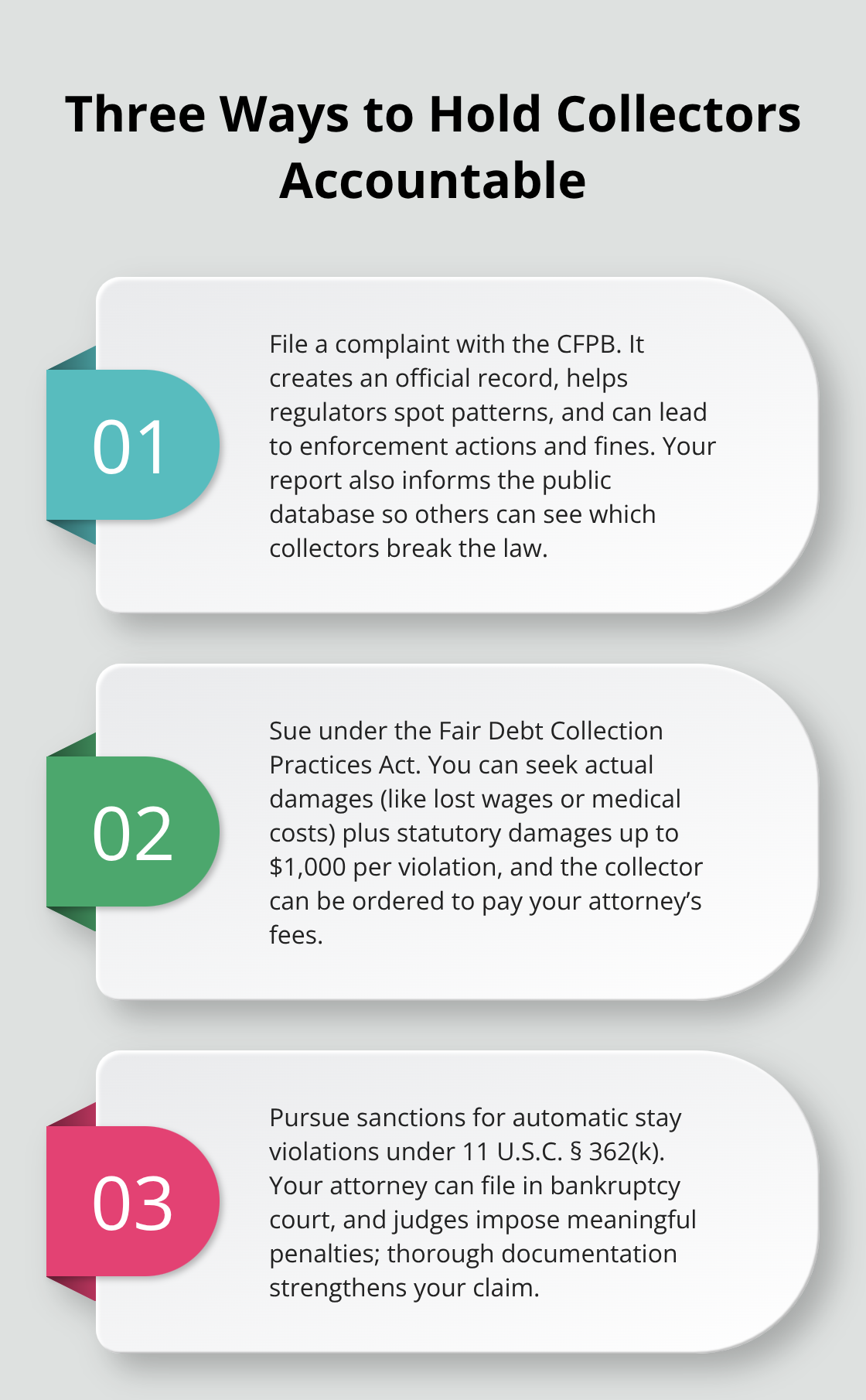
The Consumer Financial Protection Bureau receives thousands of complaints annually about debt collection violations, and filing one creates an official record that regulators use to identify patterns of abuse. When you submit a complaint to the CFPB, include your documentation of the harassment, the dates and times of calls or letters, the collector’s name and company, and the specific violations that occurred. The CFPB investigates complaints and can take enforcement action against repeat violators, sometimes resulting in substantial fines and corrective orders. Your complaint also becomes part of the public database that helps other consumers understand which collectors operate illegally. This step costs nothing and requires only thirty minutes of your time to document what happened.
Suing Under the Fair Debt Collection Practices Act
The Fair Debt Collection Practices Act gives you a direct path to sue collectors for violations, and federal courts award damages regularly when the evidence is solid. Under this federal law, you can recover actual damages such as medical bills from stress-related illness or lost wages from time spent managing collection calls, plus statutory damages up to one thousand dollars per violation even if you cannot prove direct financial harm. Attorney’s fees get paid by the creditor, meaning you do not absorb legal costs for holding them accountable. Many collection agencies violate the FDCPA repeatedly because they calculate that most debtors lack the knowledge or resources to fight back, but that calculation changes when you have documentation and legal representation. If a creditor continues contacting you after you send a written request to stop, that single violation alone can trigger statutory damages.
Pursuing Damages for Automatic Stay Violations
When creditors ignore the automatic stay after your Chapter 7 filing, you have a powerful federal remedy under 11 U.S.C. Section 362(k), which allows you to recover damages directly in your bankruptcy case without filing a separate lawsuit. Your bankruptcy attorney can file a motion for sanctions in federal court, putting pressure on creditors to comply with the stay and compensate you for violations. Courts view automatic stay violations as serious breaches of federal law, and judges impose meaningful penalties to deter future violations by other creditors. Document every contact that occurs after you file (including the date, time, caller information, and content), then report it immediately to your bankruptcy attorney so the violation becomes part of your official case record.
Your Fresh Start After Chapter 7
Your credit score recovers faster than you expect when you take deliberate action immediately after discharge. Secured credit cards offer a practical tool to establish positive payment history; you deposit money as collateral, use the card for small purchases, and make on-time payments each month. Many people see measurable credit improvements within twelve months through this consistent approach. Monitor your credit reports regularly through free annual reports at annualcreditreport.com and dispute any inaccuracies you find, since errors slow your recovery unnecessarily.
A realistic budget prevents you from returning to the debt patterns that led to Chapter 7 creditor harassment in the first place. Track your actual spending for one month to understand where money goes, then build a budget that covers essentials first and allocates remaining income to savings and modest discretionary spending. The stress relief from stopping creditor harassment gives you mental clarity to make better financial decisions than you could under constant collection pressure.
Discharged debts no longer follow you after Chapter 7 closes, and creditors cannot pursue you for eliminated obligations (continuing collection attempts after discharge violate federal law). Bankruptcy functions as a legal tool that stops harassment and creates opportunity for genuine financial stability, not as failure. Contact us to discuss how this process can protect you and restore your financial future.