Creditors in Florida use relentless tactics to collect debts-constant calls, threatening letters, and wage garnishments that drain your finances and peace of mind. The good news is that Chapter 7 bankruptcy offers a powerful legal tool to cease creditor harassment immediately.
We at Harnage Law, PLLC help Florida residents stop the harassment and eliminate debts through Chapter 7 filing. This guide shows you exactly how the automatic stay works and how debt discharge provides permanent relief.
How Creditors Actually Harass You in Florida
Constant Phone Calls and Workplace Contact
Debt collectors in Florida bombard you with calls-often multiple times per day-at inconvenient hours or directly to your workplace, violating Florida’s Fair Credit Collection Practices Act (FCCPA). The calls don’t stop even after you’ve explicitly revoked permission in writing; continued contact after you’ve said no entitles you to damages of $500 to $1,500 per violation under the Telephone Consumer Protection Act (TCPA). A January 2016 Supreme Court ruling extended TCPA protections to text messages, yet collectors continue sending harassing texts to cell phones without consent. Collectors know that workplace calls cause financial or emotional harm, yet they make them anyway because many debtors don’t understand their rights.
Deceptive Letters and Impersonation Tactics
Threatening letters arrive claiming legal action is imminent, sometimes using language that mimics court documents or attorney letterhead-a tactic that violates FCCPA rules against impersonating legal representatives. Collectors misrepresent the amount owed and threaten wage garnishments they haven’t yet obtained. Some collectors even threaten immigration consequences or criminal prosecution, tactics that cross legal lines but happen routinely. These deceptive practices exploit the fear and confusion that debt creates, making debtors more likely to pay without questioning whether the debt is even valid.
Wage Garnishment and Bank Levies
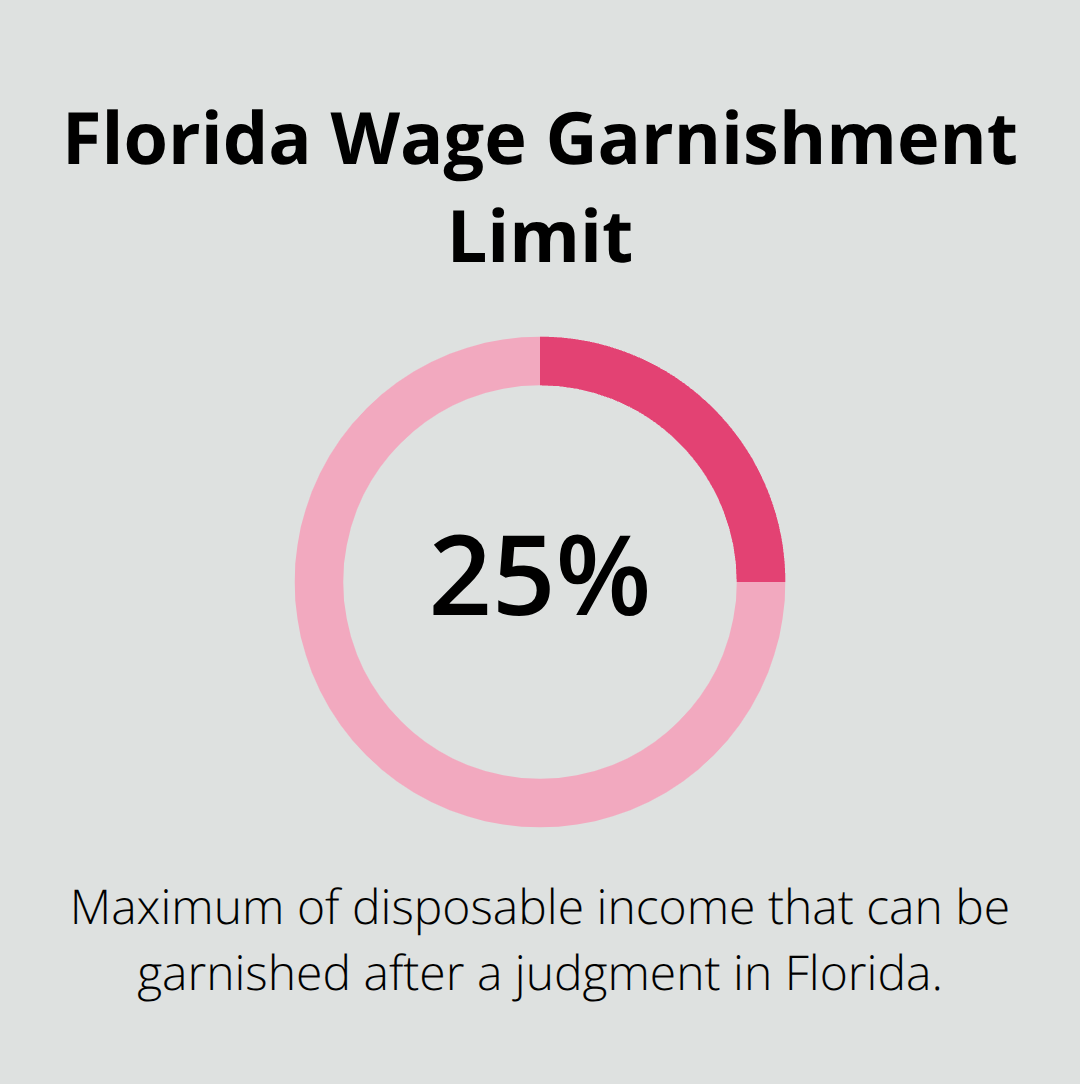
Once collectors obtain judgments, the harassment escalates into direct financial attacks. Wage garnishment in Florida can take up to 25% of your disposable income, devastating household budgets and making it impossible to cover basic expenses. Bank levies freeze accounts without warning, leaving you unable to pay rent or utilities.
These enforcement tools are legal when properly obtained, but collectors often threaten them before judgments exist, creating panic that leads to unnecessary payments.
The Real Cost of Harassment Under Florida Law
Under FCCPA, both original creditors and third-party collectors must follow the same strict rules, yet violations carry real financial consequences for the companies doing the harassing. You can sue for actual damages plus statutory damages up to $1,000 per violation, plus attorney’s fees and court costs. FDCPA violations add another layer of federal protection with similar remedies. The problem is that pursuing individual lawsuits against collectors is time-consuming and emotionally draining, even when you have a strong case. Filing Chapter 7 bankruptcy stops all of this immediately-not through lawsuits against collectors, but through the automatic stay, which is a court order that halts virtually all collection activity the moment your petition is filed.
The Automatic Stay Stops Creditor Harassment Immediately in Florida
What the Automatic Stay Does
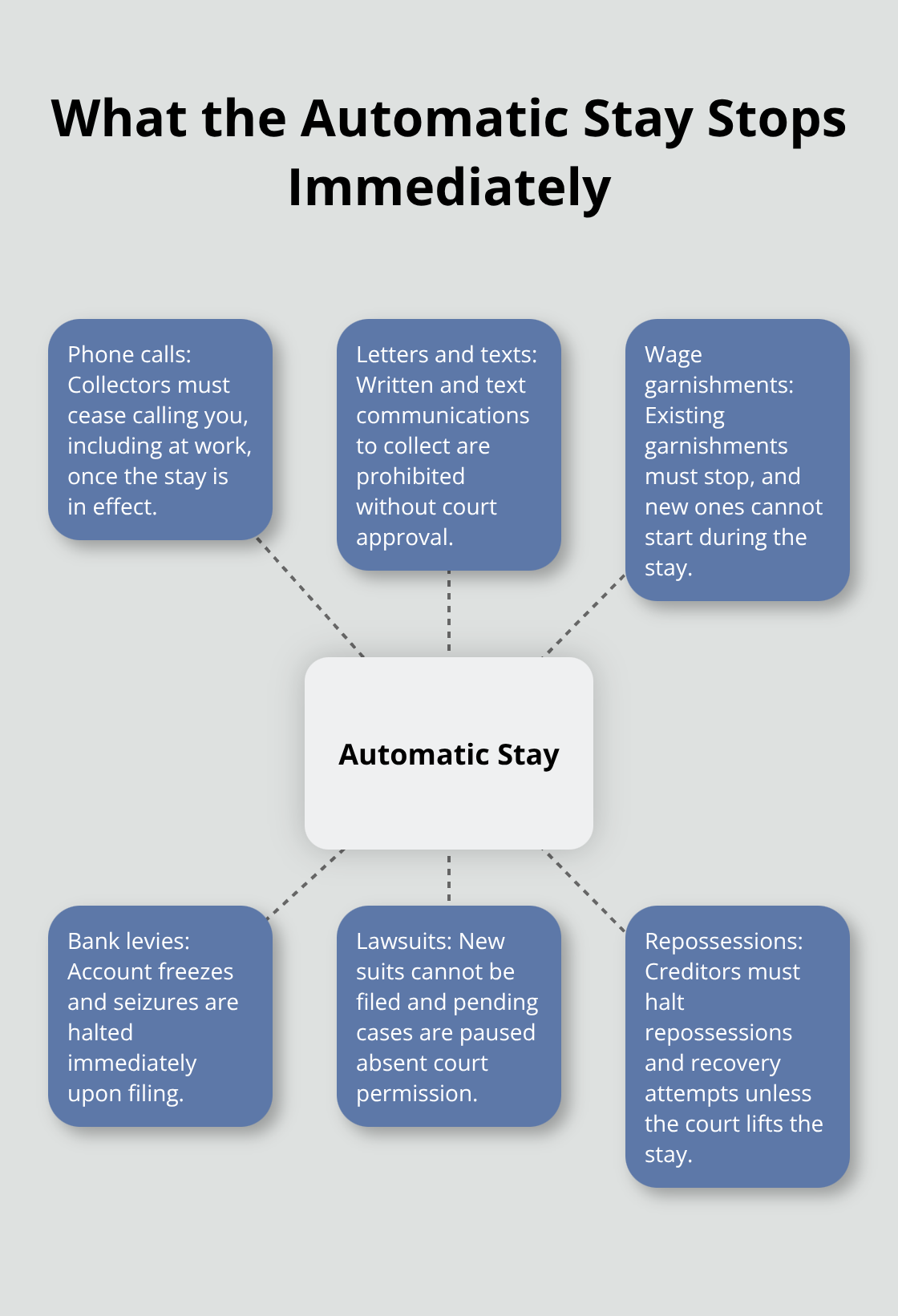
Filing Chapter 7 bankruptcy triggers an automatic stay under 11 U.S.C. § 362, which is a court order that halts virtually all creditor collection activity the moment your petition is filed. This is not a request or a negotiation-it is a legal injunction that creditors must obey. The automatic stay stops phone calls, letters, wage garnishments, bank levies, lawsuits, and repossessions instantly. Collectors cannot contact you directly, cannot pursue judgments, and cannot attempt to seize your assets.
Penalties for Violating the Stay
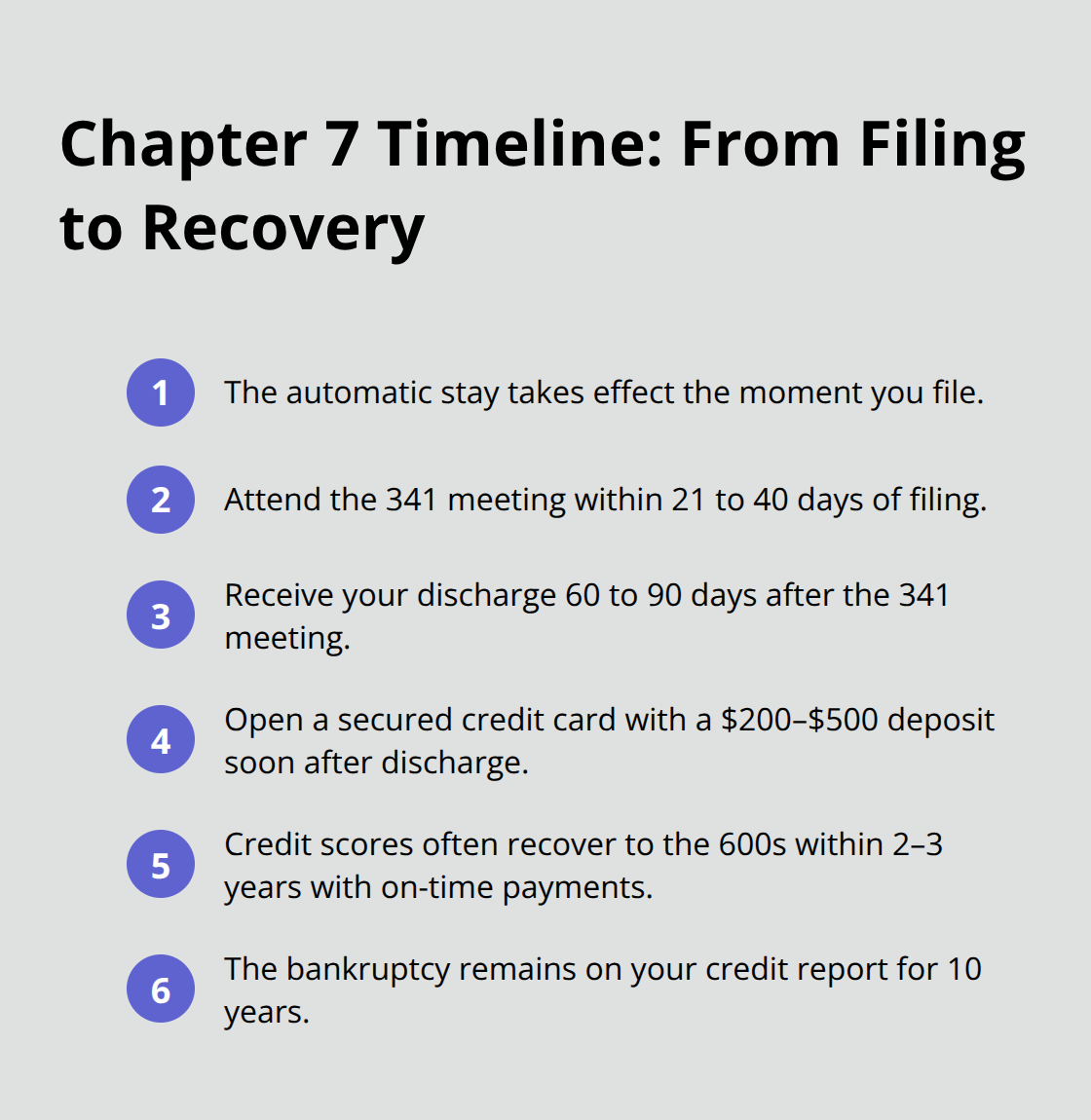
If a creditor violates the automatic stay after your Chapter 7 case is filed, they face serious consequences including contempt of court charges, damages under 11 U.S.C. § 362(k) for willful violations, and liability for your attorney’s fees. This is the most powerful tool available to stop harassment in Florida because it operates by court order, not by negotiation or complaint. Within 21 to 40 days after filing, you attend the 341 meeting of creditors, where the trustee administers your estate and creditors have limited ability to challenge the stay. Most creditors will not attempt contact after receiving notice of your Chapter 7 filing because the legal penalties are substantial and the automatic stay is nearly impossible to challenge without court approval.
Why the Automatic Stay Works Faster Than Other Remedies
What makes the automatic stay particularly valuable in Florida is that it stops both original creditors and third-party collectors simultaneously, eliminating the confusion about which laws apply to which company. Unlike sending a cease-and-desist letter or filing complaints with the Florida Attorney General’s Consumer Protection Division (which can take weeks or months to show results), the automatic stay works on day one. Creditors who continue calling, sending letters, or pursuing garnishments after your case is filed knowingly violate a federal court order. Courts take these violations seriously and award damages to debtors whose rights are violated.
Documenting Violations and Protecting Your Rights
If you receive a call or letter after filing Chapter 7, document it immediately with the date, time, caller ID, and content, then report the violation to your bankruptcy attorney. The violation itself becomes evidence of contempt and strengthens your position if you need to pursue damages. This immediate protection gives you breathing room to reorganize your finances, stop the constant stress of harassment, and work with the bankruptcy trustee to discharge your debts. Most Chapter 7 cases result in a discharge of unsecured debts within 60 to 90 days after the 341 meeting, which means the harassment stops both by operation of the automatic stay and because the debts themselves are eliminated. For Florida residents facing aggressive collection tactics, Chapter 7 provides faster relief than any other legal remedy available. Once your debts are discharged, creditors lose all legal basis to contact you-a permanent solution that goes far beyond temporary collection pauses.
Discharging Debts to End Harassment Permanently in Florida
Types of Debts Eliminated in Chapter 7
Chapter 7 eliminates most unsecured debts, which means credit card balances, personal loans, medical bills, and deficiency judgments from repossessed vehicles vanish permanently. These are the debts that create the constant harassment you’ve been experiencing. Secured debts like mortgages and car loans operate differently because the creditor holds collateral, but Chapter 7 still stops the harassment while you decide whether to keep the property or surrender it. Certain debts cannot be discharged under 11 U.S.C. § 523(a), including child support, alimony, recent income taxes, student loans (with limited exceptions), and criminal restitution. However, some debts you believe are nondischargeable can actually be eliminated in Chapter 7 if the bankruptcy trustee pursues enforcement against violators or if the court determines otherwise, so assumptions about which debts stick around are often wrong.
How Discharge Eliminates Harassment Entirely
The moment your discharge arrives, creditors cannot legally contact you about discharged debts, call your workplace, send threatening letters, or pursue any collection activity. This differs fundamentally from temporary solutions like cease-and-desist letters, which collectors often ignore. A discharge is a permanent federal court order that extinguishes the debt itself, not just temporarily pausing collection efforts. If a creditor attempts contact after discharge, they violate federal law and face damages under FDCPA and FCCPA. You can pursue claims against them for actual damages plus statutory damages up to $1,000 per violation, plus attorney’s fees. The harassment stops not because collectors choose to be nice, but because the legal foundation for their collection efforts no longer exists. This protection applies to both original creditors and third-party collectors simultaneously, eliminating the complexity of dealing with multiple entities.
Rebuilding Credit After Discharge
Your credit score will take a hit from the bankruptcy filing and will remain on your credit report for ten years, but this is far less damaging than the ongoing damage from missed payments, judgments, and wage garnishments that would continue without Chapter 7. Creditors cannot report discharged debts as ongoing obligations, which actually improves your credit profile over time as negative accounts age. Secured credit cards with deposits between $200 and $500 become available immediately after discharge, allowing you to rebuild credit within months. Within two to three years of consistent on-time payments on a secured card, many Florida residents qualify for unsecured credit at reasonable rates. The Federal Trade Commission notes that credit scores often recover to the 600 range within two to three years post-discharge if you manage new credit responsibly. Utility companies, landlords, and employers in Florida may still conduct background checks after bankruptcy, but they cannot legally discriminate solely based on the bankruptcy filing itself. The real advantage of Chapter 7 discharge is that it stops the financial bleeding immediately while providing a concrete timeline for credit recovery, rather than years of ongoing collection warfare that prevents any financial progress.
Final Thoughts
Chapter 7 bankruptcy stops creditor harassment in Florida through two mechanisms that work simultaneously. The automatic stay halts all collection activity the moment you file, while debt discharge eliminates the legal foundation for contact entirely. Together, these tools accomplish what cease creditor harassment efforts alone cannot: they stop the harassment immediately and permanently while providing a fresh financial start.
Document every call, letter, and contact from collectors with dates and times, then contact a bankruptcy attorney to evaluate whether Chapter 7 fits your situation. The filing process is straightforward when you work with someone who understands Florida bankruptcy law and the protections available to you. We at Harnage Law, PLLC help Florida residents stop creditor harassment and discharge qualifying debts through Chapter 7 bankruptcy, guiding you through every step from initial consultation through discharge.
The financial freedom you deserve is within reach-Chapter 7 bankruptcy is a legal tool designed to help people in your situation regain control. Contact us for a consultation to discuss your options and take the first step toward relief.