The means test for chapter 7 bankruptcy determines whether you qualify to discharge your debts in Florida. This calculation examines your income, expenses, and ability to repay creditors.
At Harnage Law, PLLC, we help Floridians understand this critical threshold and navigate the filing process. This guide breaks down the numbers and requirements you need to know.
Understanding the Means Test Framework in Florida
What the Means Test Actually Does
The means test is a federal calculation mandated by the Bankruptcy Abuse Prevention and Consumer Protection Act of 2005 that determines whether your income qualifies you for Chapter 7 discharge. The U.S. Courts system administers this test through Official Bankruptcy Form B 122A-2, which became effective April 1, 2022, and was most recently updated April 1, 2025. The core purpose is straightforward: if you earn below Florida’s median income for your household size, you pass automatically and can file Chapter 7. If you earn above the median, the test measures your disposable income after essential living expenses to see whether you can repay a portion of your debts.
How the 60-Month Horizon Changes Everything
The test operates on a 60-month horizon, not a lifetime view, which matters significantly if your recent income spiked temporarily due to bonuses or short-term work. This timing element can work in your favor. If you received a one-time bonus or took a temporary job that inflated your income, waiting a few months allows that spike to fall outside your six-month averaging window. As of the current period, Florida’s median household income thresholds according to the U.S. Census Bureau are approximately $66,284 for a single earner, $82,708 for two people, $94,150 for three people, and $108,351 for four people, with each additional household member adding roughly $11,100 to the threshold. This is where Florida’s cost of living matters: your state’s thresholds sit in the mid-range compared to high-cost states like California, which runs $77,221 for a single earner, and Hawaii at $83,068, but substantially higher than Mississippi at $52,594.
Chapter 7 Versus Chapter 13: The Means Test Decides
Chapter 7 and Chapter 13 are fundamentally different paths forward, and the means test is the gatekeeper between them. Chapter 7 offers complete discharge of unsecured debts like credit cards and medical bills within four to six months if you qualify, meaning you walk away free of those obligations. Chapter 13 restructures your debts into a three-to-five-year repayment plan based on what you can actually afford monthly, then discharges remaining eligible balances at completion. If you fail the means test because your disposable income exceeds the threshold, Chapter 13 becomes your primary option unless you qualify for an exemption such as having primarily non-consumer debts or being a disabled veteran.
Income Calculation and Expense Documentation
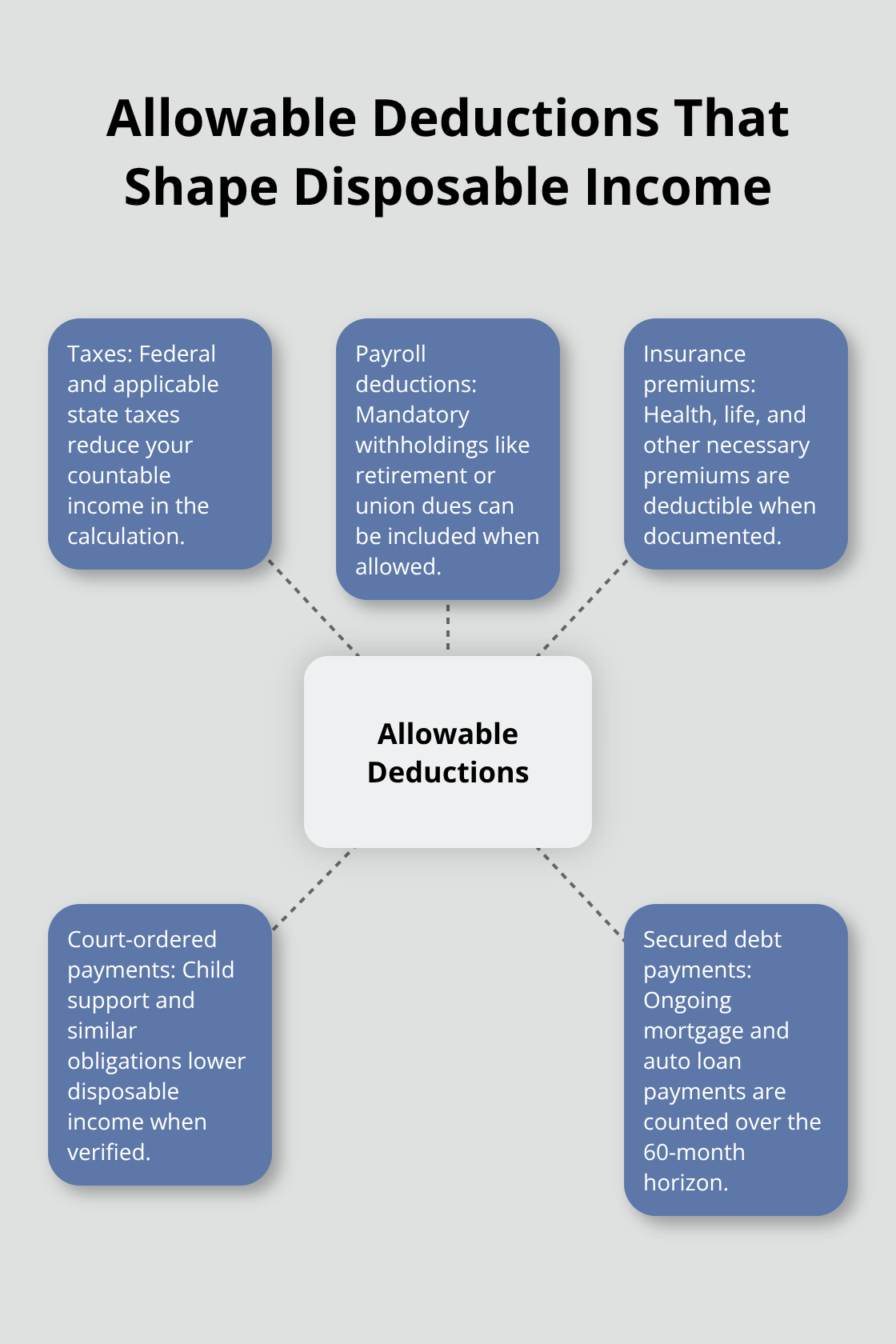
The calculation itself requires you to annualize your Current Monthly Income using the prior six calendar months of income from all sources-wages, business earnings, rental income, pensions, unemployment-then subtract allowable expenses derived from IRS standards and Census Bureau data. Florida’s housing costs vary dramatically between Miami and rural counties, so the IRS local standards adjust accordingly to reflect actual regional differences. The key actionable here is accuracy: if your income has declined recently or if you have substantial necessary expenses not initially captured, timing your filing or documenting those expenses can shift the outcome. Proper documentation of actual expenses (taxes, mandatory payroll deductions, insurance, court-ordered payments) strengthens your position when the numbers are close.
Understanding these mechanics positions you to move forward with confidence into the specific income thresholds and calculations that apply directly to your household size.
What Numbers Determine Your Florida Chapter 7 Eligibility
Florida’s Income Thresholds by Household Size
Your household’s income threshold is the first gate you face in Chapter 7 bankruptcy. According to the U.S. Census Bureau data currently in effect through March 31, 2026, Florida’s median income levels are $68,085 for a single earner, $84,305 for two people, $95,039 for three people, and $111,819 for four people. For households larger than four, add $11,100 per additional person-so a five-person household threshold reaches $122,919 and a six-person household reaches $134,019.
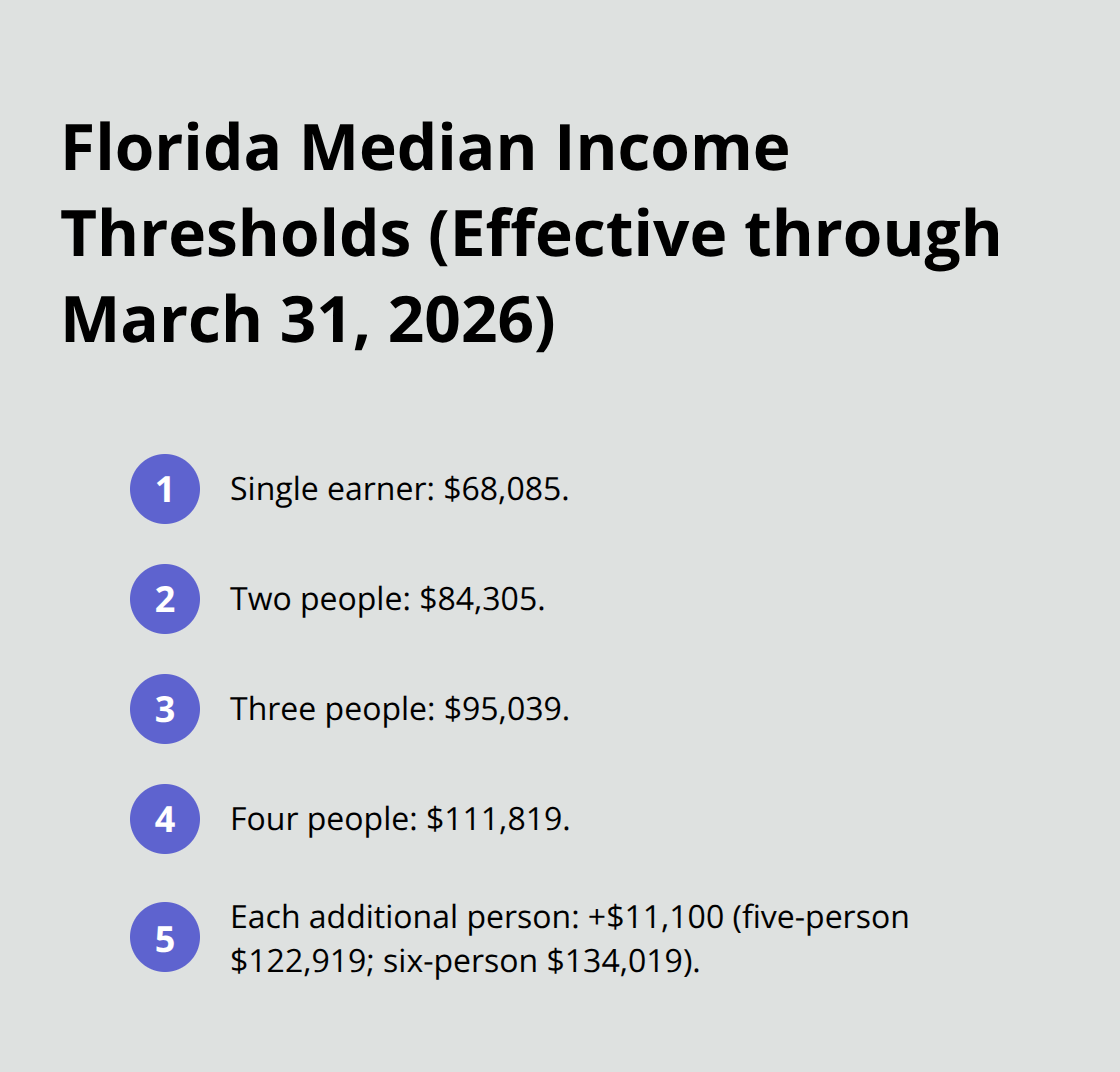
If your annualized income falls below these figures, you pass the means test automatically and move forward with Chapter 7 discharge.
How to Calculate Your Annualized Income
The calculation itself is straightforward: take your gross income from the past six calendar months across all sources including wages, self-employment earnings, rental income, pensions, and unemployment benefits, then divide by six to get your monthly average and multiply by twelve to annualize. Florida’s thresholds sit in the mid-range nationally-California runs higher at $77,221 for a single earner and Hawaii even higher at $83,068-but substantially above Mississippi’s $52,594, reflecting real regional cost-of-living differences that matter for your filing timeline.
Disposable Income: The Second Phase of the Test
If your annualized income exceeds Florida’s threshold for your household size, the means test moves to the second phase: calculating disposable income after allowable expenses. The IRS provides national standards for housing, utilities, and transportation, but Florida’s housing standards adjust locally because Miami’s costs differ dramatically from rural counties-this is where documentation becomes your weapon. Actual expenses you can deduct include federal and state taxes, mandatory payroll deductions, insurance premiums, court-ordered payments like child support, and secured debt payments on mortgages and car loans, all measured over a 60-month repayment period.
When Documentation Determines Your Outcome
If your remaining disposable income after subtracting these allowable expenses falls below the threshold of roughly $166.67 monthly, you pass the means test and qualify for Chapter 7 despite exceeding the initial income median. The practical reality is that Floridians with substantial necessary expenses-high property taxes, significant insurance costs, or legitimate medical expenses-often pass the means test even when their gross income looks too high on paper. Accuracy in documenting these expenses is not optional; it directly determines whether you access Chapter 7 discharge or face Chapter 13 repayment instead. The specific allowable deductions and how they interact with your household’s actual situation require careful attention to detail and proper presentation of your financial reality.
Why Floridians Fail the Means Test
Income Exceeds the State Median
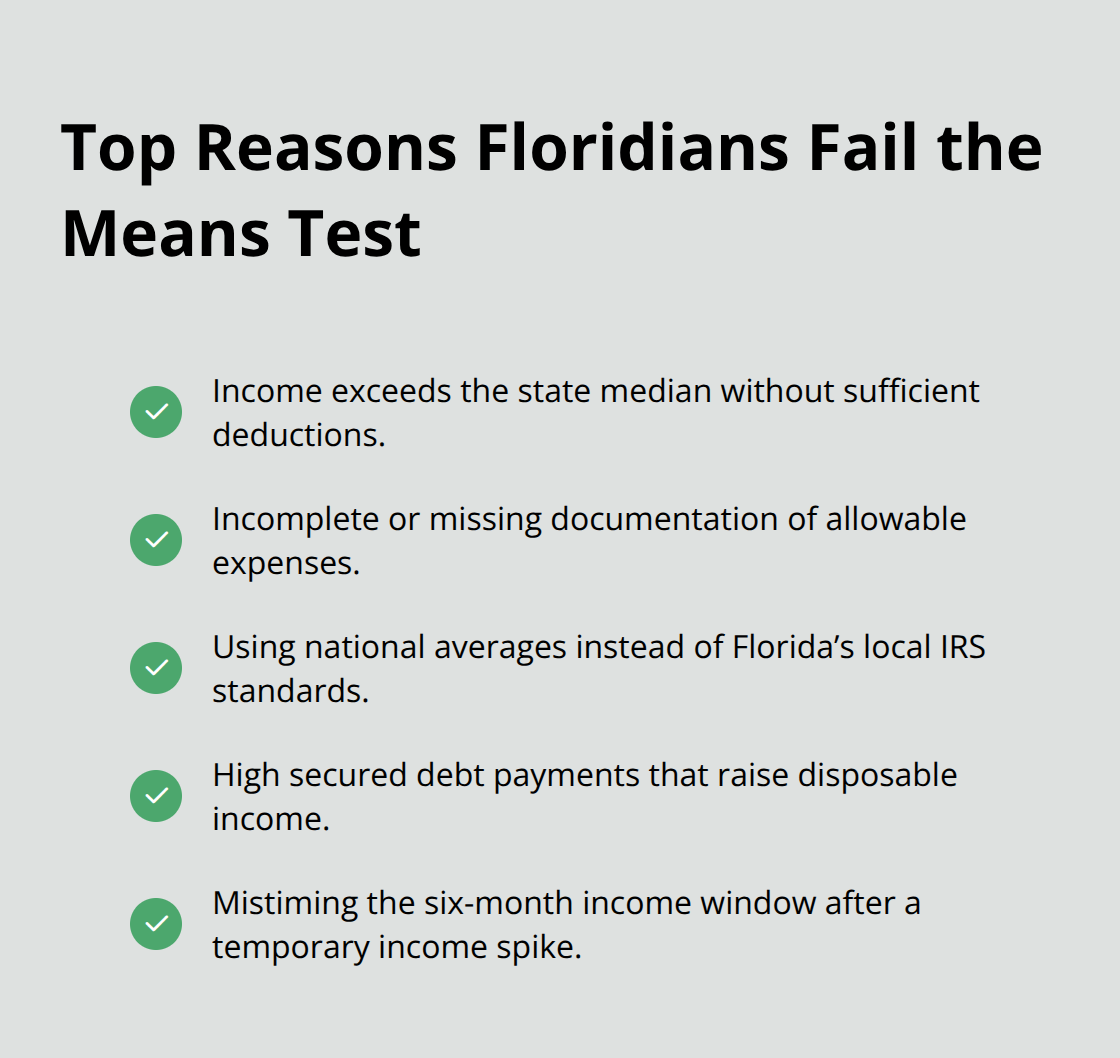
Most Floridians who fail the means test do so because their annualized Current Monthly Income simply exceeds the state median for their household size, and they lack sufficient documented expenses to bring their disposable income below the threshold. A single earner making $70,000 annually in Florida faces the median threshold of $68,085, putting them just $1,915 over the line. Without detailed documentation of allowable expenses-property taxes, homeowners insurance, actual utilities, and mandatory payroll deductions-that person fails immediately. This income-based failure happens across all income brackets and represents the most straightforward reason filers cannot access Chapter 7 discharge.
Incomplete Expense Documentation Costs You the Test
The second major failure occurs when Floridians underestimate their allowable deductions. The IRS national standards for housing, utilities, and transportation provide baseline allowances, but Florida’s local standards adjust these figures by county because Miami housing costs nothing like rural counties. A filer in Miami-Dade County can claim substantially higher housing expenses than someone in Okeechobee County, yet many people use national averages instead of Florida-specific local standards when calculating disposable income. This mistake costs them the means test. Proper documentation of actual expenses strengthens your position when the numbers sit close to the threshold.
Secured Debt Obligations Consume Your Disposable Income
The third failure pathway involves debt-to-income miscalculation. Your secured debt payments-mortgages and car loans-are included in the disposable income calculation over a 60-month period, not just the current monthly payment. A homeowner with a $1,800 mortgage payment and a $400 car payment carries $2,200 in monthly secured debt commitments that directly reduce their ability to show disposable income available for unsecured creditors. These obligations can push your disposable income above the threshold and disqualify you from Chapter 7, even when your gross income appears manageable.
What Happens When You Fail
Failing the means test does not lock you into Chapter 13; it simply means Chapter 7 discharge is not available unless you qualify for an exemption like primarily non-consumer debts or disabled veteran status. Understanding exactly where your calculation fails-whether income itself is the problem, whether your expense documentation is incomplete, or whether your debt obligations consume your available monthly income-determines your next move forward.
Final Thoughts
The Means Test Chapter Seven calculation in Florida operates on straightforward mechanics: you compare your annualized income to the state median for your household size, then measure your disposable income after allowable expenses. If you fall below the median or your remaining disposable income sits below the threshold, you qualify for Chapter 7 discharge. If you exceed both figures, Chapter 13 repayment becomes your path forward unless you qualify for an exemption based on non-consumer debt or disabled veteran status.
Passing the means test hinges on three factors working in your favor: accurate income calculation using your actual six-month average, complete documentation of allowable expenses using Florida’s local standards rather than national averages, and proper accounting of secured debt obligations over the 60-month horizon. Many Floridians fail unnecessarily because they underestimate their deductible expenses or fail to document them properly. If your numbers sit close to the threshold, timing your filing strategically or gathering additional expense documentation can shift the outcome.
The complexity of calculating your Chapter 7 eligibility accurately makes professional guidance invaluable. We at Harnage Law, PLLC help Floridians navigate this calculation, stop creditor harassment, prevent wage garnishments, and halt lawsuits while protecting your assets. Contact Harnage Law, PLLC to discuss your circumstances and determine which bankruptcy path offers you the fresh start you need.