
Medical bills are the leading cause of personal bankruptcy in Florida, with healthcare debt accounting for a significant portion of Chapter 7 filings each year. If medical expenses have overwhelmed your finances, you’re not alone-thousands of Floridians turn to bankruptcy relief annually.
Chapter 7 bankruptcy offers a legitimate path to medical debt discharge in Florida, allowing you to eliminate qualifying medical bills and start fresh. We at Harnage Law, PLLC help residents understand how this process works and what protections are available to you.
Why Medical Debt Overwhelms Florida Residents
The True Cost of Medical Emergencies
Medical debt represents a genuine financial crisis for Floridians, not merely a budget inconvenience. Emergency room visits, cancer treatment, and surgical procedures generate bills that spiral beyond what most households can absorb. An uninsured ER visit alone costs $1,000 to $3,000, while cancer treatment with high out-of-pocket costs routinely reaches tens of thousands of dollars. Retirees on fixed incomes face particular vulnerability when unexpected medical expenses arrive.
How Creditors Pursue Medical Debt Before Bankruptcy
Before you file for bankruptcy, medical creditors pursue aggressive collection tactics. They can sue you, obtain judgments against your wages, and garnish your paychecks without requiring a waiting period. The FDCPA restricts some collection methods but does not automatically stop lawsuits or wage garnishments. Once a judgment is entered, creditors attach liens to your property, creating additional financial pressure that compounds the original medical debt.
The Damage Medical Debt Inflicts on Your Credit
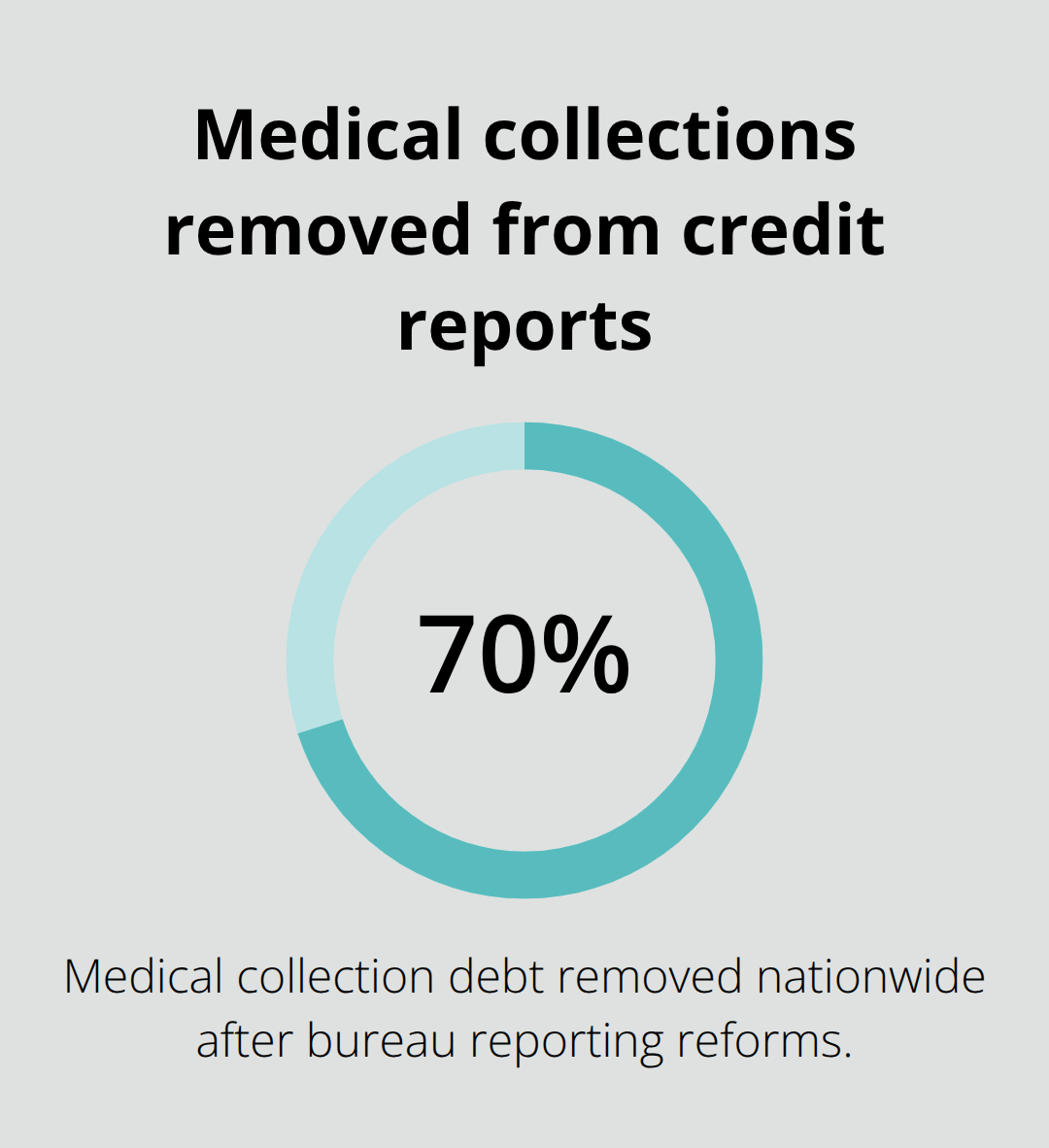
Medical bills trigger a cascade of financial damage that extends far beyond the initial bill. Credit reporting reforms have improved slightly-Equifax, Experian, and TransUnion voluntarily stopped reporting medical debt collections under $500 and removed all paid medical collections, eliminating roughly 70% of medical collection debt from reports nationwide. However, large unpaid medical bills in collections still appear on your credit report and destroy your debt-to-income ratio, making it nearly impossible to qualify for mortgages, car loans, or other credit products you need to rebuild.
Why Chapter 7 Eliminates Medical Debt Completely
Medical debt is fully dischargeable in Chapter 7 bankruptcy as general unsecured debt because it falls outside the non-dischargeable categories listed in federal bankruptcy law. This means that unlike student loans or child support, medical bills can be completely eliminated through bankruptcy. The automatic stay takes effect immediately when you file, stopping collection calls, lawsuits, and wage garnishments from day one. For Florida residents buried under medical debt, Chapter 7 offers a direct mechanism to clear these bills and regain control of your finances without years of repayment plans or continued creditor harassment.
Understanding how Chapter 7 treats medical debt is only half the battle-knowing whether you qualify and what steps you must take determines whether this relief actually reaches you.
How Chapter 7 Qualifies You for Medical Debt Discharge in Florida
Income Thresholds and the Means Test
Qualifying for Chapter 7 in Florida hinges on two practical tests: your income and your ability to pass the means test. If your household income falls below Florida’s median income of $70,056 for a single person or $135,493 for a family of four, you automatically qualify without further scrutiny. Above those thresholds, the means test compares your income against allowed expenses over a six-month average period. Medical expenses work heavily in your favor here-your ongoing health insurance premiums, out-of-pocket medical costs, and prescription drug expenses reduce your disposable income, which can push you below the threshold needed to file Chapter 7.
Preparing Your Financial Documents
Actual medical expenses on your household budget directly determine eligibility. Gather your last six months of pay stubs, tax returns, and a complete list of monthly medical costs before filing. These documents form the foundation of your means test calculation and establish whether you qualify for Chapter 7 relief.
The 341 Meeting and Filing Costs
Florida courts in the Middle District process the majority of Chapter 7 filings, and the 341 meeting (creditors’ meeting) typically occurs via Zoom within 21 to 40 days after filing. At this meeting, the trustee and any creditors can question you about your finances, though medical creditors rarely appear. The filing itself costs $245, plus $75 for administrative fees and $15 for the trustee surcharge.
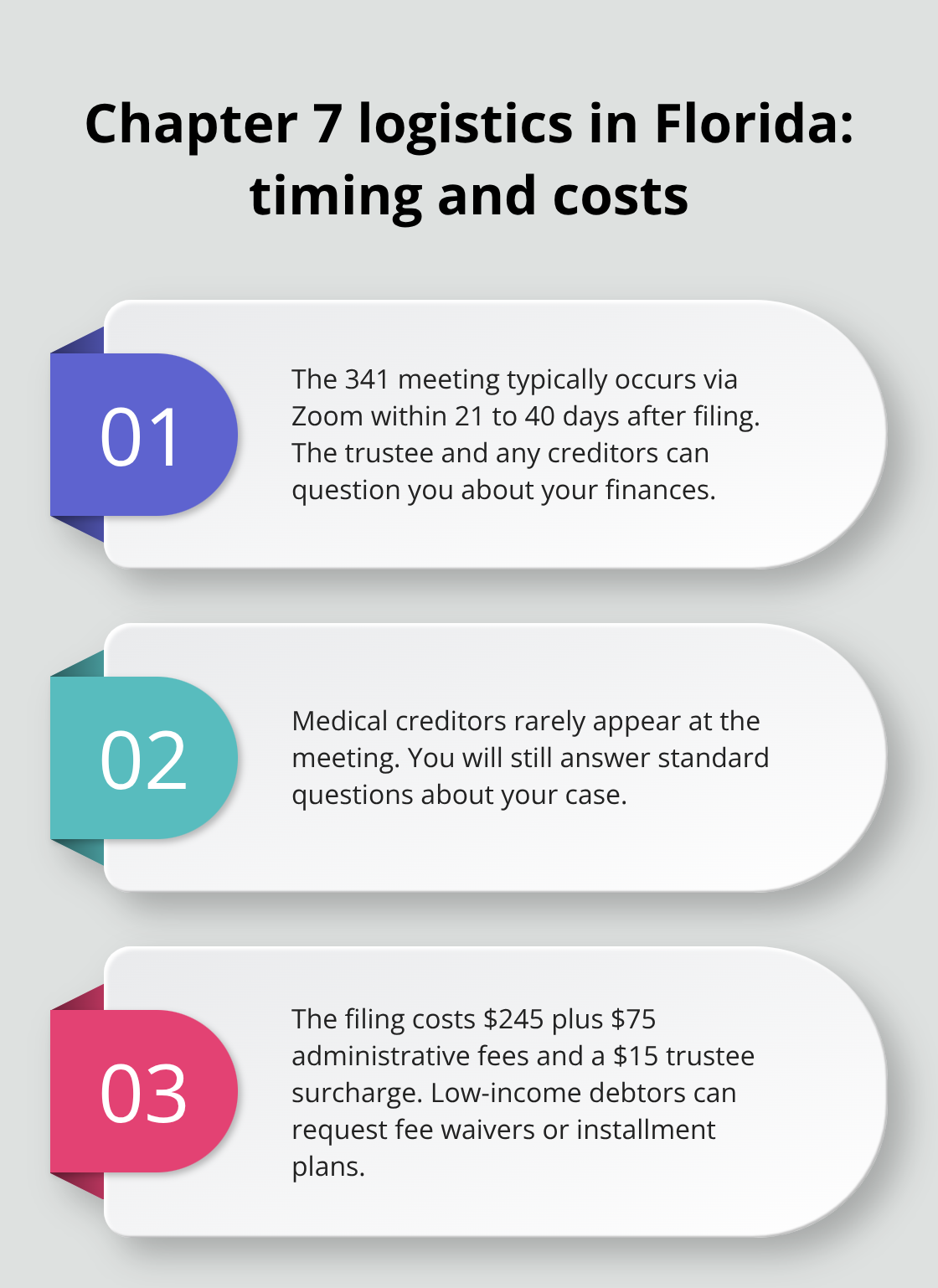
Low-income debtors can request fee waivers or installment plans to cover these costs.
How Chapter 7 Treats Medical Debts
Medical debts are treated as general unsecured debt in Chapter 7, meaning they rank equally with credit card debt and personal loans-they receive no priority and no special treatment, which actually benefits you. Debts that existed before you file are dischargeable, but critically, debts incurred after filing are not included in the discharge. If you have anticipated medical procedures, timing your filing strategically during a lull in treatment maximizes the discharge for future bills you know are coming. Medical bills not yet billed but existing before filing can still be discharged if you list them accurately on your petition.
Discharge Timeline and Permanent Relief
The discharge itself arrives approximately four months after filing, after the trustee determines whether any non-exempt assets exist to liquidate. More than 99% of individual Chapter 7 cases result in a discharge, and once granted, the discharge order permanently prevents hospitals, physicians, and collection agencies from pursuing you for those debts. Continuing collection efforts after discharge violate the discharge injunction and can be punishable as contempt of court. The automatic stay takes effect immediately upon filing, stopping wage garnishments, lawsuits, and collection calls before your first meeting with the trustee. This immediate relief alone provides breathing room to organize your finances and prepare for the discharge process ahead. With medical debts eliminated through Chapter 7, your attention shifts to the assets you can protect during bankruptcy and the credit rebuilding strategies that follow discharge.
Protecting Your Property and Rebuilding After Discharge
Florida Exemptions Shield Your Essential Assets
Florida law protects far more of your property in Chapter 7 than most debtors realize, which means you retain substantially more than you lose when you file. Your primary residence receives protection as an exempt asset if you have lived in Florida for two or more years, though foreclosure by a mortgage lender or HOA for nonpayment can erode that protection, so you must stay current on mortgage payments throughout bankruptcy. Vehicle exemptions allow you to keep your car as long as you continue making loan payments and the vehicle’s equity does not exceed the exemption limit. If you owe money on your vehicle, you can almost always keep it because the equity you own matters in bankruptcy, not the total vehicle value. The trustee only liquidates nonexempt assets to pay creditors, and in most Chapter 7 cases, no assets exist for liquidation, meaning you walk away with your essential property intact while medical debt vanishes. Gather documentation of your home’s value, outstanding mortgage balance, and vehicle loans before filing so your attorney can map out exactly what you protect under Florida’s exemption rules.
Credit Rebuilding Accelerates After Discharge
Credit rebuilding after discharge happens faster than most people expect, and your improved debt-to-income ratio immediately strengthens your financial position. The discharge eliminates personal liability on medical debts permanently, and within 12 to 18 months, many debtors see measurable credit score improvements as the discharged accounts age and negative payment history loses impact. The Consumer Financial Protection Bureau’s rule, which took effect in June 2025, removed most medical debt from credit reports, meaning your discharged medical bills no longer drag down your score the way they did before filing.
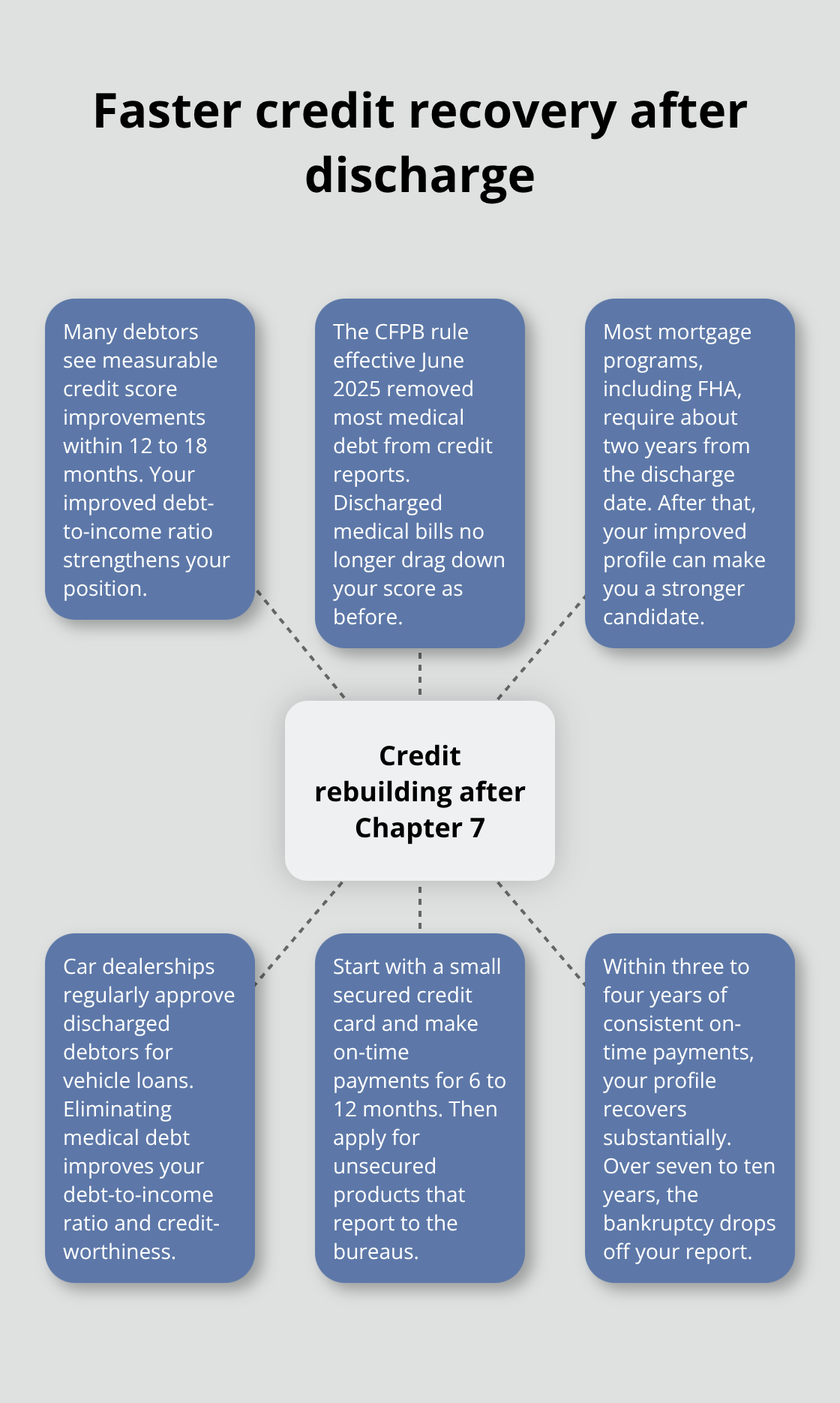
For securing a mortgage after bankruptcy, most loan programs including FHA require approximately two years of wait time from your discharge date, and after that period, your improved financial profile actually makes you a stronger candidate than before bankruptcy because creditors see you eliminated the debt rather than continuing to carry it. Car dealerships approve discharged debtors for vehicle loans regularly because your bankruptcy eliminates the medical debt that previously destroyed your debt-to-income ratio, making you suddenly creditworthy again.
Strategies for Rapid Credit Recovery
Secure a small secured credit card immediately after discharge and make on-time payments for six to twelve months, then apply for unsecured credit products that report to the bureaus. Within three to four years of consistent on-time payments post-discharge, your credit profile recovers substantially, and once the bankruptcy falls off your report after seven to ten years, you have established years of positive payment history that overshadows the bankruptcy event itself.
Final Thoughts
Medical debt discharge in Florida through Chapter 7 bankruptcy eliminates medical bills permanently and stops creditor harassment immediately. The automatic stay halts wage garnishments, lawsuits, and collection calls from day one, while the discharge order that arrives four months later prevents hospitals and collection agencies from pursuing you ever again. More than 99% of individual Chapter 7 cases result in discharge, meaning the relief you need is statistically within reach if you qualify.
Three practical steps move you toward financial recovery. First, gather your financial documents and determine whether your household income qualifies under Florida’s median income thresholds or the means test (medical expenses reduce your disposable income significantly, often pushing you below the threshold needed to file). Second, understand what you protect under Florida’s exemptions-your primary residence, your vehicle, and your essential property remain yours while medical debt vanishes. Third, recognize that credit rebuilding accelerates faster than you expect after discharge, with many debtors seeing improvements within 12 to 18 months and qualifying for mortgages within two years.
Contact us at Harnage Law, PLLC today to discuss whether medical debt discharge in Florida through Chapter 7 is right for your situation. A confidential consultation clarifies your eligibility, explains your options, and outlines the timeline from filing to discharge. Medical debt does not have to control your financial future-relief is available now.