
Filing for Chapter 7 bankruptcy in Florida involves real costs that catch many people off guard. Court fees, attorney rates, and administrative expenses add up quickly, and understanding what you’ll actually pay is the first step toward making an informed decision.
At Harnage Law, PLLC, we break down the Florida bankruptcy filing cost so you know exactly what to expect before you file. This guide covers court fees, typical attorney rates, and the factors that influence your total expenses.
What Does Chapter 7 Bankruptcy Actually Cost in Florida
The Federal Court Filing Fee
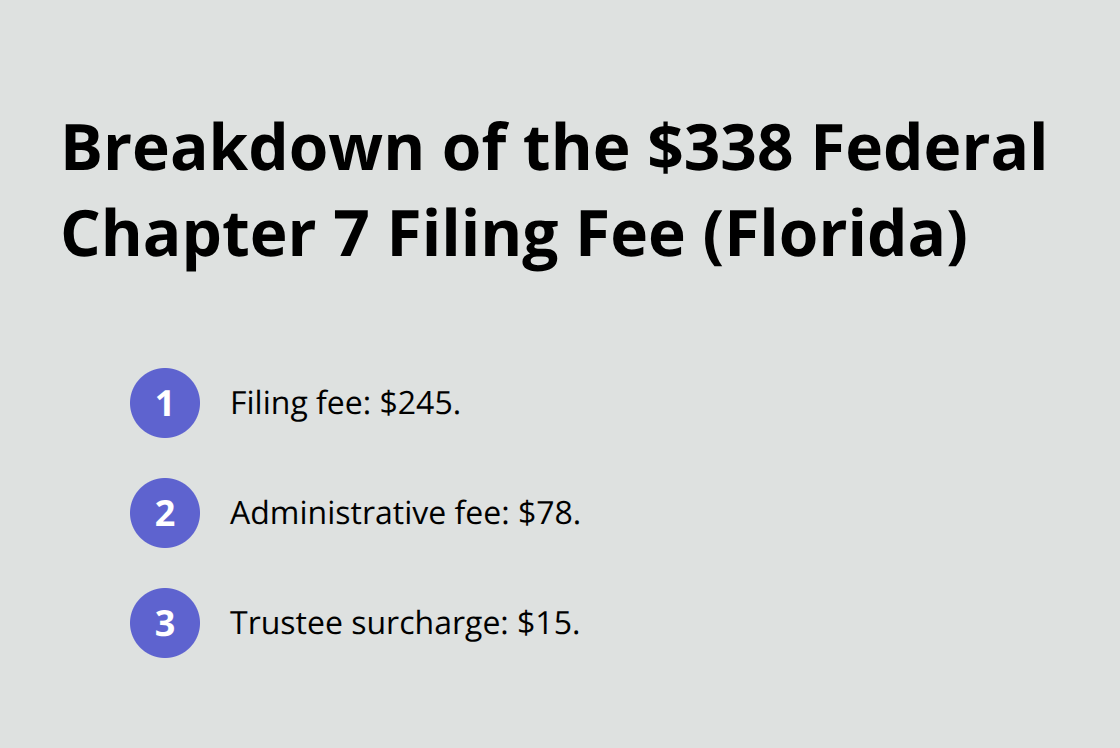
The federal court filing fee for Chapter 7 bankruptcy in Florida is $338, according to the U.S. Courts Bankruptcy Fee Schedule as of December 2023. This amount breaks down into a $245 filing fee, a $78 administrative fee, and a $15 trustee surcharge. While $338 might seem manageable, it represents only the beginning of what you’ll owe.
Many filers assume this is the total court cost and get blindsided when additional expenses surface. The federal fee covers only the court’s processing and the trustee’s involvement in your case-nothing more.
Costs Beyond the Court Filing Fee
You’ll face credit counseling requirements before filing and a debtor education course afterward, each typically costing between $10 and $50 depending on the provider you choose. If you have multiple vehicles, own property, or hold investments, you’ll pay for asset verification and credit reports that your attorney needs to properly represent you. Travel costs to the 341 Meeting of Creditors and potential certified document copies add another layer of expense that varies by your location within Florida.
Fee Waivers for Low-Income Filers
Fee waivers exist for filers whose monthly income falls at or below 150% of the federal poverty line. A single filer earning under $13,600 annually or a two-person household earning under $18,310 qualifies for consideration. You must request the waiver before filing, and the court reviews your income documentation carefully. If you don’t qualify for a waiver but can’t pay the full $338 upfront, installment payment plans allow you to split the cost over several months.
Payment Options and Consequences
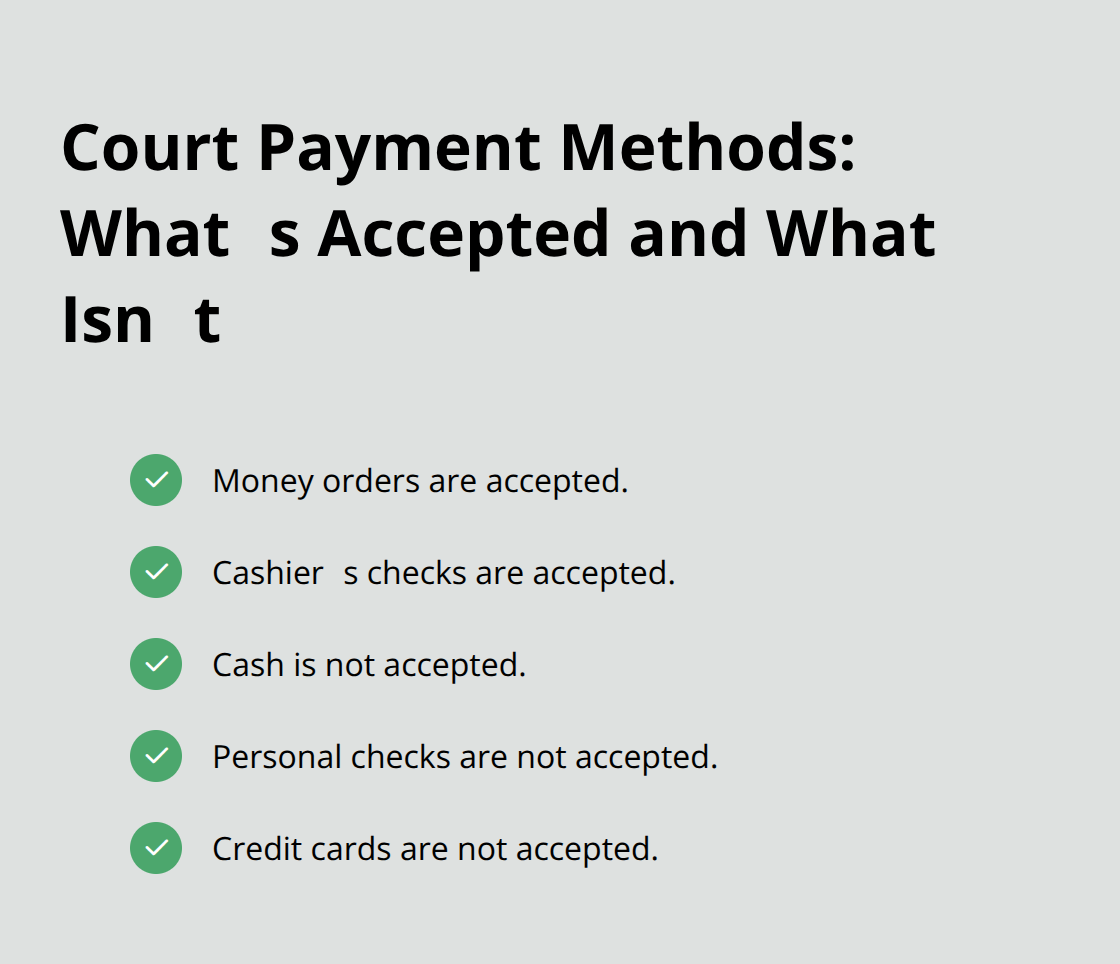
The court accepts money orders or cashier’s checks only, not cash, personal checks, or credit cards. Missing a payment on an installment plan carries real consequences-the court can dismiss your case or bar future installment payments.
This makes it critical to commit to the payment schedule before filing. Many Florida filers in the $1,200 to $2,000 attorney fee range also negotiate post-filing payment arrangements with their lawyers, spreading costs across four months or longer to match their cash flow. Understanding these payment options helps you plan your finances before you file, and knowing the consequences of missed payments prevents costly delays in your case.
What You’ll Actually Pay a Florida Bankruptcy Attorney
Attorney Fee Ranges Across Florida
Chapter 7 bankruptcy attorney fees in Florida range from $1,000 to $3,000 for straightforward cases, though larger cities like Jacksonville, Miami, and Orlando typically run $1,800 to $2,500. Chapter 7 cases cost less than Chapter 13 because they involve less negotiation and fewer court appearances after filing. The variation depends on case complexity, the number of assets you own, and whether creditors challenge your filing.
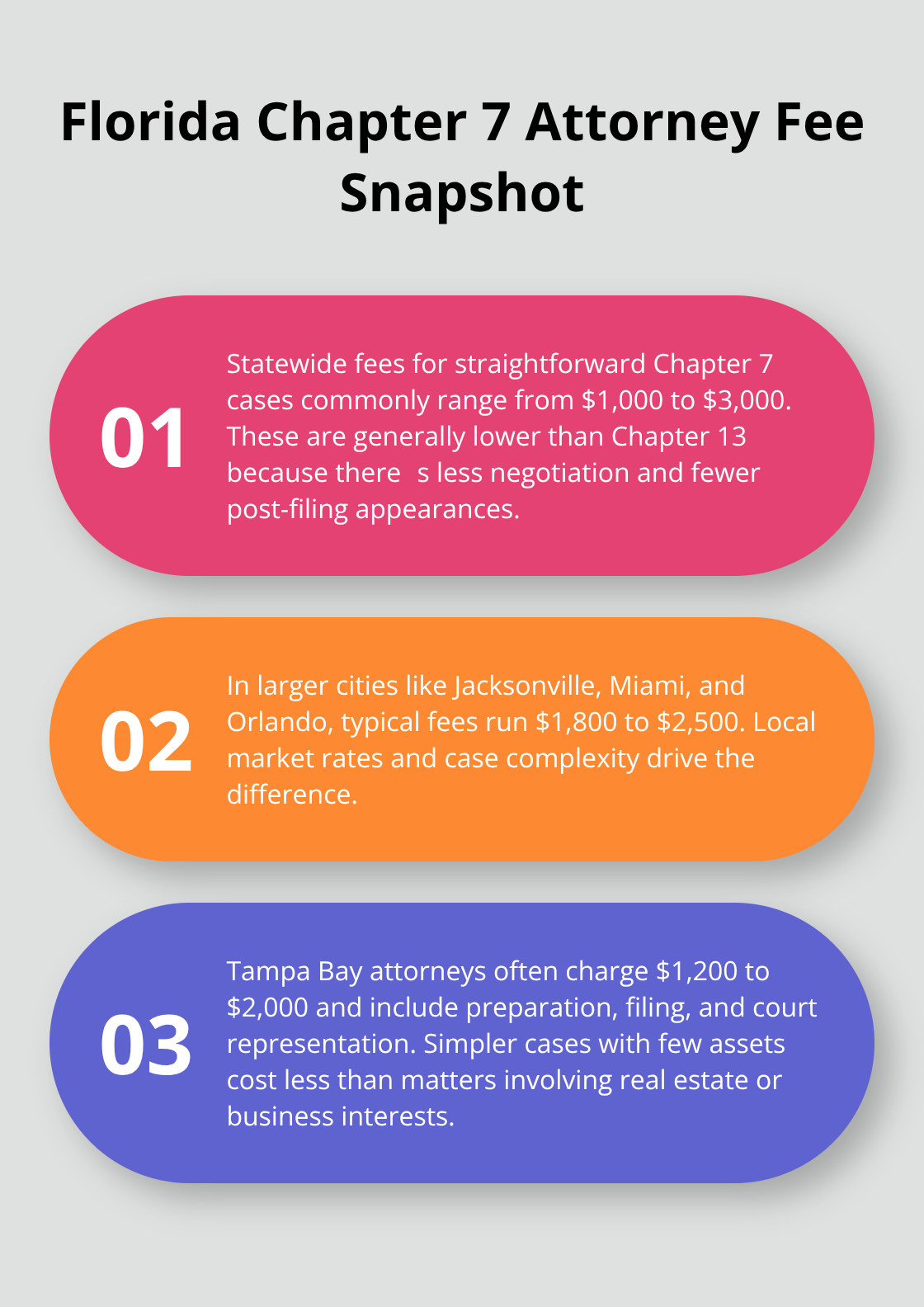
A simple case with no property and minimal creditor opposition costs far less than a case involving multiple vehicles, real estate, or business interests. Tampa Bay area attorneys commonly charge $1,200 to $2,000 and typically include full preparation, filing, and court representation in that fee.
What Services Your Attorney Includes in Their Fee
Most Florida bankruptcy attorneys include document preparation, the 341 Meeting of Creditors representation, and post-filing support in their quoted fees. They gather your financial information, prepare the petition and schedules required by federal bankruptcy code, file everything with the court, and represent you at the creditors meeting where the trustee questions your finances. Some firms charge extra for credit reports, asset verification, or amended filings if your circumstances change after submission. Before committing to any attorney, ask specifically what’s included in their fee and what costs extra.
Payment Plans and Fee Structures
Many firms offer payment plans that let you pay after filing rather than upfront, spreading costs across four months or longer to match your income. Comparing attorneys means requesting detailed fee breakdowns in writing, not just asking for a price quote over the phone. The cheapest attorney isn’t always the best choice if they rush cases or miss deadlines, and the most expensive firm isn’t necessarily better either.
How to Evaluate Attorney Quality
Check PACER records to verify how many Chapter 7 cases an attorney has actually filed in Florida federal court, which reveals real experience rather than marketing claims. You want an attorney who files cases efficiently, responds to your questions promptly, and knows the specific bankruptcy judge assigned to your case. What matters most is understanding what services your attorney actually provides for the quoted price, not just comparing raw dollar amounts across firms.
Your total cost combines court fees, attorney charges, and required courses-but understanding these individual components helps you plan your finances and identify where you can reduce expenses. The next section examines the specific factors that push costs higher or lower depending on your unique financial situation.
Factors That Affect Your Total Florida Chapter 7 Bankruptcy Costs
How Your Assets Impact Your Expenses
Your total bankruptcy expense depends far more on your specific financial situation than on flat-rate pricing. A filer with one vehicle and minimal assets pays significantly less than someone with rental property, multiple creditors suing simultaneously, or recent business ownership. Cases involving asset protection require deeper investigation, which means your attorney spends more time reviewing property values, liens, and exemptions under Florida law. If creditors file objections to your discharge or challenge the exemptions you claim, your attorney must prepare additional motions and appear in court more often, driving costs up by hundreds of dollars.
The complexity multiplies when you own real estate because your attorney must research title issues, calculate equity, and determine whether the property falls within Florida’s homestead exemption, which protects up to $215,000 in home equity as of 2024. Cases involving recent tax debt, student loans with potential hardship discharge arguments, or business assets demand more thorough analysis than straightforward wage-earner bankruptcies.
Income Level and Fee Waivers
Income level determines not just whether you qualify for Chapter 7 but also what you’ll pay overall. Filers earning under 150 percent of Florida’s poverty line qualify for court fee waivers, potentially saving $338 in filing costs. The U.S. Courts Bankruptcy Fee Schedule sets these thresholds at under $13,600 annually for single filers and under $18,310 for two-person households, with increments per additional dependent. If you barely exceed these limits, you’re not eligible for waivers but still struggle to pay attorney fees upfront, making post-filing payment plans essential.
Many Florida attorneys structure fees based on household income, charging less for lower-income cases because they understand cash flow constraints. Conversely, filers with higher incomes who own multiple properties or businesses pay premium fees because the work required expands dramatically.
Document Organization and Timeline
Your ability to assemble documents quickly affects costs indirectly. Disorganized filers who delay providing tax returns, bank statements, and asset information force their attorney to chase records repeatedly, which some firms charge as additional work. Planning ahead and assembling financial documents before your first consultation accelerates the process and often reduces overall expense because your attorney spends less time collecting information (and more time on substantive legal work that protects your interests).
Final Thoughts
Your total Florida bankruptcy filing cost falls between $1,500 and $2,500 when you combine the $338 federal court fee, attorney services ranging from $1,000 to $3,000, and credit counseling courses costing $20 to $100. The actual amount you pay depends on your specific financial situation-filers with straightforward cases involving minimal assets pay significantly less than those with multiple properties or ongoing creditor disputes. Post-filing payment plans allow you to spread attorney fees across four months or longer, making Chapter 7 accessible even without upfront cash.
Low-income filers whose monthly income falls at or below 150 percent of the federal poverty line may qualify for a court fee waiver that eliminates the $338 filing cost entirely. Request detailed fee breakdowns from multiple Florida bankruptcy attorneys and check PACER records to verify their actual case experience before committing to representation. Ask specifically what services their quoted price includes and what costs extra, since transparent fee structures help you plan your finances accurately.
Contact Harnage Law, PLLC to discuss your financial situation and receive a realistic estimate of your Florida bankruptcy filing cost. We help individuals and families overcome financial challenges through Chapter 7 bankruptcy by discharging qualifying debts, stopping creditor harassment, preventing wage garnishments, and halting lawsuits. Take the first step toward a fresh financial start with a consultation about your specific circumstances.