Chapter 7 bankruptcy offers a fresh financial start for many Florida residents drowning in debt. The process wipes out qualifying unsecured debts while protecting certain assets from creditors.
We at Harnage Law, PLLC break down the Chapter 7 Florida basics you need to understand before filing. This guide walks you through what happens, who qualifies, and how to rebuild after discharge.
How Chapter 7 Actually Changes Your Financial Situation
The Automatic Stay Stops Collection Pressure Immediately
The moment you file Chapter 7, the automatic stay takes effect and creditors must halt collection calls, lawsuits, wage garnishments, and repossession attempts. This legal protection applies to nearly all debts and creditors, giving you breathing room to move forward. The only exceptions are certain family law obligations and some tax matters, but for most people facing medical bills, credit card debt, or personal loans, the stay provides real relief within hours of filing.
How Asset Liquidation Works in Florida
The core function of Chapter 7 is straightforward: a court-appointed trustee liquidates your non-exempt assets and uses the proceeds to pay creditors according to a strict priority system. Most Chapter 7 cases in Florida are no-asset cases, meaning you have little or no non-exempt property to sell because your assets are either protected by exemptions or already encumbered by liens. Florida’s homestead exemption is generous-it allows unlimited equity in your primary residence up to half an acre in a municipality or 160 acres elsewhere, provided you owned the property for at least 1,215 days before filing. You also protect up to $5,000 in equity per vehicle and up to $1,000 in personal property like furniture and electronics.
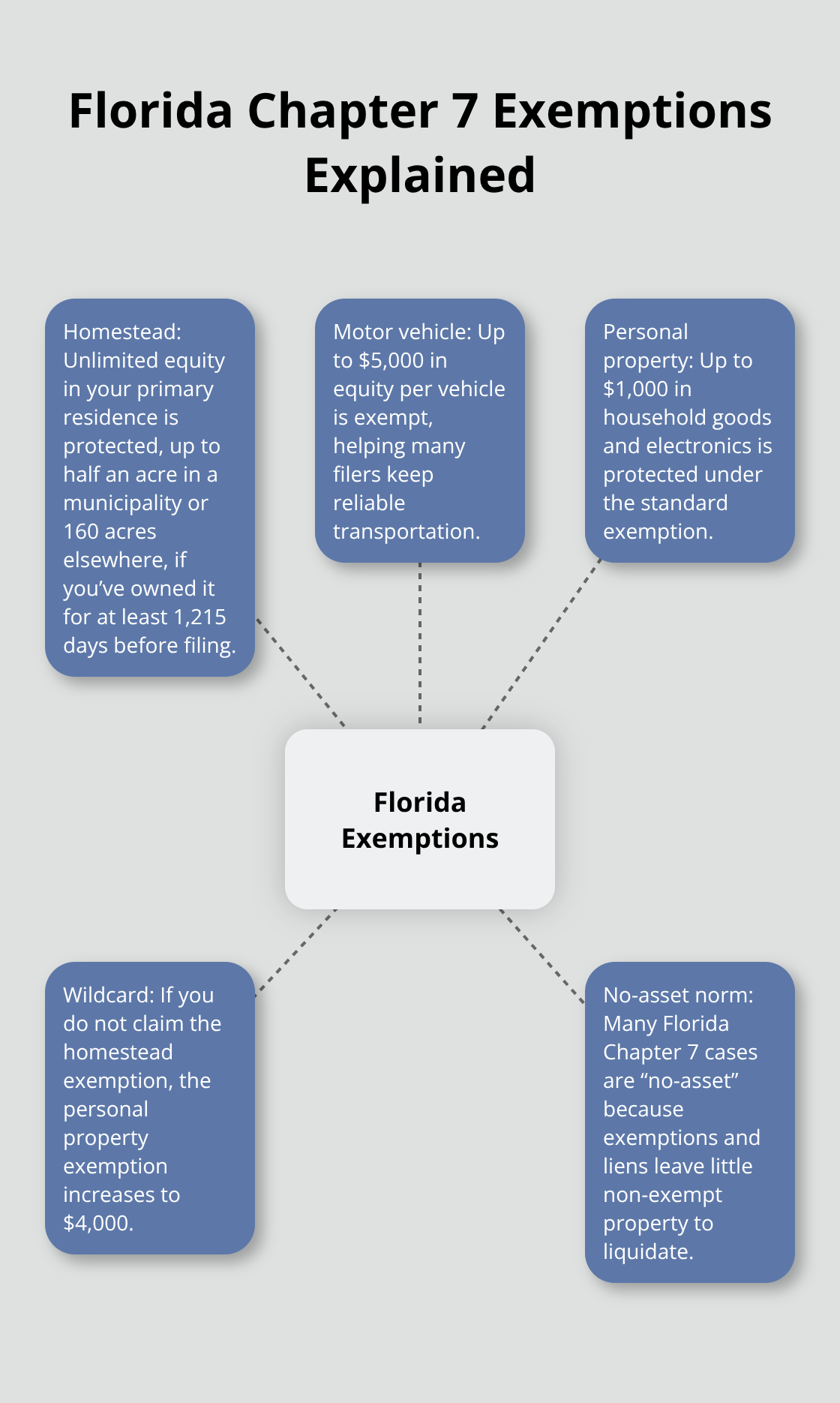
If you don’t use the homestead exemption, the personal property exemption increases to $4,000.
Discharge Releases You From Personal Liability
After the trustee completes the liquidation process, qualifying unsecured debts are discharged, typically 60 to 90 days after your creditors’ meeting. This discharge releases you from personal liability for medical bills, credit card balances, past-due rent, civil judgments, and many personal loans. The discharge does not erase liens on secured property like homes or cars, but if you reaffirm a car loan within 60 days of your creditors’ meeting, you keep the vehicle and continue payments. Without reaffirmation, the lender retains the lien but cannot pursue a deficiency judgment against you after the car is sold. Be aware that filing Chapter 7 can significantly reduce your credit score, making it harder to obtain loans or favorable rates in the future.
What Happens Next in Your Case
Understanding these mechanics sets the stage for the actual timeline you’ll follow. The path from filing to discharge involves specific deadlines and required actions that shape your entire bankruptcy experience.
Your Chapter 7 Timeline From Filing to Discharge
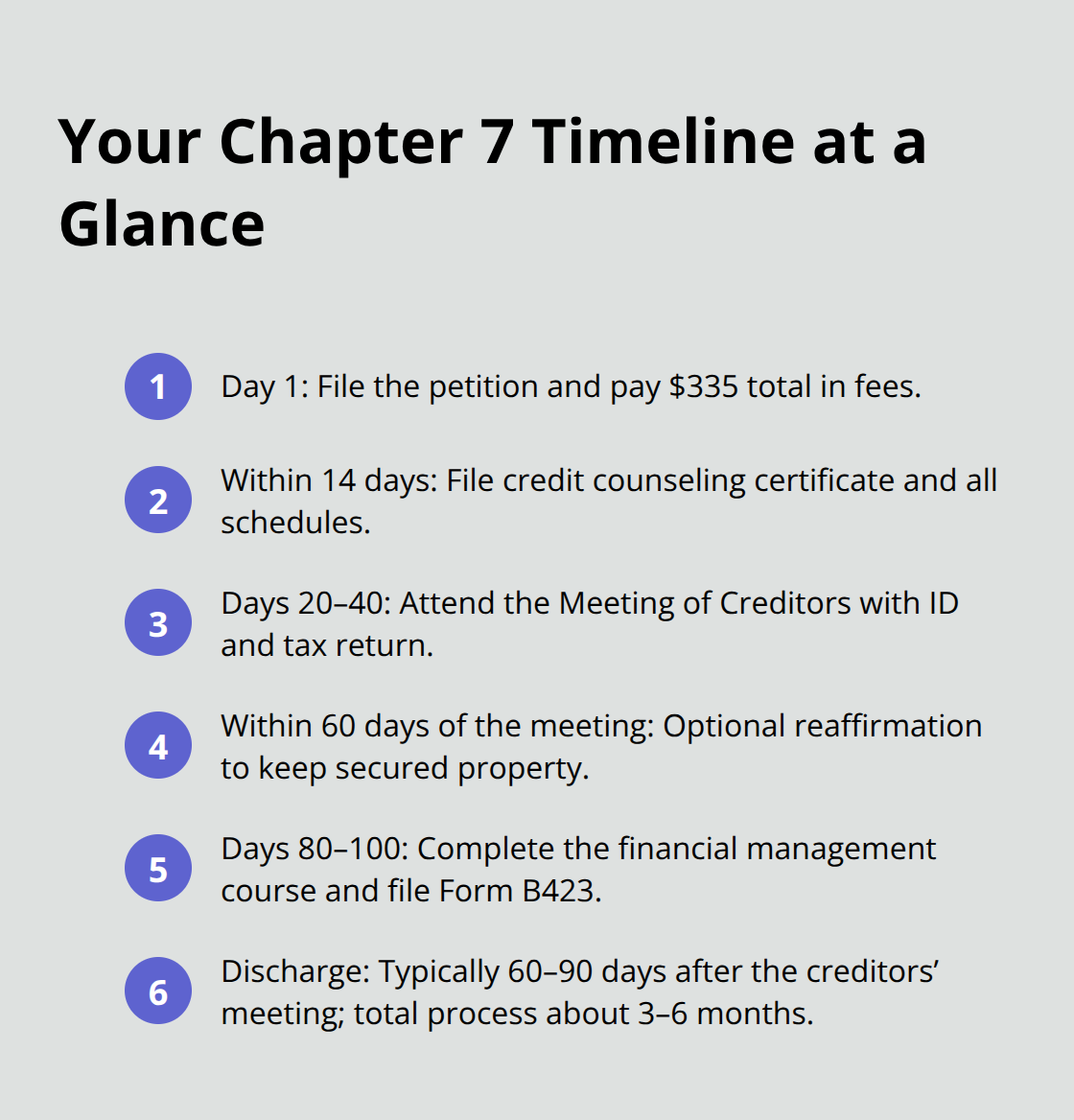
Filing Chapter 7 in Florida follows a strict sequence with specific deadlines that determine when you receive your discharge. On day one, you file your petition with the court and pay the filing fee of $245 plus a $75 administrative fee and $15 trustee surcharge, totaling $335 upfront. Within 14 days, you must file your Certificate of Credit Counseling from an approved agency along with your schedules listing all creditors, assets, liabilities, and income. The automatic stay activates immediately upon filing, halting collection calls, wage garnishments, and lawsuits.
The Meeting of Creditors Sets the Stage
Between days 20 and 40, the Meeting of Creditors occurs. This is not a courtroom proceeding but a formal meeting where you testify under oath before the trustee and potentially creditors. The trustee will ask detailed questions about your finances, property, and the accuracy of your filed documents. You must bring your photo ID, schedules, and your most recent federal tax return to this meeting. The trustee begins reviewing whether you have nonexempt assets available for liquidation at this stage.
Securing Property Through Reaffirmation
After the meeting, you have 30 days to indicate whether you will surrender or retain property securing debts through your Statement of Intent. If you want to keep a car or other secured property, you may file a Reaffirmation Agreement within 60 days of the creditors’ meeting date, allowing you to continue making payments and retain the asset. This step determines which secured debts you maintain and which you release.
Completing Required Education and Awaiting Discharge
Between days 80 and 100, you must complete a post-filing Financial Management Training Course from an approved agency and file Form B423 with the court. This two-hour course covers budgeting and responsible credit use. Discharge typically occurs 60 to 90 days after your creditors’ meeting, provided you have completed all requirements and no creditor has filed an objection to discharge. Missing any deadline can delay or jeopardize your discharge. The entire process usually takes three to six months from filing to final discharge order.
Once your discharge order enters, you move into the critical phase of rebuilding your financial foundation and establishing sustainable money management practices.
Who Actually Qualifies for Chapter 7 in Florida
Income Thresholds and the Means Test
The means test determines whether you can file Chapter 7 in Florida, and it’s based on your income over the last six months, not your current situation. If your average monthly income over the past six months falls below the Florida median for your household size, you pass the test automatically and can file Chapter 7. The Florida median income thresholds as of 2026 are $41,334 annually for a single person, $51,839 for two people, $53,952 for three, $63,196 for four, and $71,296 for five household members. For larger households, the median increases by roughly $8,000 per additional person up to ten members. To calculate your six-month average, add your gross income from the past six calendar months and divide by six, then multiply by twelve to get your annual figure. If you’re below the median, you qualify immediately without further calculation.
Calculating Disposable Income When You Exceed the Median
If your income exceeds the median, the analysis becomes more complex because you must subtract allowed expenses from your income to determine disposable income. The IRS provides national and state-specific expense standards that the court uses, covering categories like housing, food, transportation, and utilities. After subtracting these allowed expenses from your income, if your projected disposable income over the next 60 months totals less than $7,475, you pass the means test and can file Chapter 7. If it exceeds $12,475, you fail and cannot file Chapter 7. The gray zone between these figures requires additional calculations that often benefit from attorney guidance.
Debts That Chapter 7 Eliminates
Chapter 7 discharges most unsecured debts including medical bills, credit card balances, past-due rent, civil judgments, and many personal loans. The discharge releases you from personal liability for these obligations, and creditors can no longer pursue collection actions against you after the court enters your discharge order.
Debts That Survive Bankruptcy
Certain debts survive bankruptcy and remain your responsibility. Alimony and child support cannot be discharged under any circumstances, nor can most federal and state income taxes filed within the last three years. Student loans are discharged only in rare cases where you can prove undue hardship, a high legal standard that courts interpret strictly. Debts for willful and malicious injuries, fraud-based debts, and criminal restitution also survive discharge. Recent purchases of luxury goods over $725 and cash advances exceeding $1,000 obtained within 90 days of filing may not be discharged.
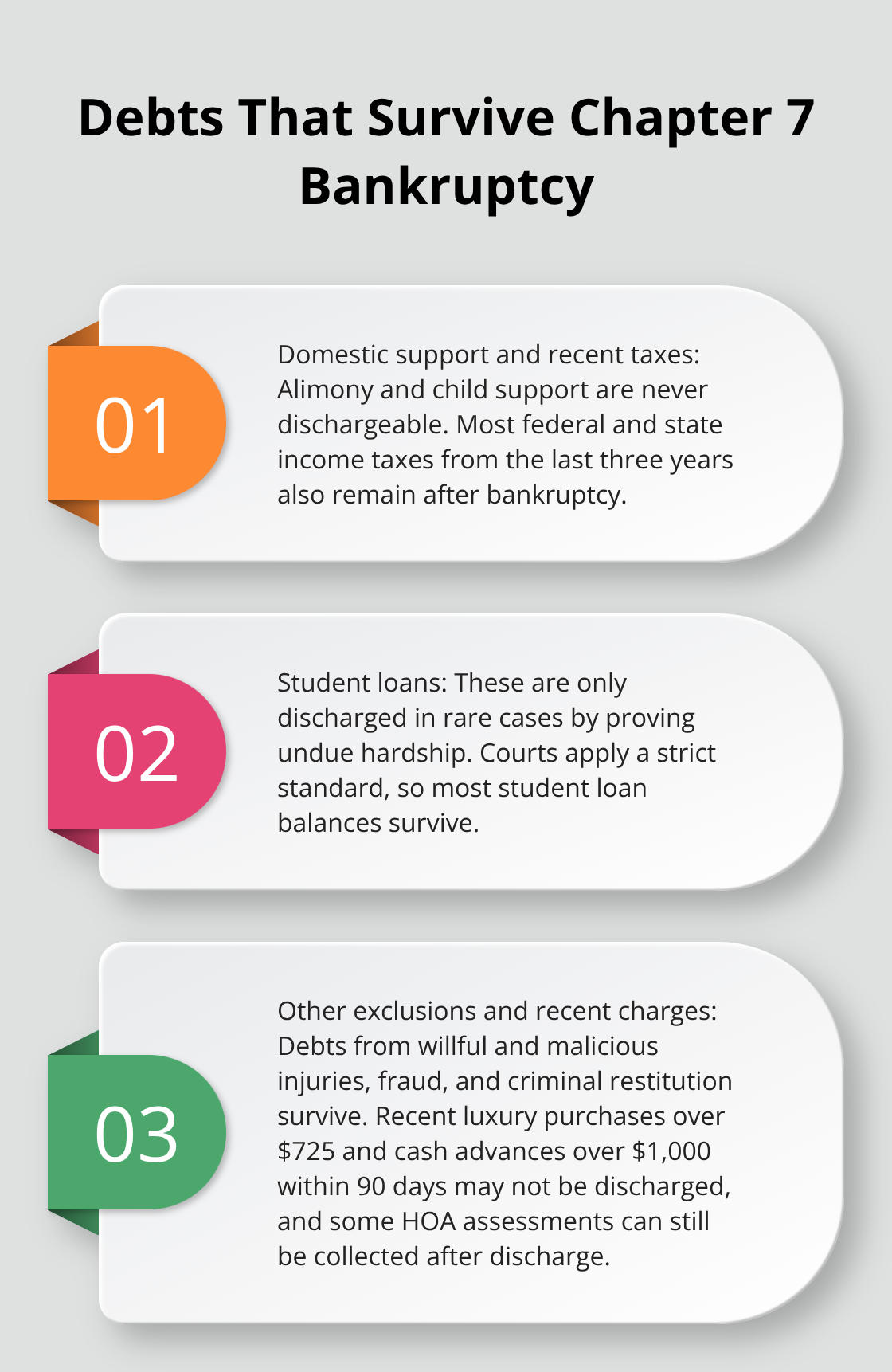
Homeowners associations can pursue collection for unpaid assessments after discharge if the debt relates to real property. The distinction matters because filing Chapter 7 wipes out dischargeable debts but leaves you personally liable for non-dischargeable ones, so understanding which debts you’re eliminating versus which remain is critical before filing.
Moving Forward After Your Chapter 7 Discharge
Your discharge order marks the beginning of financial recovery, not the end of your journey. Your credit score will have dropped significantly from the bankruptcy filing, but it recovers faster than many people expect-secured credit cards designed for rebuilding credit typically require a cash deposit that becomes your credit limit, and responsible use over six to twelve months demonstrates payment reliability to lenders. Utility companies, phone providers, and rental payments also report to credit bureaus when you pay on time, creating positive payment history without requiring traditional credit products. Within two to three years of consistent on-time payments, your score can improve substantially, making mortgages and auto loans accessible again at reasonable rates.
The Chapter 7 Florida basics you learned during your case-understanding exemptions, recognizing dischargeable versus non-dischargeable debts, and following strict timelines-apply to your post-discharge life as well. A realistic monthly budget prevents the spending patterns that led to your original debt crisis, and tracking expenses for three months reveals spending leaks you never noticed before. Emergency savings of even $500 to $1,000 provides a buffer against unexpected costs that previously would have triggered credit card reliance.
Creditors will aggressively market credit cards and loans to recent bankruptcy filers because they know you cannot file again for eight years, but accepting these offers often recreates the debt cycle. Instead, focus on increasing income through side work or career advancement and maintain consistent savings habits. If you’re considering Chapter 7 or need guidance on rebuilding after discharge, contact Harnage Law, PLLC for personalized legal support throughout your financial recovery.