Chapter 7 bankruptcy offers real financial relief for Florida residents drowning in debt. The process protects your home, vehicle, and personal belongings while stopping creditors from calling, suing, and draining your bank account.
We at Harnage Law, PLLC help people understand exactly what Chapter 7 protection in Florida means for their situation. This guide walks you through the assets you keep, how the automatic stay works, and what to expect from start to finish.
What Assets Stay Protected in Chapter 7 Bankruptcy in Florida
Florida’s Chapter 7 bankruptcy protections shield the things that matter most. Your home, car, retirement savings, and household essentials remain yours when you file, provided you understand how Florida’s exemption laws work. Florida is an opt-out state, meaning you use Florida exemptions rather than federal ones if you’ve lived here for at least 730 days before filing. This distinction matters enormously because Florida offers some of the strongest homestead protections in the country.
Your Home Stays Protected Under Florida’s Homestead Exemption
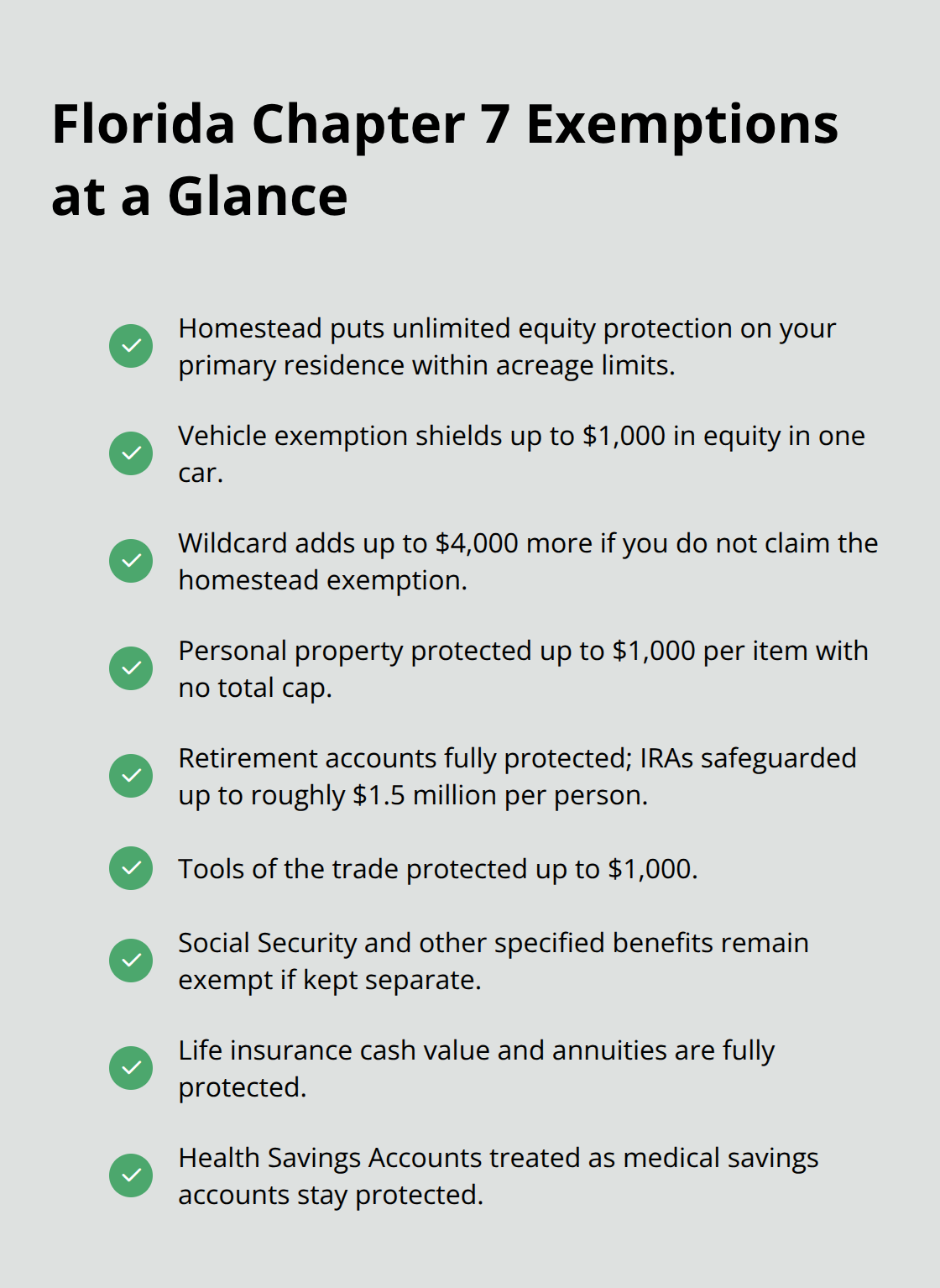
Your primary residence receives unlimited protection in value if you own it for at least 1,215 days before filing and the property stays within size limits: half an acre in a city or up to 160 acres elsewhere. This protection applies only to your principal residence, not vacation homes or rental properties. If you own your home with a spouse, you can often double exemptions, making joint ownership a powerful asset protection strategy. You continue making mortgage payments after filing, and the exemption protects your equity while the automatic stay prevents foreclosure if creditors try to seize the property.
The property must be your principal residence with a filed homestead declaration to qualify.
Vehicle Equity and the Wildcard Exemption
The vehicle exemption protects up to $1,000 of equity in one car. If you don’t use your homestead exemption, the wildcard exemption covers up to $4,000 more in any property, including additional vehicle equity, bringing total protection to $5,000 per vehicle. Leased vehicles present no concern since you don’t own them, though financed cars require examining what remains after loan payoff. You can reaffirm your car loan to keep the vehicle and continue making payments.
Personal Property, Retirement Accounts, and Income Protection
Personal property protections shield up to $1,000 per item with no total cap, covering furniture, appliances, clothing, electronics, family heirlooms, and essential household goods. Retirement accounts like traditional IRAs, Roth IRAs, 401(k)s, and pensions receive full protection, with IRAs safeguarded up to roughly $1.5 million per person. Social Security benefits, disability payments, unemployment compensation, and public assistance remain completely exempt when kept separate from other funds. Tools of trade up to $1,000 protect equipment you need for your job, including specialized tools for self-employment. Life insurance cash surrender value and annuity contracts stay fully protected, as do Health Savings Accounts treated as medical savings accounts.
How the Automatic Stay Stops Creditor Action Immediately
The automatic stay halts most collection actions the moment you file your petition. Creditors must stop calling, suing, and attempting to seize your property or drain your bank account. This protection gives you breathing room to move forward with your case without constant harassment from lenders and debt collectors.
How Chapter 7 Stops Creditor Harassment and Wage Garnishment
The Automatic Stay Halts Collection Actions Instantly
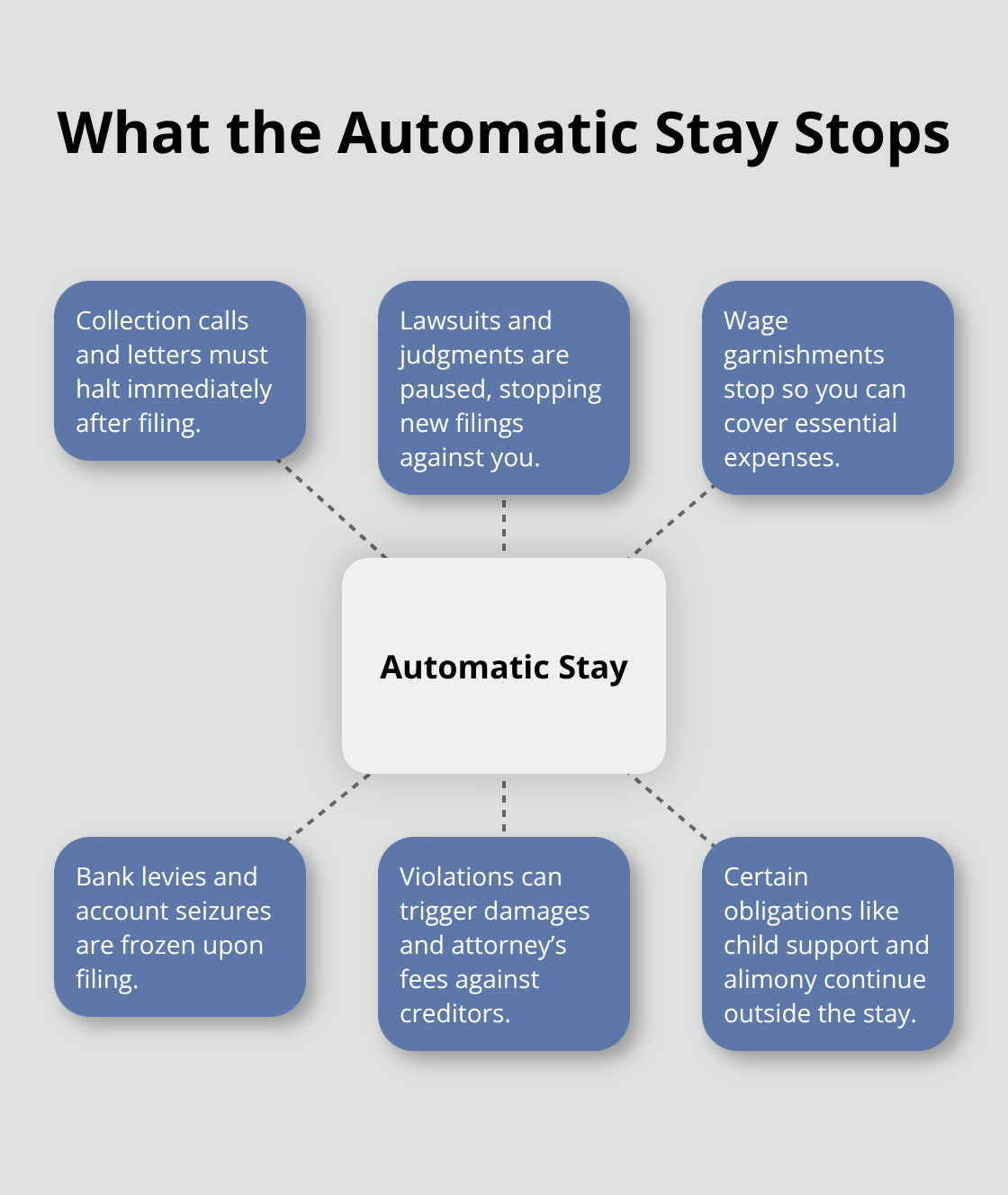
The automatic stay stands as the single most powerful tool you gain the moment you file Chapter 7 bankruptcy in Florida. This court order stops creditors dead in their tracks, and it happens instantly. Creditors cannot call you, sue you, garnish your wages, or seize your bank account once your petition reaches the court. The Federal Trade Commission reports that debt collection complaints consistently rank among the top consumer complaints, with millions of Americans harassed annually. Filing Chapter 7 ends that harassment immediately because creditors who violate the automatic stay face serious penalties, including damages and attorney fees.
Creditor Calls and Legal Action Stop Completely
Collection agencies must cease calling your phone the moment the automatic stay takes effect. Your employer cannot accept wage garnishment orders, and creditors cannot file new lawsuits against you. If creditors attempt collection activity after the stay takes effect, federal law allows you to sue them for damages. Bank levies halt immediately, meaning creditors cannot drain your accounts to satisfy debts. This protection applies to most debts, though certain obligations like child support and alimony continue outside the stay.
Wage Garnishment and Bank Levies End
Wage garnishment stops completely, protecting your income so you can cover essential living expenses and continue making mortgage or vehicle payments. If a creditor violates the stay, you have grounds to recover actual damages plus statutory damages up to $1,000 per violation, making enforcement a real consequence for bad actors. Florida courts take automatic stay violations seriously, and violators face court sanctions that motivate immediate compliance.
The Breathing Room You Need to Move Forward
This protection transforms your financial situation within hours. The breathing room allows you to stabilize your finances, catch up on priority debts, and move through the bankruptcy process without constant threats and collection calls destroying your mental health and financial stability. With creditors silenced and your income protected, you can focus on understanding what happens next in your Chapter 7 case-starting with the filing requirements and documentation you’ll need to prepare.
The Chapter 7 Process and Timeline in Florida
Filing Requirements and Documentation
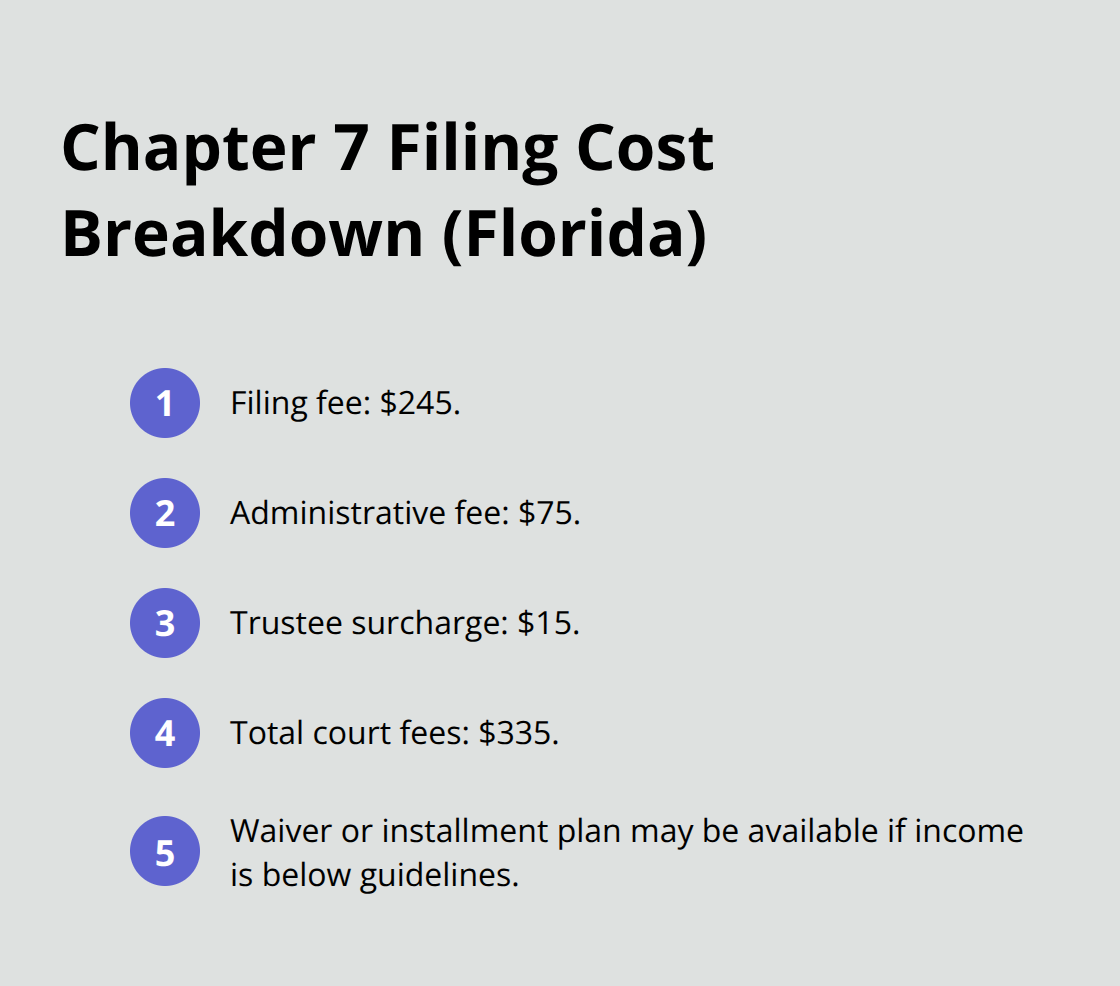
Filing Chapter 7 in Florida requires completing official bankruptcy forms obtained directly from uscourts.gov, not from the court itself. The filing package includes your petition, schedules listing all assets and liabilities, a schedule of income and expenses, a financial affairs statement, and a schedule of exempt property claiming which assets you protect under Florida law. You’ll pay a filing fee of $245, an administrative fee of $75, and a trustee surcharge of $15, totaling $335, though fee waivers or installment plans are available if your household income falls below poverty guidelines. Before filing, you must complete pre-filing credit counseling from an approved agency, which typically costs $50 to $100 and takes about an hour. The counseling requirement applies in nearly all cases, though narrow emergency exceptions exist.
Accuracy matters enormously here-undervaluing assets, hiding property, or missing the exemption deadline creates serious consequences including denial of discharge, meaning your debts remain unpaid and you lose bankruptcy protection.
The 341 Meeting of Creditors
The 341 Meeting of Creditors occurs 21 to 40 days after you file, and you must attend in person or by video. The bankruptcy trustee administers your case and conducts this meeting under oath, asking detailed questions about your finances, assets, income sources, and any property transfers made before filing. Most creditors don’t attend, but those who do can question you directly. You need accurate documentation including recent tax returns, pay stubs, bank statements, and vehicle titles to answer questions confidently and prove your exemption claims hold water. The trustee looks for non-exempt assets to liquidate and pays unsecured creditors from the proceeds; if your case contains no non-exempt assets, creditors file no claims and your discharge comes faster, typically 60 to 90 days after the meeting concludes. Fraudulent transfers or concealment discovered at this meeting can result in case dismissal, fines, or criminal charges, so complete honesty protects you.
Discharge Timeline and What Happens After
After discharge, most unsecured debts including credit cards, medical bills, and personal loans disappear permanently, though certain debts like child support, alimony, recent taxes, and most student loans survive bankruptcy and remain your obligation. Your credit report reflects the bankruptcy for ten years, but you can rebuild credit immediately (a secured credit card and on-time payments work well here) with many filers seeing score improvements within two to three years as negative marks age and positive payment history accumulates.
Final Thoughts
Chapter 7 protection in Florida shields your home under the homestead exemption with unlimited value, protects your vehicle within equity limits, and keeps your retirement accounts completely safe. The automatic stay stops creditor calls, wage garnishment, and bank levies the moment you file, giving you immediate breathing room to stabilize your finances. Personal property like household items and family heirlooms remain protected, your income gets shielded for essential expenses, and most unsecured debts disappear through discharge typically 60 to 90 days after your 341 Meeting of Creditors.
We at Harnage Law, PLLC guide you through every step of this process by helping you understand which assets qualify for protection under Florida law, preparing accurate documentation for your filing, and representing you at your creditor meeting. Our goal is straightforward: stop creditor harassment, prevent wage garnishments, and help you discharge qualifying debts so you can rebuild your financial life. We provide personalized legal services tailored to your specific situation rather than generic advice that ignores your circumstances.
Contact Harnage Law, PLLC to discuss how Chapter 7 protection in Florida can work for your situation. The sooner you understand your protections and options, the sooner you move forward with confidence toward a fresh financial start.