
Chapter 7 fraud considerations matter because bankruptcy trustees scrutinize every financial move you make before filing. One mistake-whether intentional or accidental-can derail your case, trigger criminal charges, or result in dismissal.
We at Harnage Law, PLLC have seen how quickly honest debtors stumble into serious legal trouble by not understanding what trustees look for. This guide walks you through seven critical red flags that raise suspicion in Florida Chapter 7 filings and how to avoid them.
Red Flag #1: Transferring Assets Before Filing
Trustees examine all asset transfers made within two to six years before you file Chapter 7 in Florida, and they possess strong legal tools to reverse transfers they deem fraudulent. Under the Bankruptcy Code, a trustee can recover property transferred to benefit yourself or insiders like family members, especially if the transfer occurred when you were insolvent or knew insolvency was approaching. Florida law aligns with federal standards, meaning transfers designed to hide assets from creditors face immediate scrutiny. The most dangerous transfers involve moving cash, vehicles, real estate, or valuable items such as jewelry to relatives or friends shortly before filing. Trustees regularly uncover these schemes because they compare your asset list against prior tax returns, bank statements, and public records showing property ownership.
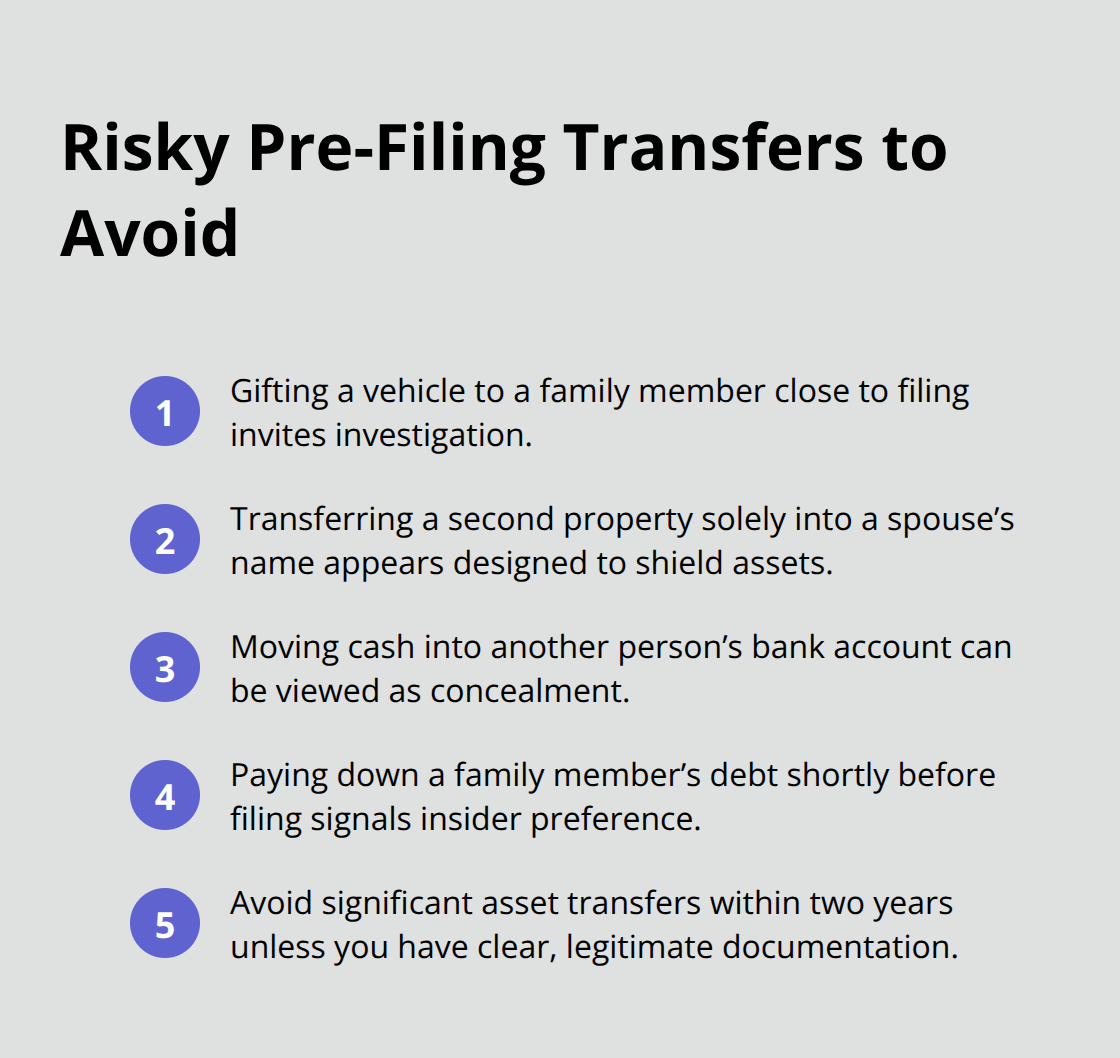
Common scenarios that trigger investigations include gifting a vehicle to a family member within months of filing, transferring a second property to a spouse’s name alone, or moving cash into someone else’s bank account. Paying down a family member’s debt using your own funds weeks before filing also raises red flags because it appears to show preference to an insider. The safest approach involves avoiding any significant asset transfers in the two years immediately before filing unless you have clear documentation showing the transfer served a legitimate purpose unrelated to bankruptcy. If you have already made transfers that concern you, discuss them with a bankruptcy attorney before filing so they can assess the risk and determine whether disclosure or other strategies apply.
Understanding what trustees look for in your financial history sets the stage for examining the next major red flag: what happens when debtors fail to report assets and income on their official forms.
Red Flag #2: Concealing Property or Income
Bankruptcy forms require you to list every asset and income source without exception. The official schedules demand disclosure of bank accounts, vehicles, real estate, jewelry, collectibles, retirement accounts, and any property held in another person’s name. Income must include wages, freelance earnings, rental income, cash payments, and side gigs-omitting anything constitutes fraud. Trustees verify your disclosures against tax returns, bank statements, employment records, and public property databases.
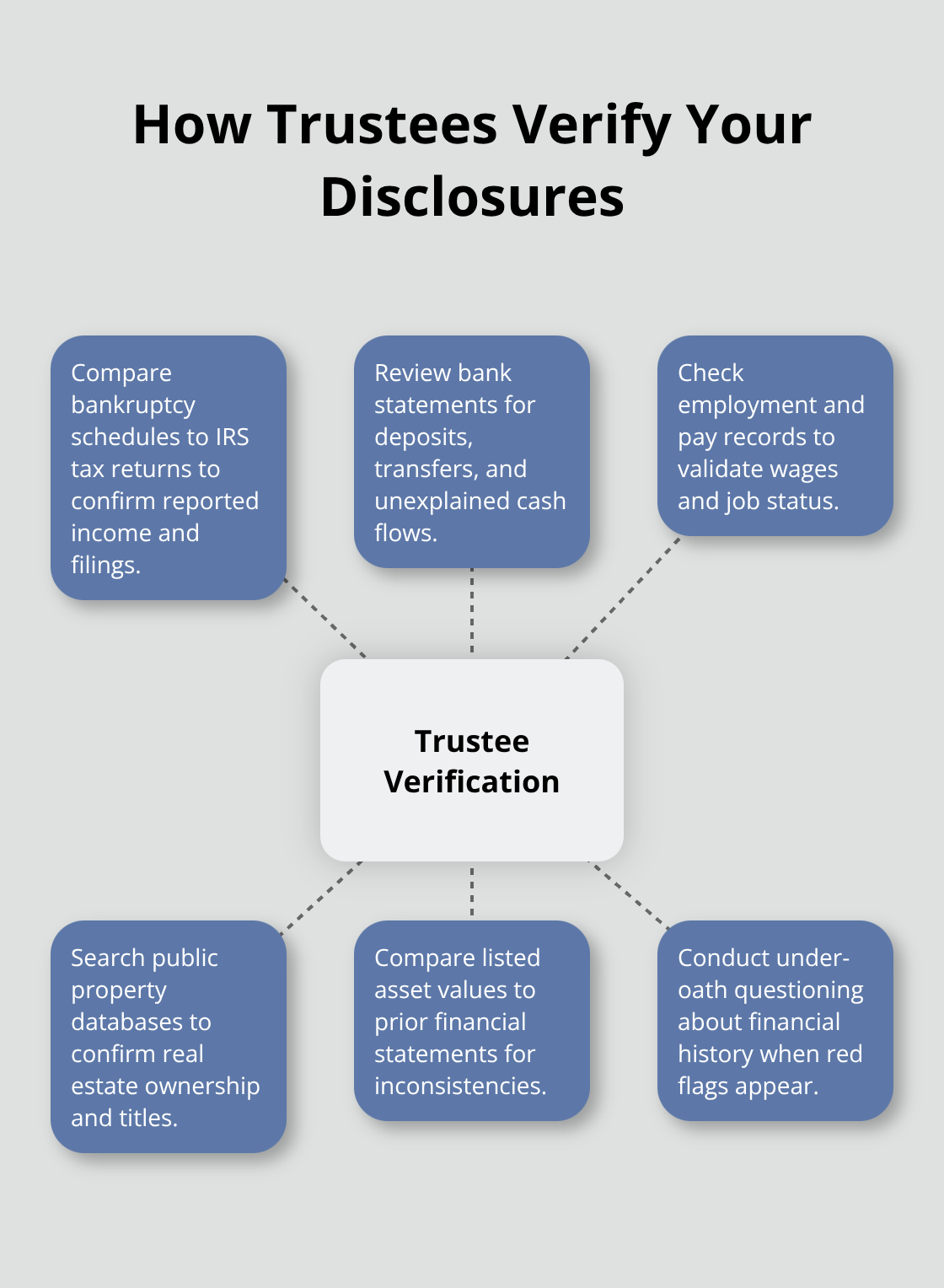
They cross-reference reported income with IRS filings and compare asset values against prior financial statements to identify inconsistencies.
When a trustee uncovers undisclosed assets or income, they can deny your discharge entirely, meaning your debts survive bankruptcy and you gain nothing from filing. Criminal charges can follow, carrying up to five years in prison and fines reaching $250,000 under federal law. A fraud finding blocks discharge of all debts listed in your case, and you cannot refile for Chapter 7 again for eight years. Trustees use sophisticated investigation tools-they review bank statements for deposits you cannot explain, examine property records for real estate you failed to mention, and interview you under oath about your financial history.
If you realize you omitted something before filing, contact a bankruptcy attorney immediately to file an amendment. Correcting errors early demonstrates honesty and reduces the risk of criminal prosecution, whereas discovered omissions after filing appear intentional and trigger aggressive enforcement. The next red flag involves a different timing problem: what happens when you accumulate new debt in the months immediately before filing.
Red Flag #3: Running Up Debt Before Filing
Trustees view credit card charges and cash advances in the 90 days immediately before filing as presumptively fraudulent under bankruptcy law. If you charge luxury items, take cash advances, or make high-value purchases within this window, the trustee can deny discharge of those specific debts, meaning you remain liable for them even after bankruptcy closes. Florida courts have consistently ruled that accumulating new debt shortly before filing signals an intent to abuse the bankruptcy system rather than address genuine financial distress. The pattern suggests you knew insolvency was coming and deliberately incurred obligations you had no ability to repay, which contradicts the honest debtor standard courts expect. Trustees compare your credit card statements against your petition filing date and flag any transactions that appear non-essential.
What counts as presumptively fraudulent includes luxury goods, jewelry, electronics, travel, dining, and entertainment expenses charged within 90 days of filing. Cash advances carry even greater scrutiny because they suggest you were extracting liquidity with no intention of repaying. If you must make a purchase before filing, limit yourself to essentials like groceries, utilities, rent, and necessary vehicle repairs, and keep receipts documenting why each purchase was essential. Courts understand that debtors need food and housing; they do not understand why someone facing insolvency buys a new television or takes a vacation. The safest approach involves freezing non-essential spending at least four months before consulting a bankruptcy attorney, and any pre-filing purchases require clear documentation showing necessity rather than consumption. This attention to spending patterns connects directly to the next red flag: how trustees scrutinize the information you provide on your official bankruptcy documents.
Red Flag #4: Providing False Information on Your Bankruptcy Forms
When you sign your bankruptcy petition, you swear under oath that every statement is true and complete. Federal law treats this signature as a legal declaration carrying the same weight as testimony in court, meaning false statements expose you to felony charges under 18 U.S.C. § 152, which carries penalties up to five years in prison and fines reaching $250,000. Trustees routinely cross-reference your bankruptcy forms against tax returns filed with the IRS, employment verification records, and bank statements spanning multiple years. Discrepancies between what you report on Schedule I (income) and what appears on your prior two years of tax returns trigger immediate investigation. Misrepresenting your employment status, inflating household size to claim exemptions you don’t qualify for, or understating income are common errors that trustees catch within weeks of filing.
The most dangerous misrepresentations involve listing a different income amount than your tax return shows or failing to disclose a spouse’s income when filing jointly. If your 2024 tax return shows $65,000 in annual income but your bankruptcy petition claims $45,000, the trustee will demand explanation and may pursue fraud charges if the discrepancy appears intentional. Trustees also flag cases where debtors claim zero household members beyond themselves but bank statements show regular transfers to family members or mortgage payments on property occupied by others. Ensure your petition accurately reflects what tax authorities have on file about you, and disclose any income sources that don’t appear on your most recent return, including freelance work, cash payments, or informal side income. If your circumstances have changed significantly since your last tax filing, document those changes clearly so the trustee understands why your reported income differs from prior-year figures.
The next red flag involves a different pattern entirely: what happens when you file multiple bankruptcy cases in quick succession.
Red Flag #5: Filing Multiple Bankruptcies in Quick Succession
Filing Chapter 7 bankruptcy triggers an automatic stay that halts creditor calls, wage garnishments, and lawsuits the moment your petition reaches the court. If you file again within eight years of a previous Chapter 7 discharge, courts view the pattern as abusive and will deny the automatic stay on your second filing, leaving you vulnerable to collection activity you sought to escape. Florida judges have consistently rejected serial filings where debtors discharge debts, rebuild credit artificially, and file again to discharge new obligations accumulated in the interim. The trustee in your second case will examine whether you incurred significant unsecured debt between filings and whether your income and expenses suggest you could have managed payments through Chapter 13 instead.
Legitimate reasons for refiling include major job loss, medical emergencies, or divorce that genuinely altered your financial circumstances after your first discharge, but you must document these changed conditions clearly and prove you acted in good faith rather than manipulating the system. Courts distinguish between debtors facing genuine hardship and those using bankruptcy as a revolving door to escape obligations repeatedly. If you file a second Chapter 7 within eight years, expect the trustee to scrutinize every transaction between your first discharge and second filing, questioning large purchases, credit accumulation patterns, and whether you made reasonable efforts to avoid refiling. The automatic stay denial on subsequent filings within the lookback period means creditors can continue collection efforts immediately, defeating the primary purpose of bankruptcy protection. Timing matters significantly: filing too quickly after discharge signals you never intended to address your financial behavior, whereas spacing filings further apart and demonstrating genuine lifestyle changes strengthens your credibility with the court. The next red flag involves a different type of problematic payment pattern that trustees investigate closely.
Red Flag #6: Preferential Payments to Insiders and Creditors
Trustees recover payments you make to specific creditors or insiders in the months immediately before filing Chapter 7. Under federal bankruptcy law, a preferential payment occurs when you pay back money to someone while insolvent, giving that person an advantage over other creditors who receive nothing through bankruptcy. The Bankruptcy Code allows trustees to claw back these transfers and redistribute the funds fairly among all creditors, which means money you thought was settled gets pulled back into your bankruptcy estate. For insider payments-money paid to family members, friends, or business associates-trustees examine transfers dating back one full year before filing. For all other creditors, the lookback period extends only 90 days, but that 90-day window catches most problematic payment patterns because debtors typically accelerate payments to favored creditors as insolvency approaches.
Common scenarios triggering preference investigations include paying your mother back a personal loan weeks before filing, sending extra payments to a family member’s credit card debt, or prioritizing one creditor’s invoice over others when you lack funds to pay everyone. Trustees demand that any creditor who received preferential payments return those funds to the estate, leaving you responsible for the original debt anyway. The practical impact proves severe: money you paid thinking you were settling an obligation gets recovered, and you end up owing the debt plus facing trustee litigation costs. Do not attempt to repay family members or specific creditors before filing-that action directly signals fraud to the trustee and guarantees investigation. Maintaining equal payment treatment across all creditors in the year before filing, or halting payments entirely, protects you from preference claims that undermine your case and sets the stage for examining how business owners complicate their financial picture through commingled accounts.
Red Flag #7: Operating Business and Personal Finances Together in Florida
Sole proprietors and small business owners in Florida create serious fraud exposure when they operate through personal bank accounts without separating business revenue from personal spending. Trustees immediately flag commingled accounts because they cannot determine which funds belong to the business estate versus your personal assets, and this ambiguity gives trustees legal grounds to claim larger portions of your account balances as nonexempt property available for creditor distribution. When your business account shows $50,000 but half came from personal loans and half from actual revenue, the trustee will demand detailed documentation proving which funds are truly business assets and which are personal. Unclear financial records also complicate your own asset valuations, forcing you to justify valuations that appear arbitrary or suspicious to a court.
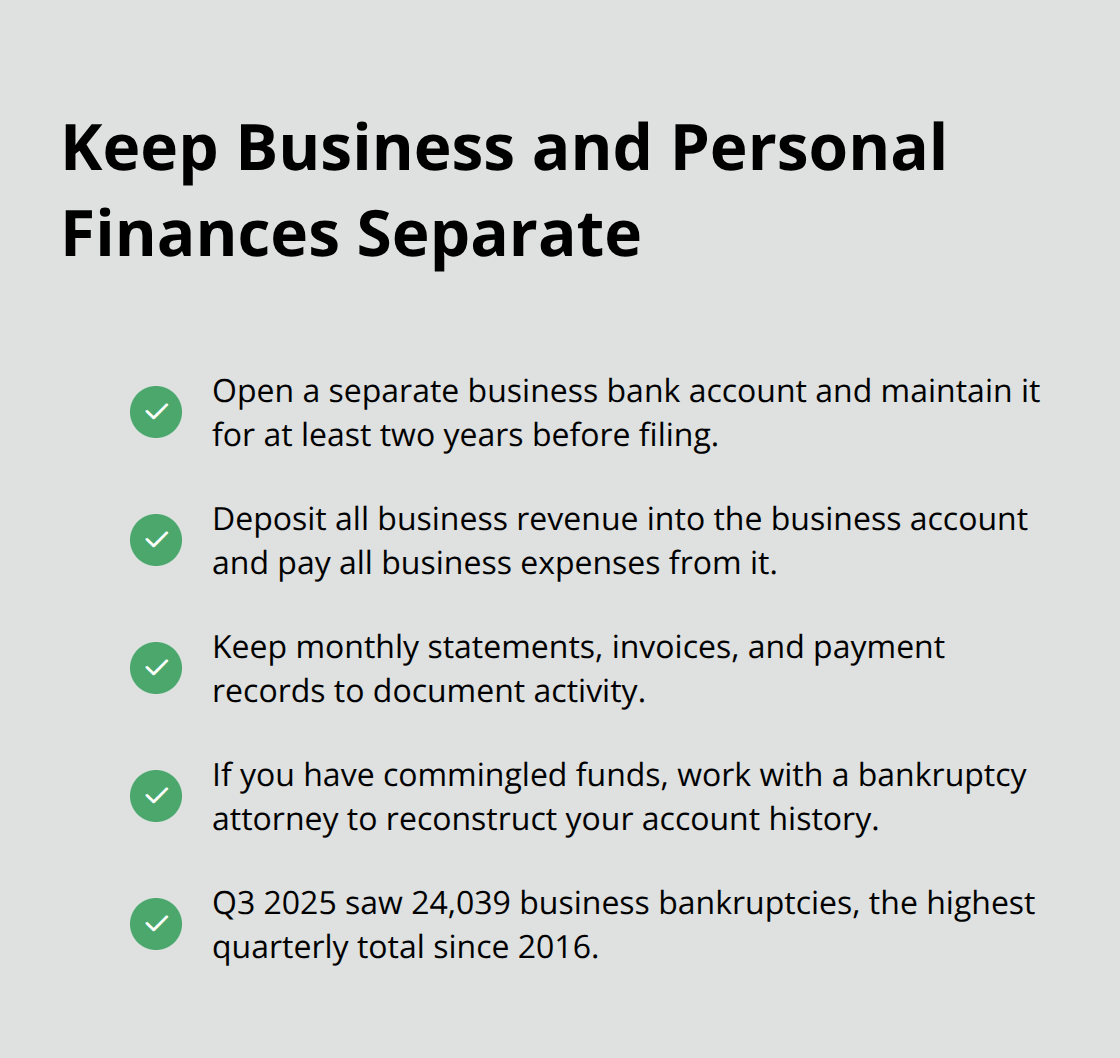
Q3 2025 saw 24,039 business bankruptcies, the highest quarterly total since 2016, with many small-business owners unknowingly creating fraud red flags through poor account management.
Open a separate business bank account immediately and maintain it consistently for at least two years before filing Chapter 7. Deposit all business revenue into the business account and pay all business expenses from that account, never mixing personal purchases with business funds. Keep monthly bank statements, invoices, and payment records showing the business account’s activity in detail, because trustees will demand proof that account balances represent legitimate business assets rather than personal funds you attempted to hide. If you have already commingled funds, work with a bankruptcy attorney to reconstruct your account history and prepare clear documentation explaining which portions belong to the business and which are personal. This financial clarity protects you from trustee claims that ambiguity justifies seizing larger amounts for creditor distribution, and it positions you well as you prepare to move forward with an honest Chapter 7 filing in Florida.
Final Thoughts on Chapter 7 Fraud Considerations in Florida
The seven red flags outlined above represent the most common mistakes that derail honest debtors and transform straightforward bankruptcy cases into criminal investigations. Understanding what trustees scrutinize protects you from unintentional errors that carry severe consequences. Full transparency throughout your Chapter 7 filing means disclosing every asset, every income source, and every financial transaction without exception, even when disclosure feels uncomfortable or embarrassing.
Working with qualified legal guidance from the start prevents most problems that arise from incomplete filings or misunderstood disclosure requirements. A bankruptcy attorney reviews your financial history before you sign anything, identifies potential red flags, and guides you toward compliant filing strategies that protect your interests. If you have already made mistakes in preliminary filings or financial decisions before consulting counsel, correcting those errors early with an attorney’s guidance demonstrates good faith and significantly reduces prosecution risk.
The team at Harnage Law, PLLC assists individuals and families in overcoming financial challenges by providing legal guidance and representation throughout the Chapter 7 process in Florida. Reaching out to qualified counsel before filing gives you the best chance of navigating Chapter 7 fraud considerations successfully and avoiding the red flags that transform bankruptcy from relief into legal jeopardy.