
The Florida Chapter 7 meeting of creditors is a required step in your bankruptcy process, and it’s often less intimidating than you might think. We at Harnage Law, PLLC want you to walk into that meeting prepared and confident.
This guide covers exactly what documents to bring, what happens during the meeting, and how to prepare yourself for the trustee’s questions.
What Documents to Bring to Your Florida Chapter 7 Meeting
Identification and Financial Verification
Arrive at your 341 meeting with a valid government-issued photo ID and your Social Security card or proof of your Social Security number. The trustee must verify your identity before proceeding, and mismatches between your petition name and your ID create delays that push your discharge further out. Bring your most recent tax return-this is non-negotiable. If you filed a more recent return after submitting your bankruptcy petition, bring that one too. The trustee uses tax returns to verify your income claims and spot discrepancies.
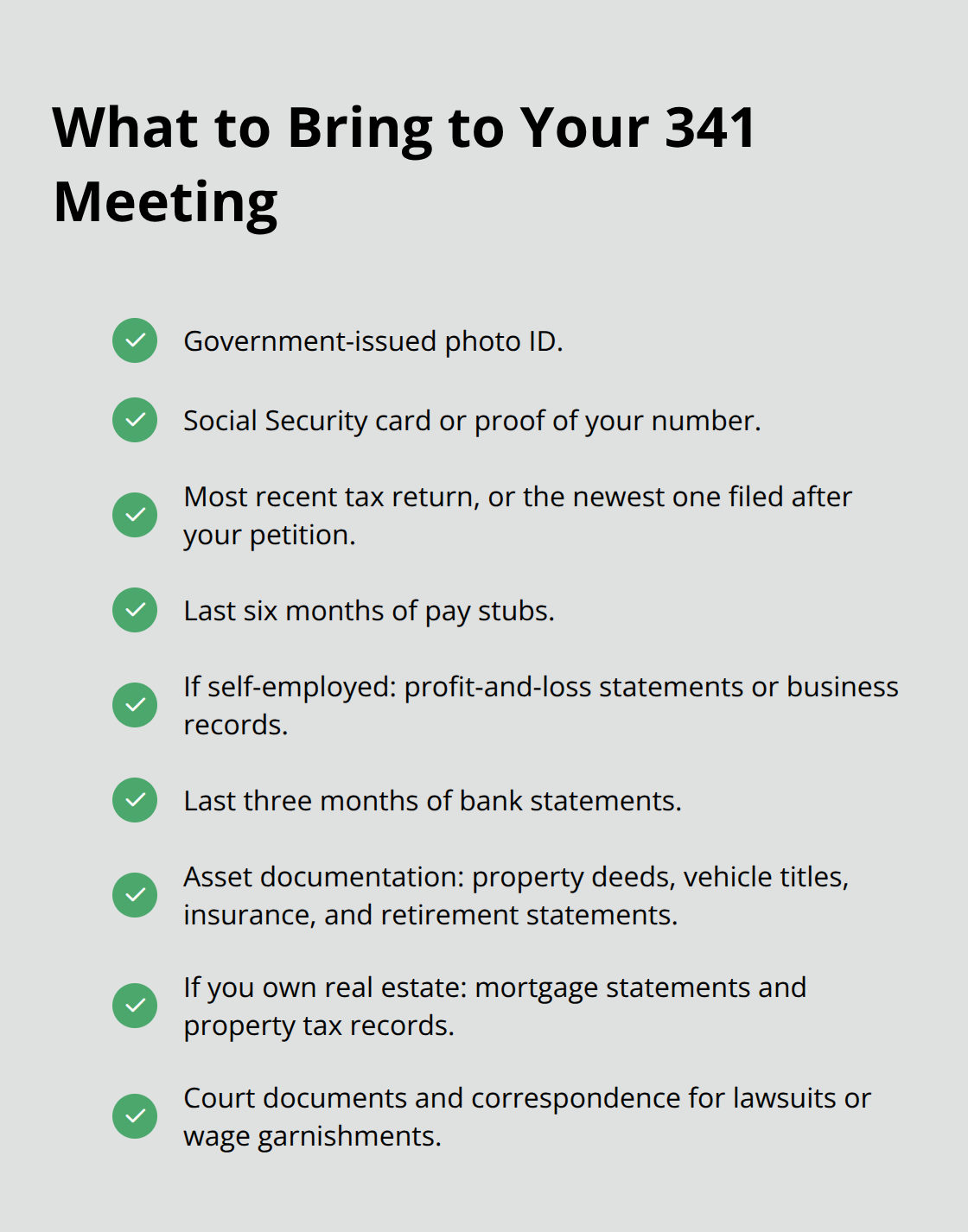
Bring your last six months of pay stubs to confirm your current employment status and income level. If you work for yourself, bring profit-and-loss statements or business records covering the same period.
Bank Statements and Asset Documentation
Bring bank statements from the last three months. The trustee reviews these to confirm the cash balances you listed on your petition and to identify any suspicious transfers. If you made payments to family members or friends in the past year, the trustee will ask about them, and your bank statements provide the evidence. Bring documentation for any assets you listed-property deeds, vehicle titles, insurance policies, or retirement account statements showing balances. If you own real estate, bring mortgage statements and property tax records. If creditors have sued you or garnished your wages, bring those court documents and any correspondence about the garnishment.
Your Petition and Evidence of Changes
Bring a copy of your bankruptcy petition and schedules to the meeting so you can reference them during questioning. Many debtors forget details from documents they signed weeks or months earlier, and having the papers in front of you prevents awkward answers like “I don’t know” or “I can’t remember.” The trustee records all testimony, and vague or evasive answers can be used against you later if a creditor objects to your discharge. If your circumstances changed after you filed-you obtained a job, received an inheritance, or sold property-bring documentation of that change. The trustee cares about post-filing income and assets because they affect your case. Bring any documents related to transfers of money or property to family members in the past four years. If you gave your mother $10,000 or transferred a vehicle to your son, you need to explain it with supporting paperwork.
Organization and Preparation Strategy
The trustee cross-references your schedules against your documents to find omissions or false statements. If you listed an asset worth $3,000 but can only produce a receipt showing you paid $5,000 for it three years ago, the trustee notices the gap and asks questions. If you claim zero income but your bank statements show regular deposits, that’s a red flag. Plan to arrive 15 minutes early and bring everything in an organized folder. The courthouse handles multiple hearings in a single hour, and fumbling through disorganized documents while the trustee waits signals unprofessionalism and lack of preparation. Your documents answer the trustee’s questions before they’re even asked, and that preparation sets the tone for a smooth, efficient meeting.
What Happens Inside Your Florida Chapter 7 Meeting
The Trustee Runs the Show, Not a Judge
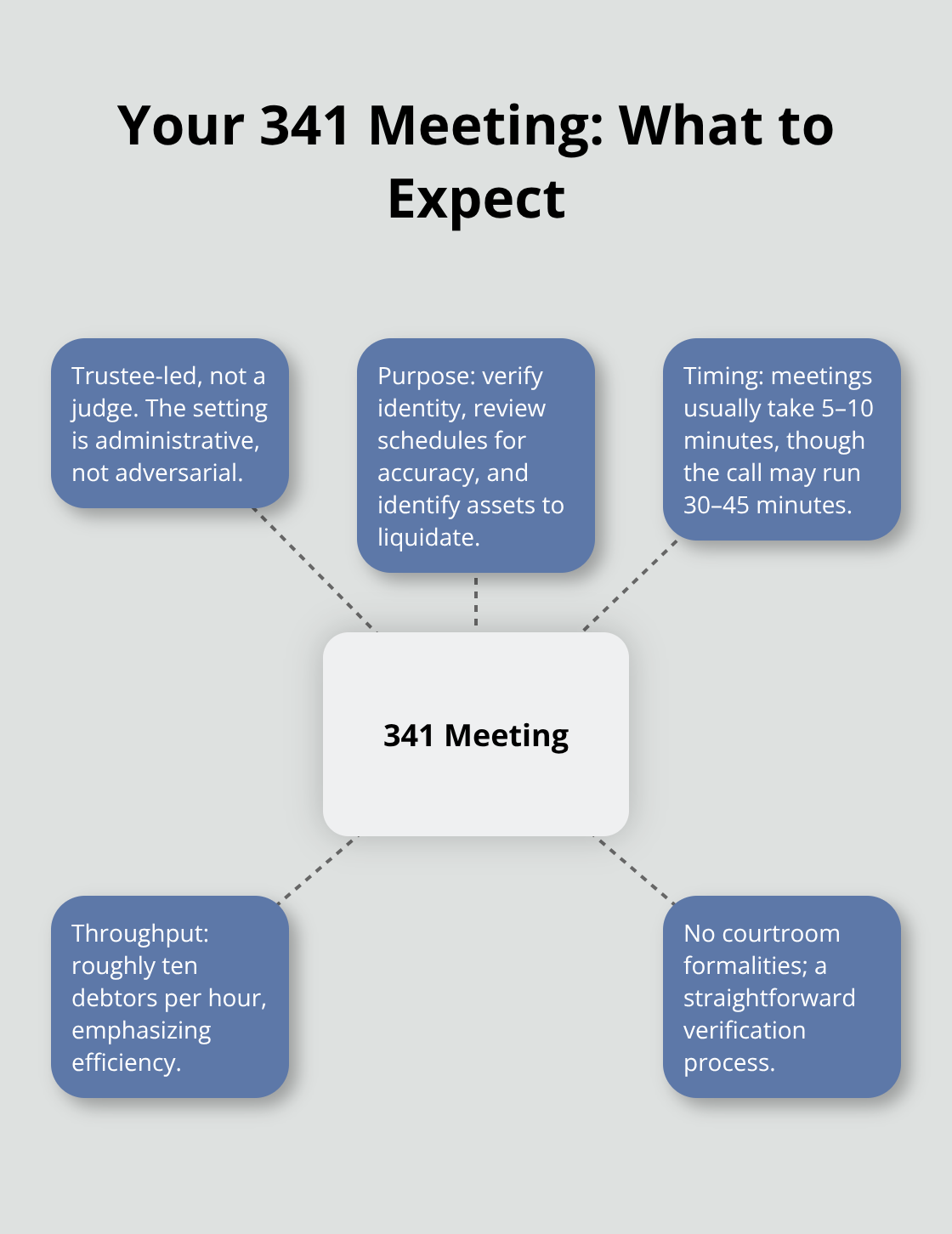
The trustee runs your 341 meeting, not a judge. This distinction matters because it means the atmosphere is administrative, not adversarial. The trustee’s job is to verify your identity, review your schedules for accuracy, and locate assets to liquidate for your creditors. Most Florida Chapter 7 meetings last about 5 to 10 minutes, even though you may be on a 30- to 45-minute call waiting for your turn. The trustee typically handles roughly ten debtors in a single hour, so efficiency is the norm.
Creditors Rarely Show Up
Creditors rarely show up-most don’t attend 341 meetings at all, which works in your favor because you won’t face aggressive questioning from collection agencies or credit card companies. When creditors do appear, they usually ask narrow questions about cash advances or specific discrepancies on your schedules. The trustee’s questions come directly from your petition and schedules, which is why reviewing those documents beforehand prevents stumbling through answers. All testimony is recorded, so evasive or contradictory statements create a permanent record that creditors can use if they object to your discharge later.
How You Must Answer Questions
You must answer truthfully and directly; your attorney cannot answer questions for you, though they can clarify if the trustee misunderstands something you said or if you need the question rephrased. The trustee will ask whether you reviewed your bankruptcy information sheet, signed your schedules truthfully, and listed all assets and debts. Expect questions about whether anyone owes you money, whether you are paying on credit cards post-filing, and any property transactions in the past 12 months.
Standard Questions About Your Financial History
The trustee asks about gifts or transfers to family members within the past four years because those transactions can be reversed if they occurred shortly before filing. If you owned real estate in the past four years, the trustee wants to know what happened to the proceeds. Questions about mortgage payments, 401(k) contributions, and how long you have lived in your current home follow a standard script that applies to nearly every debtor. If your spouse is also filing, the trustee asks whether you have joint debts and whether your spouse used your credit cards.
What Comes Next in Your Case
You will be asked what caused you to file bankruptcy-provide a truthful one-liner like job loss, medical bills, or divorce rather than a lengthy explanation. The trustee may also ask whether you are current on domestic support obligations like child support or alimony. If you expect a tax refund for the year before you filed, the trustee will explain that you must send it to them rather than keeping it or requesting a direct deposit. Once the trustee completes this examination, the focus shifts to what happens after the meeting and how your case moves toward discharge.
How to Prepare Yourself for the Meeting
Review Your Petition and Schedules Thoroughly
The 341 meeting hinges on how thoroughly you review your bankruptcy petition and schedules before walking into that room. Most debtors sign these documents weeks or months before the meeting and forget critical details, which creates problems when the trustee asks specific questions. Set aside two hours to read through your entire petition line by line. Cross-reference every asset you listed with the documentation you plan to bring. If you claimed your vehicle is worth $12,000, verify that valuation matches what you told your attorney and what you can support with recent repair estimates or market comparisons. If you listed $8,500 in a savings account, confirm that balance matches your most recent bank statement.
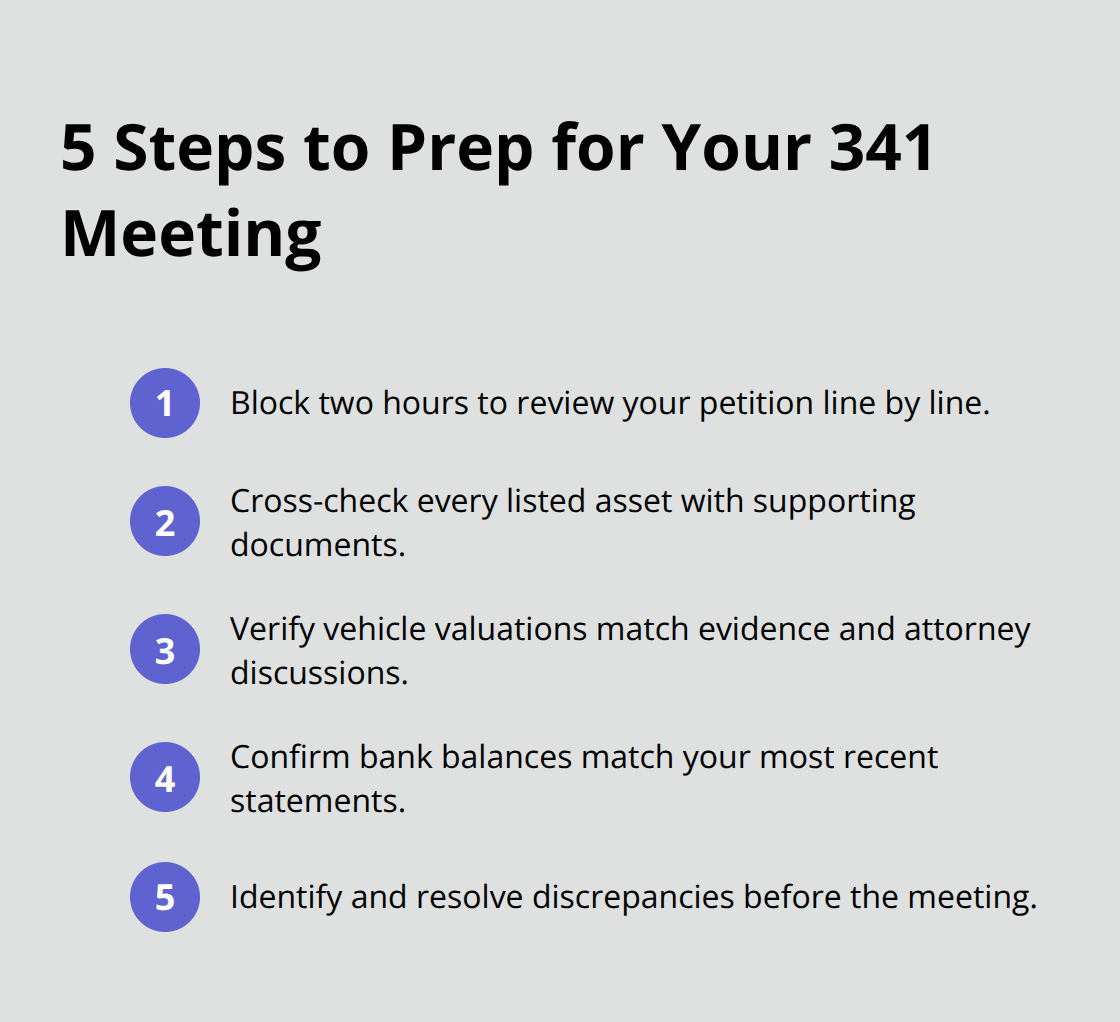
Discrepancies between what you wrote and what you can prove derail the meeting and trigger follow-up questions or amendments.
The trustee will notice if your petition says you own a motorcycle but your schedules list no vehicle. These gaps signal carelessness or worse, and they create a permanent record because the meeting is recorded. Write down three to five questions you expect based on your specific situation. If you transferred $15,000 to your brother two years ago, anticipate that question and prepare a clear explanation supported by bank statements. If you recently lost your job and filed bankruptcy, have a concise explanation ready about when you lost employment and what income you currently receive. One-sentence answers work best-the trustee wants facts, not a lengthy story.
Organize Your Documents and Identification
Arrive with your government-issued photo ID and Social Security card or proof of your number. Your ID must match the name on your petition exactly. If your petition lists John Michael Smith but your driver’s license says John M. Smith or J. Michael Smith, alert your attorney before the meeting to file an amendment. Name mismatches cause delays that push your discharge date back. Bring your bankruptcy petition and schedules in a separate folder so you can reference them during questioning without fumbling through unrelated documents.
Bring your most recent tax return and your last six months of pay stubs. If you are self-employed, bring profit-and-loss statements. Bring your last three months of bank statements and any documentation for assets you listed, including property deeds, vehicle titles, and retirement account statements. Organize everything chronologically and label each document. Arrive 15 minutes early-courthouses hold multiple 341 hearings simultaneously, and finding the correct room matters.
Answer Questions with Honesty and Precision
Answer every question truthfully and directly. Do not guess, do not say “I don’t know” if you actually know the answer, and do not offer explanations beyond what the trustee asks. If the trustee asks whether you listed all your debts, say yes or no, not a lengthy story about which debts you struggled to remember. Your attorney cannot answer questions for you, but they can request clarification if the trustee rephrases a question unclearly. Evasive or contradictory answers create ammunition for creditors who might later object to your discharge, and that objection extends your case timeline significantly.
Final Thoughts
Your preparation transforms the Florida Chapter 7 meeting from an intimidating unknown into a straightforward administrative process. You walk in with organized documents, honest answers ready, and a clear understanding of your petition, which removes stress and keeps your discharge timeline on track. The meeting itself lasts only five to ten minutes, creditors rarely attend, and the trustee simply verifies your identity and reviews your schedules for accuracy.
After your 341 meeting concludes, you enter a 60-day waiting period before discharge. The trustee may request additional documents during this time, and creditors have the opportunity to object to your discharge. If no objections arise, your discharge issues automatically once the 60-day period expires, eliminating your personal liability for qualifying debts and stopping creditor harassment immediately.
We at Harnage Law, PLLC help you prepare thoroughly for your Florida Chapter 7 meeting, review your petition and schedules for accuracy, and represent your interests if complications arise. If you face wage garnishment, foreclosure, or overwhelming debt, contact us today to discuss whether Chapter 7 bankruptcy offers the relief you need.