Tax debt feels different from other debts. The IRS doesn’t stop collecting just because you’re struggling financially, and many people assume all tax obligations survive bankruptcy.
We at Harnage Law, PLLC know that IRS discharge in Chapter 7 bankruptcy is possible-but only under specific conditions. This guide walks you through which taxes qualify for discharge, the timing rules that matter, and the mistakes Florida residents commonly make.
Which Tax Debts Actually Disappear in Chapter 7 Bankruptcy in Florida
Income tax debt qualifies for discharge in Chapter 7 bankruptcy, but not all tax obligations meet the criteria. The IRS distinguishes between income taxes and other tax types, and only income tax debt can potentially be discharged. Payroll taxes, fraud penalties, and trust fund taxes do not qualify for discharge, according to IRS guidelines. This distinction matters because many Florida residents assume all tax debt survives bankruptcy.
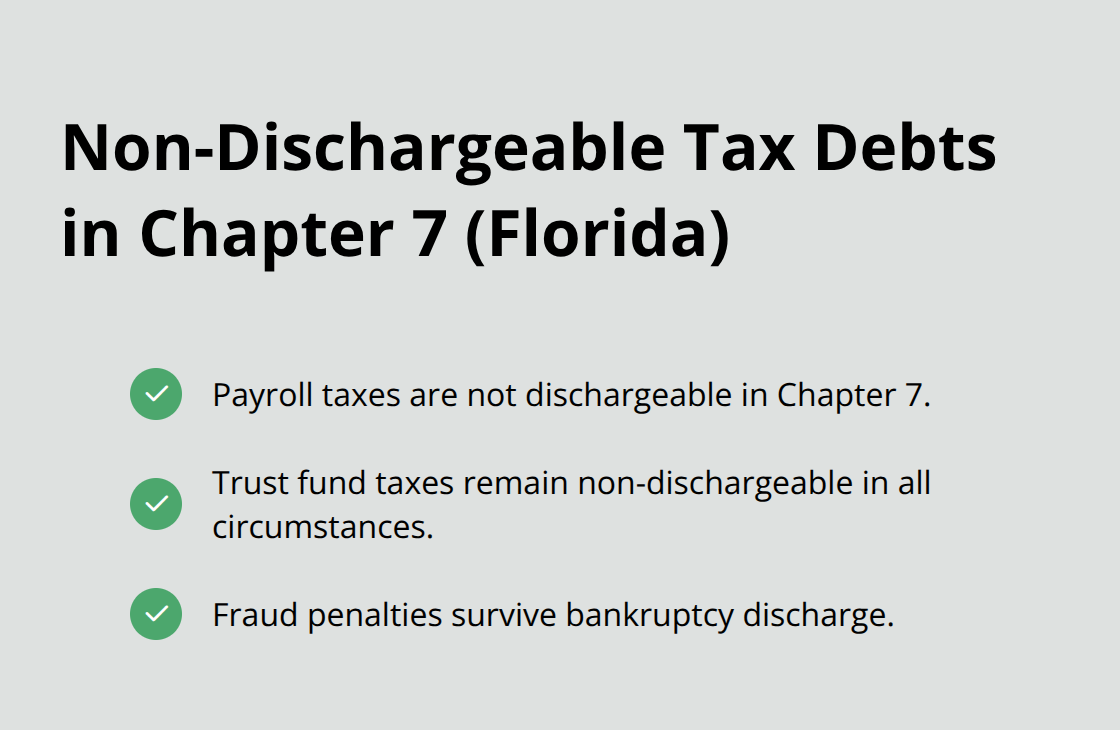
The reality is straightforward: if you owe income tax, you have a legitimate path to discharge it. If you owe payroll taxes from a business or penalties tied to fraud, those debts will follow you through the process and beyond.
The 3-2-240 Rule Controls Your Discharge Eligibility
Three specific dates determine whether your income tax debt qualifies for discharge. The tax return must have been due at least three years before you file for bankruptcy. You must have filed the return itself at least two years before your bankruptcy petition. The IRS must have assessed the debt at least 240 days before you file. These timelines are strict and non-negotiable. If you owe taxes on a return due April 15, 2021, you cannot discharge that debt in a bankruptcy filed before April 15, 2024. The 240-day assessment period extends if the IRS suspended collection activity through an offer in compromise or a previous bankruptcy case. Timing your bankruptcy filing matters significantly. Filing too early by even one day disqualifies otherwise eligible tax debt from discharge. Review your complete tax history with the IRS before filing to confirm which years meet all three criteria.
Fraud and Willful Evasion Block Discharge
Meeting the 3-2-240 requirements does not protect you if the IRS proves you committed fraud or willfully evaded taxes. The Eleventh Circuit, which covers Florida, requires affirmative acts of fraud such as maintaining double books, making false entries, destroying records, or concealing income. Simply failing to file or pay does not qualify as willful evasion under Florida law. The burden falls on the IRS to prove these affirmative acts, and courts interpret discharge exceptions narrowly. This protects honest debtors while holding fraudsters accountable.
Tax Liens Survive Discharge
Tax liens present a separate issue from debt discharge. Even if your tax debt receives discharge, the lien remains attached to your property unless the IRS releases it or you pay it off. Discharge eliminates your personal liability for the debt, but the government retains its claim against your assets. Understanding this distinction becomes critical as you move through the Chapter 7 process, where the bankruptcy trustee’s role in handling tax obligations shapes what happens to your property and which debts actually disappear.
How Chapter 7 Protects You From the IRS
Filing Chapter 7 bankruptcy triggers an automatic stay that immediately halts IRS collection actions. The moment your petition reaches the bankruptcy court, wage garnishments stop, bank levies freeze, and property seizures pause. The IRS cannot continue collection efforts during your case, according to the U.S. Bankruptcy Code. This protection remains in effect for the entire duration of your bankruptcy, giving you breathing room to address your financial situation without the IRS pursuing aggressive enforcement tactics.
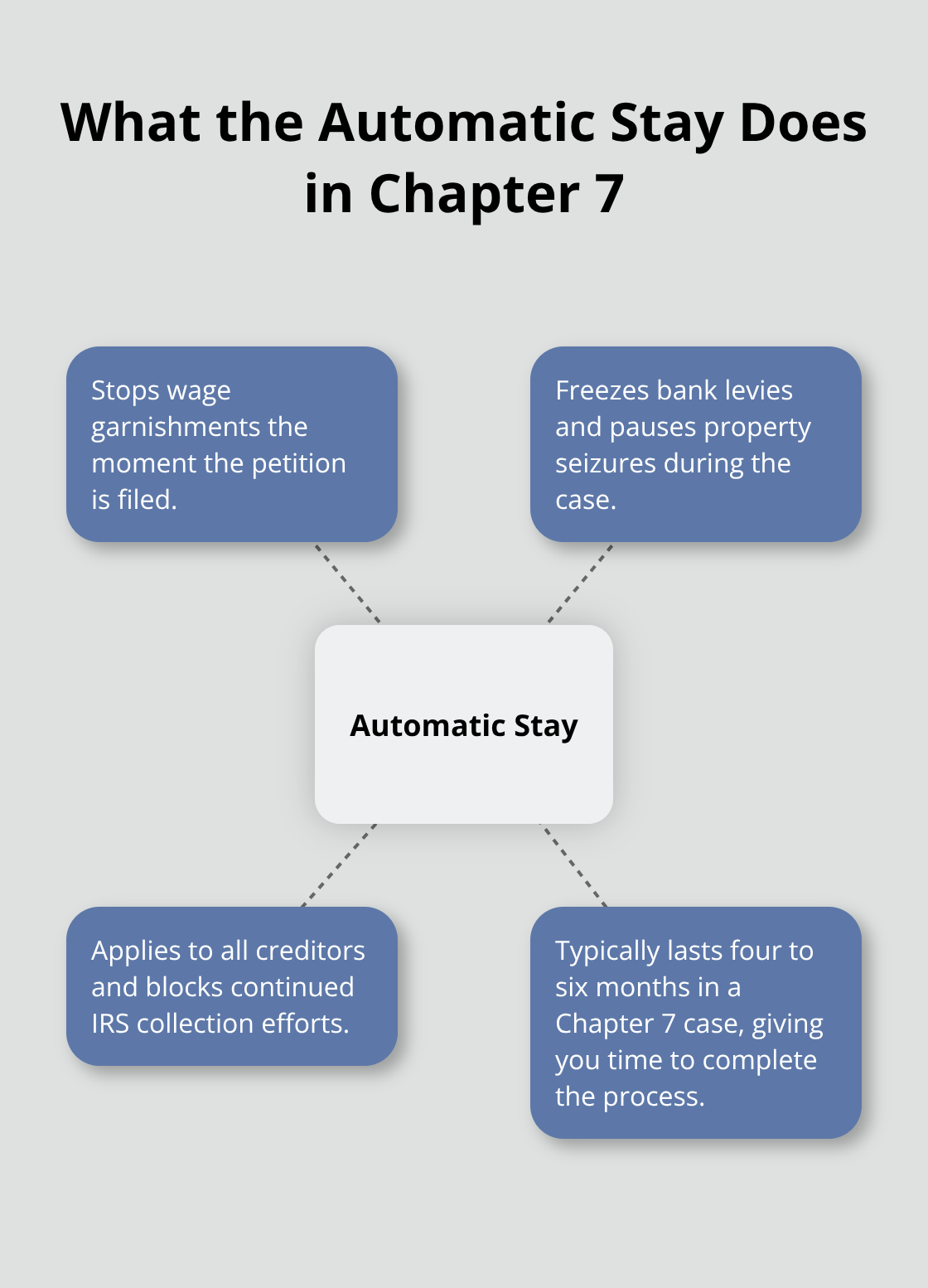
The automatic stay applies to all creditors, but the IRS typically moves faster than most, so this pause matters significantly. In practice, the automatic stay buys you time-usually between four to six months in a Chapter 7 case-to work through the bankruptcy process without facing new collection notices or frozen accounts.
Tax Liens Persist After Discharge
The automatic stay stops collection activity, but it does not eliminate tax liens. If the IRS filed a lien before your bankruptcy petition, that lien remains attached to your property even after your tax debt receives discharge. Discharge eliminates your personal liability to pay the debt, but the government retains its legal claim against your assets. This distinction confuses many Florida residents who assume discharge means the lien disappears. It does not. A lien release requires either the IRS to voluntarily release it, you to pay off the debt, or a court order in specific circumstances. If you own a home with significant equity, the trustee assigned to your case may need to account for the tax lien when determining what property the trustee can liquidate. Understanding this reality before filing prevents disappointment when you discover the lien still exists after your discharge order arrives.
The Trustee’s Role in Protecting Your Assets
Your Chapter 7 trustee handles all interactions with the IRS regarding your tax obligations. The trustee receives your tax debt schedules, reviews your assets, and determines what property qualifies for liquidation under federal and Florida exemption laws. In many Chapter 7 cases, debtors claim exemptions that protect their homes, vehicles, and essential personal property from liquidation. Florida homestead exemptions provide strong protections for primary residences, allowing you to retain significant home equity even in bankruptcy. The trustee’s job involves maximizing distributions to unsecured creditors like the IRS, but this occurs only when nonexempt assets exist. Most Chapter 7 cases filed in Florida are no-asset cases, meaning the trustee finds no property to liquidate and creditors receive nothing. When assets do exist, the trustee sells them and distributes proceeds according to bankruptcy priorities, with tax claims receiving treatment as unsecured debts. This process removes the burden of negotiating directly with the IRS while ensuring your exempt property remains protected throughout the case.
The trustee’s involvement also shapes how the IRS learns about your financial situation and what claims it can assert. Rather than the IRS pursuing you independently, the trustee controls the information flow and manages the distribution process according to bankruptcy law. This structured approach often results in better outcomes for debtors than attempting to negotiate with the IRS alone. As your case progresses toward discharge, understanding what happens to your specific tax obligations becomes essential-particularly when certain taxes cannot be discharged and require alternative handling strategies.
Common Mistakes Florida Residents Make with Tax Debt in Chapter 7
Florida residents filing Chapter 7 bankruptcy with tax debt often rush the process without understanding the strict timing requirements that govern discharge eligibility. The most costly mistake occurs when someone files too early before meeting the 3-2-240 rule. If your tax return was due April 15, 2023, you cannot discharge that debt until April 15, 2026 at the earliest, assuming the other two criteria are met. Filing even one day before that deadline wastes court resources, costs you filing fees around $335 total, and forces you to either dismiss your case or proceed without discharging those taxes. Many Florida residents discover this problem during their 341 meeting with the trustee, when it becomes too late to adjust their strategy. The solution is straightforward: pull your IRS account transcript at least six months before filing to verify the assessment dates and return due dates for each tax year. This single step prevents filing mistakes that cost thousands in wasted expenses and delays your fresh start by months.
Filing Before You Meet the Timing Requirements
The 3-2-240 rule creates hard deadlines that do not bend for anyone. Your tax return must have been due at least three years before your bankruptcy filing. You must have filed the return itself at least two years before your petition. The IRS must have assessed the debt at least 240 days before you file.
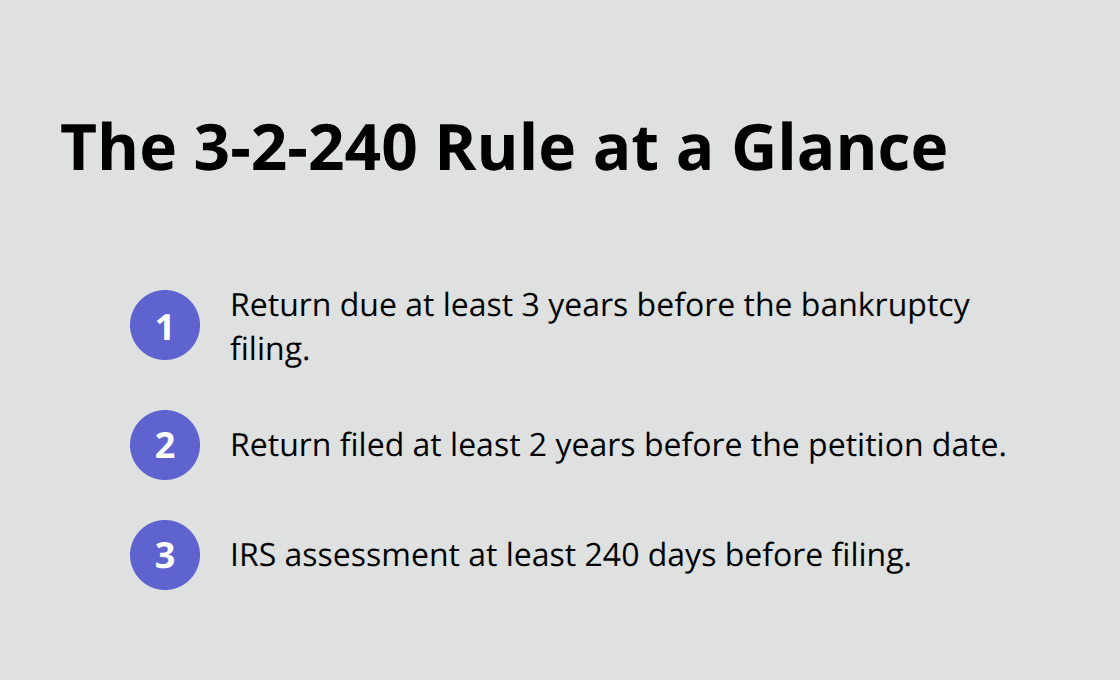
These three conditions work together, and missing even one disqualifies your tax debt from discharge. Many Florida residents calculate only one or two of these dates and assume they can proceed. The IRS assessment date matters most because it often falls months after you file your return. If you filed your 2020 return in April 2021 but the IRS did not assess it until September 2021, the 240-day clock starts in September, not April. Filing for bankruptcy in June 2022 would discharge that debt, but filing in August 2022 would not. This timing trap catches debtors who do not obtain their complete IRS account transcript before filing.
Omitting Tax Obligations From Your Bankruptcy Schedules
Failing to list all tax obligations on your bankruptcy schedules creates a different but equally serious problem. The bankruptcy court requires complete disclosure of every debt, including tax debts that cannot be discharged. When Florida residents omit tax years from their schedules because they assume those debts will not discharge anyway, they violate the duty of full disclosure and expose themselves to potential fraud allegations. The IRS does not forgive debts simply because you failed to mention them in bankruptcy. Instead, those unlisted taxes remain on your record as personal obligations that survived the bankruptcy process, and the IRS can continue collection efforts against you years later. Payroll taxes and fraud penalties cannot be discharged under any circumstances, according to IRS guidelines, but you must still list them so the court understands your complete financial picture. The trustee needs this information to properly administer your case and determine what property qualifies for liquidation.
Confusing Income Tax With Payroll Tax and Other Non-Dischargeable Debts
Many Florida residents misunderstand which taxes fall into the non-dischargeable category and attempt to discharge payroll taxes or penalties they owe as a business owner. These debts never qualify for discharge, regardless of the 3-2-240 timeline. Income tax represents what you owe on your personal earnings and investment income. Payroll taxes represent amounts you withheld from employee paychecks or owed as a self-employed person. Trust fund taxes (the employee portion of payroll taxes) carry special status under federal law and remain non-dischargeable in all circumstances. Fraud penalties attached to any tax return also survive bankruptcy discharge. Confusing income tax with payroll tax leads debtors to file bankruptcy expecting relief that never comes, then discover the IRS still pursues them for trust fund taxes after their discharge order arrives. Understanding this distinction before filing prevents the disappointment of a discharge that does not address your largest tax obligations.
Final Thoughts
IRS discharge in Chapter 7 bankruptcy depends on three elements: the 3-2-240 rule, the absence of fraud, and complete disclosure of all tax obligations. Income tax debt qualifies for discharge when your return was due at least three years before filing, you filed it at least two years before your petition, and the IRS assessed it at least 240 days before you filed. Payroll taxes, trust fund taxes, and fraud penalties never qualify for discharge, regardless of timing.
The mistakes Florida residents make with tax debt in Chapter 7 are preventable through proper planning. Filing too early before meeting the 3-2-240 requirements wastes filing fees and delays your fresh start, while omitting tax obligations from your bankruptcy schedules violates your duty of full disclosure and leaves you vulnerable to continued IRS collection efforts. Obtaining your complete IRS account transcript at least six months before filing clarifies which tax years actually qualify for discharge and prevents costly errors.
Consulting with a bankruptcy attorney before filing gives you clarity on your specific situation and prevents irreversible mistakes. Contact Harnage Law, PLLC to discuss your tax debt and determine whether Chapter 7 bankruptcy offers the fresh financial start you need.