Filing for Chapter 7 bankruptcy in Florida triggers an automatic stay that immediately halts most creditor actions. This legal protection gives you breathing room, but understanding automatic stay duration is essential because the protection doesn’t last forever.
We at Harnage Law, PLLC know that many filers don’t realize when their stay ends or what happens after discharge. This guide breaks down the timeline, your rights, and what creditors can and cannot do during this critical period.
What the Automatic Stay Actually Does
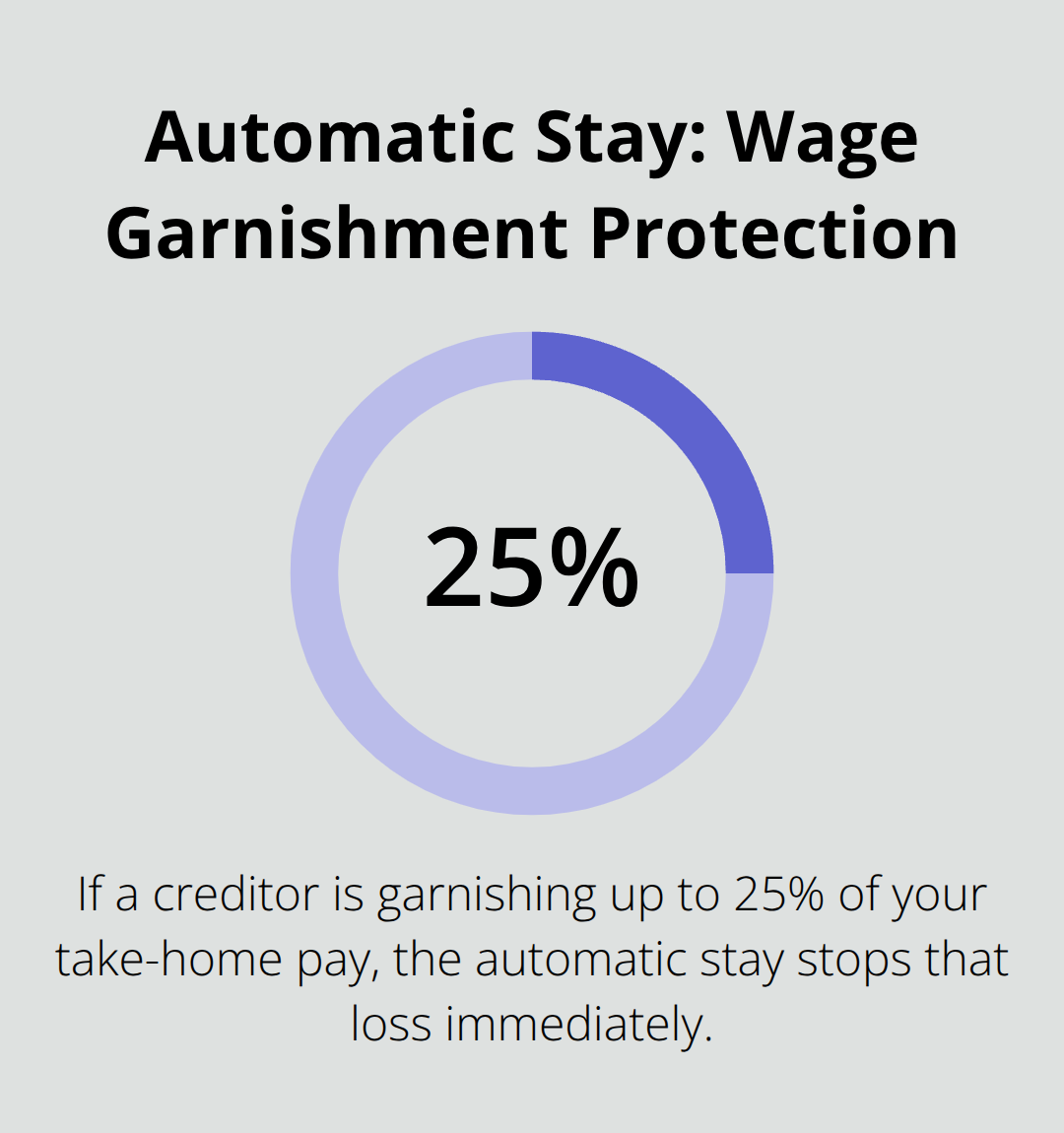
The automatic stay is a court-ordered injunction under Section 362 of the Bankruptcy Code that activates the moment your Chapter 7 petition is filed in Florida. This isn’t a request or a suggestion to creditors-it’s a legal mandate that stops collection activities immediately. Within hours of filing, creditors must cease wage garnishments, foreclosure proceedings, repossession attempts, lawsuits, collection calls, and letters. If you’re facing a garnishment that takes up to 25% of your take-home pay, the stay halts that income loss right away. This immediate protection applies across state lines, so creditors cannot pursue you in other jurisdictions either.
The stay takes effect without a court hearing or creditor approval; it’s automatic and binding the moment the bankruptcy court receives your petition.
What Creditors Must Stop Doing
Most creditor actions freeze under the automatic stay. Foreclosure on your home pauses, giving you time to explore options like loan modification or reinstatement. Repossession of your vehicle stops. Bank account levies and wage garnishments halt, restoring cash flow you need for living expenses. Lawsuits against you are suspended. Collection agency calls and letters must cease. If a creditor already obtained a judgment against you, enforcement of that judgment stops.
What the Stay Does Not Cover
The stay is not absolute. Child support and alimony obligations continue unaffected. Criminal prosecutions move forward. Certain tax collection activities and audits proceed. Debts you incur after filing are not covered by the stay, so new credit obligations can still be pursued. Government licensing actions and regulatory matters are not blocked.
Why These Exceptions Matter
Many filers assume everything stops, then face confusion when some obligations continue or when new creditors contact them about post-filing debts. Understanding these exceptions protects you from unexpected collection attempts and helps you prioritize which obligations demand your immediate attention. The distinction between what stops and what continues shapes your financial strategy during the bankruptcy process, which is why the next section examines how long the stay actually lasts and when it terminates.
How Long Your Stay Lasts
When Your Stay Ends
Your automatic stay remains in effect from the moment you file your Chapter 7 petition until your case reaches discharge or dismissal. In Florida, most Chapter 7 cases reach discharge within three to six months, meaning your stay protection lasts that entire period. The stay does not expire on a fixed date; instead, one of three events terminates it: your case receives a discharge order, the court dismisses your case, or a creditor obtains relief from the stay through a successful motion. The discharge represents the endpoint most filers reach, and bankruptcy statistics show that more than 99 percent of Chapter 7 debtors receive a discharge. When the discharge order enters, the stay ends automatically, but so does your liability for most unsecured debts like credit cards and medical bills. If your case faces dismissal before discharge-which occurs when you fail to complete required filings, miss deadlines, or fail the means test-the stay terminates immediately, and creditors can resume collection activities on any debts not yet resolved.
How Creditors Lift the Stay Early
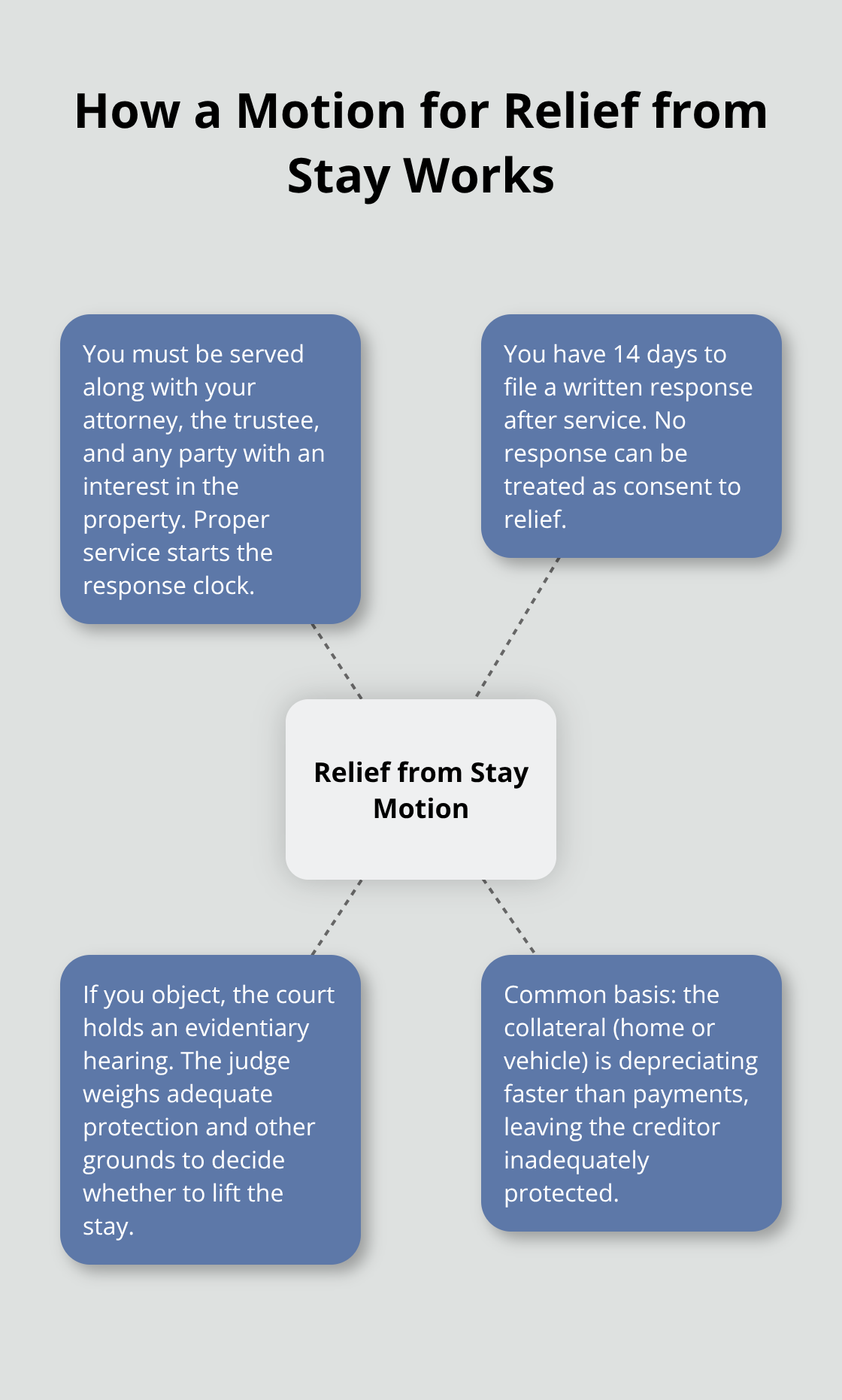
Creditors can end the stay before discharge by filing a Motion for Relief from the Automatic Stay, and Florida courts follow strict procedural rules for these motions. In the Southern District of Florida, the movant must serve the motion on you, your attorney, the trustee, and any party with an interest in the property. You have 14 days to file a written response after the motion is served; if you don’t respond, the court may treat your silence as consent to relief. If you do object, the court will schedule an evidentiary hearing where both sides present evidence about whether the creditor has adequate protection for their collateral or whether other grounds justify lifting the stay. The most common reason creditors seek relief is that they claim their collateral-typically a home or vehicle-depreciates faster than you pay the debt, leaving them inadequately protected.
Extending the Stay Beyond Standard Duration
Extensions to the stay are possible under Section 362(c)(3) if you file a motion with an affidavit explaining why the stay should continue, but courts presume bad faith if you have filed multiple bankruptcies within the past year. You must rebut that presumption with specific facts to succeed. Understanding these timelines matters because creditors will file relief motions strategically; if you own a home facing foreclosure or a vehicle facing repossession, the creditor may move quickly to lift the stay unless you take action to protect your interest through a loan modification, reinstatement, or a Chapter 13 conversion. The decisions you make in response to relief motions directly shape whether you retain your property or lose it during the bankruptcy process.
Common Creditor Actions During and After the Automatic Stay
Violations and Penalties for Creditor Harassment
Creditors who ignore the automatic stay and continue collection activities face real financial consequences under Florida law. When a creditor calls you after your filing, attempts wage garnishment despite the stay, or pursues foreclosure after receiving notice of your bankruptcy, that creditor has violated Section 362 of the Bankruptcy Code. You can file a motion in bankruptcy court to hold the creditor accountable, and if the court finds a violation, you recover compensatory damages for actual harm plus attorney fees and court costs. Many violations also trigger punitive damages ranging from roughly $1,000 to $5,000 or more depending on severity and whether the creditor’s conduct was willful.
Documentation proves essential to building a strong violation claim. Save every creditor communication after filing, including voicemails, emails, letters, and text messages. Record call dates and times. If a creditor contacts you about your debt after receiving the bankruptcy notice, that communication is nearly always a violation. Courts take these violations seriously because creditors must know the rules, and repeated violations suggest intentional disregard. You don’t need to prove the creditor intended to harm you, only that they knowingly or recklessly violated the stay.
If you face ongoing harassment after filing, contact an attorney immediately to discuss filing a stay violation motion. The damages you recover can offset your legal costs and send a clear message that violations carry consequences.
What Happens After Discharge
After your Chapter 7 case receives a discharge, the automatic stay ends and your liability for most unsecured debts terminates, but creditors still cannot pursue you on discharged obligations. The discharge order is final and binding, meaning creditors cannot call, sue, or attempt collection on credit card debt, medical bills, personal loans, and similar unsecured debts included in your case. Attempting to collect a discharged debt violates the discharge injunction under Section 524 of the Bankruptcy Code, and you have the same remedies available as with stay violations.
However, certain debts survive discharge and creditors can pursue those aggressively. Child support and alimony obligations continue indefinitely. Recent tax debts may remain.
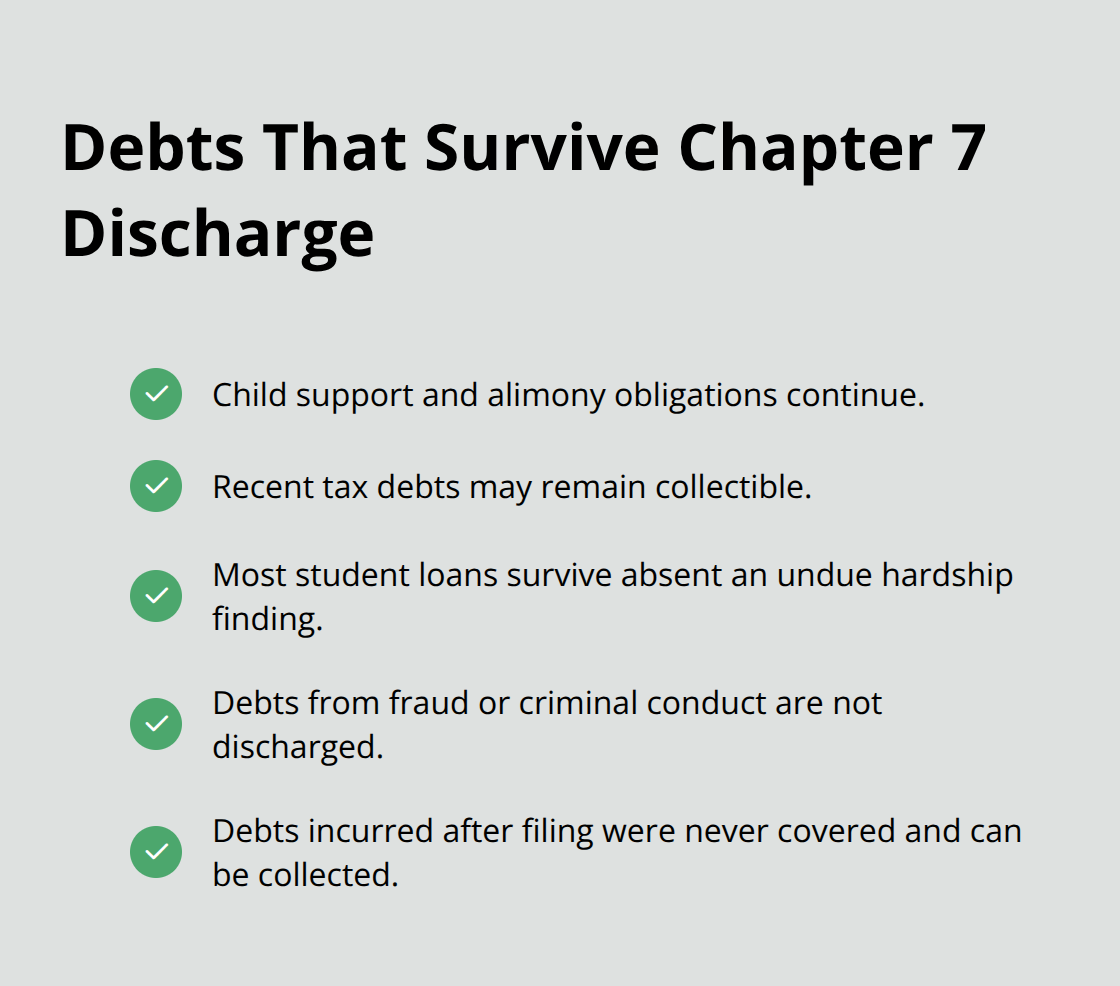
Student loans typically survive discharge unless you prove undue hardship. Debts from fraud or criminal conduct are not discharged. Additionally, debts you incur after filing were never covered by the stay and are not affected by discharge, so a new creditor from a post-filing debt can pursue collection immediately.
Secured Debts and Liens After Discharge
In Florida, secured debts tied to collateral like your home or vehicle require careful attention because the discharge eliminates your personal liability, but the lender’s lien on the property remains unless you redeemed or surrendered the collateral during your case. This means a mortgage holder cannot pursue you personally for a deficiency after foreclosure, but the lien survives. A creditor cannot pursue you on a discharged obligation, yet the lien itself persists as a claim against the property.
Understanding what survives discharge prevents confusion when creditors contact you after your case closes. You can distinguish between legitimate post-discharge collection efforts on non-discharged debts and illegal attempts to collect on obligations that were discharged. This knowledge protects you from unwanted contact and helps you respond appropriately to any creditor communication that arrives after your discharge order enters.
Final Thoughts
The automatic stay duration in Chapter 7 bankruptcy shapes your entire financial recovery. From the moment you file in Florida, the stay halts wage garnishments, foreclosures, repossessions, and collection calls, giving you immediate breathing room. That protection lasts through discharge, typically three to six months, unless a creditor obtains relief or your case faces dismissal.
Your rights during this period are substantial, but they have limits. Child support, alimony, and certain tax obligations continue regardless of the stay. Debts you incur after filing receive no protection. Creditors who violate the stay by contacting you or pursuing collection face real penalties, including compensatory damages, attorney fees, and punitive damages ranging from roughly $1,000 to $5,000 or more. Documenting every violation strengthens your position if you need to hold a creditor accountable in court.
After discharge, most unsecured debts vanish permanently, but secured debts tied to collateral like your home or vehicle require careful attention. The discharge eliminates your personal liability, yet liens on property may persist. If you face questions about automatic stay duration, creditor violations, or what happens after discharge, contact Harnage Law, PLLC for personalized legal guidance tailored to your situation.