
Filing Chapter 7 bankruptcy doesn’t mean losing your car. Florida law protects a portion of your vehicle’s equity, allowing many filers to keep their transportation.
We at Harnage Law, PLLC help clients understand exactly how car exemption Chapter 7 rules work and what they can realistically protect. This guide walks you through Florida’s motor vehicle exemption limits, strategies for multiple vehicles, and concrete steps to take before filing.
How Much Car Equity Can You Protect in Florida Chapter 7
Florida’s motor vehicle exemption allows you to shield up to $5,000 of your car’s equity when filing Chapter 7 bankruptcy. This protection took effect on July 1, 2024, when Florida Senate Bill 158 increased the exemption from the previous $1,000 limit that had been in place since 1993. If you have medical debt, the exemption rises to $10,000 for a single vehicle, giving you substantially more room to keep your transportation.
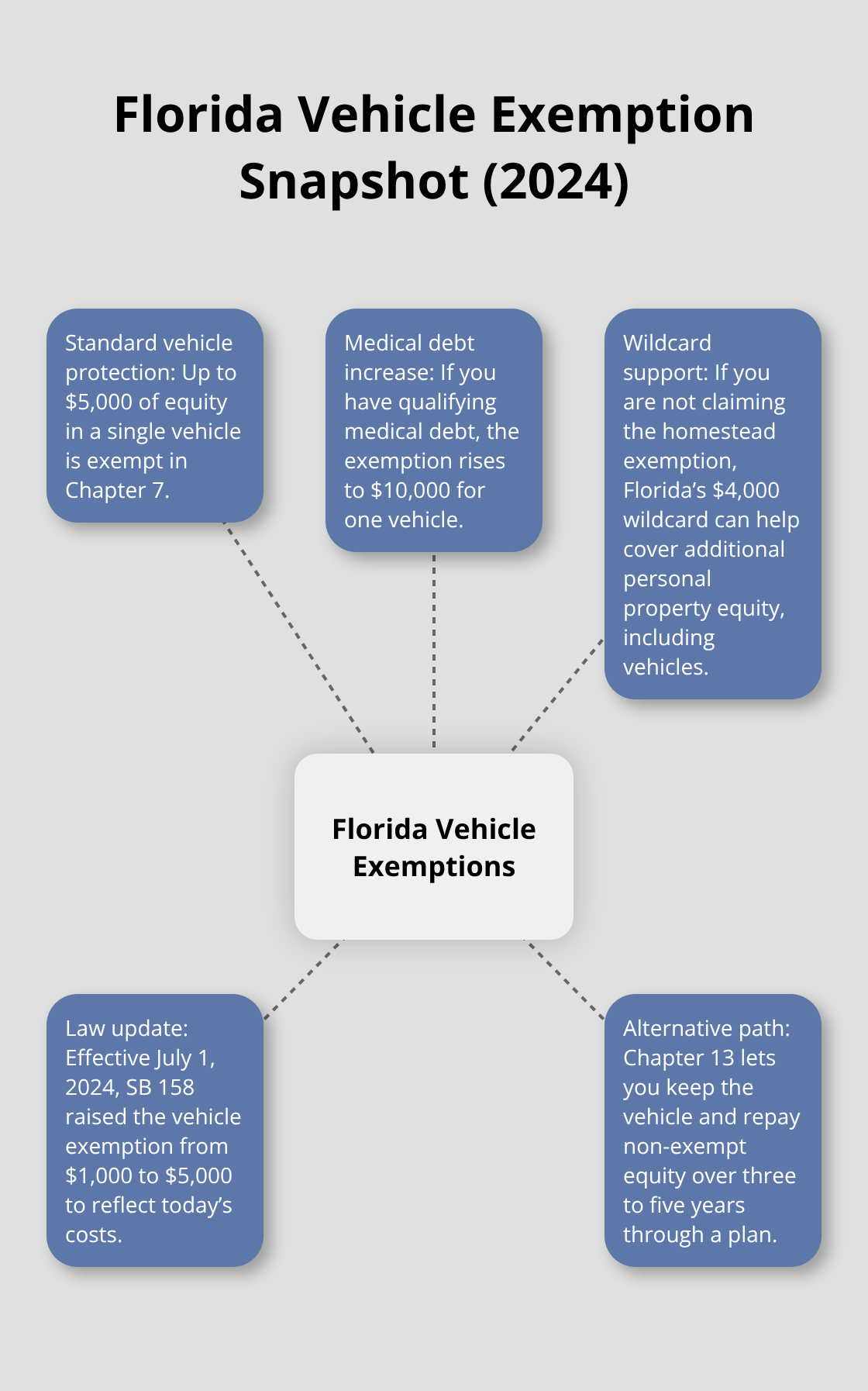
The change reflects Florida’s recognition that vehicle costs have climbed significantly, and protecting your car matters for rebuilding your life after bankruptcy.
Understanding Your Vehicle’s Equity Position
Equity represents your car’s current market value minus any outstanding loan balance. If your vehicle is worth $7,000 and you owe $2,000 on the loan, your equity is $5,000, which falls exactly at the exemption threshold and remains protected. When your car is worth $8,000 with a $3,000 loan balance, you have $5,000 in equity that qualifies for full protection. If your vehicle’s equity is $3,500, the entire amount stays exempt because it sits below the $5,000 cap. The math is straightforward, but obtaining an accurate vehicle valuation matters enormously because the court may appoint a disinterested appraiser to determine fair market value if anyone questions your estimate, which can influence how much protection you actually receive.
What Happens When Your Vehicle Exceeds the Exemption
If your car’s equity surpasses $5,000, the bankruptcy trustee may liquidate the vehicle to pay unsecured creditors with the excess amount. A car valued at $9,000 with no loan balance leaves $4,000 in non-exempt equity that could be sold. However, you have options beyond losing the vehicle. You can apply Florida’s wildcard exemption, which allows up to $4,000 in additional protection for personal property if you’re not using the homestead exemption, potentially covering the overage. Chapter 13 bankruptcy offers another path where you keep the vehicle and repay non-exempt equity through a three to five year plan, eliminating liquidation risk entirely if you stay current with payments. Most debtors in Florida who file Chapter 7 end up in no-asset cases where all property remains exempt anyway, so having a vehicle that exceeds the exemption doesn’t automatically mean losing it.
Preparing for Your Vehicle Appraisal
Getting an accurate valuation before filing strengthens your position significantly. Use online tools like Kelley Blue Book or NADA Guides to establish your car’s fair market value, then compare multiple sources to confirm the figure. Document the vehicle’s condition, mileage, and any mechanical issues that affect its worth, as these details support your valuation if challenged. If the trustee questions your estimate, the court appoints an independent appraiser whose assessment determines the final value used in your case.
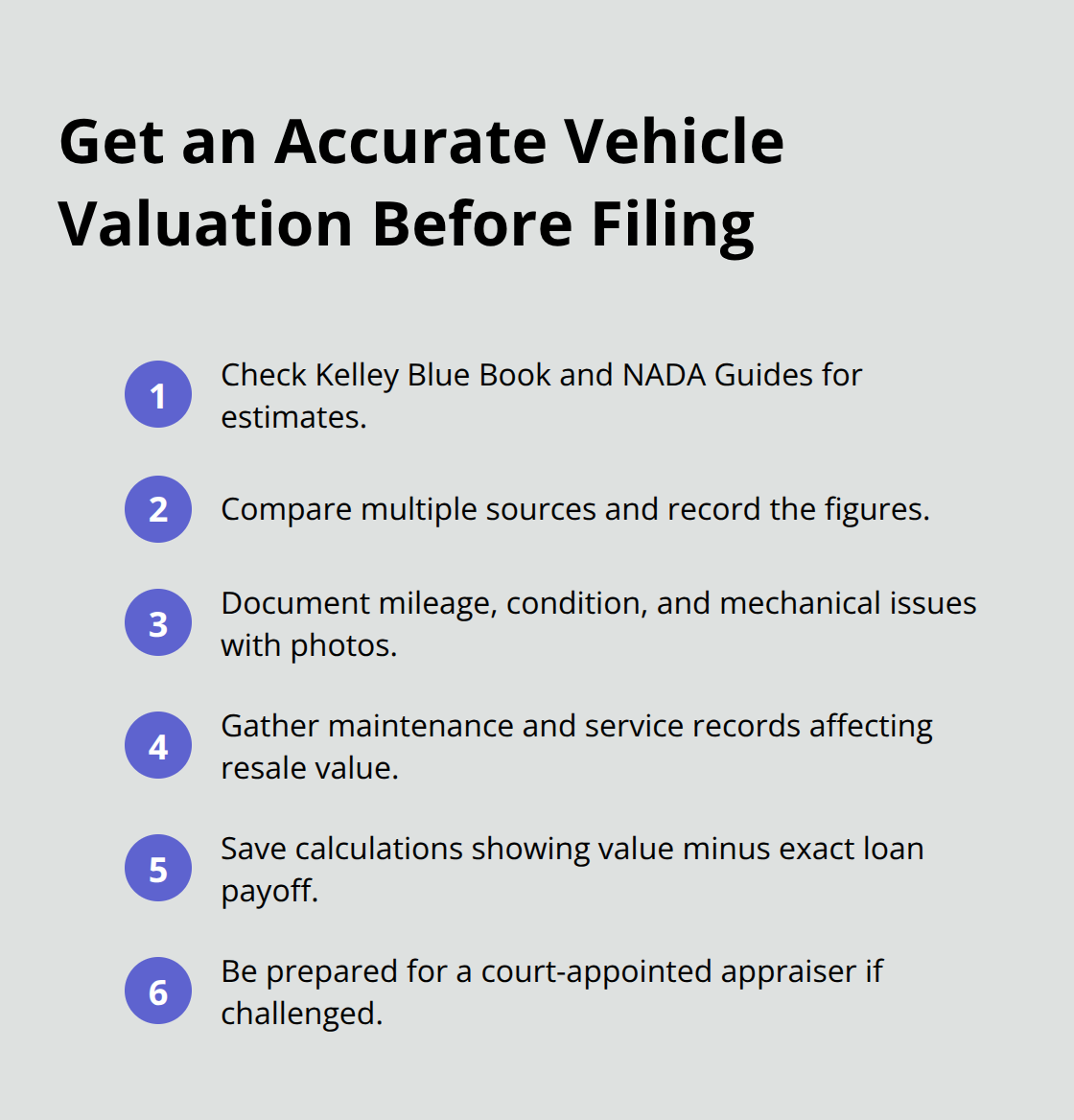
Taking time to gather this information now prevents surprises later and helps you understand exactly what equity protection you’ll receive.
Moving Forward With Your Vehicle Strategy
Your next step involves calculating your specific equity position and determining which exemption strategy works best for your situation. If your equity falls within the $5,000 limit (or $10,000 with medical debt), your vehicle protection is straightforward. If your equity exceeds these amounts, you’ll want to explore whether the wildcard exemption applies or whether Chapter 13 makes more sense for your circumstances. The decisions you make now about your vehicle directly affect your overall bankruptcy strategy and what assets you’ll protect moving forward.
Protecting Multiple Vehicles in Your Florida Chapter 7 Filing
Exempting More Than One Vehicle
Households with two or more vehicles can protect multiple cars in Chapter 7 bankruptcy, but Florida law requires you to justify each one. You cannot simply claim you need three vehicles without connecting them to legitimate purposes. A commuter vehicle for your job and a second car for family errands qualifies easily. A work truck and a personal vehicle for your spouse’s employment also passes scrutiny.
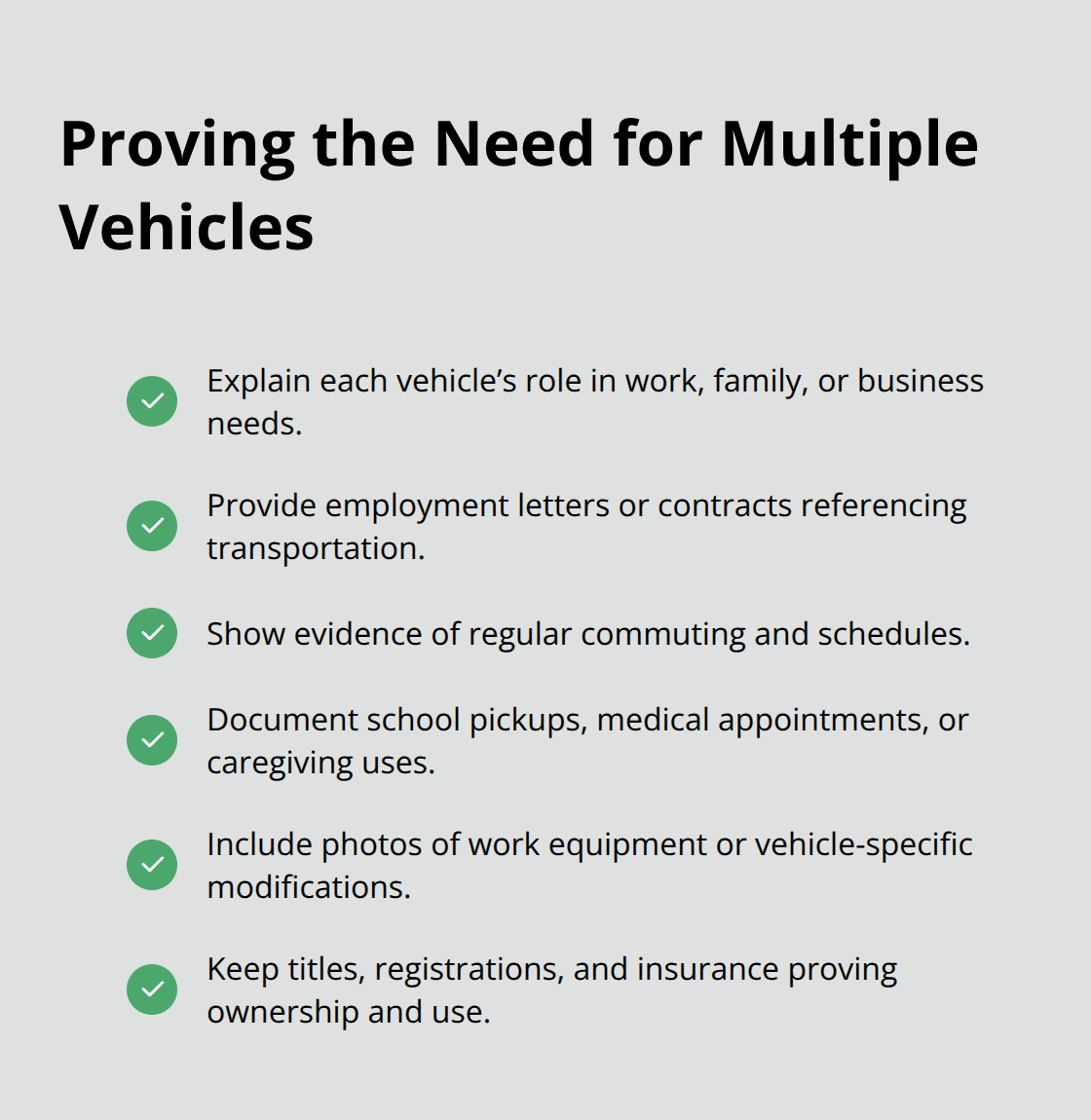
The court wants to see why your household actually needs multiple vehicles, not just that you own them.
Each vehicle receives its own $5,000 exemption (or $10,000 if medical debt applies), meaning a household with two cars can protect up to $10,000 in total equity across both vehicles. If you own three vehicles, the math becomes tighter-you need strong documentation showing all three are essential, and the trustee may challenge the third vehicle as unnecessary. Collect documentation now showing each vehicle’s actual use: employment contracts, job letters stating you need a vehicle, evidence of regular commuting, or written explanations of how each car supports your household’s functioning. Photos of work-related equipment in a truck or documentation of school pickup responsibilities strengthen your position considerably.
Calculating Equity Across Multiple Vehicles
When your vehicles have loans attached, you calculate the equity for each one separately. A truck valued at $12,000 with a $9,000 loan balance leaves $3,000 in equity that the $5,000 exemption fully protects. A sedan worth $6,000 with a $4,000 loan balance gives you $2,000 in equity, also protected. Combined, both vehicles stay in your possession despite having $5,000 total equity across them because each individual vehicle’s equity falls within protection limits. This approach works in your favor when you own multiple financed vehicles, as the loan amounts reduce the equity that the trustee can target.
Understanding Co-Owned and Financed Vehicles
Co-owned vehicles complicate protection because you can only shield your own equity share in the vehicle. If you co-own a car with your spouse and the total equity is $8,000, your 50 percent share equals $4,000, which receives full protection under the $5,000 exemption. Your spouse’s $4,000 share may be protected under their own exemption if they’re also filing Chapter 7, or it may be at risk if they’re not filing. This requires clear documentation of ownership percentages and how title is held.
Vehicles financed through loans where you’re the primary obligor but a family member co-signs create different risks. The lender has claim to the vehicle regardless of how you’ve arranged internal family payments, but your exemption still protects your equity share from the bankruptcy trustee. Before filing, sit down with your loan documents and verify exactly who holds title, how much each person has contributed to equity, and whether co-owners are also filing bankruptcy. This clarity prevents disputes during your case and protects what you actually own rather than making assumptions about shared vehicles.
Understanding your multi-vehicle situation now sets the stage for the next critical step: reviewing your specific vehicle values and loan balances before you file, which determines exactly what protection you’ll receive and what strategies work best for your household’s transportation needs.
Securing Your Vehicle Before Filing Chapter 7
Gather Your Vehicle’s Financial Details
Start with three critical pieces of information about each vehicle you own: its current fair market value, your loan balance, and the loan payoff date. Open Kelley Blue Book or NADA Guides and enter your vehicle’s year, make, model, mileage, and condition to get a realistic valuation. Do this for every car in your household, not just the primary vehicle. Next, contact your lender directly and request your exact loan payoff amount as of today, not an estimate from your last statement. The difference between your car’s value and this payoff figure is your equity, and this number determines everything about your Chapter 7 protection.
If your vehicle is worth $6,500 and you owe $3,200, your equity is $3,300, which sits comfortably within Florida’s $5,000 exemption. Write these numbers down clearly because you’ll need them when filing your bankruptcy petition. Many people skip this step and guess at values, which creates problems later when the trustee questions their estimates.
Understand How Courts Verify Vehicle Values
Courts can appoint independent appraisers to determine fair market value, and if the official appraisal comes in higher than your claim, you could lose protection on that extra equity. Taking two hours now to document vehicle values accurately prevents months of uncertainty during your case. Gather supporting documentation like recent maintenance records, photos showing the vehicle’s condition, and any service reports that reflect wear or damage affecting resale value.
Document the Need for Multiple Vehicles
Once you have your numbers, decide whether each vehicle qualifies for protection based on actual household need. If you own two cars, write down specifically why you need both: one for work commuting and one for your spouse’s job, or one for your business and one for family transportation. Courts accept these justifications easily when documented with employment letters or written explanations of how each vehicle supports your household’s functioning.
Explore Additional Exemption Options
If your vehicle equity exceeds $5,000 and you don’t qualify for the $10,000 medical debt exemption, calculate whether Florida’s $4,000 wildcard exemption could cover the overage if you’re not claiming the homestead exemption. This wildcard protection applies to any personal property, not just vehicles, so it can bridge gaps in your vehicle protection. Chapter 13 bankruptcy might better preserve a higher-value vehicle through a repayment plan, allowing you to keep the car and repay non-exempt equity over three to five years.
Take Action on Your Vehicle Strategy
Contact a Florida bankruptcy attorney to review your specific vehicle situation, confirm which exemptions apply to your circumstances, and identify whether Chapter 13 might better preserve a higher-value vehicle. The decisions you make about your vehicles now directly impact your overall bankruptcy strategy and what you’ll actually keep when your case closes.
Final Thoughts
Florida’s car exemption Chapter 7 rules protect most vehicles from liquidation through the $5,000 exemption (or $10,000 with medical debt). Your equity calculation determines everything: vehicle value minus loan balance tells you exactly what the trustee can target, and when your equity stays within the exemption limit, you keep your car. The July 2024 increase from $1,000 reflects what vehicles actually cost in Florida today, giving you substantially more protection than the previous law allowed.
Multiple vehicles require documentation showing each one serves a legitimate household purpose, but households with two or more cars can protect significant equity across all of them. Co-owned and financed vehicles follow the same equity rules, though ownership percentages matter when determining your individual protection. Taking time now to gather accurate vehicle valuations, loan payoff amounts, and documentation of vehicle necessity prevents disputes during your bankruptcy case and clarifies exactly what you’ll protect.
Contact Harnage Law, PLLC to review your specific vehicle situation and build a bankruptcy strategy that preserves your transportation. We’ll calculate your equity, confirm which exemptions apply to your circumstances, and help you discharge qualifying debts while keeping the assets that matter most to your family’s stability. Your next step is straightforward: gather your vehicle information and reach out to discuss your financial recovery.
