Filing Chapter 7 in Florida gives you a clear path forward when debt becomes overwhelming. The process involves seven concrete steps, from passing the means test to receiving your discharge and rebuilding your financial life.
We at Harnage Law, PLLC have guided countless Floridians through this journey. This guide walks you through each stage so you know exactly what to expect.
Step 1: Pass the Means Test to Qualify
The means test determines whether your income qualifies you for Chapter 7 bankruptcy in Florida. This test compares your current monthly income against Florida’s median household income, which varies by family size. The U.S. Trustee Program uses Census Bureau and IRS data to set these thresholds, reflecting real cost-of-living expenses in your state. If your income falls below the median for your household size, you pass automatically and proceed with Chapter 7. If your income exceeds the median, the trustee calculates your disposable income using allowed expenses to determine whether you have enough leftover money each month to repay debts.
Calculating disposable income requires completing Official Bankruptcy Form B122A-2, which subtracts qualified expenses from your current monthly income. The form applies IRS standards and Census multipliers for housing, transportation, food, and utilities-you cannot simply claim whatever expenses you want. Accurate documentation matters here; you’ll need your last 60 days of pay stubs, tax returns, and current bills to support your numbers. If the means test shows significant disposable income, the court may conclude Chapter 7 abuse and deny your filing or push you toward Chapter 13 instead (where you’d repay debts over three to five years). Understanding this calculation upfront helps you prepare realistic documentation and avoid delays or dismissals based on incomplete means testing.
Step 2: Get Your Credit Counseling Certificate
Credit counseling is not optional-it’s a federal requirement before you file Chapter 7 in Florida. The U.S. Trustee maintains a list of approved agencies on their website, and you must complete your course with one of these providers within 180 days before filing your petition. Most agencies offer online sessions that take one to two hours, making it possible to complete this requirement without traveling or taking time off work. During your session, a counselor reviews your income, debts, and budget to identify whether bankruptcy is truly your best option or if alternatives like debt management plans might work. You’ll receive a certificate of completion immediately after finishing, which you must submit with your bankruptcy petition-without it, the court will dismiss your case.
Bring documentation that shows your current financial situation: recent pay stubs, bank statements, and a list of your debts with approximate balances. The counselor won’t judge your situation; their role is to ensure you understand what Chapter 7 involves and what happens to your assets and debts afterward. Many agencies ask about your income sources, monthly expenses, and whether you have any assets of significant value. This conversation helps the counselor provide realistic guidance tailored to your circumstances. Once you complete the session and obtain your certificate, you’re ready to move forward with the next critical step: gathering your financial documents and completing the bankruptcy forms that the court requires.
Step 3: Compile Your Financial Records and Complete Court Forms
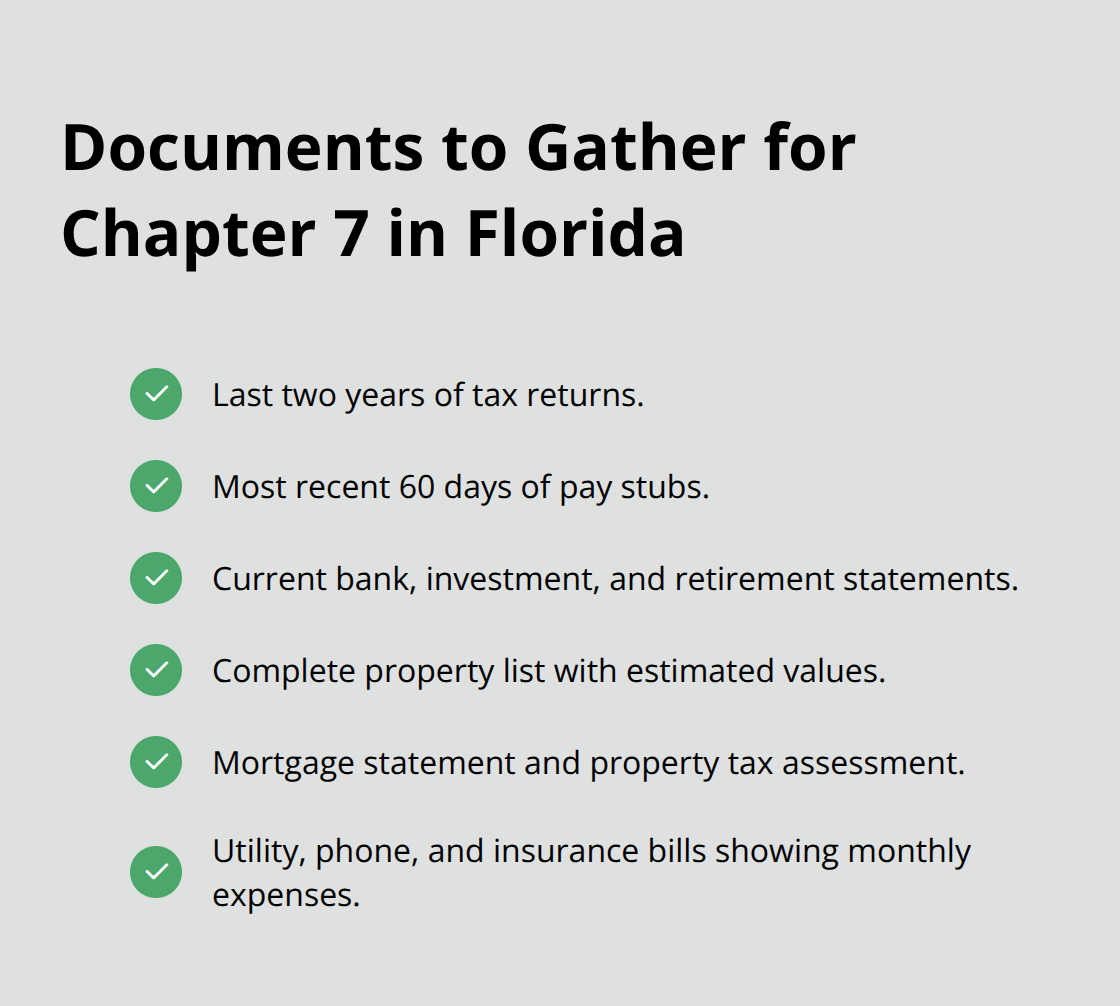
Gathering the right documents before you fill out bankruptcy forms saves weeks of back-and-forth with the court and your attorney. You’ll need your last two years of tax returns, your most recent 60 days of pay stubs, and current statements from every bank account, investment account, and retirement account you hold. The court also requires a list of all your property with estimated values-your car, furniture, electronics, tools, jewelry-anything of monetary worth. If you own a home, pull your mortgage statement and property tax assessment to document its current value and what you owe. Utility bills, phone bills, and insurance statements showing your monthly living expenses feed directly into the means test calculation and your bankruptcy schedules.
The petition itself consists of multiple official forms: the Voluntary Petition, Schedule A for real property, Schedule B for personal property, Schedule D for secured debts, Schedule E for unsecured debts, Schedule I for income, Schedule J for expenses, and the Statement of Financial Affairs that explains what happened to your assets over the past four years. The most common filing mistake is undervaluing or omitting assets, which can lead the trustee to suspect fraud and delay or deny your discharge. Another frequent error is listing incorrect creditor addresses on your creditor matrix-the court uses this to notify your creditors, and wrong addresses mean notices don’t reach them.
Look up actual market prices using online tools or recent appraisals rather than estimates for your property values. Accuracy on these forms protects you from court challenges and speeds your path toward discharge. Once you complete these forms with precision, you move into the next critical phase: filing your petition with the Florida bankruptcy court and triggering the automatic stay that stops creditor collection efforts immediately.
Step 4: File Your Petition and Trigger Immediate Protection
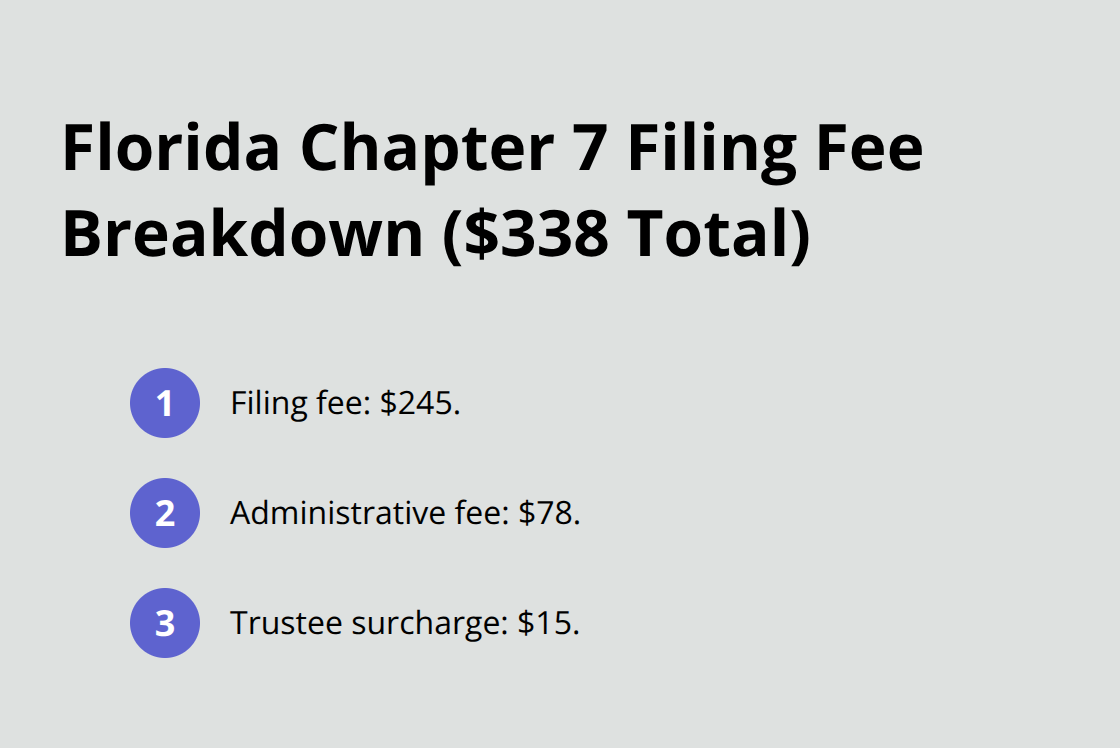
File your petition with the correct Florida bankruptcy court district based on your county of residence. The U.S. Bankruptcy Court for the Southern District of Florida, Middle District of Florida, and Northern District of Florida each handle cases according to location, so verify which court has jurisdiction before submitting anything. The filing fee totals $338-$245 for the filing fee, $78 for the administrative fee, and $15 for the trustee surcharge. You must pay this fee with a cashier’s check or money order payable to Clerk, U.S. Bankruptcy Court within 14 days of filing; the court will not accept cash, personal checks, or credit cards.
If you cannot afford the full amount upfront, you can request installment payments under Local Rule 1006-1(A), with your first installment covering at least half the total fee.
The moment the court stamps your petition as filed, the automatic stay takes effect and blocks virtually all creditor collection efforts against you. Creditors cannot call, send collection letters, pursue wage garnishments, or continue lawsuits once the stay is in place. Any pending lawsuits against you pause automatically, and collection actions halt completely. If creditors violate the automatic stay after filing, you can hold them accountable for damages. This protection remains active throughout your entire bankruptcy case, giving you breathing room while the trustee reviews your case and your path to discharge unfolds.
With the automatic stay now protecting you from collection pressure, the next phase involves meeting with the trustee assigned to your case at the 341 meeting of creditors.
Step 5: Meet with the Bankruptcy Trustee
The 341 meeting of creditors occurs roughly 30 days after you file your petition, and creditors almost never attend. The trustee assigned to your case will ask you questions under oath about your income, debts, assets, and financial situation to verify the information you submitted on your bankruptcy forms. Bring your government-issued photo ID and your original Social Security card or a copy of your tax return showing your Social Security number. Have recent pay stubs, bank statements, and proof of any assets available in case the trustee requests documentation on the spot. Arrive 15 minutes early to review your petition one final time and confirm all details are accurate.
The trustee’s questions focus on whether you have been truthful about your assets, income, and debts, not on judging your financial situation. You will be asked about major purchases or transfers in the past four years, any inheritance or lawsuit settlements, and whether you have hidden assets or income sources. Answer directly and honestly; lying under oath creates serious legal consequences. The entire meeting typically lasts 5 to 10 minutes per debtor, and most cases proceed smoothly without complications. Once the meeting concludes, you move forward toward completing your financial management course, which you must finish within 60 days of this meeting to qualify for your discharge.
Step 6: Complete Your Debtor Education Course
The financial management course is the final mandatory step before the court grants your discharge, and you must complete it within 60 days after your 341 meeting. The U.S. Trustee maintains a list of approved debtor education providers, and you can select any agency from that list to take your course online or in person. Most providers charge between $50 and $100 for the course, which typically runs two to three hours and covers budgeting, credit rebuilding, and financial planning strategies tailored to post-bankruptcy life.
Schedule this course well before your 60-day deadline expires; waiting until the last week creates unnecessary stress and risks missing the window entirely. The course provider will issue you a completion certificate immediately, which you must file with the court to finalize your discharge. Many debtors mistakenly believe the credit counseling course they completed before filing satisfies this requirement, but it does not-these are two separate, mandatory courses. The pre-filing counseling focuses on whether bankruptcy is right for you, while the financial management course teaches you how to avoid financial problems after discharge.
Your completion certificate must reach the court within the 60-day window or your discharge will be delayed until you file it. Do not lose this certificate; keep a copy for your records and submit the original to the bankruptcy court immediately after completion. Once the court receives your certificate, your discharge papers are issued within days, eliminating your qualifying debts and marking the official end of your Chapter 7 case in Florida. With your discharge finalized, you transition into the final phase of your bankruptcy journey: rebuilding your financial future and taking the first concrete steps toward credit recovery.
Step 7: Your Discharge and Financial Recovery
Your discharge papers arrive within days after the court receives your financial management course certificate, typically 90 to 120 days after your initial filing. This discharge eliminates qualifying unsecured debts including credit cards, medical bills, personal loans, and collection accounts, though secured debts like mortgages and car loans remain your responsibility. The discharge is permanent and legally binding-creditors cannot pursue these debts after discharge, and any attempt to collect violates federal law. Florida law protects significant assets during your entire bankruptcy process through exemptions that shield your home’s equity, retirement accounts, and personal property from the trustee’s reach. If you owned your home for at least 1,215 days before filing and it doesn’t exceed half an acre in a municipality or 160 acres outside one, Florida’s homestead exemption protects unlimited equity, meaning you keep your home free and clear after discharge.
Rebuilding credit starts immediately after discharge. Secure a secured credit card with a $500 to $1,000 deposit, which reports to credit bureaus and demonstrates responsible borrowing behavior. Pay every bill on time starting now-this single factor matters most for credit recovery and typically rebuilds your score by 100 to 150 points within 12 months of consistent payments. Avoid predatory lenders or high-interest products marketed specifically to bankruptcy filers; these traps repeat the debt cycle that led to your filing.
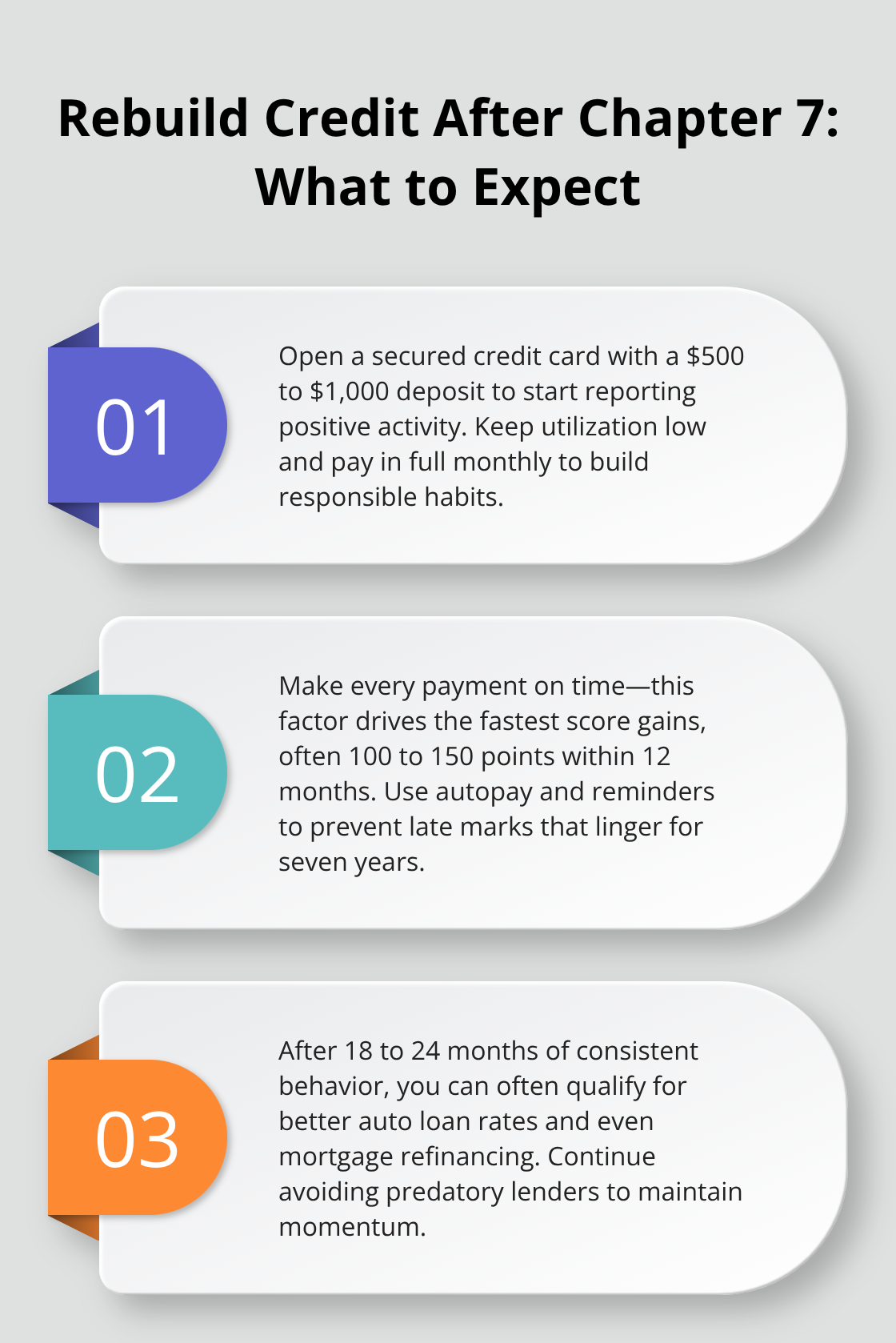
Set up automatic payments for utilities, phone bills, and any credit accounts to eliminate missed payments, which damage scores for seven years.
Within 18 to 24 months of disciplined payment behavior, you qualify for better interest rates on car loans and eventually mortgage refinancing, giving you genuine financial stability. This foundation positions you to move forward with confidence as you take the next steps in your financial recovery journey.
Final Thoughts
Filing Chapter 7 Florida marks the start of genuine financial recovery, not an ending. We at Harnage Law, PLLC guide clients through each stage with personalized legal representation tailored to your specific situation, handling complex paperwork and protecting your rights while you move forward.
The long-term benefits of Chapter 7 discharge extend far beyond eliminating debt-you regain control over your paycheck, rebuild your credit systematically, and create a foundation for genuine financial stability. Many clients report that within two years of discharge, they qualify for better interest rates on car loans and can refinance mortgages at competitive rates. This fresh start requires discipline with on-time payments, realistic budgeting, and avoiding the spending patterns that led to your original financial crisis, but it remains absolutely achievable when you commit to it.
Taking action today stops creditor harassment immediately through the automatic stay and sets your discharge timeline in motion. If you’re ready to regain control of your financial future and explore whether Chapter 7 is right for your situation, contact us at Harnage Law, PLLC to schedule your consultation and learn how we can guide you through bankruptcy with compassion and personalized legal services.