
Tax debt feels different from other debts because the IRS doesn’t give up easily. Many people filing Chapter 7 bankruptcy wonder whether their tax obligations will disappear along with credit card balances and medical bills.
We at Harnage Law, PLLC know that bankruptcy taxes in Chapter 7 follow specific rules that can work in your favor-but only if you understand them. This guide walks you through what gets discharged, what doesn’t, and how to handle taxes before and after bankruptcy.
How Taxes Are Treated in Chapter 7 Bankruptcy
Federal income taxes can disappear in Chapter 7, but only if they meet strict timing rules. The tax must be at least three years old, your return must have been filed on time, and the IRS must have assessed the tax more than 240 days before you file for bankruptcy. If a federal income tax debt meets all three conditions, it qualifies for discharge.
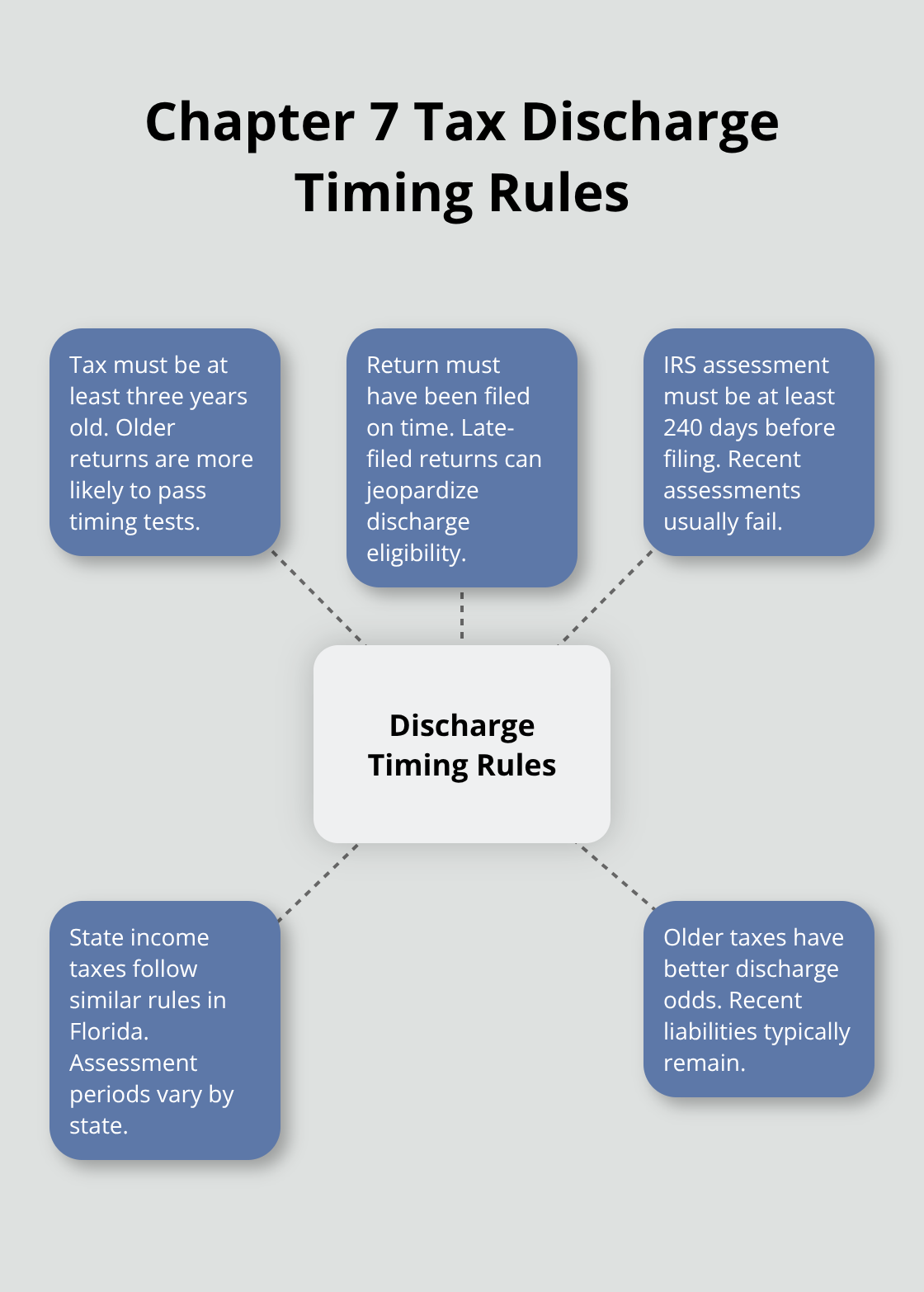
For example, if you owe federal income taxes from 2021 and file Chapter 7 in 2025, that debt likely qualifies for elimination. State income taxes follow similar rules in Florida, though the assessment period varies by state. Older taxes have a much better chance of discharge than recent ones.
Which Tax Debts Cannot Be Discharged
Property taxes, payroll taxes, and recent federal income taxes do not discharge in Chapter 7. If you owe property taxes on a home, those debts remain your responsibility even after bankruptcy closes. Payroll taxes withheld from employees fall into this category too, particularly trust fund taxes under 26 U.S.C. §6672, which impose 100% penalties on responsible persons like business owners or officers. Recent income taxes filed within the past three years also survive bankruptcy.
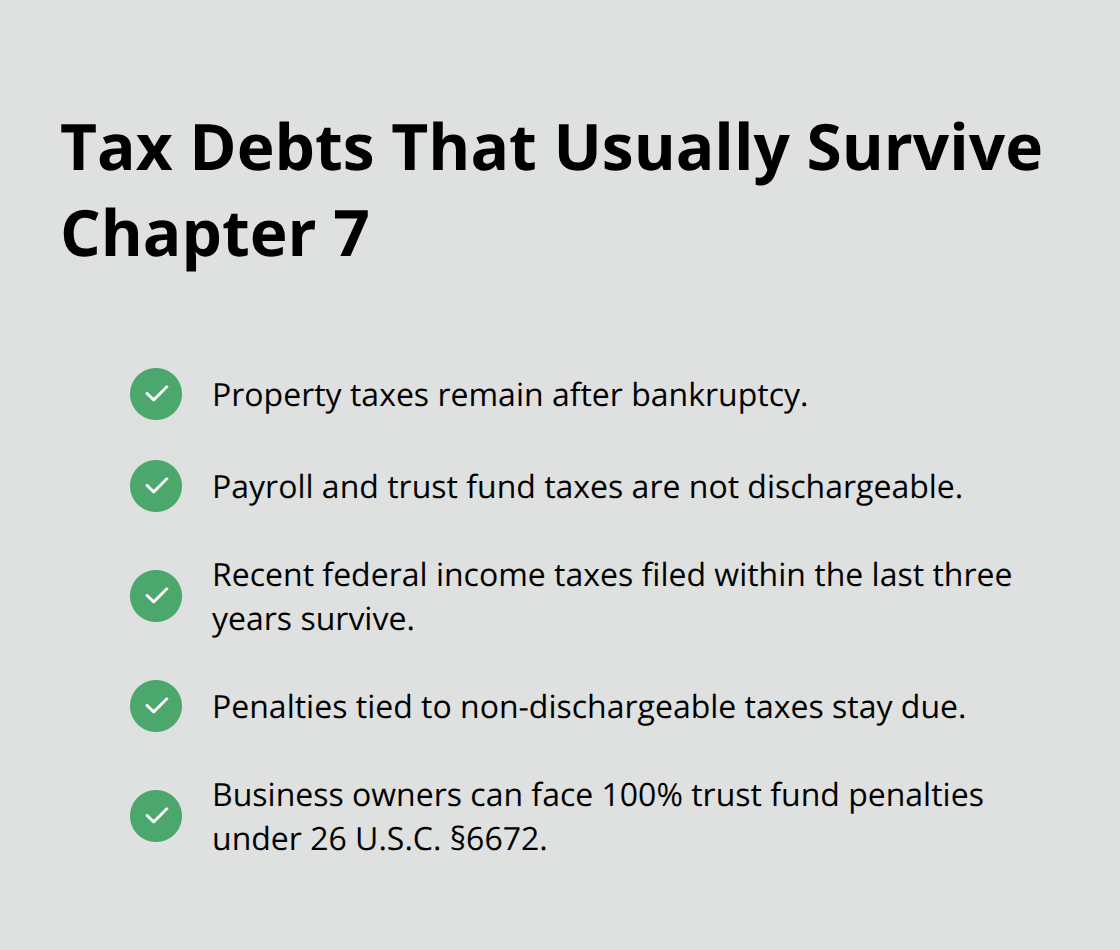
Penalties tied to non-dischargeable taxes stay as well. The IRS treats these debts as exceptions to the fresh start principle, and courts across the country uphold this treatment. If you own a business and owe payroll taxes, Chapter 7 will not eliminate that liability.
The Trustee’s Role in Tax Cases
The bankruptcy trustee assigned to your case handles tax matters on behalf of the estate. If you owe taxes for income earned before filing, the trustee may file a Form 1041 to report estate taxes and work toward collecting refunds or determining liability. The trustee receives IRS notices related to your tax debts and coordinates with the IRS through the Centralized Insolvency Operation. You must keep your address current with the IRS using Form 8822 so notices reach you, not the trustee (which prevents misdirection and delays). Revenue Procedures 2006-24 and 2010-27 outline how trustees pursue prompt determinations and prompt refunds for estate taxes. The trustee’s involvement means the IRS has a clear point of contact and a structured process for resolving your tax liability. This coordination actually works in your favor because it prevents the IRS from sending confusing or contradictory notices to multiple parties.
How Tax Refunds Factor Into Your Case
Your tax refund may become part of the bankruptcy estate and go toward paying creditors, though state or federal exemptions may protect part or all of it. In Florida, most federal tax refunds are exempt from the bankruptcy estate under Florida Statute § 222.25(3), often allowing filers to keep the refund. The Earned Income Tax Credit (EITC) receives protection by the Florida exemption, so the trustee cannot take this portion of your refund in Chapter 7 unless you owe child or spousal support. If you owe child support or spousal support, the exemption does not apply to the portion of your tax refund needed to satisfy those obligations. Timing matters significantly: filing before you receive a tax refund can lead to seizure of the refund, while filing after spending the refund on necessary items can help protect it. Refunds from pre-filing income may be at risk, but refunds from post-filing income belong entirely to you after Chapter 7 closes.
Understanding which taxes discharge and which ones stick around shapes whether Chapter 7 makes sense for your situation. The next section covers your tax filing obligations during bankruptcy and what happens to your tax responsibilities after discharge.
Tax Filing Duties During Bankruptcy
You Must Continue Filing Returns
You must file tax returns after you file Chapter 7-stopping this obligation creates serious problems. The bankruptcy court expects you to maintain compliance with tax filing requirements, and failing to file results in case dismissal, which wipes out the protections you sought. The IRS does not pause its filing deadlines just because you entered bankruptcy. If you owe taxes for income earned before filing, the trustee may file a Form 1041 to report estate taxes, but this does not relieve you of your personal filing obligations. You still need to file your individual return on time each year. Many debtors mistakenly think bankruptcy pauses tax duties, then face dismissal when the court discovers unfiled returns.
Address Updates Prevent Misdirected Notices
Your address matters more than you might think during this process. Do not file tax returns in care of the trustee, as this causes IRS notices to go to the trustee instead of you, creating confusion and delays. Use Form 8822 to update your address with the IRS, and confirm the USPS has your current mailing address on file. The IRS uses your last known address to send notices, so if notices reach the wrong place, you may miss critical deadlines or penalty abatement opportunities. If the IRS was not originally listed as a creditor in your bankruptcy, notify them promptly to prevent violations of the automatic stay.
What Happens After Discharge
Once your Chapter 7 case closes, refunds for income earned after filing belong entirely to you-only pre-filing refunds may have been part of the estate. Your tax obligations continue as normal after discharge. You remain liable for non-dischargeable taxes like property taxes and recent payroll taxes, and the IRS continues collection efforts on those debts until the statute of limitations expires or you satisfy the liability. The discharge order eliminates qualifying tax debts, but it does not stop the IRS from collecting on debts that survived bankruptcy. Any penalties and interest continue accruing on non-dischargeable taxes unless you work out a payment arrangement or settlement with the IRS after your case closes.
Understanding your filing duties and post-discharge obligations sets the stage for managing tax debt strategically. The next section explores how to handle tax problems before you file Chapter 7, including when bankruptcy actually makes sense for your tax situation.
Strategies to Manage Tax Debt Before Filing Chapter 7
Understanding the Statute of Limitations on Tax Debts
The IRS has a 10-year statute of limitations to collect most tax debts, but that clock starts from the date of assessment, not the date you owed the taxes. If the IRS assessed your 2015 tax debt in March 2016, the collection period ends in March 2026, regardless of when you actually filed that return. This timing creates a strategic window: taxes close to their statute expiration date become far more attractive targets for Chapter 7 discharge because the IRS loses collection power anyway.
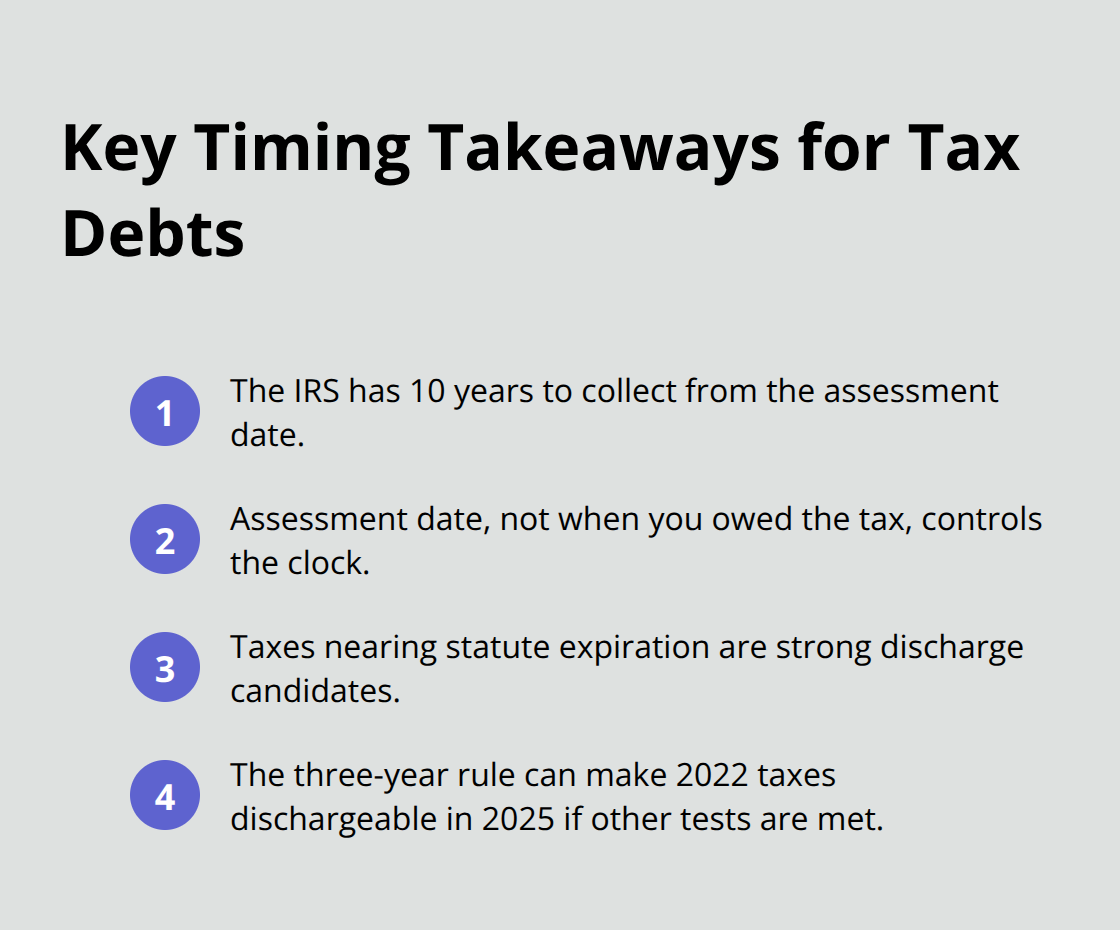
Many people wait too long to act, watching as older taxes approach the discharge threshold without realizing they could have eliminated them years earlier. The three-year filing rule means taxes from 2022 filed on time become potentially dischargeable in 2025, but only if you file bankruptcy before the IRS completes its 240-day assessment clock.
Negotiating with the IRS Before Bankruptcy
Negotiating with the IRS before bankruptcy makes sense only if your tax debt falls outside the discharge window and you have genuine income to support a payment plan. If you earned $35,000 last year and owe $8,000 in back taxes from 2020, the IRS will likely reject an Offer in Compromise because your income suggests you can pay. The IRS accepts Offers in Compromise when the amount you can realistically pay falls far below what you owe, typically requiring proof that your reasonable collection potential is substantially less than the tax liability. Attempting an Offer in Compromise on a tax debt that qualifies for discharge wastes time and money on professional fees that could go toward bankruptcy filing costs instead.
When Chapter 7 Makes Sense for Tax Problems
Chapter 7 bankruptcy makes sense for tax problems when your tax debts either fall outside the discharge window or when non-dischargeable taxes like payroll obligations or property taxes are bundled with other unsecured debts that bankruptcy can eliminate. If you owe $15,000 in recent income taxes that won’t discharge, $8,000 in credit card debt, and $12,000 in medical bills, filing Chapter 7 wipes out the credit card and medical debt, freeing up monthly income to address the taxes through a post-bankruptcy payment arrangement with the IRS. The trustee filing Form 1041 during your bankruptcy also triggers the IRS’s prompt refund procedures outlined in Revenue Procedures 2006-24 and 2010-27, which can resolve estate tax liability faster than waiting years for normal IRS processing. If you face wage garnishment from the IRS or other creditors alongside tax debt, Chapter 7’s automatic stay halts garnishments immediately, giving you breathing room to reorganize finances and plan your next move.
Business Owners and Trust Fund Penalties
Corporate officers facing trust fund penalties under 26 U.S.C. §6672 should understand that these penalties rarely discharge in Chapter 7 because courts treat them as willfully evaded taxes requiring affirmative fraud proof, making Chapter 7 less effective for business owners with significant payroll tax exposure. Filing Chapter 7 also stops interest and penalties from accruing on non-dischargeable taxes after your case closes, providing meaningful relief on debts you cannot eliminate outright.
Final Thoughts
Bankruptcy taxes in Chapter 7 follow rules that work in your favor when you understand them. Taxes older than three years often discharge completely, while recent taxes and payroll obligations remain your responsibility. The trustee’s involvement with the IRS through the Centralized Insolvency Operation streamlines the process and prevents confusion, and your tax refund may receive protection under Florida law, especially if it includes the Earned Income Tax Credit.
The decision to file Chapter 7 for tax problems depends on your specific situation. If you owe older federal income taxes alongside credit card debt and medical bills, bankruptcy eliminates the unsecured debts and frees up income to handle the taxes through a post-bankruptcy arrangement with the IRS. If you face wage garnishment or creditor harassment, the automatic stay halts collection immediately.
We at Harnage Law, PLLC help individuals and families overcome financial challenges through Chapter 7 bankruptcy by discharging qualifying debts, stopping creditor harassment, preventing wage garnishments, and halting lawsuits. Contact us at https://chapter7florida.com to discuss your bankruptcy taxes and Chapter 7 options with someone who understands Florida bankruptcy law.