
Credit card debt is one of the biggest reasons people file for Chapter 7 bankruptcy in Florida. When you file, your credit cards get wiped out through discharge, but the process involves specific rules you need to understand.
At Harnage Law, PLLC, we help clients navigate what happens to their credit cards during bankruptcy and how to rebuild afterward. This guide walks you through the treatment of credit card debt, common pitfalls, and practical steps for financial recovery.
What Happens to Your Credit Cards in Florida Chapter 7 Bankruptcy
Credit Cards as Unsecured Debt
Credit card debt falls into a category called unsecured debt, which means no collateral backs these obligations. Unlike a car loan where the lender can repossess the vehicle, credit card companies have no physical asset to seize if you stop paying. This distinction matters enormously in Chapter 7 because unsecured debts are precisely what the bankruptcy process targets for discharge. According to U.S. Courts resources, credit card debt is typically dischargeable in Chapter 7, releasing you from personal liability on those balances.
The Automatic Stay Stops Collection Immediately
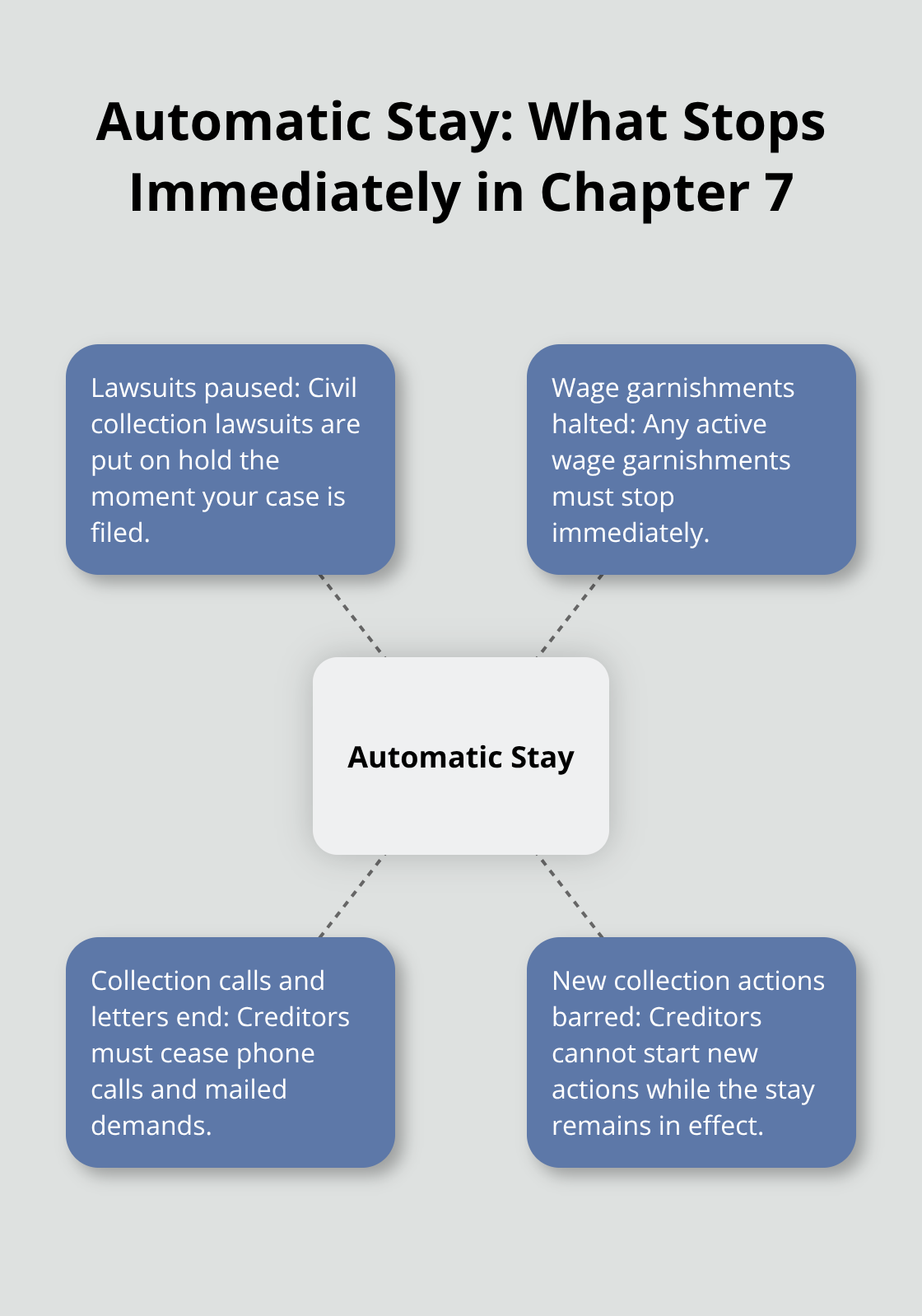
The moment you file in Florida federal court, an automatic stay takes effect immediately, stopping all collection actions against you. Credit card companies must halt lawsuits, wage garnishments, phone calls, and collection letters the instant your case is filed. The stay remains in place throughout your bankruptcy, giving you breathing room while the process unfolds.
When the Discharge Enters and What It Means
The discharge itself is the court order that wipes out your qualifying credit card balances. This happens relatively quickly-U.S. Courts data shows discharge typically enters 60 to 90 days after your meeting of creditors, unless someone files an objection. The key word here is qualifying. Not every charge on your credit cards will discharge.
Pre-Filing Charges That May Not Discharge
If you made purchases of luxury items or services totaling $725 or more within 90 days before filing, those charges face presumptive fraud allegations. Cash advances over $1,000 within 70 days before filing carry similar risk. These thresholds exist because courts want to prevent people from running up balances with no intent to repay right before bankruptcy. If you know you’re filing, stop using your credit cards immediately and limit any pre-filing charges to absolute essentials like food, gas, or medicine.
Moving Forward After Discharge
Once the discharge enters, your credit card debt vanishes, and creditors cannot pursue you for payment. You walk away free from those obligations, though your credit report will show the bankruptcy and the discharged accounts for years. This fresh start on credit card debt forms the foundation for what comes next-understanding how your credit score responds after bankruptcy and what steps you can take to rebuild it.
Rebuilding Your Credit After Florida Chapter 7 Discharge
Your Credit Score Recovers Faster Than You Think
Your credit score takes an immediate hit when you file Chapter 7, but recovery happens faster than most people expect. U.S. Courts data shows that credit scores rebound significantly within two to three years after discharge, especially if you manage credit responsibly during that window. The discharge wipes away your debt-to-income ratio burden, which is one of the largest components affecting your score.
Within 24 months of filing, many filers see their scores climb into the 600 range. By year three or four, scores in the 650-700 range become achievable. The bankruptcy itself remains on your credit report for ten years, but its impact diminishes substantially after the first three years. Your financial life after discharge is not permanently damaged-it is simply reset.
Secured Credit Cards Build Your Foundation
Getting approved for new credit after discharge is absolutely possible and necessary for rebuilding. You can generally obtain a new credit card within months of your discharge, though expect higher interest rates and lower credit limits initially.
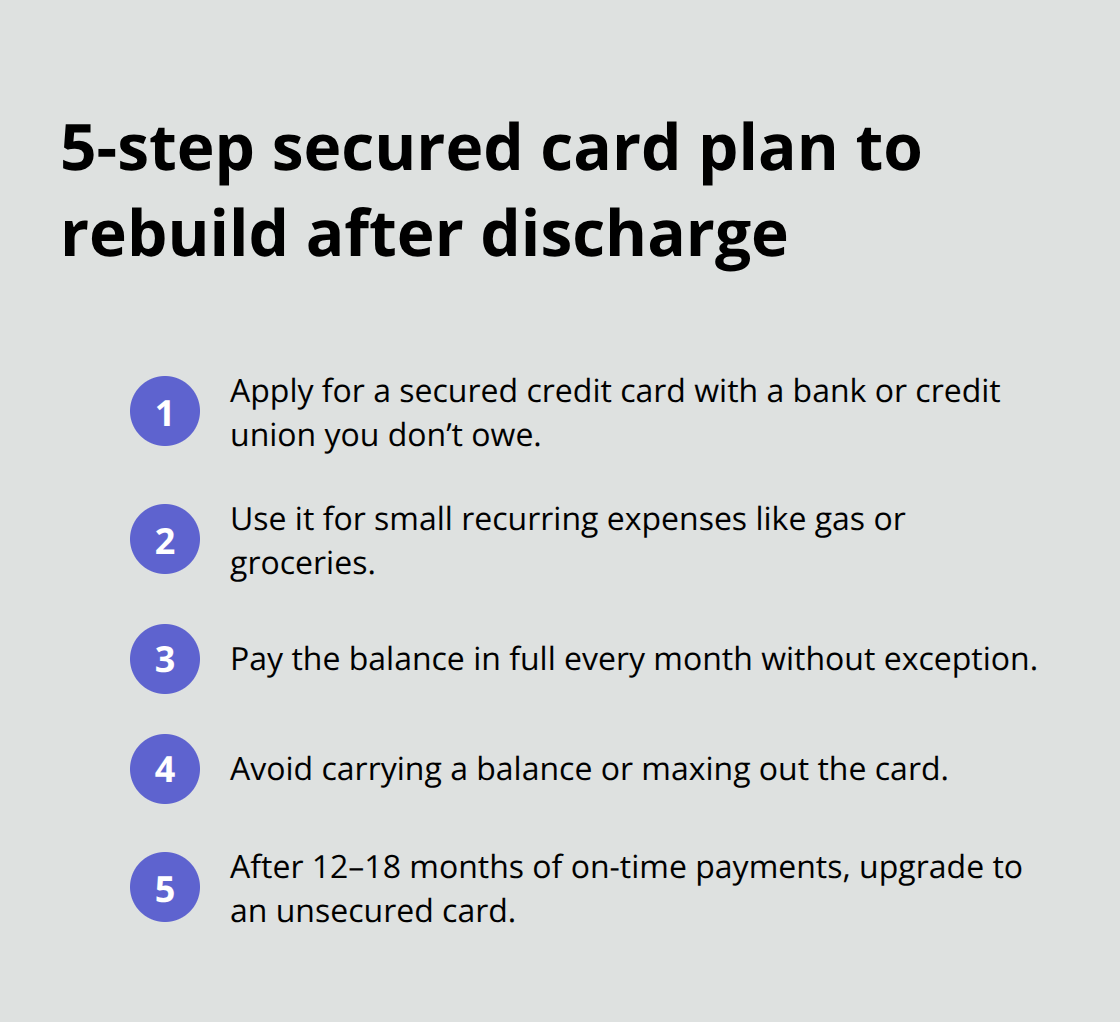
The strategy is straightforward: apply for a secured credit card from a bank or credit union where you don’t owe money, use it for small recurring charges like gas or groceries, and pay the balance in full every month without exception.
This approach demonstrates payment reliability to creditors and gradually improves your score. Avoid the temptation to carry a balance or max out the card-these actions reverse your progress immediately. After 12-18 months of perfect payments on a secured card, you typically qualify for an unsecured card with better terms.
Why Avoiding Credit Cards Backfires
Some people make the mistake of avoiding credit cards entirely after bankruptcy, thinking this protects them. Lenders need to see that you handle credit responsibly. Creditors cannot legally discriminate against you for having filed bankruptcy, so apply for credit with confidence. The goal is not to accumulate debt again-it is to demonstrate consistent, responsible payment behavior that rebuilds your creditworthiness from the ground up.
Moving Into Common Pitfalls
Understanding what rebuilds your credit is half the battle. The other half involves recognizing the mistakes that derail your progress before you make them.
Common Mistakes That Destroy Your Chapter 7 Case Before It Even Starts
Hiding Assets or Income from the Trustee
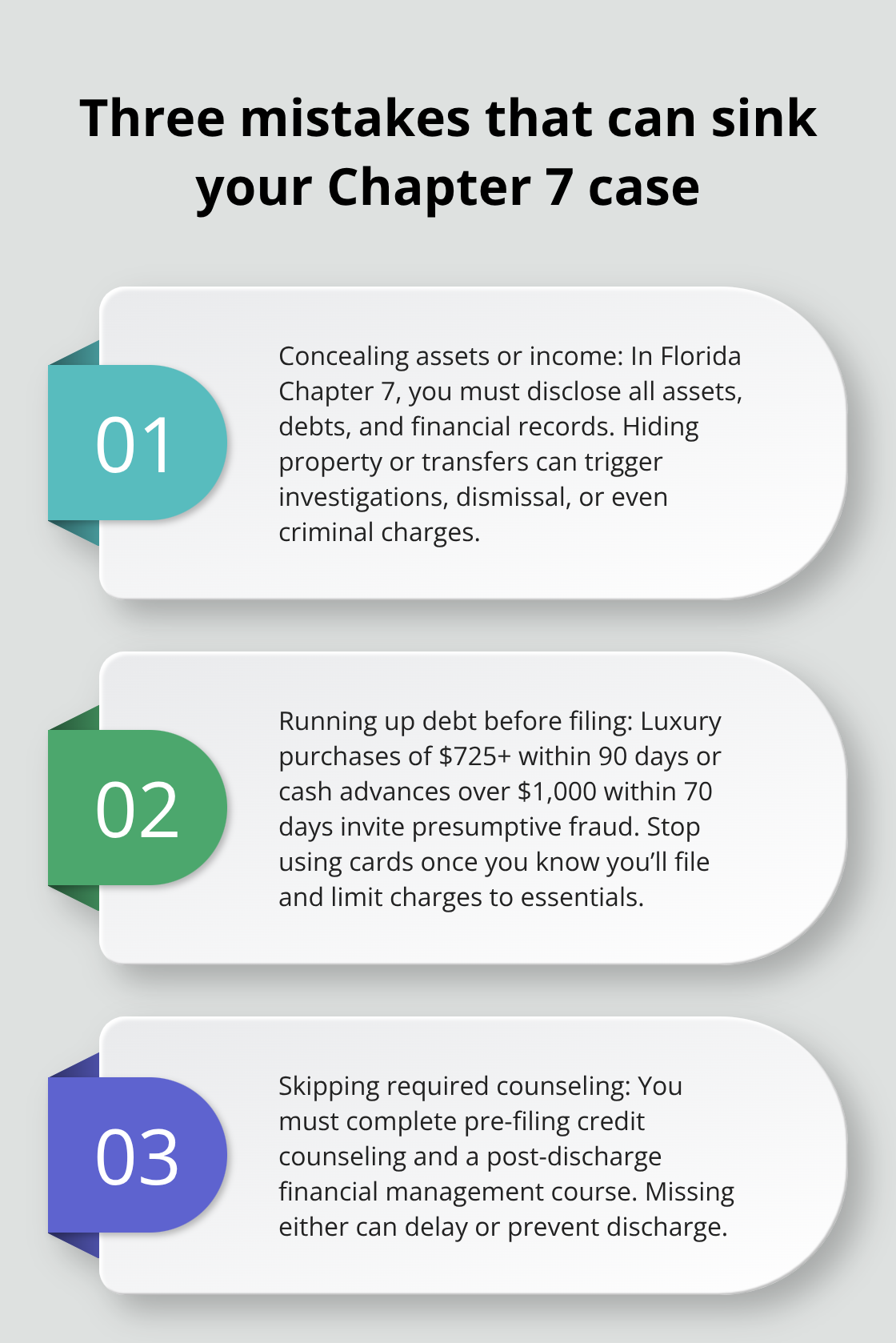
The path to successful discharge hinges on honesty and discipline during the months before you file. Many people sabotage their own cases through preventable errors that trigger trustee investigations, creditor objections, or case dismissal. The most damaging mistake is concealing assets or income from the bankruptcy trustee. When you file Chapter 7 in Florida federal court, you must disclose every asset you own, every debt you owe, and your complete financial picture. The trustee’s job involves liquidating nonexempt assets to pay creditors, but they can only accomplish this if you tell them what exists.
If you transfer property to someone else, drain bank accounts, or fail to list accounts before filing, the trustee will find out. The bankruptcy system requires you to provide tax returns to the trustee, and they cross-reference bank statements, property records, and credit reports. Concealing a vehicle, real estate, or cash reserves does not protect those assets-it exposes you to fraud allegations that can result in case dismissal or criminal charges.
Accumulating New Debt Immediately Before Filing
The second critical error involves running up credit card balances, taking cash advances, or making large purchases within 90 days of filing. Those charges face presumptive fraud scrutiny. Courts assume that charges of luxury items or services totaling $725 or more within 90 days show intent not to repay. Cash advances exceeding $1,000 within 70 days carry the same presumption.
When creditors challenge these charges, the burden falls on you to prove they were not fraudulent-a difficult position to defend. This timing issue (the 90-day and 70-day windows) exists because courts want to prevent people from running up balances with no intention to repay right before bankruptcy. Stop using your credit cards immediately if you know you’re filing, and limit any pre-filing charges to absolute essentials like food, gas, or medicine.
Skipping Required Credit Counseling
The third mistake involves skipping or delaying the required credit counseling course. Federal law mandates that you complete pre-filing credit counseling from an approved agency before your case can proceed. If you miss this deadline, the trustee can dismiss your case without granting discharge. You must complete the counseling, file the certificate with the court, and then complete a second financial management course after discharge (both courses are mandatory requirements).
Skipping either course delays your discharge or prevents it altogether. These three errors-concealing financial information, accumulating debt before filing, and neglecting required counseling-account for the vast majority of Chapter 7 problems. They are entirely preventable if you work with an attorney who walks you through proper disclosure, timing, and compliance requirements.
Final Thoughts
Credit card debt represents one of the largest obstacles to financial stability, but Chapter 7 bankruptcy in Florida offers a direct path to discharge those balances. The bankruptcy chapter 7 credit cards process eliminates your personal liability on qualifying balances, the automatic stay stops collection immediately upon filing, and discharge typically enters within 60 to 90 days. Your credit score rebounds faster than most people expect, with scores climbing into achievable ranges within two to three years if you manage credit responsibly after discharge.
The path from filing to discharge involves specific rules, timing requirements, and disclosure obligations that demand professional guidance. Working with an attorney who understands Florida bankruptcy law protects you from costly mistakes and maximizes your discharge outcome. We at Harnage Law, PLLC guide clients through every step of the Chapter 7 process, from pre-filing planning through post-discharge credit rebuilding, and we help you protect your assets while securing the fresh financial start you deserve.
If you’re carrying credit card debt that feels unmanageable, contact Harnage Law, PLLC for a consultation. We’ll evaluate your situation, explain your options, and walk you through the bankruptcy process with clarity and support. Your path to financial stability begins with understanding your choices and taking action with proper legal guidance.