
The Chapter 7 bankruptcy 341 meeting is one of the most important steps in your bankruptcy case, yet many people feel anxious about it simply because they don’t know what to expect.
At Harnage Law, PLLC, we’ve guided countless clients through this process, and we know the questions keeping you up at night. This guide walks you through exactly what happens at your 341 meeting, what the trustee will ask, and how to prepare so you can walk in confident and ready.
What Happens at Your 341 Meeting in Florida
The Meeting’s Legal Purpose and Structure
The 341 meeting is a mandatory conversation between you and a court-appointed bankruptcy trustee who verifies your identity and reviews the accuracy of your bankruptcy paperwork. Section 341 of the Bankruptcy Code mandates this meeting in every Chapter 7 case, which is why it carries that number. This is not a court hearing, and no judge will be present. The trustee’s job is straightforward: confirm you are who you claim to be, verify the information in your petition matches reality, and identify any assets available to creditors.
When Your Meeting Takes Place
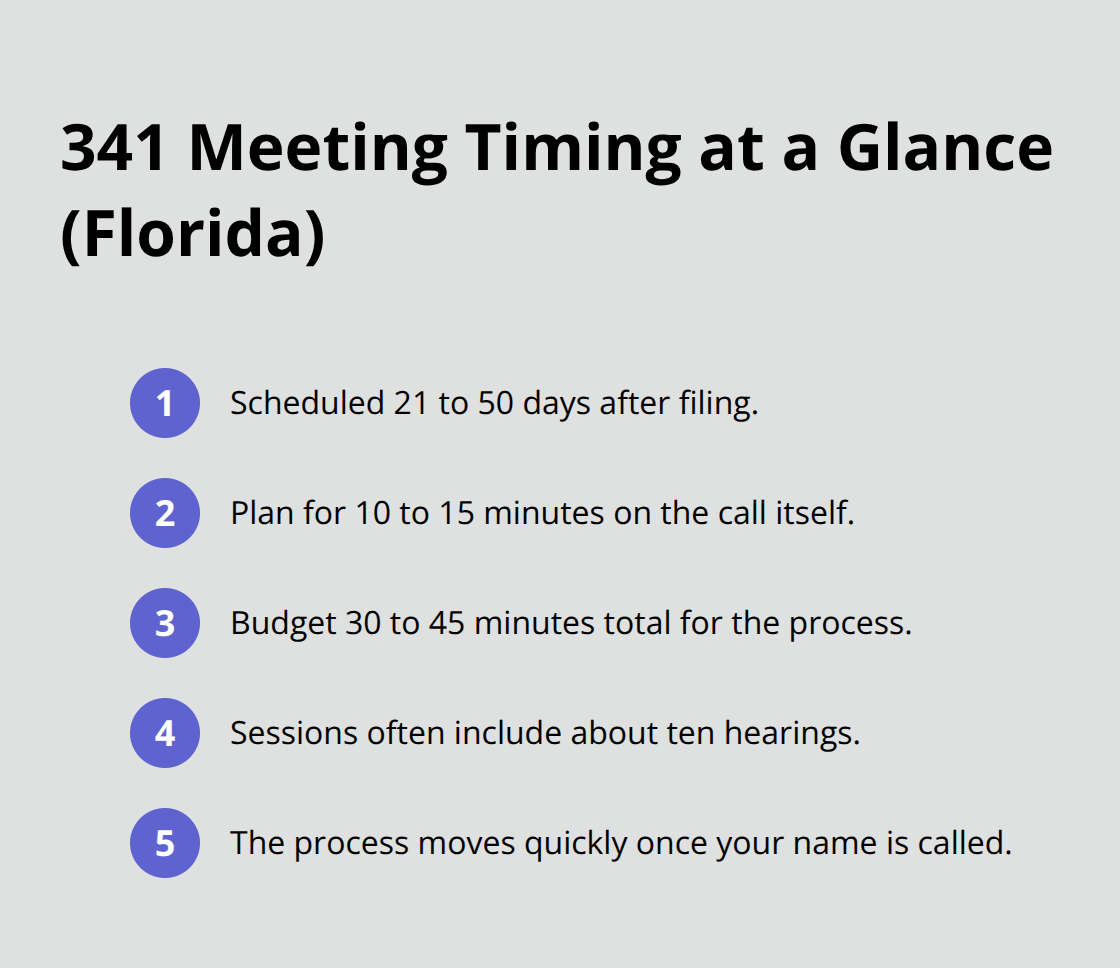
Most 341 meetings in Florida occur between 21 and 50 days after you file your petition, giving the trustee time to review your documents before meeting with you. The meeting typically lasts 10 to 15 minutes on the call itself, though you should budget 30 to 45 minutes total from start to finish. The U.S. Trustee’s office schedules multiple meetings on the same day-usually about ten hearings per session-so the process moves quickly once your name is called.
Who Attends and Your Right to Representation
Creditors are legally permitted to attend your 341 meeting, but most don’t show up. In no-asset Chapter 7 cases, which represent the majority of Florida filings, unsecured creditors rarely recover anything, so they have little financial incentive to participate. The trustee represents their interests regardless of whether they attend. If you file jointly with your spouse, both of you must appear at the meeting. You can bring an attorney to represent you, and having counsel present protects your rights and ensures you answer questions accurately.
What You Must Know About Testimony
The meeting of creditors is conducted under oath, meaning your testimony can be recorded and used against you if disputes arise later. This isn’t meant to intimidate you-it simply means you should give brief, direct answers rather than volunteering extra information. Most questions come directly from your bankruptcy schedules, so you cannot rely on someone else to answer for you, even if an attorney is present. Your answers form the foundation of what happens next in your case, which is why understanding the specific questions the trustee will ask matters so much.
What the Trustee Will Ask and How to Answer
The Pattern of Trustee Questions
The trustee’s questions follow a predictable pattern because they come directly from your bankruptcy schedules. You cannot prepare by having someone else answer for you-the trustee needs to hear from you under oath. The Department of Justice publishes the standard questions trustees ask, and reviewing them beforehand eliminates most anxiety. Expect questions confirming your name and address, whether you reviewed your bankruptcy paperwork, whether you signed the schedules, and whether all information is truthful and correct.
Financial History and Recent Transactions
The trustee will ask whether you have moved since filing, whether you have filed for bankruptcy before, and whether you are current with all tax returns. Most trustees ask about recent credit card purchases or cash advances, particularly those made close to your filing date, because courts scrutinize spending patterns before bankruptcy. If you disclosed a recent car purchase or property sale, prepare to explain what you did with the proceeds. The trustee will confirm you listed all creditors and all property, including bank accounts, investments, and anything of value. If anyone owes you money, you must disclose it.
How to Answer Effectively
Answer yes or no when possible, and volunteer extra information only if the trustee asks follow-up questions. Testimony is recorded and can be used against you if disputes arise, so accuracy matters far more than lengthy explanations. If your financial situation changed since filing, bring documents showing those changes and mention them unprompted. This demonstrates honesty and prevents the trustee from discovering inconsistencies later.
Documents You Must Bring
Bring original government-issued photo identification and an original document showing your full Social Security number-your Social Security card works, though many people bring their tax return or a bank statement with the number visible. Without both documents, the meeting cannot proceed, so do not skip this step. The trustee requires these at least 14 days before the meeting.
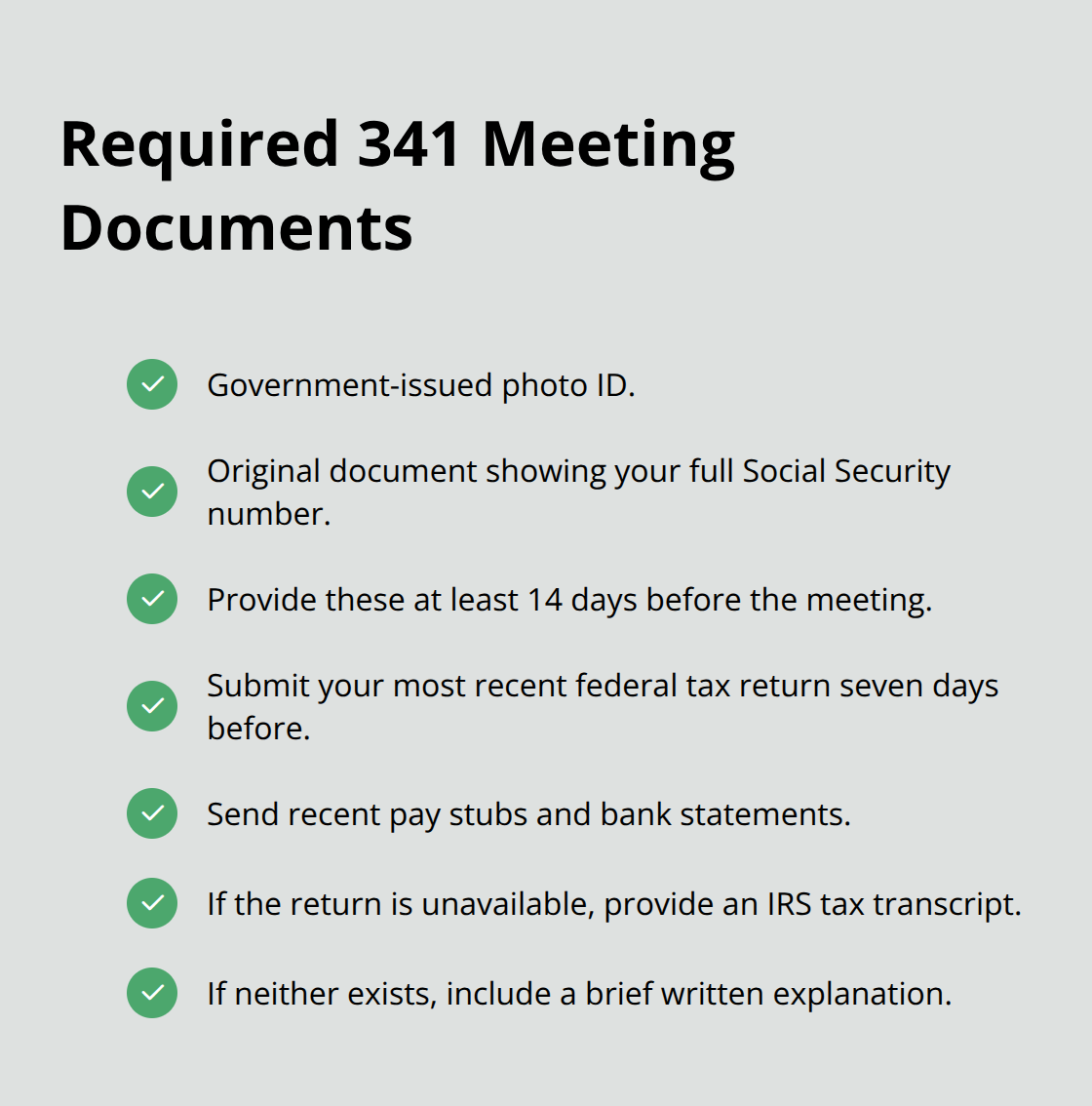
You must also provide your most recent federal income tax return at least seven days before the meeting, including all attachments, or a tax transcript if the return is unavailable, or a written statement explaining why neither exists.
Supporting Financial Records
Bring recent pay stubs showing current income, bank statements for all checking, savings, money market, and investment accounts covering the period that includes your filing date, and documentation of monthly expenses if you claimed excess food, clothing, or energy allowances above IRS standards. If required documents do not exist or you cannot locate them, provide a written statement explaining their absence rather than showing up empty-handed. Many trustees ask to see these documents during the meeting, and having them ready demonstrates preparedness. If your financial circumstances changed after filing-a job loss, a new job, or an inheritance-bring documentation of that change. Organized documentation speeds up the meeting considerably and shows the trustee that you take the process seriously.
How to Prepare for Your 341 Meeting in Florida
Start preparing at least two weeks before your scheduled meeting date. Pull together every document the trustee requested and organize them in a folder you can access quickly on the day of the meeting. The Department of Justice publishes the full list of standard questions trustees ask, and reading through them takes about 20 minutes. Go through your bankruptcy petition line by line and mark anything that might prompt follow-up questions. If you made large purchases, sold property, or received gifts in the past four years, prepare a one-sentence explanation for why you did it. This isn’t about crafting a story; it’s about answering confidently and honestly when asked. Your goal is to demonstrate that you reviewed your own paperwork and understand what you filed, not to impress the trustee with elaborate details.
Gather Documents Before the Deadline
The trustee’s deadline for receiving documents is firm, not flexible. Send your federal income tax return at least seven days before the meeting, along with recent pay stubs and bank statements covering the period that includes your filing date. If you cannot locate your tax return, request a tax transcript from the IRS instead, which you can obtain online or by phone within days. Bring original photo identification and an original document showing your full Social Security number to the meeting itself. Without both, the meeting stops immediately and must be rescheduled. Many people bring their Social Security card, though a bank statement or tax return with the number visible works equally well. If required documents don’t exist, write a brief statement explaining why and submit it with your other materials. This prevents the trustee from discovering gaps in your documentation during the meeting and suggests you’re acting proactively rather than hiding something.
Address Changes in Your Financial Situation
The trustee will ask whether your financial situation changed since you filed your petition. If you lost a job, accepted a new position, received an inheritance, or experienced any other significant change, mention it unprompted and bring documentation. Courts scrutinize spending patterns in the months before bankruptcy, so if you made credit card purchases or cash advances close to your filing date, prepare a straightforward explanation. The trustee isn’t looking to punish you; they’re verifying that your petition reflects reality and identifying whether assets exist to distribute to creditors.
Answer Questions Directly and Honestly
When the trustee asks yes or no questions, answer yes or no. When they ask for explanation, keep it to one or two sentences. Testimony is recorded, and anything you say can be used against you if disputes arise later, so accuracy matters far more than completeness. If you don’t understand a question, ask for clarification rather than guessing at what the trustee wants to know. Most 341 meetings last only 10 to 15 minutes because debtors who prepare answer questions directly and move through the process quickly.
Final Thoughts
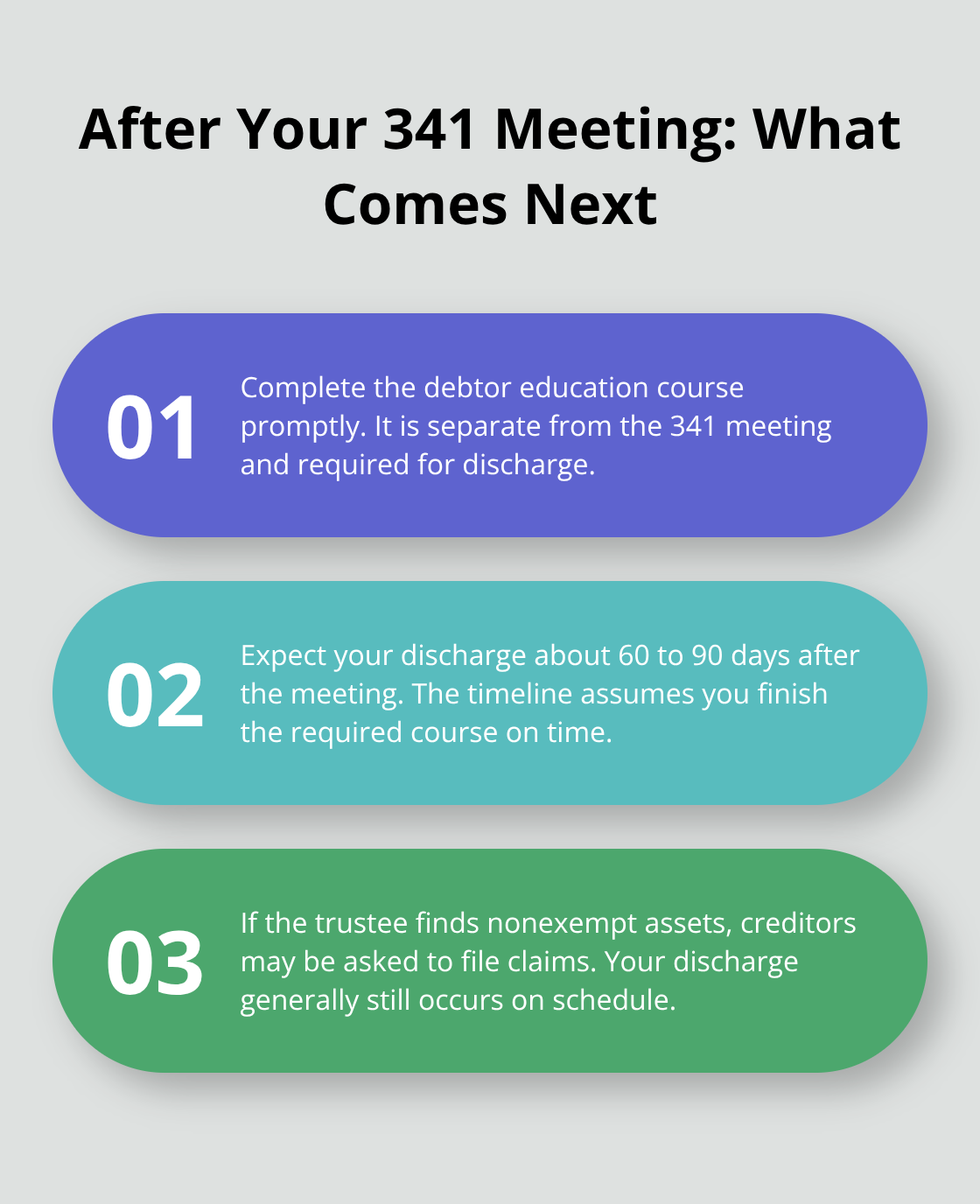
The Chapter 7 bankruptcy 341 meeting concludes quickly when you prepare thoroughly and answer questions directly. After the meeting ends, you must complete a debtor education course, which is separate from the meeting itself. Discharge typically arrives 60 to 90 days after your meeting, provided you finish the required course. If the trustee identifies nonexempt assets, they notify creditors to file claims, but your discharge still occurs on schedule.
Missing deadlines, particularly the debtor education requirement, can cause your case to close without discharge and defeat the purpose of filing. The court closes your case with a final decree, and the automatic stay ends at closure. Staying organized and meeting all requirements protects your fresh financial start.
We at Harnage Law, PLLC help you navigate the Chapter 7 bankruptcy 341 meeting and every step that follows. Contact us to discuss your situation and learn how we can guide you through Chapter 7 bankruptcy in Florida. We protect your rights and help you achieve the financial relief you deserve.
