Filing Chapter 7 bankruptcy in Florida triggers an automatic stay-a powerful legal shield that stops creditors dead in their tracks the moment your case is filed.
We at Harnage Law, PLLC know this protection is often the first real relief our clients experience. The automatic stay halts collection calls, wage garnishment, foreclosure, and repossession all at once. Understanding how this protection works and where it has limits is essential to maximizing your fresh start.
What the Automatic Stay Actually Does
The Automatic Stay Takes Effect Immediately
The automatic stay is not a suggestion or a request-it’s a federal court order that takes effect the moment you file Chapter 7 bankruptcy in Florida. Under 11 U.S.C. § 362, this order freezes nearly all collection activity against you and your property immediately, without requiring a hearing or waiting for a judge’s approval. Creditors learn about the filing through the court’s electronic bankruptcy system, which sends formal notice within days of your case being filed. The court assigns your case a number and includes it in the Notice of Bankruptcy Filing sent to all creditors on file.
What Collection Actions the Stay Stops
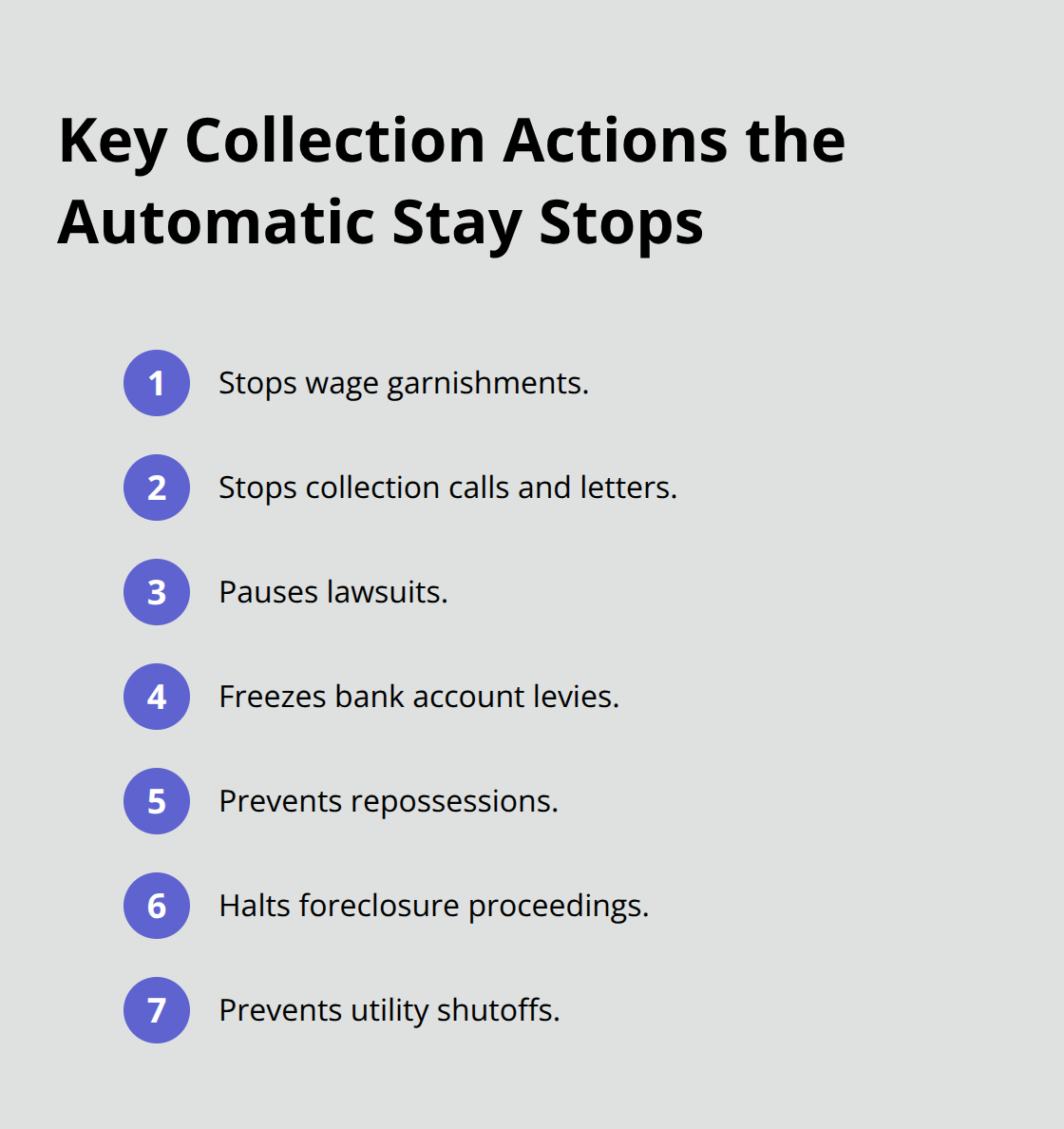
Once creditors receive this notice, they are legally barred from continuing collection efforts. The stay applies to wage garnishments, collection calls and letters, lawsuits, bank account levies, repossessions, foreclosure proceedings, and utility shutoffs. If a creditor violates the stay after receiving notice, you can file a motion for sanctions and recover actual damages, attorney fees, and potentially punitive damages for willful violations.
The stay remains in effect throughout your entire bankruptcy case until your debts are discharged or the case is dismissed.
Actions That Fall Outside the Stay’s Protection
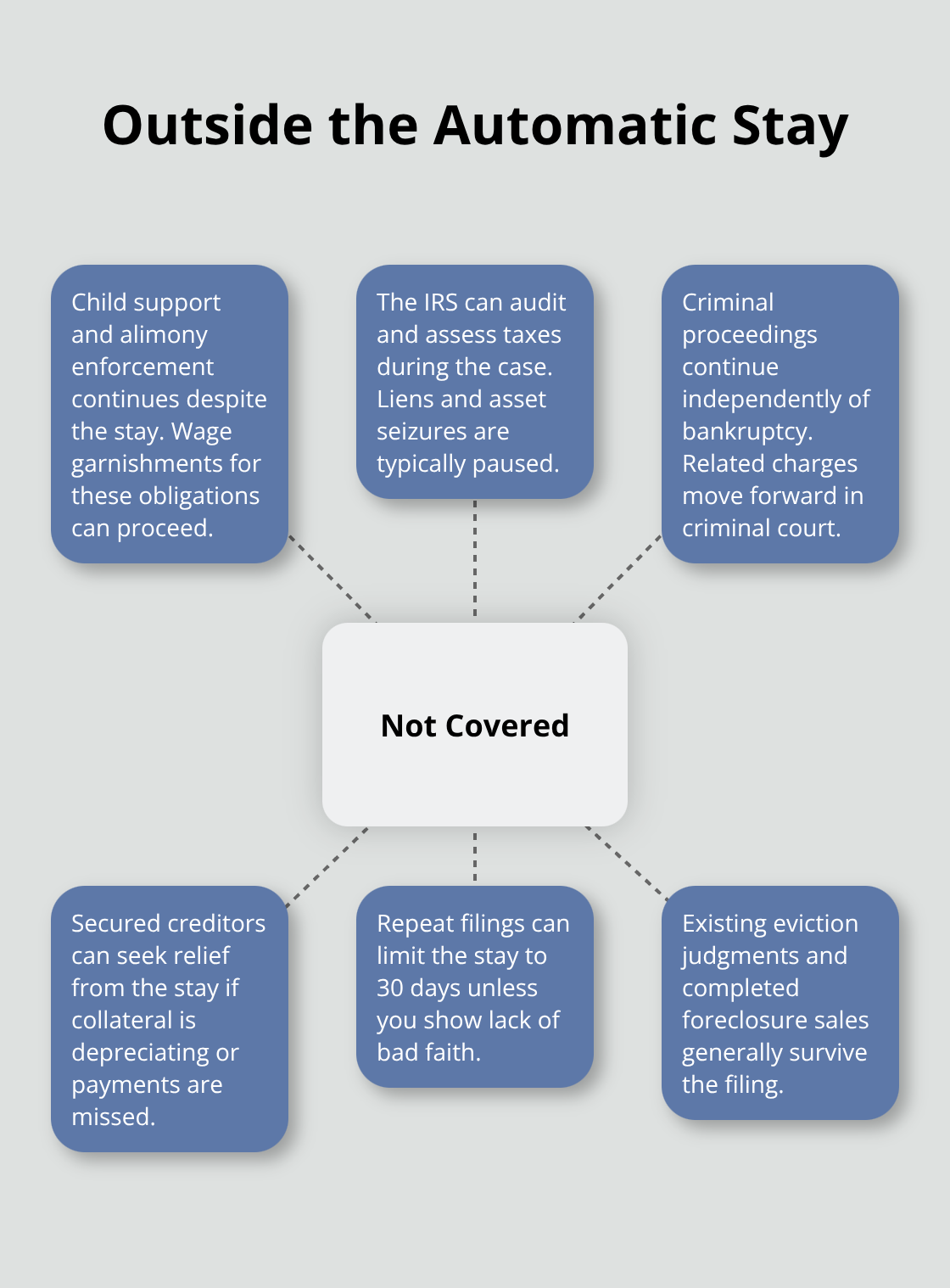
Some actions fall outside the stay’s protection, and this matters for your planning. The stay does not stop child support or alimony enforcement, criminal proceedings, or tax audits by the IRS. If you have filed for bankruptcy within the past year, the stay may last only 30 days unless you can show clear and convincing evidence of lack of bad faith, according to 11 U.S.C. § 362(c)(3).
When Creditors Can Request Relief from the Stay
Creditors can file a Motion for Relief from the Automatic Stay if they believe their interests are not adequately protected-for example, if a secured creditor argues that collateral is depreciating faster than payments are being made. A creditor must file this motion and obtain court approval; the stay does not lift automatically just because someone disagrees with it. If you are facing eviction, the stay provides temporary protection, but Florida law allows evictions to proceed if a possession judgment was already entered before you filed. Similarly, if a foreclosure was completed before filing, the automatic stay cannot reverse it.
The timeline matters significantly: creditors who continue collection after receiving notice face serious consequences, while those who act before formal notice may have defenses. Understanding these boundaries helps you prepare for what comes next in your Chapter 7 case.
How the Automatic Stay Stops Creditor Contact and Collection Actions in Florida Chapter 7
Creditors Lose Their Right to Contact You Immediately
The moment the court files your Chapter 7 case in Florida, creditors lose their legal right to contact you about your debts. This is not a courtesy-it is a hard legal requirement under the automatic stay. When creditors receive formal notice of your bankruptcy filing through the court’s electronic system, they must immediately cease all collection communications. Collection agencies cannot call your phone, send letters, emails, or texts demanding payment. If a creditor continues contacting you after receiving notice, you have grounds to file a motion for sanctions and recover actual damages plus attorney fees. The silence after filing becomes the most immediate relief many clients experience because the constant barrage of calls stops within days. The Fair Credit Reporting Act also prohibits creditors from reporting new missed payments to credit bureaus once the stay takes effect, which protects your credit profile during the bankruptcy process.
Wage Garnishments and Bank Levies Stop Instantly
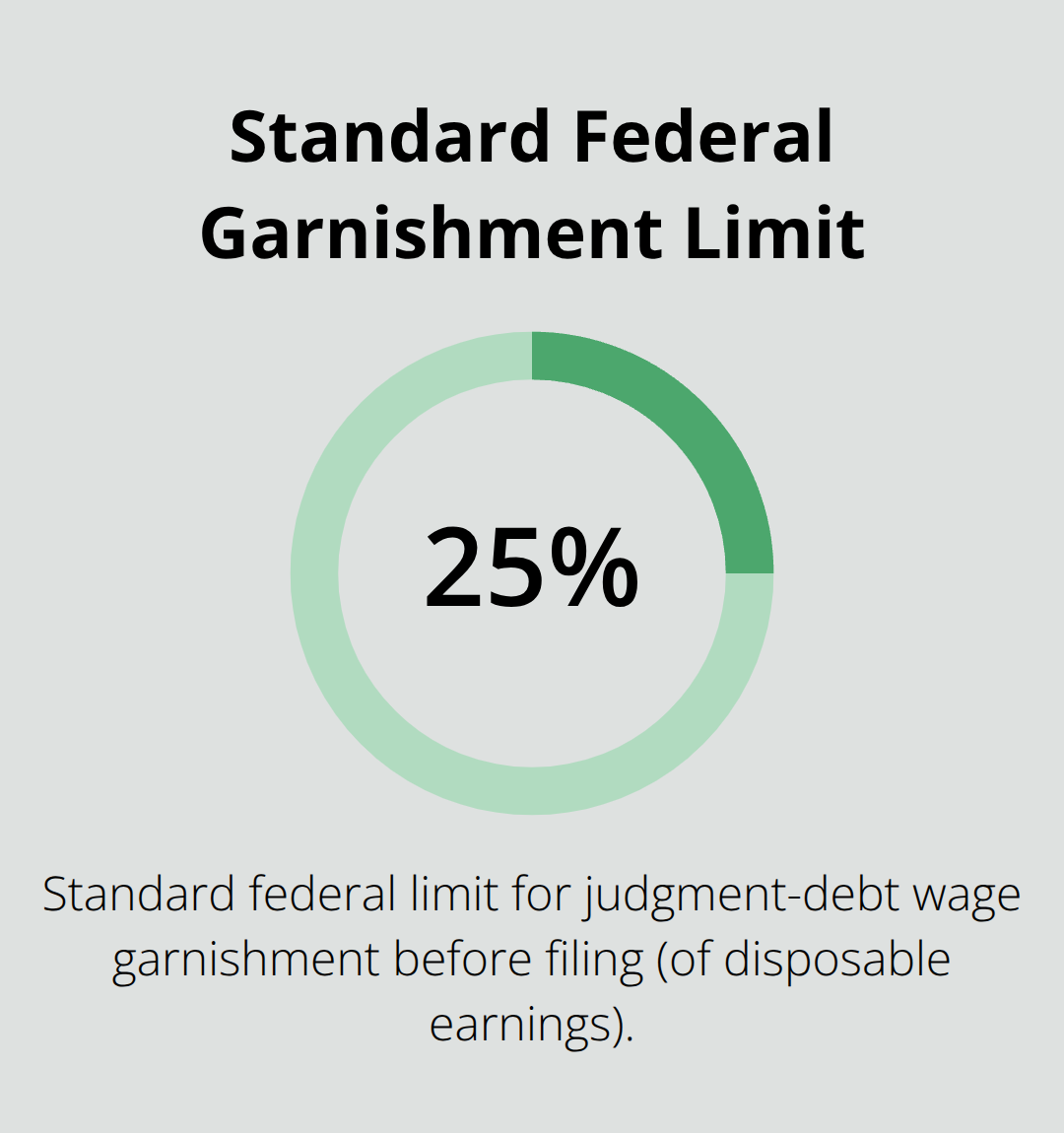
Wage garnishments and bank levies end instantly when your Chapter 7 case is filed, and this matters significantly for your monthly cash flow. If your employer was garnishing 25 percent of your disposable earnings before filing-the standard limit under federal law for judgment debts-that money returns to your paycheck immediately. The court sends notice to your employer’s payroll department, and garnishments must stop within days of the filing.
If your bank account was frozen or levied by a creditor, the automatic stay releases those funds. Your paycheck and bank accounts regain protection from creditor seizure the moment you file.
Foreclosures and Repossessions Halt Under the Stay
In Florida, creditors cannot proceed with new foreclosures or repossessions once the stay takes effect. If a foreclosure sale was scheduled before you filed, the sale is halted. Repossession of your vehicle stops as well, giving you time to evaluate whether to keep the car through a reaffirmation agreement or surrender it. The stay provides this protection regardless of how much debt you owe or how delinquent your accounts are-the court order applies equally to all creditors on day one. These protections create space for you to assess your options and plan your next moves in the bankruptcy process.
What the Automatic Stay Does Not Protect
The automatic stay is powerful, but it has real boundaries that affect your Chapter 7 case in Florida. Child support and alimony obligations continue regardless of the stay-creditors pursuing these debts can keep enforcing wage garnishments, even though regular judgment creditors cannot. The IRS can still audit your tax returns and assess additional taxes while your case is pending, though liens and asset seizures are typically paused. Criminal proceedings move forward independently of bankruptcy protection, so if you face criminal charges related to fraud or other offenses, those cases continue in criminal court.
Secured Creditors Have Faster Access to Relief
Secured creditors holding liens on your home or vehicle have a faster path to relief from the stay than unsecured creditors do. A mortgage lender or auto finance company can file a Motion for Relief from the Automatic Stay arguing that the collateral is depreciating, that you are not making payments, or that they lack adequate protection under 11 U.S.C. § 362(d). Courts grant these motions regularly, particularly in foreclosure cases where the homeowner has no equity or owes more than the property is worth.
Repeat Filings Trigger Shorter Stay Periods
If you filed Chapter 7 within the past year, the stay lasts only 30 days unless you file a declaration showing clear and convincing evidence that your current filing is not in bad faith under 11 U.S.C. § 362(c)(4). This restriction applies to repeat filers and significantly limits the breathing room the stay normally provides.
Existing Judgments and Liens Survive the Filing
In Florida specifically, if a creditor obtained a possession judgment for eviction before you filed, the stay does not prevent the eviction from proceeding-the judgment survives the filing. If a foreclosure sale already closed before you filed, the stay cannot reverse it. These limitations mean Chapter 7 protects you from new foreclosures and repossessions, but existing liens and judgments require careful handling with your attorney before filing to understand what protection applies to your specific assets and debts.
Final Thoughts
The automatic stay in Chapter 7 bankruptcy stops wage garnishments, halts collection calls, freezes bank levies, and pauses foreclosure and repossession proceedings the moment you file. This protection gives you breathing room to reorganize your finances without creditors pursuing collection efforts, and the stay remains in effect throughout your entire case. Most Chapter 7 cases result in discharge within 60 to 90 days after your creditors meeting, which means the stay protects you during this relatively short period.
Understanding the boundaries of the automatic stay matters equally because child support and alimony obligations continue, criminal proceedings move forward independently, and secured creditors can request relief from the stay under certain circumstances. If you filed bankruptcy within the past year, the stay may last only 30 days unless you demonstrate lack of bad faith. Existing judgments and liens require careful attention before filing to understand what protection applies to your specific situation.
Your next step is to consult with an attorney who understands how the automatic stay chapter 7 bankruptcy protection applies to your specific debts and assets. We at Harnage Law, PLLC help individuals and families in Florida overcome financial challenges by providing legal guidance through the bankruptcy process and stopping creditor harassment while protecting your assets. Contact Harnage Law, PLLC to discuss how the automatic stay can provide relief in your situation.