Running an LLC in Florida comes with real financial risks. If your business faces overwhelming debt, Chapter 7 bankruptcy for an LLC might be your path forward.
We at Harnage Law, PLLC help LLC owners understand whether liquidation makes sense and how to protect personal assets throughout the process. This guide walks you through the facts you need to know.
Can an LLC File for Chapter 7 in Florida
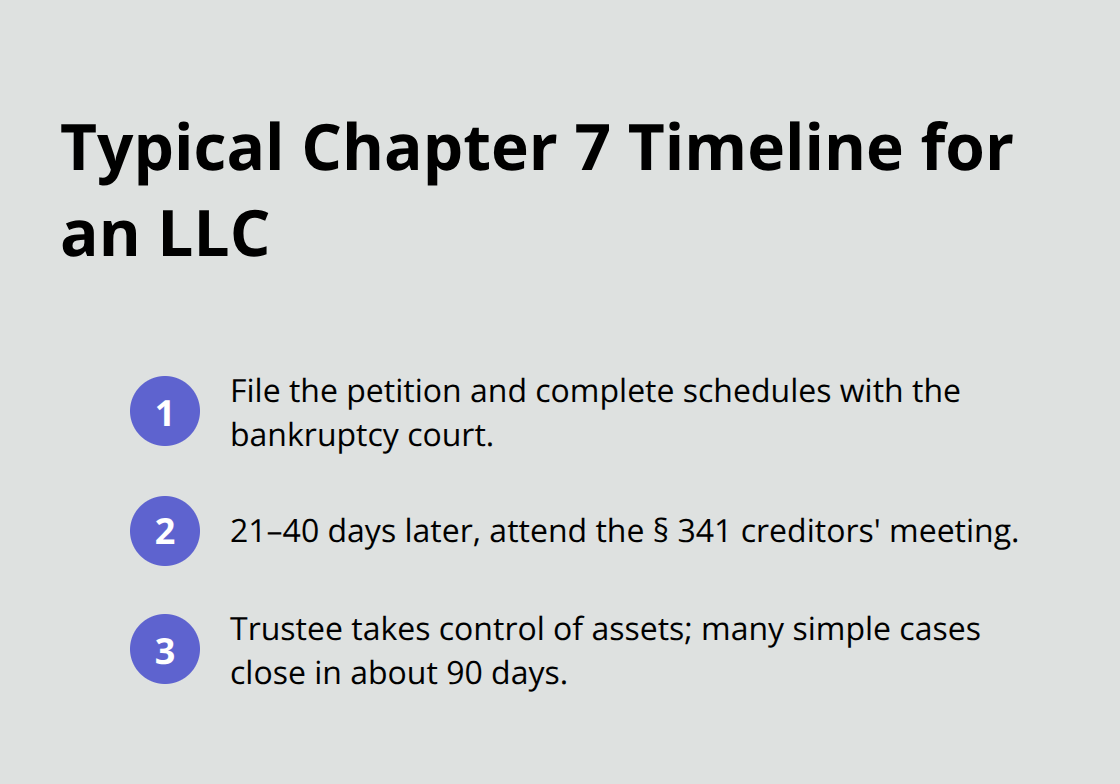
Yes, an LLC can file for Chapter 7 bankruptcy in Florida, and the process works differently than individual bankruptcy. When an LLC files Chapter 7, the business itself enters liquidation, not the owners personally. The bankruptcy trustee appointed under the Bankruptcy Code takes control of the company’s assets, sells them, and distributes the proceeds to creditors according to priority rules. Unlike individual Chapter 7 filers who receive a discharge of personal debts, an LLC does not get a debt discharge because the entity ceases to exist after liquidation. Florida allows LLCs to file Chapter 7 without a means test-there is no income threshold to qualify. The filing happens in the federal bankruptcy district where the LLC operates, and most simple business liquidations close within 90 days according to the United States Courts, though complex cases take longer.
Why LLCs Choose Chapter 7 Over Other Options
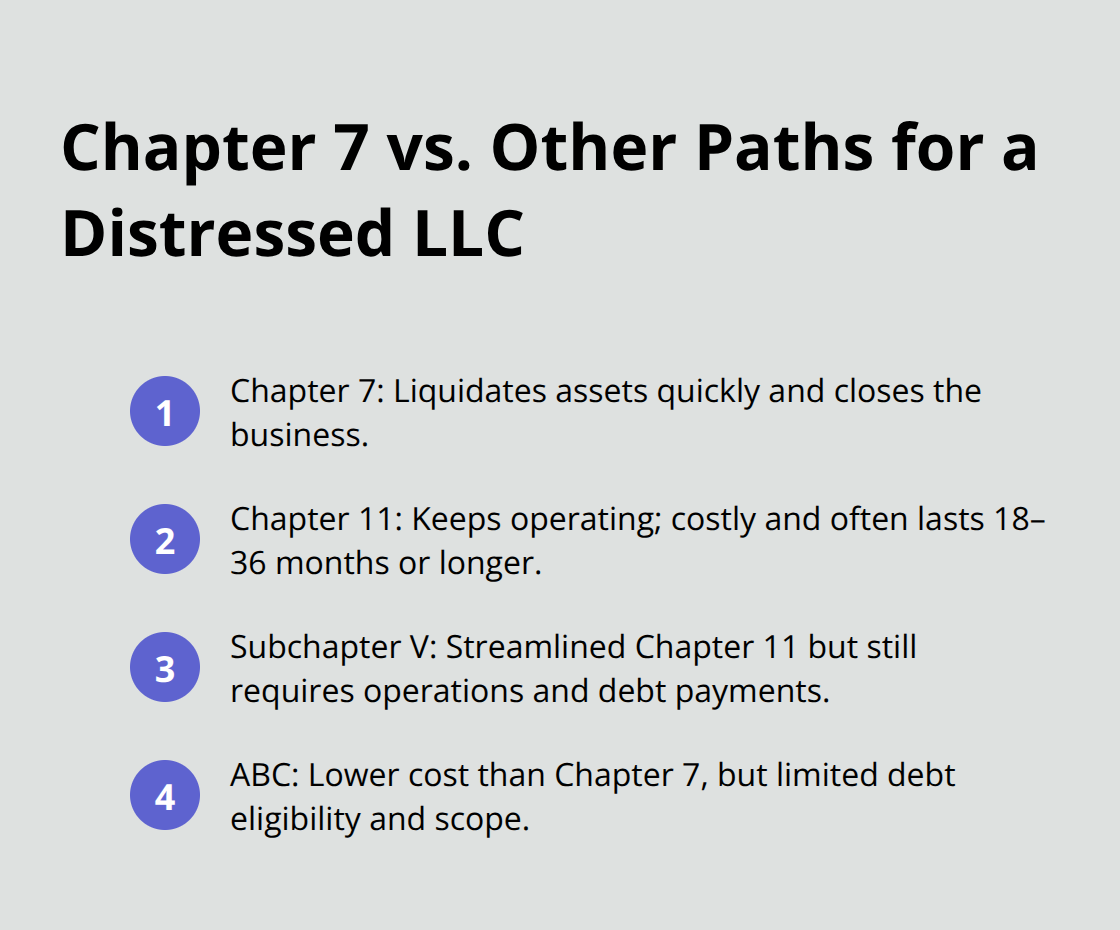
An LLC in financial distress has multiple paths forward, but Chapter 7 delivers finality fast. Chapter 11 reorganization keeps the business operating while you negotiate a repayment plan with creditors-but this requires the company to generate enough cash flow to make payments, costs tens of thousands in legal and trustee fees, and takes 18 to 36 months or longer. Subchapter V, a streamlined version of Chapter 11 for small businesses, reduces costs and complexity but still demands ongoing operations and debt payments. Assignment for the Benefit of Creditors (ABC) transfers assets to an intermediary for sale at lower cost than Chapter 7, but ABC has strict limitations on which debts qualify. If your LLC has no realistic path to profitability, Chapter 7 stops the bleeding immediately. The business closes, assets convert to cash, creditors get paid from liquidation proceeds, and you move forward without years of restructuring payments.
Asset Protection Under Florida Law
Florida LLC law provides meaningful protection for owners, but Chapter 7 bankruptcy exposes gaps that many business owners overlook. Florida Statute 608.433 offers charging order protection-meaning creditors normally cannot seize LLC assets directly and must instead receive a portion of any distributions the LLC makes. However, the Florida Supreme Court’s decision in Olmstead v. Federal Trade Commission revealed that charging order protection is not absolute, especially in bankruptcy. The court ruled that courts may order alternative remedies beyond charging orders based on case facts, which means a Chapter 7 trustee can potentially access LLC assets that owners thought were protected.
Personal Guarantees and Remaining Liability
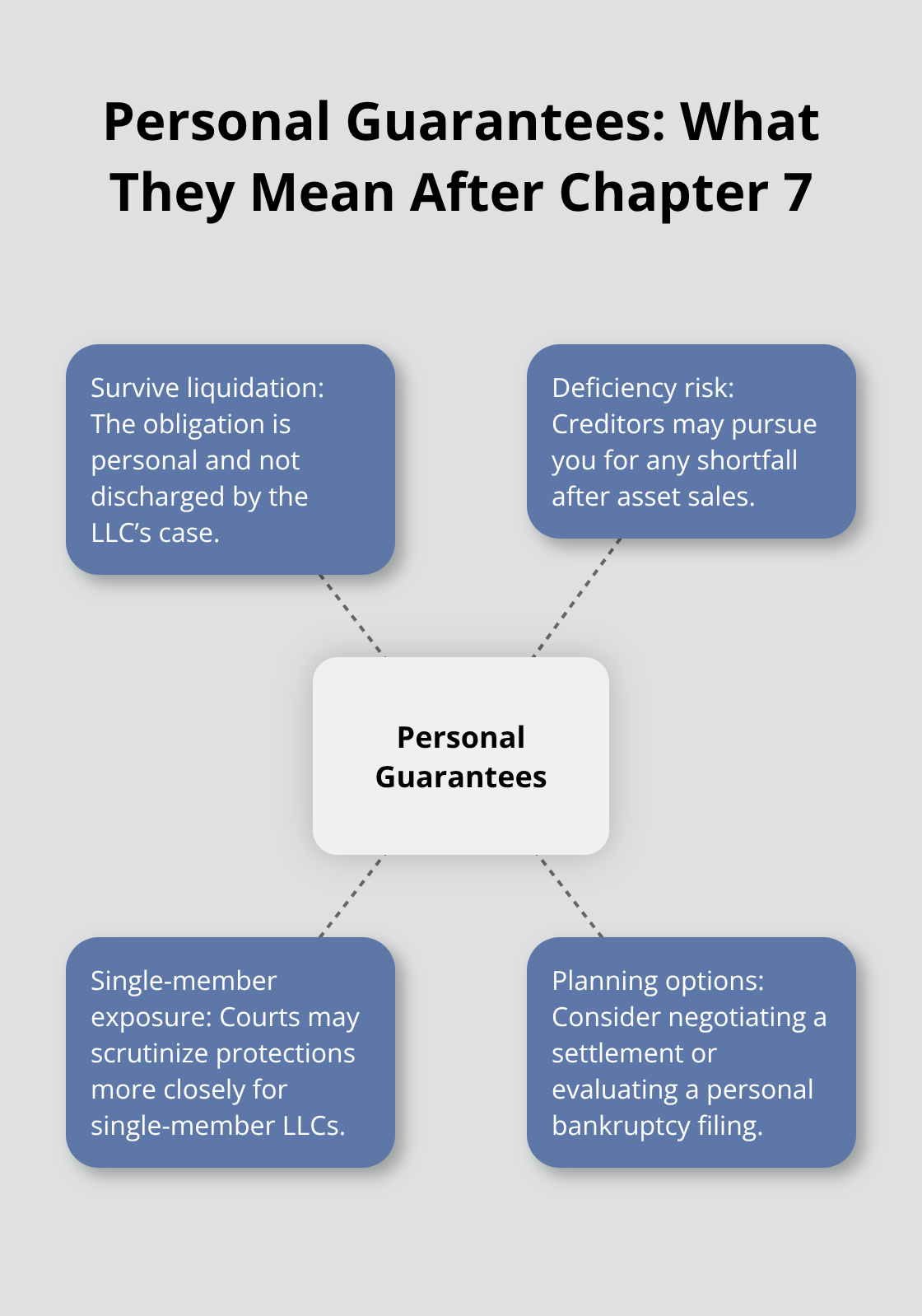
Personal guarantees complicate asset protection significantly. If you personally guaranteed business debts to a lender, Chapter 7 does not eliminate those guarantees. The guarantee survives the LLC’s liquidation, and creditors can pursue you individually for the remaining balance. Single-member LLCs face additional risk because courts sometimes apply different standards for asset protection compared to multi-member LLCs (a distinction that matters when creditors challenge the LLC structure in bankruptcy court).
Preparing Your Financial Records
Before filing Chapter 7, gather your financial records, contracts, and loan documents to understand which debts carry personal guarantees and which ones do not. This clarity shapes whether Chapter 7 truly protects your personal finances or leaves you exposed to creditor claims after the business closes. Understanding your specific debt structure and LLC ownership arrangement determines what happens to your personal assets when the trustee liquidates the company-a distinction that carries real consequences for your financial future.
How to File Chapter 7 for Your LLC in Florida
Gathering and Submitting Required Documents
Filing Chapter 7 for an LLC requires submitting specific documents to the federal bankruptcy court in your district. The petition itself is relatively straightforward, but the supporting schedules demand accuracy and completeness. You must file a petition under 11 U.S.C. § 726, along with detailed schedules listing all assets and liabilities, a statement of financial affairs, and a complete list of executory contracts (like leases or service agreements still in force). The IRS requires current and prior-year tax returns as well. Many LLC owners underestimate how much detail the trustee needs; vague asset descriptions or missing contract information delay the process and raise red flags during the creditors’ meeting.
Federal filing fees total $335 according to 28 U.S.C. § 1930, though you can request to pay in installments if your income falls below 150% of the poverty level. The court filing happens in the federal bankruptcy district where your LLC operates, not where you live personally. Accuracy matters more than speed here-incomplete filings get rejected, forcing you to refile and restart the timeline.
Understanding the Timeline and Key Milestones
Most simple Chapter 7 cases for LLCs close within 90 days according to the United States Courts, though complex liquidations with significant assets or disputed claims stretch to six months or longer. Within 21 to 40 days after filing, the U.S. trustee schedules a creditors’ meeting under 11 U.S.C. § 341, where you answer questions about the business finances and asset values. The trustee appointed to your case takes immediate control of all LLC assets, stopping collection calls and lawsuits through the automatic stay.
How the Trustee Manages Asset Liquidation
The trustee’s job is to maximize what creditors receive, so they evaluate whether selling assets individually generates more cash than selling the business as a whole. Secured creditors-like banks holding liens on equipment or inventory-get paid first from the sale proceeds. Unsecured creditors (vendors, credit card companies, and trade creditors) receive whatever remains after secured claims and trustee fees are satisfied. Many unsecured creditors recover nothing in asset cases, while simple no-asset cases close quickly because there is nothing to distribute. The trustee handles all communications with creditors and manages the liquidation process, which removes the burden from you but also means you lose control over how assets are sold and for what price.
Understanding how the trustee prioritizes creditor payments and manages the sale of your business assets shapes what happens next-particularly when it comes to protecting any remaining personal liability and planning your financial recovery after liquidation closes.
Protecting Your Personal Assets During LLC Bankruptcy in Florida
Understanding the LLC Liability Shield
Chapter 7 bankruptcy creates a hard boundary between your LLC’s debts and your personal finances, but only if you structured the company correctly and avoided specific mistakes that courts punish. When your LLC files Chapter 7, the bankruptcy estate includes only the business assets, not your house, car, retirement accounts, or personal savings. The trustee liquidates the company’s property and distributes proceeds to creditors according to priority rules established in the Bankruptcy Code. Your personal assets remain untouched unless you personally guaranteed business debts or commingled personal and business funds so thoroughly that a court finds the LLC was merely a shell to hide assets.
How Courts Evaluate LLC Legitimacy
The distinction matters enormously: an LLC owner who maintained separate bank accounts, filed annual tax returns, and kept business records faces minimal personal exposure, while an owner who mixed personal and business money or used the LLC primarily to shield assets from creditors creates exactly the kind of situation the Olmstead decision addressed. Florida courts apply a facts-and-circumstances test rather than a blanket rule, meaning courts examine whether the LLC was a legitimate operating entity or a fraud device. If legitimate, your personal assets get protection. If questionable, courts may order alternative remedies that expose personal property to creditor claims.
The Real Threat: Personal Guarantees
Personal guarantees represent the real threat to your financial security during and after Chapter 7. Many LLC owners sign personal guarantees on equipment loans, real estate mortgages, or lines of credit without fully understanding that Chapter 7 does not eliminate those guarantees. The guarantee survives liquidation because it is your personal obligation, not the company’s. Creditors can pursue you after the LLC closes for any deficiency between what the trustee recovers from asset sales and what you owed.
Single-Member LLCs and Additional Complexity
Single-member LLCs face additional complexity because courts sometimes view the charging order protection differently for single-member entities compared to multi-member structures, as the Olmstead case demonstrated when the FTC sought $10 million in restitution and challenged whether the LLC’s assets were truly protected. Before filing, you must identify every debt with your signature on the guarantee document and calculate realistic exposure. If the debt amount is significant, you may need to negotiate a settlement with the creditor before filing Chapter 7 or consider whether personal bankruptcy alongside the LLC filing makes financial sense.
Preparing for Post-Liquidation Liability
Keeping meticulous records of which debts carry guarantees and which ones do not shapes your post-liquidation liability and determines whether Chapter 7 truly delivers the fresh start you need. This preparation work-identifying guarantees, calculating exposure, and understanding your specific debt structure-directly affects your financial recovery after the business closes.
Final Thoughts
Chapter 7 bankruptcy for an LLC in Florida offers a definitive exit when your business cannot recover. The process liquidates company assets, pays creditors according to priority rules, and closes the entity permanently. You avoid years of restructuring payments required by Chapter 11 or Subchapter V, and you stop the constant pressure from collection calls and lawsuits. The automatic stay halts creditor actions immediately, giving you breathing room to plan your next move.
The real protection comes from understanding your specific situation before filing. Personal guarantees on business debts survive liquidation and remain your personal obligation after the LLC closes. Single-member LLCs face different asset protection dynamics than multi-member structures, as Florida courts apply facts-and-circumstances tests rather than blanket rules. Charging order protection, while valuable under normal circumstances, is not absolute in bankruptcy contexts, so identifying which debts carry your personal signature determines whether Chapter 7 truly delivers financial relief or leaves you exposed to creditor claims.
Most simple Chapter 7 cases close within 90 days, though complex liquidations take longer. The trustee handles asset sales and creditor distributions, removing the burden from you but also removing your control over how the business is sold. Contact Harnage Law, PLLC to discuss your specific situation and explore whether Chapter 7 makes sense for your business.