Chapter 7 bankruptcy isn’t always the right path for everyone facing debt in Florida. We at Harnage Law, PLLC know that alternatives to Chapter 7 bankruptcy in Florida can provide relief without the same level of asset liquidation.
This guide walks you through other options, from Chapter 13 repayment plans to debt consolidation and creditor negotiation strategies. Understanding these alternatives helps you make an informed decision about your financial future.
Chapter 13 Bankruptcy in Florida
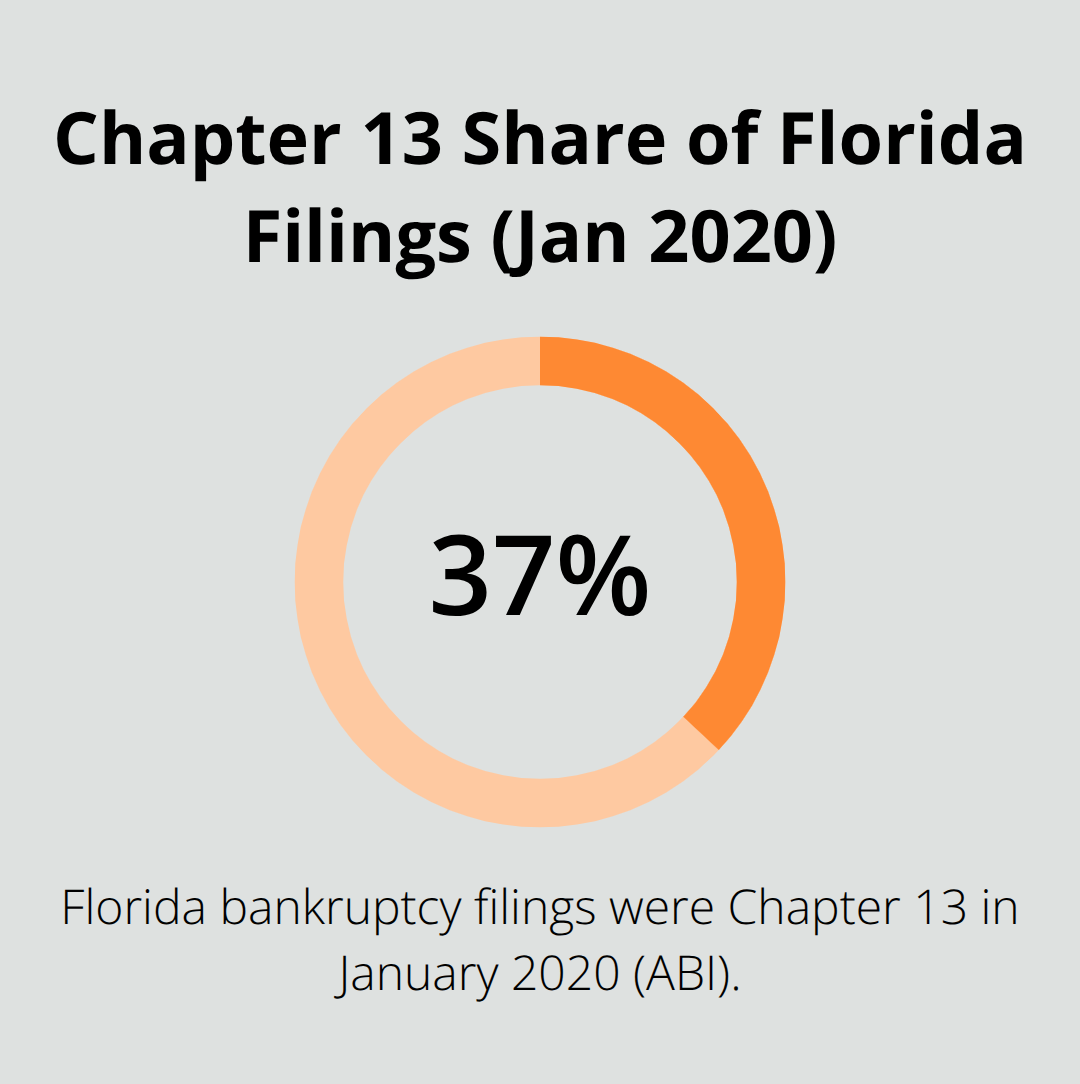
Chapter 13 bankruptcy operates fundamentally differently from Chapter 7. Instead of liquidating assets, you propose a repayment plan lasting three to five years, during which you pay creditors a portion of what you owe from your future income. The American Bankruptcy Institute reported that in January 2020, about 37% of Florida filings were Chapter 13 cases, with 1,302 filings that month. This matters because Chapter 13 preserves your assets entirely-your home, car, and other property remain yours while you execute the plan.
You must have regular income to qualify, and the court must approve your proposed repayment amount as feasible. The key advantage over Chapter 7 is asset protection; if you own significant equity in your home or vehicle, Chapter 13 lets you keep those assets while reorganizing debt. However, you commit to a multi-year payment obligation, which requires discipline and stable employment. Chapter 13 also stops foreclosure immediately through an automatic stay, giving homeowners behind on mortgages a concrete path to catch up on arrears within the plan structure rather than losing the property outright.
How Chapter 13 Repayment Plans Work
Your Chapter 13 plan proposes monthly payments to a court-appointed trustee over 36 to 60 months. The trustee distributes these payments to your creditors according to the plan’s priority structure. Secured debts like mortgages and car loans typically receive full payment through the plan or separately, while unsecured debts like credit cards and medical bills often receive reduced payments. You must file detailed schedules listing all debts, monthly income, and living expenses-documentation that requires honesty and accuracy. The court trustee assigned to your case reviews the plan and can object if payments seem insufficient. This is where the practical work begins: creating a realistic budget that the court will accept and that you can sustain for 36 to 60 months without defaulting.
Income and Eligibility Requirements
Chapter 13 eligibility hinges on having disposable income after expenses. The bankruptcy court calculates your disposable income using a formula that compares your gross income against the Florida median income for your household size. If your income falls below the state median, calculations are simpler. If it exceeds the median, the court applies stricter expense standards to determine what you can actually afford to pay creditors monthly. You must demonstrate that you have regular income-whether from employment, self-employment, or other sources-to support the plan. The court will not approve a plan that fails to account for your actual living expenses or that proposes payments you cannot realistically make.
When Chapter 13 Makes Sense Over Chapter 7
Chapter 13 becomes the stronger choice when you have assets worth protecting or income sufficient to reorganize debt. Homeowners with substantial equity, vehicle owners, and those holding retirement accounts or inheritance should seriously consider Chapter 13 because Chapter 7 could force liquidation of nonexempt property. If you fall behind on a mortgage, Chapter 13 halts foreclosure and lets you catch up arrears through the plan-Chapter 7 offers no such protection. Additionally, if your income exceeds Florida’s median, you may not qualify for Chapter 7 under the means test, making Chapter 13 your only bankruptcy option. The downside is commitment: missing even one plan payment can result in case dismissal, leaving you vulnerable to creditor lawsuits and wage garnishment. Chapter 7 discharges debts in three to four months; Chapter 13 demands years of compliance. For those with unstable income or job uncertainty, Chapter 13 carries genuine risk.
Moving Beyond Bankruptcy Alternatives
While Chapter 13 provides a structured path for those with regular income and assets to protect, other options exist outside the bankruptcy system entirely. Debt consolidation, creditor negotiation, and hardship programs offer ways to address debt without court involvement or the multi-year commitment that Chapter 13 requires.
Debt Consolidation and Negotiation Options
Debt consolidation combines multiple debts into a single payment, typically with a lower interest rate, without requiring bankruptcy. This approach works best when you have sufficient income to qualify for a personal loan and when your credit score hasn’t deteriorated too severely. A consolidation loan pays off existing creditors in full, leaving you with one monthly obligation instead of juggling multiple payments to different creditors. The math matters: if you consolidate credit card debt at 18% interest into a personal loan at 8%, you reduce both your monthly payment and total interest paid over time. However, consolidation doesn’t eliminate debt-it reorganizes it. Many people consolidate, then accumulate new credit card balances while still paying the consolidation loan, worsening their financial position. You must address the underlying spending habits that created the debt in the first place, or consolidation becomes a temporary fix masking a deeper problem.
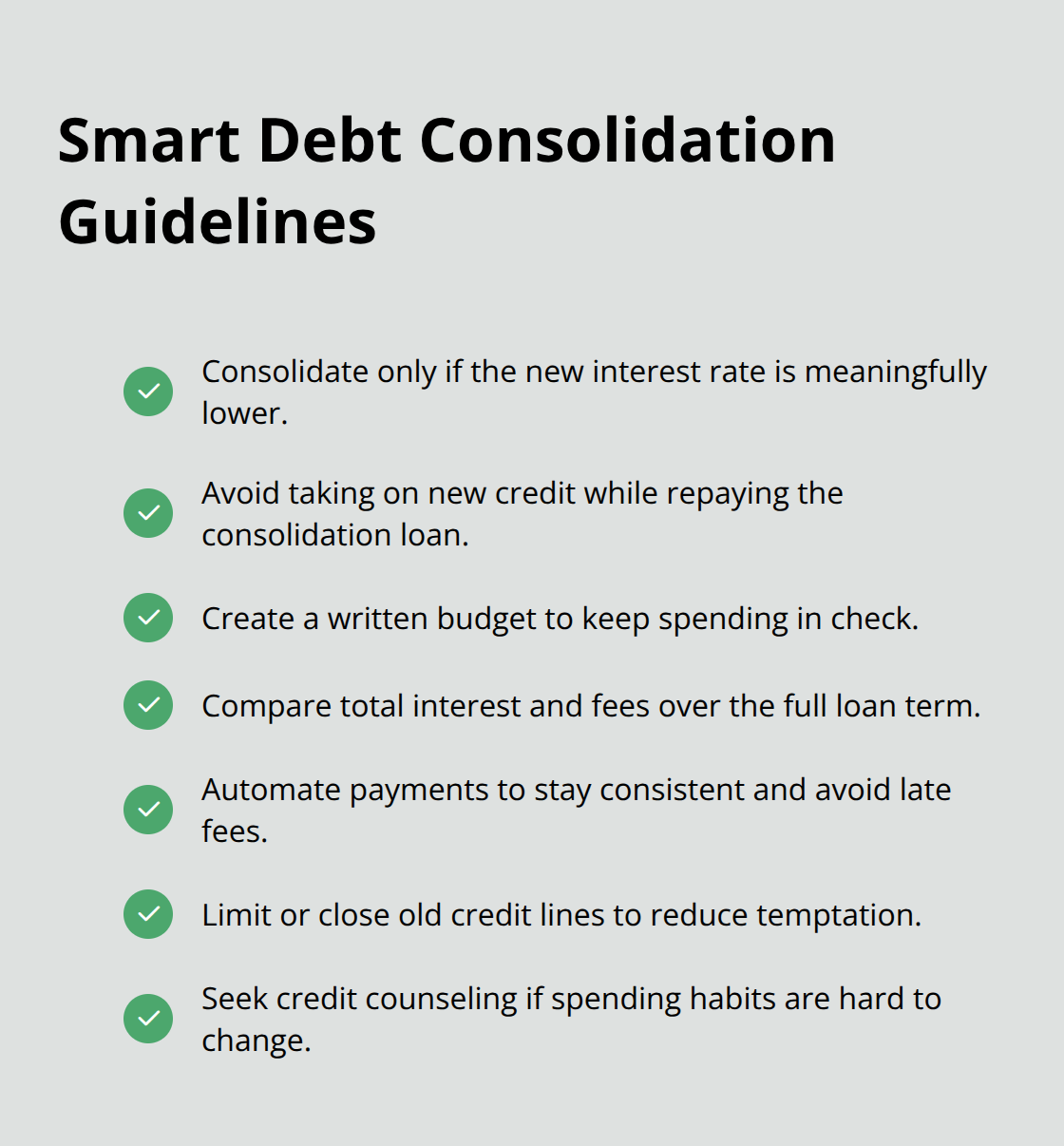
This is why consolidation alone often fails without accompanying lifestyle changes or a structured plan to prevent new debt accumulation.
Credit Counseling Through Approved Florida Agencies
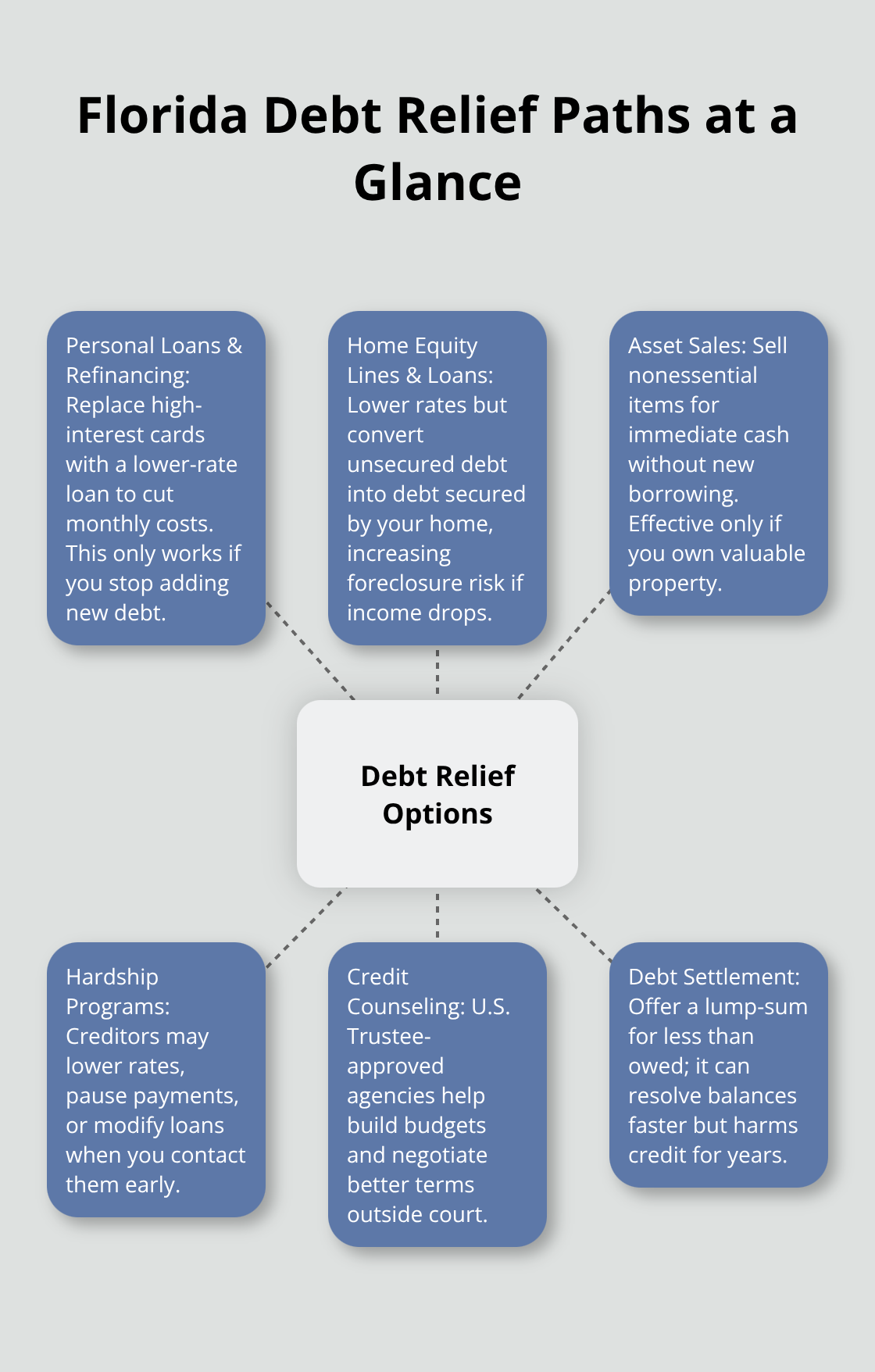
Credit counseling through a U.S. Trustee-approved agency in Florida provides debt management planning without bankruptcy costs. The U.S. Trustee Program maintains a list of Florida-based counselors offering both in-person and online services, with providers like Consolidated Credit Counseling Services in Orlando and 123 Credit Counselors in Miami delivering accessible guidance to residents statewide. These agencies help you create realistic budgets and negotiate directly with creditors to modify payment terms-extending loan periods, reducing interest rates, or waiving fees. A debt management plan typically takes three to five years to complete, similar to Chapter 13’s timeline, but outside the court system entirely.
Creditor Settlement and Negotiation Strategies
Creditor settlement offers another path: you negotiate with creditors to accept a lump-sum payment of 30% to 50% of what you owe in exchange for closing the account. Settlement damages your credit score significantly and can remain on your report for up to seven years, but it eliminates the debt faster than a management plan. The Fair Debt Collection Practices Act and Florida’s Consumer Collection Practices Act protect you during negotiations, preventing creditors from using abusive tactics. Debt settlement companies charge substantial fees-typically 15% to 25% of enrolled debt-making independent negotiation or working with a Florida bankruptcy attorney a more cost-effective approach. Settlement works best when you have accumulated funds available to pay immediately and when debts have aged at least 90 days past due, signaling creditor willingness to negotiate rather than pursue collection lawsuits.
These debt management and settlement strategies operate outside the bankruptcy system, offering flexibility that Chapter 13 cannot match. Yet they require discipline, available funds, and creditor cooperation-conditions that don’t always align with your financial reality. When negotiation stalls or your income cannot support a consolidation loan, non-bankruptcy debt relief solutions provide additional pathways forward.
Non-Bankruptcy Debt Relief Solutions in Florida
Personal loans and refinancing offer immediate relief when you have sufficient credit standing to qualify. A personal loan from a bank or credit union at 6% to 12% interest can pay off high-interest credit cards at 18% to 25%, reducing your monthly obligation and total interest paid over the loan term. This only works if you stop accumulating new debt-many borrowers refinance, then rebuild credit card balances while servicing the personal loan, doubling their total debt load.
Before pursuing refinancing, calculate whether the lower interest rate actually saves money over the full repayment period, accounting for any origination fees that lenders charge upfront.
Home Equity and Asset Sales
Home equity lines of credit appeal to homeowners because interest rates are lower than unsecured loans, but this strategy converts unsecured debt into secured debt backed by your home-a risky move if your income becomes unstable. Selling nonessential assets like vehicles, jewelry, or investment accounts provides immediate cash to pay down debt without borrowing, though this approach only works if you own valuable property beyond what you need for daily living.
Hardship Programs From Creditors
Florida creditors and lenders increasingly offer hardship programs when you contact them proactively before defaulting. Credit card issuers may lower interest rates, pause payments temporarily, or reduce minimum payments if you demonstrate financial difficulty. Mortgage lenders offer loan modification programs that extend your loan term or reduce your interest rate, preventing foreclosure without bankruptcy court involvement. The Consumer Financial Protection Bureau reports that creditors are more willing to negotiate when you initiate contact early-waiting until accounts reach collections status severely limits your options.
When These Solutions Fall Short
These non-bankruptcy solutions require honesty about your spending habits and realistic assessment of whether your income can sustain repayment. If consolidation loans require you to stretch your budget to the breaking point, if hardship programs delay inevitable default, or if asset sales leave you unable to function financially, these alternatives mask the real problem rather than solve it. Formal bankruptcy through Chapter 13 or Chapter 7 becomes the more honest path forward when debt relief strategies cannot address your underlying financial crisis.
Final Thoughts
Chapter 7 bankruptcy becomes the right choice when alternatives to Chapter 7 bankruptcy in Florida have failed to stop creditor harassment, wage garnishment, or collection lawsuits. If you’ve tried debt consolidation, creditor negotiation, and hardship programs without meaningful progress, Chapter 7 offers a faster path to discharge-typically three to four months compared to the three to five years required by Chapter 13 or debt management plans. This speed matters when creditors intensify collection efforts or when you need genuine relief rather than years of constrained budgeting.
Evaluating your financial situation honestly requires examining three core factors: your income relative to Florida’s median, the value of assets you own, and whether your debts stem from temporary hardship or unsustainable spending patterns. If your income falls below the state median, Chapter 7 eligibility becomes straightforward, and liquidation poses little threat to your financial foundation. If you own substantial home equity, operate a business, or earn income above the median, Chapter 13 or non-bankruptcy alternatives may better protect your assets and future earning capacity.
The next step is scheduling a consultation with a Florida bankruptcy attorney who can review your specific circumstances without judgment. We at Harnage Law, PLLC provide legal guidance through every step of the bankruptcy process and help clients stop creditor harassment, prevent wage garnishments, and halt lawsuits. Contact Harnage Law, PLLC to discuss whether Chapter 7 or alternatives better fit your situation.