Chapter 7 bankruptcy offers Florida residents a fresh financial start by eliminating most unsecured debts. However, qualification for Chapter 7 bankruptcy involves meeting specific income thresholds and asset requirements.
We at Harnage Law, PLLC see many clients who assume they automatically qualify without understanding the strict federal guidelines. The process requires careful evaluation of your financial situation.
Income Requirements for Chapter 7 in Florida
Florida Median Income Thresholds
The median income test acts as the primary gatekeeper for Chapter 7 bankruptcy in Florida. As of April 2024, households must earn below specific thresholds: $62,973 for one person, $77,639 for two people, and $143,669 for eight people. For households with more than eight members, add $9,900 for each additional person. These figures come from the Census Bureau and change twice yearly in April and October.
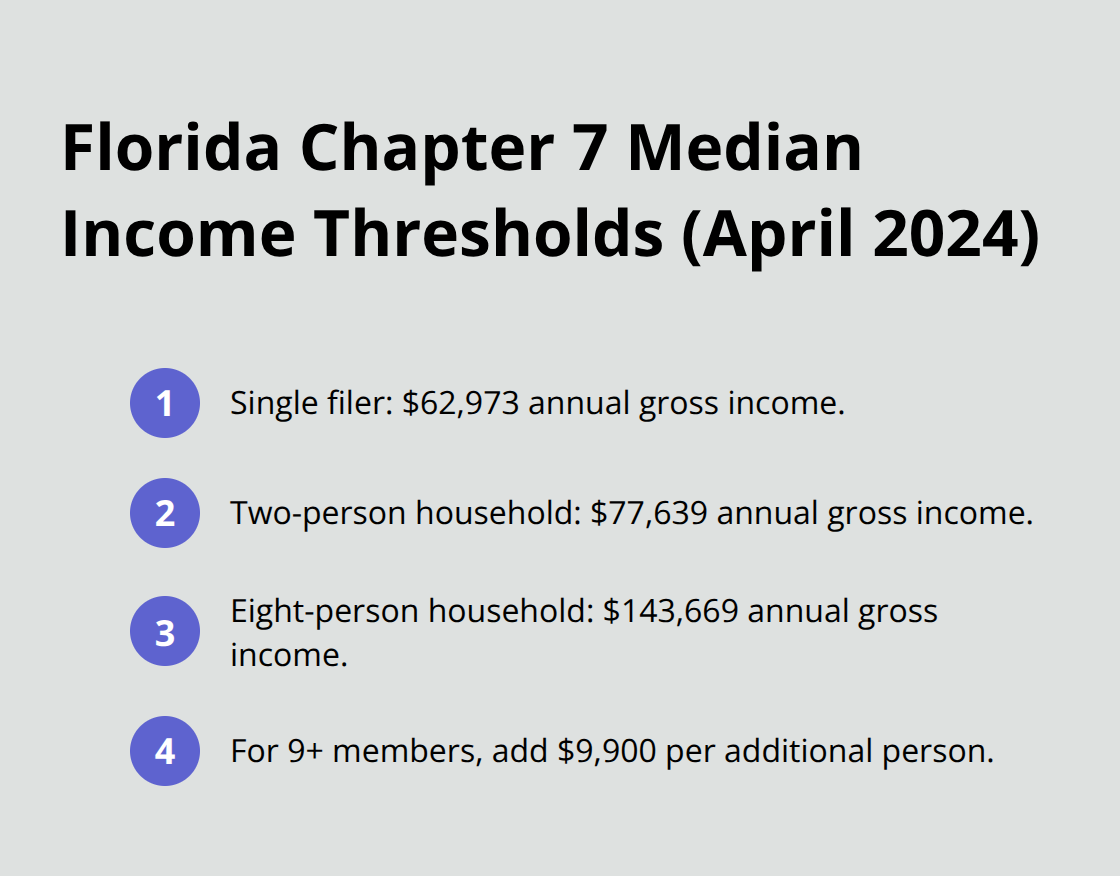
Households that earn below these amounts automatically qualify for Chapter 7 without additional scrutiny. The test applies to gross income from all sources within your household, which includes wages, pensions, unemployment benefits, and rental income. Social Security benefits and child support payments remain exempt from this calculation.
Income Calculation Methods
You calculate your average monthly income by totaling gross household income from the six complete calendar months before you file, then divide by six and multiply by twelve. This six-month lookback period can work in your favor if your income recently decreased due to job loss or reduced hours. Wait to file if your current income is significantly lower than the six-month average.
The calculation includes all household members’ income, regardless of marriage status or whether they plan to file bankruptcy. This means roommates, adult children, and unmarried partners all count toward the household income total.
Required Income Documentation
You must gather pay stubs from all household members for the past six months, tax returns from the previous two years, and bank statements that show all deposits. Include documentation for unemployment benefits, disability payments, rental income, and business profits or losses. The court requires Form B122A-1 to detail current monthly income calculations (available through the U.S. Trustee Program). Missing or incomplete documentation will delay your case and potentially lead to dismissal.
The Means Test Process
If your income exceeds Florida’s median thresholds, you must complete the means test to determine eligibility. This test evaluates your ability to pay back debts by subtracting allowable expenses from your monthly income. The calculation uses standardized expense amounts from the IRS and Census Bureau data for items like housing, transportation, and food costs.
You pass the means test if your disposable income over five years totals less than $9,075. Income between $9,075 and $15,150 requires additional calculations to determine qualification. These asset and property considerations play an equally important role in your Chapter 7 eligibility.
What Assets Can You Keep in Florida Chapter 7
Florida provides some of the nation’s most generous asset protection laws for Chapter 7 bankruptcy filers. The state homestead exemption allows you to protect unlimited value in your primary residence, provided it sits on half an acre or less in a municipality or 160 acres or less in rural areas. This protection applies regardless of your home’s value, which makes Florida attractive for homeowners with significant equity. You must have owned the property for at least 40 months before you file to claim the full exemption amount above $170,350.
Personal Property You Can Protect
Florida law protects $1,000 worth of personal property for each household member, which covers items like furniture, clothes, and electronics. Your primary vehicle receives protection up to $1,000 in value, though this amount often proves insufficient for newer cars. The state also exempts retirement accounts (including 401k plans, IRAs, and pensions) without dollar limits. Tools of your trade receive protection up to $1,000, while wages are completely exempt from creditor collection in Florida.
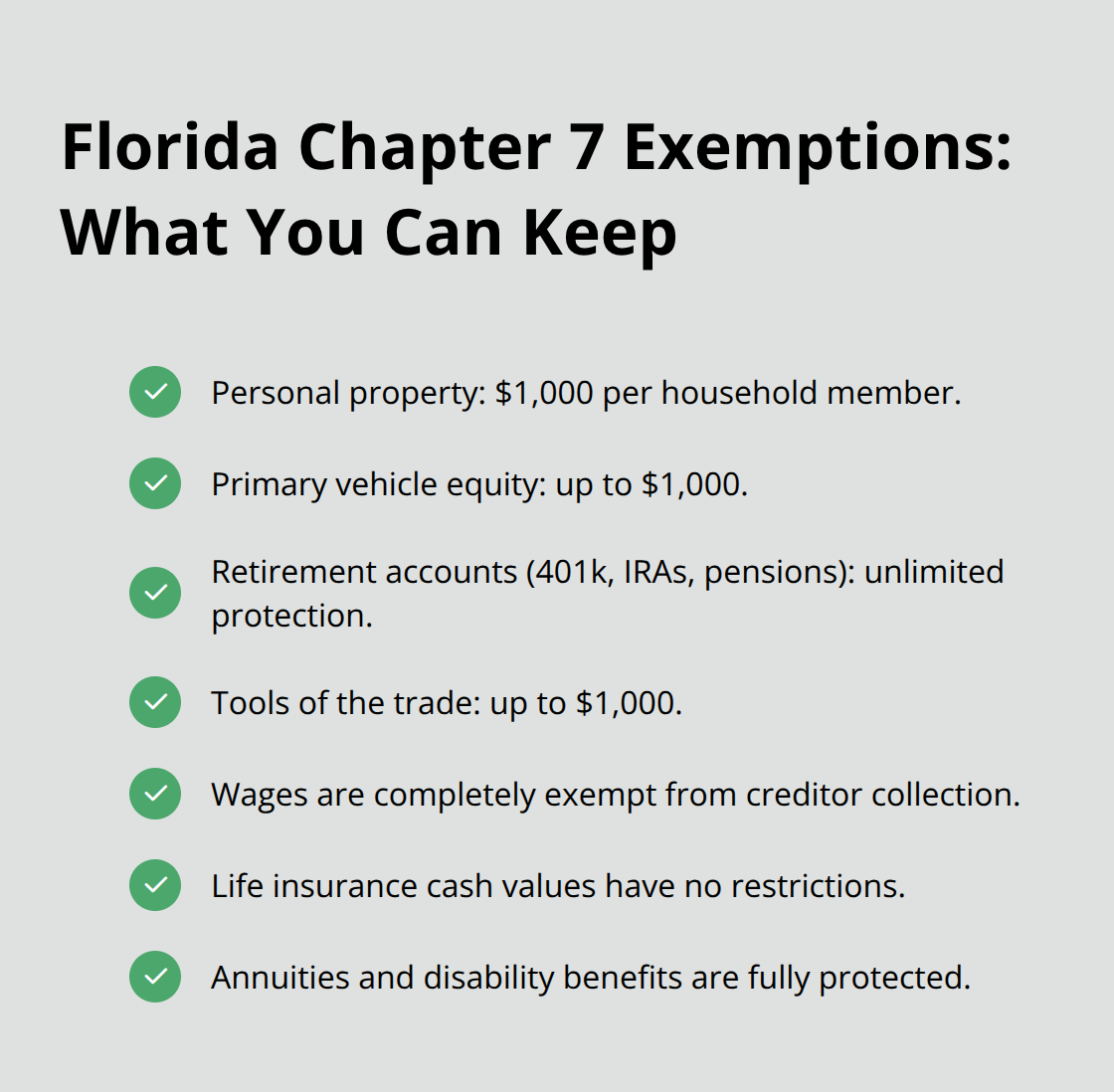
Life insurance cash values face no restrictions, and you can protect annuities and disability benefits entirely.
Assets the Trustee Will Liquidate
Non-exempt assets become part of your bankruptcy estate and face liquidation to pay creditors. Second homes, investment properties, and vacation homes receive no protection under Florida exemptions. Luxury items (including boats, expensive jewelry, and recreational vehicles) often exceed exemption limits and face sale. Bank accounts, stocks, bonds, and other financial investments become trustee property unless they qualify as retirement funds. Business assets and inventory typically face liquidation unless you can demonstrate they fall under the tools of trade exemption.
Recent Asset Transfers and Red Flags
The trustee will also target any recent large purchases or transfers that appear to hide assets from creditors. Transfers to family members within two years of your petition date face intense scrutiny. Cash advances and luxury purchases within 90 days before you file may be considered fraudulent and remain non-dischargeable. These factors can significantly impact your qualification and lead to the next major consideration: common reasons why Chapter 7 applications face rejection.
What Prevents Chapter 7 Approval in Florida
Prior Bankruptcy Filing Limits
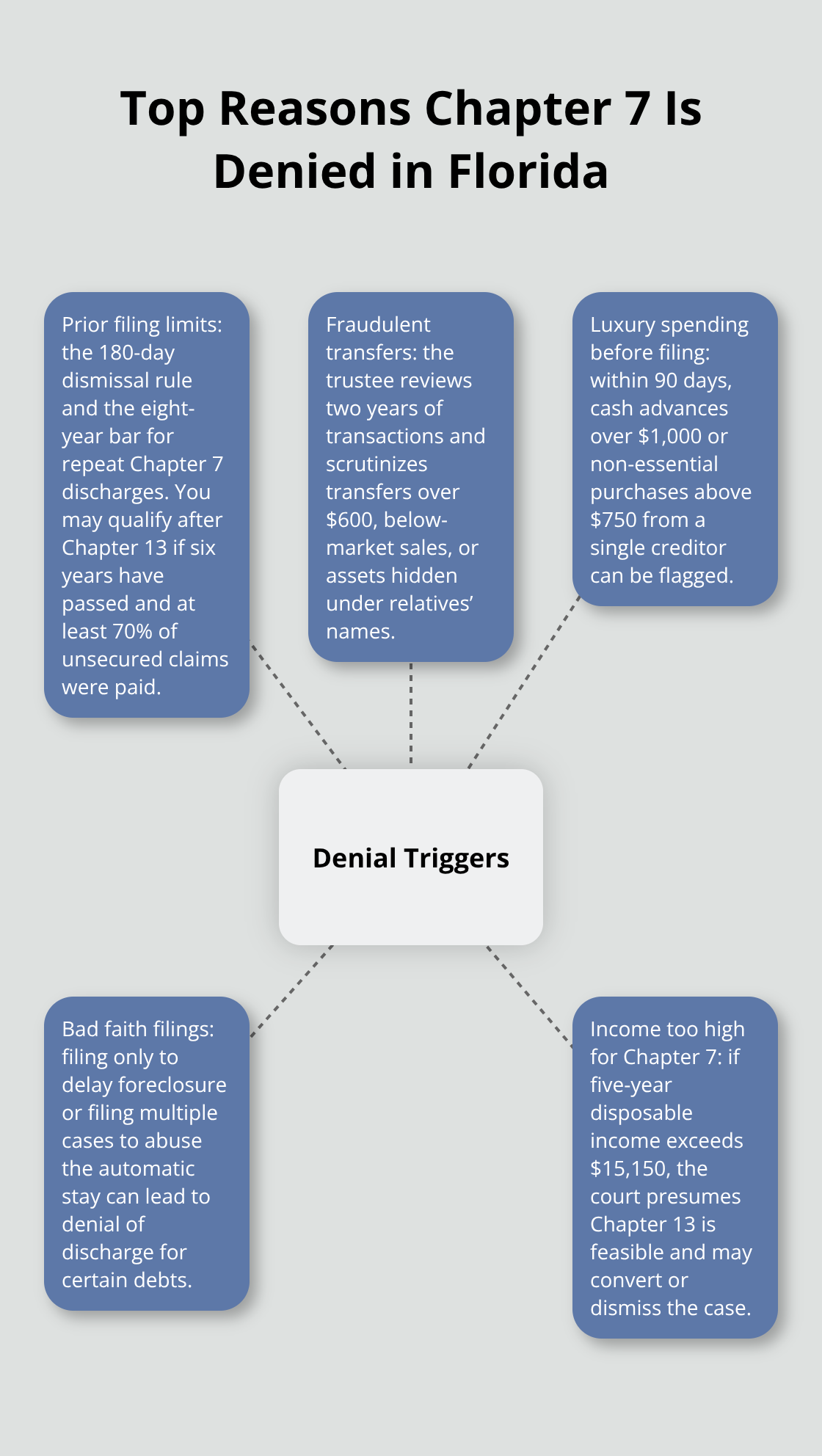
The 180-day rule blocks most Chapter 7 applications if your previous bankruptcy case faced dismissal within six months due to willful failure to appear in court or comply with court orders. This restriction applies regardless of which bankruptcy chapter you previously filed. The eight-year rule prevents you from receiving another Chapter 7 discharge if you already received one within the past eight years (measured from filing date to filing date). However, you can file Chapter 7 after receiving a Chapter 13 discharge if six years have passed and you paid unsecured creditors at least 70% of their claims through your previous plan.
These timing restrictions exist because bankruptcy courts view repeated filings as potential abuse of the system. Courts maintain detailed records of all bankruptcy filings, which makes it impossible to hide previous cases from trustees and judges.
Fraudulent Transfers and Bad Faith Actions
The bankruptcy trustee investigates all financial transactions within two years before your filing date, with particular attention to transfers that exceed $600. Property transfers to family members, asset sales below market value, or money hidden in accounts under relatives’ names constitute fraudulent activity that will result in case dismissal and potential criminal charges. The trustee also examines luxury purchases within 90 days of filing, which includes cash advances over $1,000 and non-essential purchases above $750 from a single creditor.
Courts also reject cases filed in bad faith. This includes filing solely to delay foreclosure without genuine financial distress or filing multiple cases to abuse the automatic stay protection. Credit card debt accumulated immediately before filing while you plan to file bankruptcy demonstrates bad faith that leads to denial of discharge for those specific debts.
Income Above Chapter 13 Thresholds
The means test serves as the final gatekeeper for Chapter 7 qualification in Florida. If your disposable income over five years exceeds $15,150, the court presumes you can afford a Chapter 13 repayment plan and will convert or dismiss your Chapter 7 case. This calculation becomes particularly problematic for high earners with significant secured debt payments, as the means test uses standardized expense amounts rather than actual costs. Florida residents who earn above median income must demonstrate genuine financial hardship through special circumstances like serious medical conditions or job loss to overcome this presumption.
Final Thoughts
Qualification for Chapter 7 bankruptcy in Florida requires you to meet income thresholds below $62,973 for single filers and $77,639 for couples. You must pass the means test if your income exceeds these amounts and protect your assets within state exemption limits. The process demands complete financial documentation and avoids disqualifying factors like recent fraudulent transfers or previous bankruptcy filings within restricted timeframes.
Qualified filers must gather six months of pay stubs, tax returns, and bank statements before they file. You must complete mandatory credit counseling from an approved agency within 180 days of your petition date (as required by federal law). Most qualified filers receive their discharge within four months, which eliminates unsecured debts and stops creditor harassment.
We at Harnage Law, PLLC help Florida residents navigate Chapter 7 bankruptcy complexities and protect their assets while they achieve debt relief. Our firm provides personalized legal guidance through every step of the bankruptcy process, from initial qualification assessment through final discharge. Contact us at chapter7florida.com to evaluate your situation and start your path toward financial freedom.