Chapter 7 bankruptcy offers Florida residents a fresh financial start by eliminating most unsecured debts within months. Understanding how bankruptcy Chapter 7 works can help you make informed decisions about your financial future.
We at Harnage Law, PLLC see firsthand how this legal process transforms lives by stopping creditor harassment and wiping out overwhelming debt burdens.
What Happens During Chapter 7 Bankruptcy in Florida
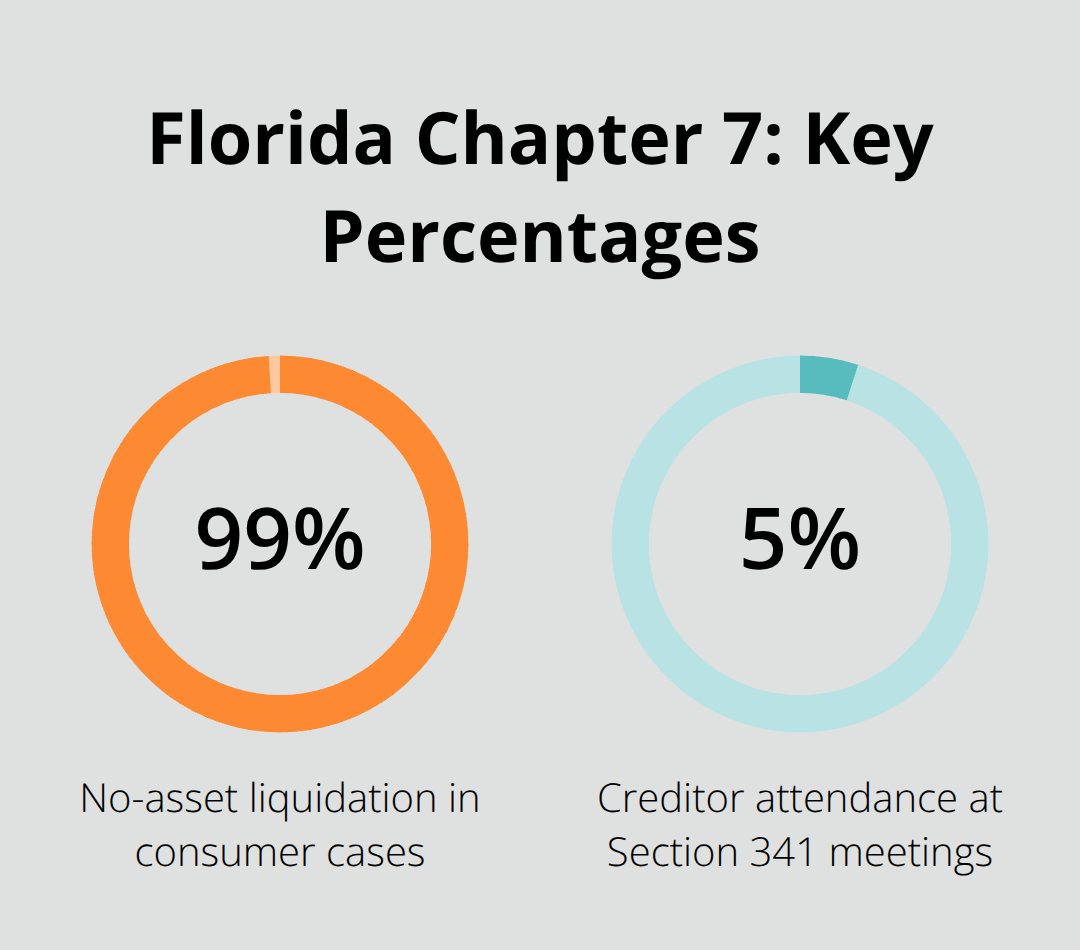
Chapter 7 bankruptcy operates through a straightforward liquidation process that protects most Florida residents’ assets while it eliminates debt. Florida’s homestead exemption allows unlimited equity protection in your primary residence (up to half an acre in cities or 160 acres elsewhere), plus $5,000 vehicle equity and $4,000 in personal property if you don’t use the homestead exemption. The bankruptcy trustee reviews your assets within 21 to 40 days at the creditors’ meeting, but over 99% of cases involve no asset liquidation because exemptions cover everything you own.
Immediate Protection from Collections
Chapter 7 filing triggers an automatic stay that stops all creditor actions within 24 hours, which includes wage garnishments, foreclosure proceedings, and collection calls. This protection remains in effect throughout your case, typically lasting 90 to 120 days until discharge. Court data shows creditors who violate the automatic stay face penalties up to $1,000 per violation plus attorney fees, which makes this protection highly effective.
Debt Elimination Process
Chapter 7 discharges most unsecured debts (credit cards, medical bills, and personal loans) within four months of filing. The process eliminates these debts permanently, though certain obligations like child support, recent taxes, and student loans typically survive bankruptcy. Florida residents must complete credit counseling within 180 days before they file and financial management education within 60 days after the creditors’ meeting to receive their discharge.
Asset Review and Trustee Evaluation
The appointed trustee examines your financial situation to determine which assets qualify for protection under Florida exemptions. Most debtors keep all their property because Florida’s generous exemptions shield homes, vehicles, and personal belongings from liquidation. The trustee focuses on identifying any non-exempt assets that could generate funds for creditors, though this occurs in less than 1% of consumer cases.
The next phase involves meeting specific eligibility requirements that determine whether you qualify for Chapter 7 bankruptcy in Florida.
Who Qualifies for Chapter 7 Bankruptcy in Florida
Income Thresholds and Means Test Calculations
Florida residents must pass two financial tests to qualify for Chapter 7 bankruptcy. The median income test serves as the first hurdle, with 2024 thresholds set at $62,973 for single filers, $78,039 for two-person households, $90,956 for three people, and $104,069 for families of four. Your income above these amounts triggers the means test, which calculates your monthly disposable income after you deduct necessary expenses like secured debt payments, taxes, childcare costs, and health insurance premiums.
The test multiplies your average monthly disposable income by 60. Results below $9,075 typically qualify you for Chapter 7, while amounts above $15,150 usually disqualify you unless exceptional circumstances apply. Disabled veterans with a 30% disability rating or higher can bypass means tests for debts they incurred during active duty or homeland defense activities.
Asset Protection Under Florida Law
Florida’s bankruptcy exemptions protect substantial assets from liquidation, but you must reside in the state for 730 days to claim these protections. The homestead exemption shields unlimited equity in your primary residence if you’ve owned it for 1,215 days before you file (though federal caps limit protection to $214,000 for newer homeowners). You can protect $5,000 in vehicle equity, plus $1,000 in personal property or $4,000 if you don’t use the homestead exemption.
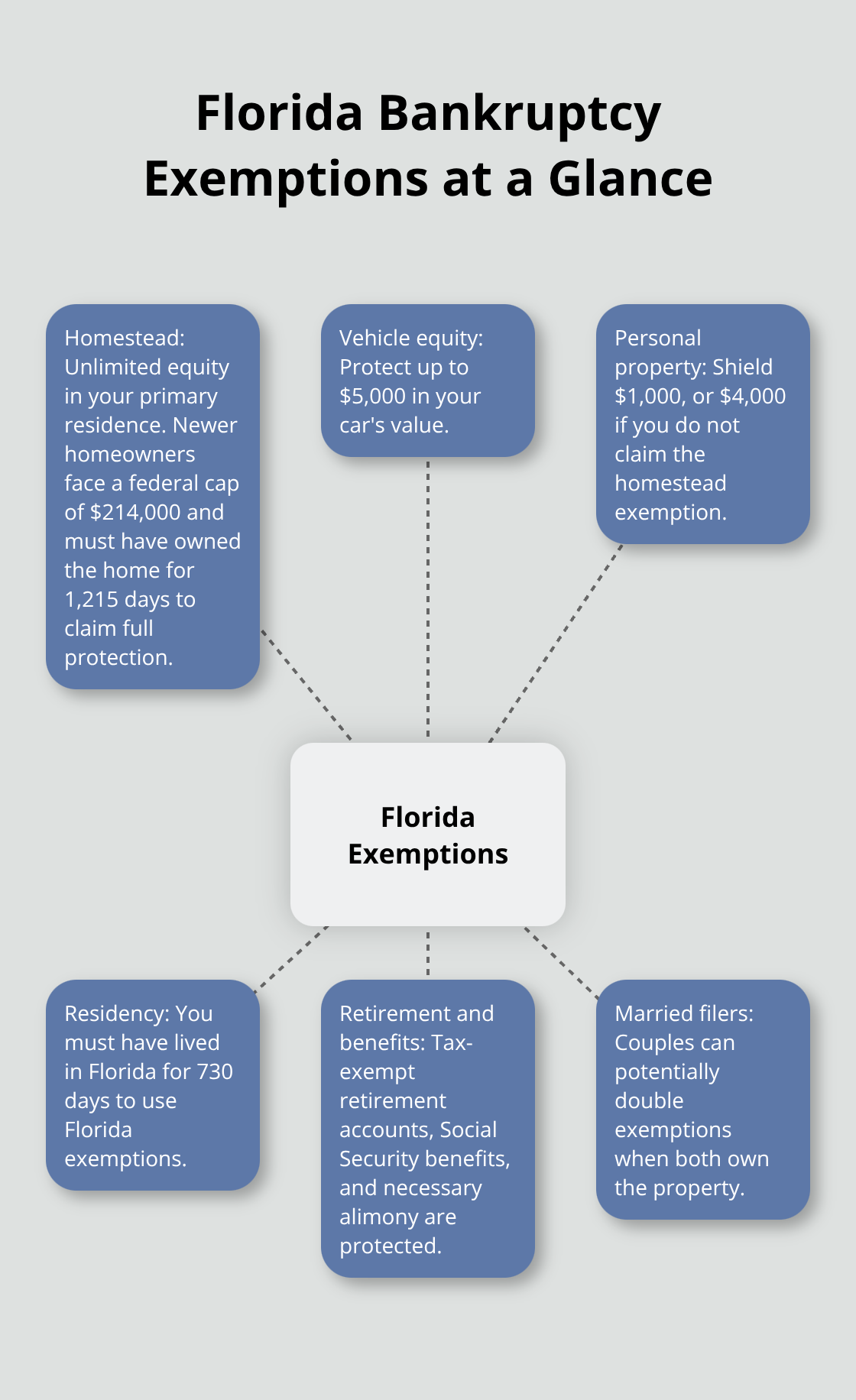
Tax-exempt retirement accounts, Social Security benefits, and necessary alimony payments remain protected. Married filers can potentially double their exemption amounts if both own the property.
Previous Bankruptcy Restrictions
Previous bankruptcy cases create mandatory wait periods between filings. You must wait eight years between Chapter 7 discharges, six years from Chapter 13 to Chapter 7 if you received less than 70% creditor payment, and four years from Chapter 13 to Chapter 7 with full creditor payment. These restrictions prevent abuse of the bankruptcy system while you rebuild your financial stability.
Pre-Filing Requirements
You must complete credit counseling from an approved agency within 180 days before you file, plus financial management education within 60 days after your creditors’ meeting to receive discharge. The $338 filing fee can be paid in installments for those who qualify, with half the amount due upfront. Florida courts require current government-issued photo identification, 60 days of pay statements, and accurate financial schedules that detail all assets, liabilities, and creditors.
Once you meet these qualification requirements, the actual Chapter 7 process follows a predictable timeline with specific milestones and deadlines.
What Happens After You File Chapter 7 in Florida
Required Documents and Initial Paperwork
Florida courts demand specific documents within strict deadlines to start your Chapter 7 case. You must submit the voluntary petition, schedules of assets and liabilities, statement of financial affairs, and your certificate of credit counseling completion. The $338 filing fee breaks down into $245 for the petition, $75 administrative fee, and $15 trustee surcharge (payment due at filing unless you qualify for installments). Courts accept certified checks or money orders but never accept cash payments through mail.
Your documentation package must include 60 days of pay statements, current government-issued photo identification, and a creditor matrix that lists all creditor names and addresses. Missing or incomplete paperwork delays your case and potentially jeopardizes your automatic stay protection.
Section 341 Meeting and Trustee Questions
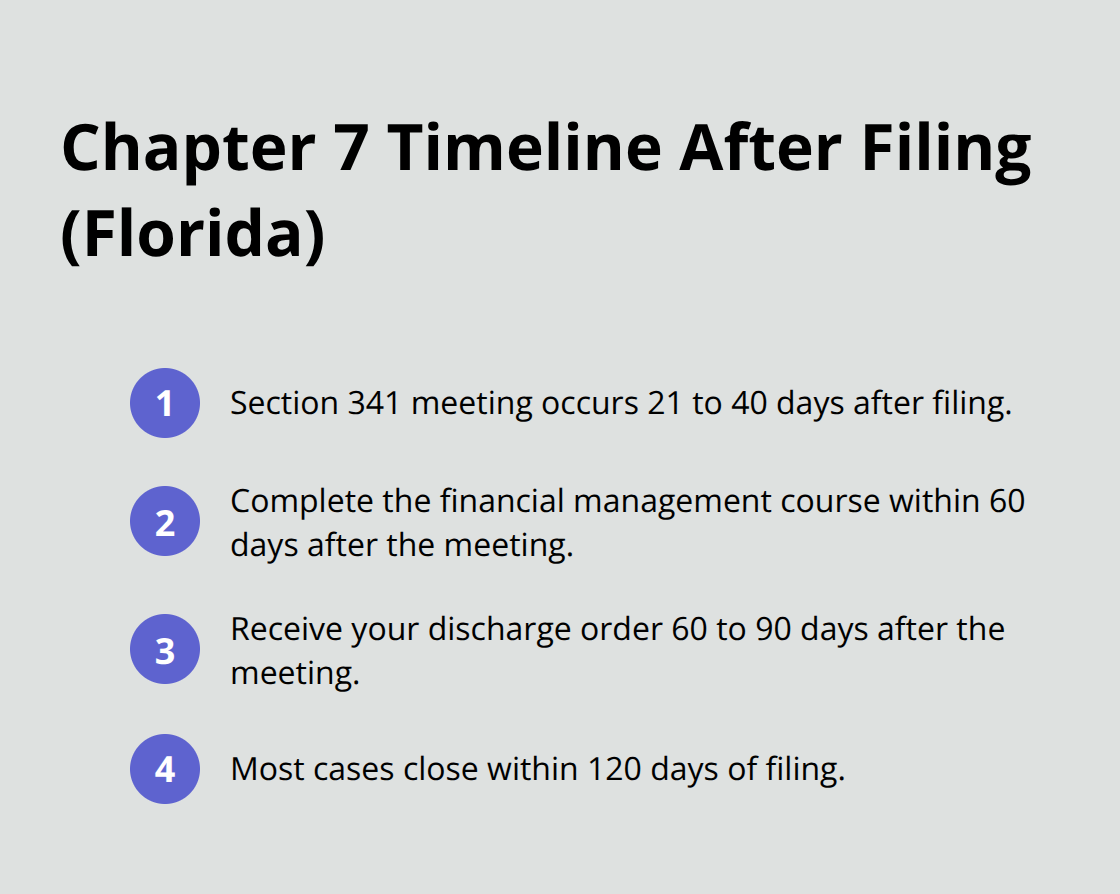
The creditors meeting occurs 21 to 40 days after you file, where you answer questions under oath about your financial situation and petition accuracy. This meeting typically lasts 5 to 15 minutes in Florida courts, with the trustee focusing on asset verification and potential fraud detection. You must bring photo identification and Social Security card to the meeting.
Creditors rarely attend these meetings, appearing in less than 5% of consumer cases according to Administrative Office of the US Courts data. The trustee determines whether your case qualifies as a no-asset case, meaning creditors receive no payment because exemptions protect all your property.
Financial Management Course Completion
You have 60 days after the creditors meeting to complete your financial management course before discharge eligibility. This course covers budgeting, money management, and credit rebuilding strategies. The course provider must appear on the approved list from the US Trustee’s office, and you must file the completion certificate with the court.
Failure to complete this course within the deadline prevents your discharge and may result in case dismissal. Most approved providers offer online courses that cost between $50 to $100 and take 2 to 4 hours to complete.
Final Discharge and Case Closure
Your discharge order arrives 60 to 90 days after the creditors meeting, permanently eliminating qualifying debts and prohibiting future collection efforts. The court closes your case within 120 days of filing in most Florida Chapter 7 cases, though complex asset cases may extend longer. Your discharge covers credit cards, medical bills, personal loans, and deficiency balances from repossessed vehicles or foreclosed homes.
However, child support, recent taxes, student loans, and criminal fines survive bankruptcy. The discharge injunction carries federal court enforcement power, making violations punishable by contempt of court charges and monetary penalties.
Final Thoughts
Chapter 7 bankruptcy eliminates most unsecured debts within four months while it protects your home, vehicle, and personal property through Florida’s generous exemptions. The automatic stay immediately stops creditor harassment, wage garnishments, and collection calls. This process provides a genuine fresh start for overwhelmed debtors who need debt relief.
Your credit score will initially drop 100 to 200 points, but many people see improvements within 12 months through responsible financial habits. Focus on timely bill payments, secured credit cards, and maintain credit utilization below 10% to rebuild your creditworthiness. Understanding how does bankruptcy Chapter 7 work empowers Florida residents to make informed decisions about their financial future.
You must complete credit counseling, gather financial documents, and file your petition with the court to take action. We at Harnage Law, PLLC guide Florida families through every step of the bankruptcy process (from initial consultation through final discharge). Contact us today to stop creditor harassment and protect your assets while you rebuild your financial future.