Choosing between Chapter 11 vs Chapter 7 bankruptcy in Florida depends on your financial situation and goals. Both options offer debt relief but work differently.
Chapter 7 liquidates assets for quick discharge, while Chapter 11 focuses on reorganization and repayment plans. We at Harnage Law, PLLC see clients benefit from understanding these key differences before filing.
How Does Chapter 7 Bankruptcy Work in Florida
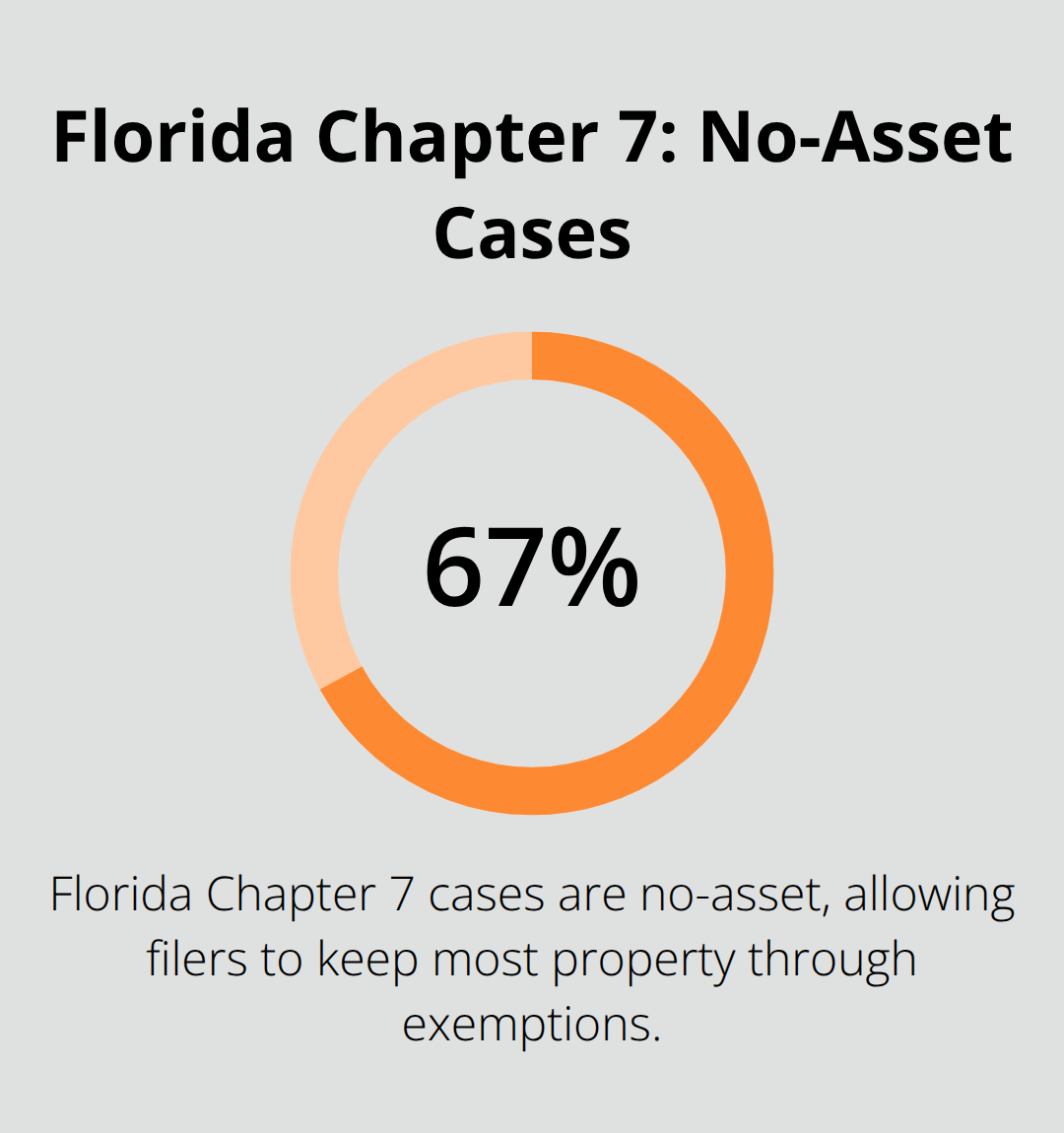
Chapter 7 bankruptcy operates through a straightforward liquidation process that takes three to six months from filing to discharge. The means test determines eligibility by comparing your household income to Florida’s median income levels. If your monthly income falls below $4,300 for a single person or $5,240 for a two-person household (based on 2024 census data), you automatically qualify. Higher earners must pass additional calculations that involve allowable expenses and debt payments. The U.S. Trustee Program reports that 67% of Florida Chapter 7 cases are no-asset cases, which means filers keep most property through exemptions.
Florida’s Generous Asset Protection Laws
Florida offers some of the strongest bankruptcy exemptions in the nation. Your homestead receives unlimited protection regardless of value, while retirement accounts like 401(k)s and IRAs remain completely safe. Personal property exemptions include $1,000 for a vehicle, $1,000 for personal items, and tools of trade worth up to $1,000. The wildcard exemption allows $4,000 in additional protection for any asset if you don’t claim homestead. Motor vehicles under $1,000 in equity typically remain protected. These exemptions mean most Florida residents lose little to nothing in Chapter 7 cases.
Quick Timeline from Filing to Fresh Start
The Chapter 7 process moves rapidly compared to other bankruptcy types. After you file, the automatic stay immediately stops all collection actions, foreclosures, and wage garnishments. The 341 meeting occurs within 30-40 days, where you answer questions about your finances under oath. Creditors have 60 days to object to your discharge, though objections happen in less than 1% of cases according to Administrative Office of U.S. Courts data. Most debtors receive their discharge order 90-120 days after they file, which eliminates credit card debt, medical bills, and personal loans permanently.
Court Fees and Administrative Costs
Chapter 7 filing fees total $345, which courts may allow you to pay in installments if approved. Additional costs include credit counseling ($50-100) and debtor education courses ($50-100), both required by federal law. Attorney fees in Florida typically range from $1,200 to $2,500 for straightforward cases. The total cost remains significantly lower than Chapter 11 alternatives, which makes Chapter 7 accessible for individuals with limited resources.
Chapter 11 bankruptcy presents a completely different approach that focuses on business reorganization rather than asset liquidation.
How Does Chapter 11 Reorganization Work in Florida
Chapter 11 bankruptcy allows businesses and individuals with substantial assets to restructure debts while they maintain operations. Florida businesses with debts that exceed $2,725,625 in combined secured and unsecured obligations qualify for Chapter 11, while smaller companies can use the streamlined Small Business Reorganization Act provisions. The Southern District of Florida saw Chapter 11 filings increase from 183 cases in 2022 to 290 cases in 2025, which reflects the stress that businesses face. Chapter 11 debtors become debtors-in-possession and retain control of business operations while they develop repayment plans that extend three to seven years.
Court Approval Process and Plan Development
Chapter 11 cases require debtors to propose reorganization plans within 120 days of the petition date (though courts often extend this deadline). The plan must classify creditors into groups and specify how each class will receive payment over the proposed timeline. Courts evaluate plans based on feasibility standards that require realistic cash flow projections and achievable payment schedules. The debtor must demonstrate that creditors will receive more through reorganization than they would in a Chapter 7 liquidation scenario. Plan confirmation requires either creditor acceptance or court approval through the “cram down” provision when certain legal standards are met.
Creditor Negotiations and Voting Rights
Successful Chapter 11 cases depend on creditor acceptance of reorganization plans that reduce total debt amounts and extend payment schedules. The automatic stay prevents creditors from collection efforts while negotiations proceed, which gives businesses time to restructure operations. Creditors vote on proposed plans by class, with secured creditors typically receiving priority treatment over unsecured debt holders. Major corporations like Delta Airlines and General Motors used Chapter 11 to renegotiate supplier contracts, lease agreements, and labor costs while they continued operations. Each creditor class must accept the plan by majority vote (representing two-thirds of the dollar amount of claims).
Administrative Costs and Court Oversight
Chapter 11 cases require extensive court supervision with monthly operating reports, cash flow statements, and approval for major business decisions that include asset sales over $2,500. Professional fees for attorneys, accountants, and financial advisors typically range from $50,000 to $500,000 based on case complexity and business size. The filing fee alone costs $1,717, which substantially exceeds Chapter 7’s $345 fee.
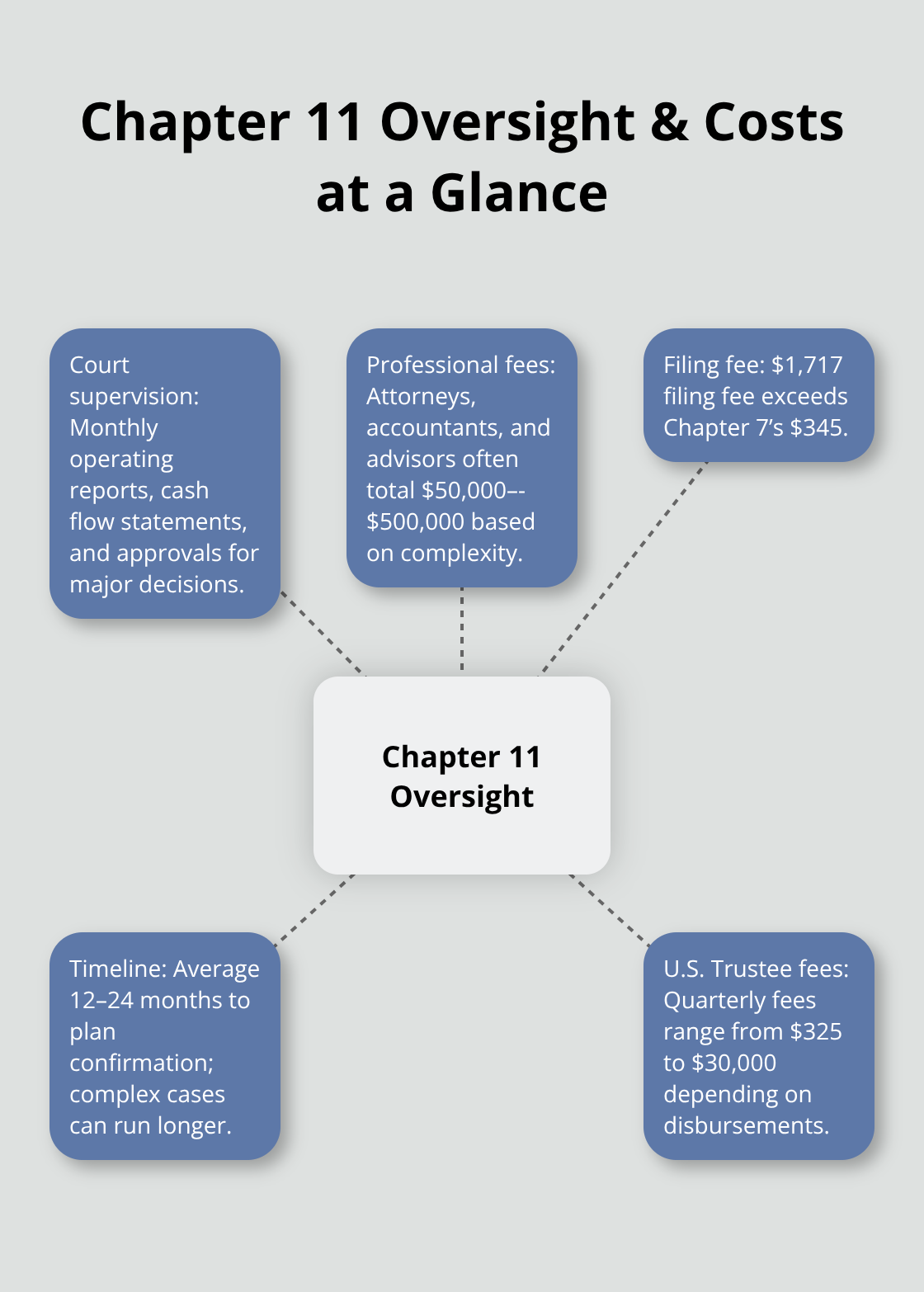
Cases average 12 to 24 months from the initial petition to plan confirmation, though complex reorganizations can extend several years. Quarterly fees to the U.S. Trustee range from $325 to $30,000 based on disbursements under the confirmed plan.
These complex requirements and substantial costs make Chapter 11 fundamentally different from Chapter 7’s straightforward liquidation approach, which leads to important distinctions in how each bankruptcy type affects your financial future.
Which Bankruptcy Costs More and Takes Longer
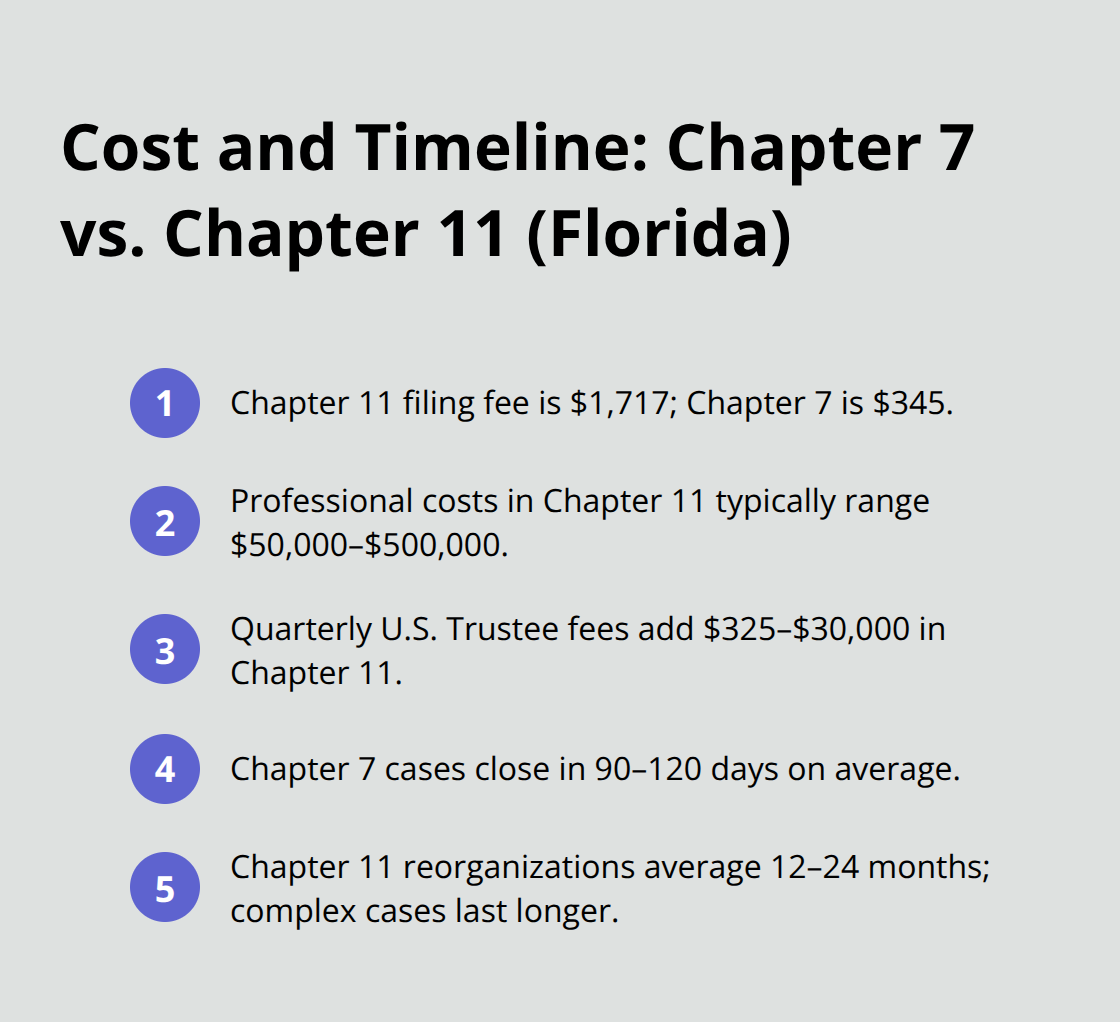
The financial gap between Chapter 7 and Chapter 11 bankruptcy in Florida is massive. Chapter 7 filing fees cost $345 plus attorney fees that range from $1,200 to $2,500 for straightforward cases, which brings total costs to roughly $2,000 to $3,000. Chapter 11 cases start with a $1,717 filing fee and professional costs that typically range from $50,000 to $500,000 based on business complexity. Quarterly U.S. Trustee fees add $325 to $30,000 depending on disbursements under confirmed plans. The Administrative Office of U.S. Courts data shows Chapter 7 cases close within 90 to 120 days, while Chapter 11 reorganizations average 12 to 24 months with complex cases that extend several years.
Credit Report Impact and Recovery Timeline
Chapter 7 bankruptcy remains on credit reports for 10 years from the filing date, while Chapter 11 stays for seven years according to Fair Credit Reporting Act guidelines. However, Chapter 7 filers often see credit score improvements within 12 to 18 months because all discharged debts disappear immediately. Chapter 11 debtors face payment obligations that can strain credit utilization ratios throughout the repayment period. The National Association of Consumer Bankruptcy Attorneys reports that Chapter 7 filers typically qualify for secured credit cards within six months and conventional mortgages after two years with stable income. Chapter 11 cases create uncertainty for lenders who view reorganization plans as continued financial distress.
Business Operations and Future Access to Credit
Chapter 7 forces immediate business closure through asset liquidation, while Chapter 11 allows continued operations during reorganization. This operational difference affects future access to credit significantly. Lenders view successful Chapter 11 completion as evidence of business viability and management competence. Companies that emerge from Chapter 11 often secure debtor-in-possession financing during cases and exit financing upon plan confirmation (though terms vary widely). Individual Chapter 7 filers gain immediate debt relief but lose business assets permanently. Chapter 11 provides the chance to preserve business value but requires substantial cash flow to fund operations and plan payments simultaneously.
Final Thoughts
The Chapter 11 vs Chapter 7 bankruptcy decision depends entirely on your financial circumstances and future goals. Chapter 7 works best for individuals with limited income who need immediate debt relief and can accept asset liquidation. This option suits people who face overwhelming credit card debt, medical bills, or personal loans without significant business interests.
Chapter 11 benefits businesses or high-asset individuals who want to preserve operations while they restructure substantial debts over time. Florida residents must consider the state’s generous exemption laws that protect homesteads and retirement accounts in Chapter 7 cases. Cost differences are substantial, with Chapter 7 totaling around $3,000 compared to Chapter 11’s range of $50,000 to $500,000.
Complete financial records are necessary before you file, which include income statements, asset valuations, and debt documentation (credit counseling is mandatory within 180 days of filing for both chapters). We at Harnage Law, PLLC help Florida residents navigate Chapter 7 bankruptcy proceedings while we protect their assets and stop creditor harassment. Professional guidance prevents costly mistakes and maximizes debt relief benefits under federal bankruptcy laws.