
Financial hardship can strike multiple times throughout your life, leaving many Florida residents wondering how often they can file a Chapter 7 bankruptcy for relief.
Federal law sets specific waiting periods between bankruptcy filings that directly impact your ability to discharge debts again. We at Harnage Law, PLLC see clients who need to understand these timing rules before making critical financial decisions.
The answer depends on your previous filing history and the type of bankruptcy case you completed.
What Are the Exact Waiting Periods for Chapter 7 Bankruptcy in Florida
The Eight-Year Rule Between Chapter 7 Cases
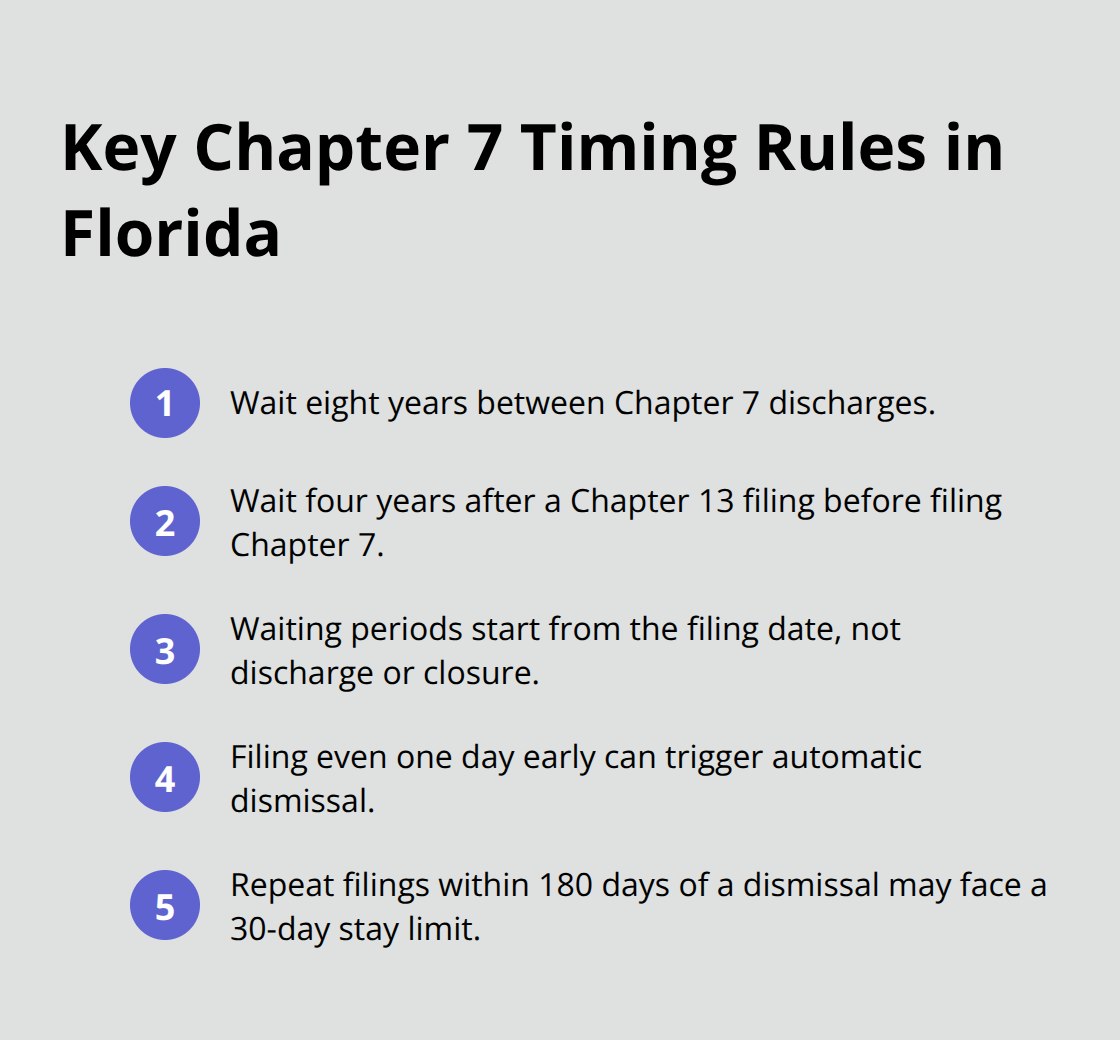
Federal law mandates an eight-year wait between Chapter 7 bankruptcy discharges. You cannot receive a discharge in a new Chapter 7 case if you received a discharge in a previous Chapter 7 or Chapter 11 case within the past eight years (Bankruptcy Code Section 727(a)(8)). The American Bankruptcy Institute reports that over 500,000 Chapter 7 bankruptcies are filed annually nationwide, which makes this eight-year restriction particularly significant for Florida residents who face repeated financial hardship.
Four-Year Window from Chapter 13 to Chapter 7
If you previously filed Chapter 13 bankruptcy, you must wait four years from your Chapter 13 date before you file Chapter 7. This four-year rule applies regardless of whether you completed your Chapter 13 repayment plan or received a discharge. However, if your Chapter 13 case paid 100% of unsecured creditor claims or paid at least 70% of claims in good faith under the best effort standard, you can file Chapter 7 immediately without any wait period.
Timeline Calculations and Date Requirements
The wait periods begin from the date you filed your previous bankruptcy case, not the discharge date or case closure date. For example, if you filed Chapter 7 on January 15, 2016, you cannot file another Chapter 7 until January 15, 2024. Courts strictly enforce these timeline calculations, and you will face automatic dismissal if you file even one day early. Track these dates carefully, as miscalculations can cost you fees and delay your debt relief by months or years.
These strict federal timelines create situations where some Florida residents cannot access Chapter 7 relief when they need it most, which leads to important questions about what exceptions might apply to these standard rules.
When Do Courts Allow Early Chapter 7 Filings in Florida
Courts rarely bend the eight-year rule between Chapter 7 cases, but specific circumstances create pathways for earlier relief that many Florida residents overlook. The most significant exception occurs when your previous bankruptcy case was dismissed without a discharge rather than completed with a discharge.
Dismissal Without Discharge Creates Immediate Options
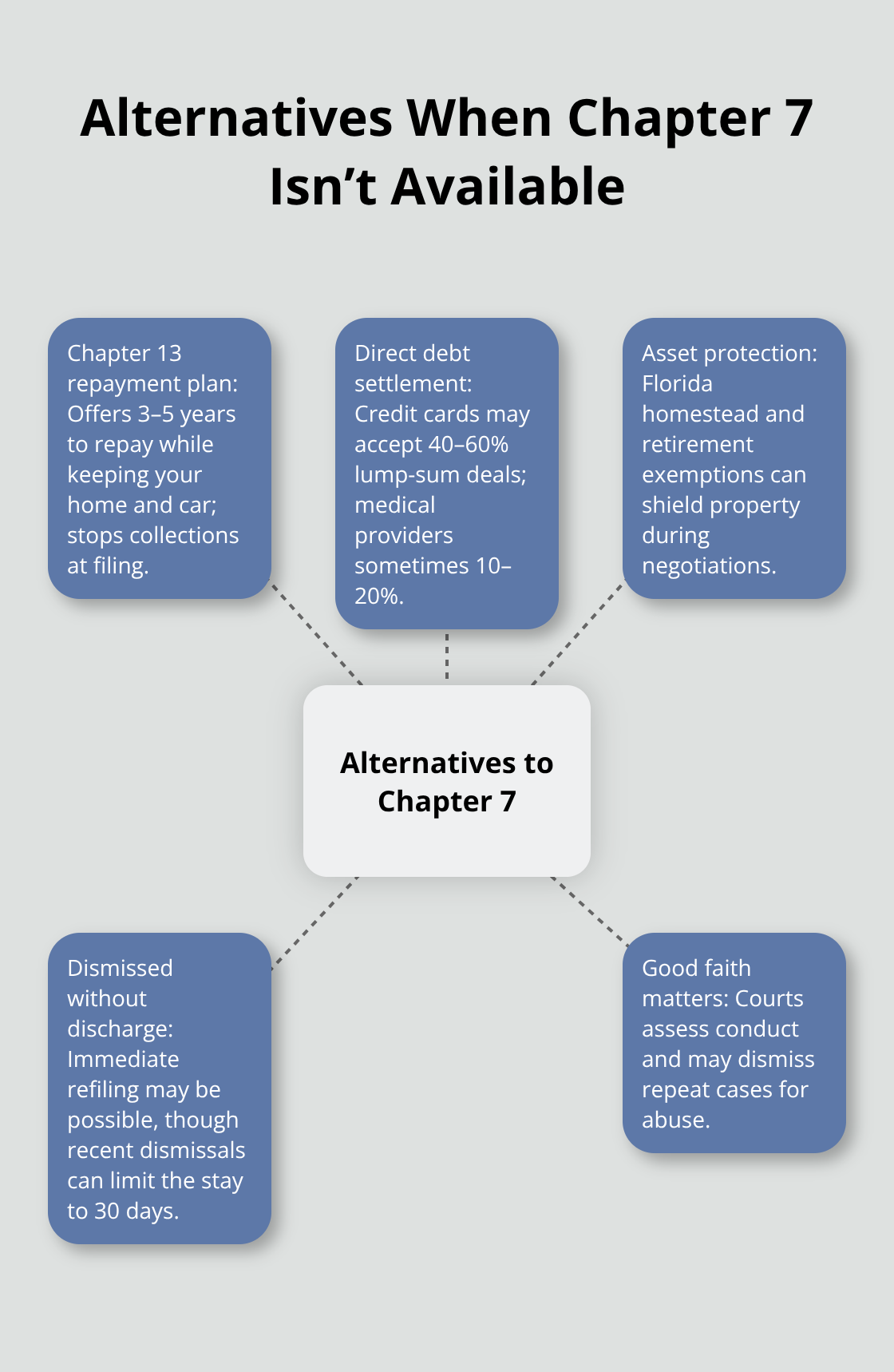
If your prior Chapter 7 case was dismissed for any reason other than court violations or bad faith conduct, you can file a new Chapter 7 immediately without the eight-year wait. Courts will scrutinize repeat cases within 180 days of a dismissal, and judges can impose automatic stay limitations that reduce your protection from creditors to just 30 days. This reduced protection still halts most collection actions but provides less time to organize your finances.
Good Faith Requirements Override Standard Rules
Courts evaluate the good faith standard when you file multiple bankruptcies within short timeframes, and this assessment can either accelerate or block your case entirely. If you previously completed a Chapter 13 plan that paid at least 70% of unsecured creditor claims in good faith, you can file Chapter 7 after just four years instead of the standard six-year wait period (Bankruptcy Code Section 727(a)(9)).
Courts examine your payment history, plan modifications, and overall conduct during the previous case to make this determination. You must demonstrate that your prior Chapter 13 case met the best effort test and was proposed in good faith.
Emergency Hardship Situations Create Limited Options
True financial emergencies rarely override federal wait periods, but they can influence how courts handle your case and automatic stay protections. If you face imminent foreclosure, wage garnishment, or utility shutoffs and cannot wait for the full eight-year period, Chapter 13 bankruptcy becomes your primary alternative since it has shorter wait periods.
After a Chapter 7 discharge, you can file Chapter 13 after four years and still receive a discharge for debts. Courts also consider substantial abuse factors when you file repeatedly, and they will dismiss cases where they determine you manipulate the bankruptcy system rather than face genuine hardship.
When Chapter 7 remains unavailable despite these exceptions, Florida residents must explore alternative debt relief strategies that can provide financial stability without bankruptcy protection.
What Can You Do When Chapter 7 Is Not Available in Florida
Chapter 13 Bankruptcy Provides Immediate Relief Options
Chapter 13 bankruptcy offers the most practical alternative when the eight-year Chapter 7 wait period blocks your case. After a Chapter 7 discharge, you can file Chapter 13 after just four years and receive a discharge for debts that qualify. This three to five-year repayment plan allows you to keep your home and car while you pay a portion of unsecured debts based on your disposable income.
The American Bankruptcy Institute reports that Chapter 13 cases have a 60% completion rate, which means most Florida residents who start these plans successfully finish them. Chapter 13 also stops foreclosures, wage garnishments, and creditor lawsuits immediately upon your case submission. You must have regular income and total debts below $2,750,000 to qualify for Chapter 7 bankruptcy under federal law (11 U.S.C. § 109(e)).
The number 100% seems to be not appropriate for this chart. Please use a different chart type.
Direct Debt Settlement Delivers Faster Results Than Wait Periods
Direct negotiation with creditors often produces better outcomes than years of delay before you can file Chapter 7 again. Credit card companies typically accept settlements between 40-60% of the original balance when you can pay a lump sum, according to Federal Trade Commission data. Medical debt providers frequently accept even lower settlement amounts, sometimes as little as 10-20% of the original bill.
Start with your smallest debts to build momentum and free up monthly cash flow for larger settlements. Document all settlement agreements in written form before you make payments, as verbal agreements provide no legal protection.
Asset Protection Strategies Shield Property During Debt Resolution
Asset protection strategies like homestead exemptions and retirement account contributions can shield your property from creditors during negotiation periods. Florida’s unlimited homestead exemption protects your primary residence from most creditors, which makes it one of the strongest asset protection tools available to residents.
You can also protect retirement accounts, including 401(k) plans and IRAs, from creditor claims under federal and state exemption laws. These protections remain in place whether you pursue debt settlement or wait to file Chapter 7 bankruptcy in Florida again.
Final Thoughts
Federal law sets clear boundaries on how often you can file Chapter 7 bankruptcy in Florida through mandatory wait periods between cases. The eight-year rule between Chapter 7 discharges creates the primary restriction, while the four-year wait from Chapter 13 to Chapter 7 offers an alternative path. Courts dismiss cases filed even one day early and may limit automatic stay protections for repeat cases within short timeframes.
Chapter 13 bankruptcy provides immediate relief when Chapter 7 remains unavailable, while debt settlement and asset protection strategies offer non-bankruptcy alternatives. Each option carries distinct advantages that depend on your income, debt levels, and financial goals (11 U.S.C. § 109(e)). The question of how often you can file Chapter 7 bankruptcy requires careful consideration of these federal timelines and your specific circumstances.
We at Harnage Law, PLLC help Florida residents navigate these complex timing rules and develop strategies for financial recovery. Our firm focuses on Chapter 7 bankruptcy cases and provides guidance through every step of the process. Contact us for a consultation to discuss your financial rebuilding options and determine the best path forward for your situation.