Chapter 7 bankruptcy income requirements determine whether Florida residents qualify for this debt relief option. The means test compares your household income to state median levels over a six-month period.
We at Harnage Law, PLLC see many clients confused by these calculations. Understanding these requirements helps you prepare for the bankruptcy process and explore your options.
How Does Florida’s Chapter 7 Means Test Work
Florida’s Current Median Income Thresholds
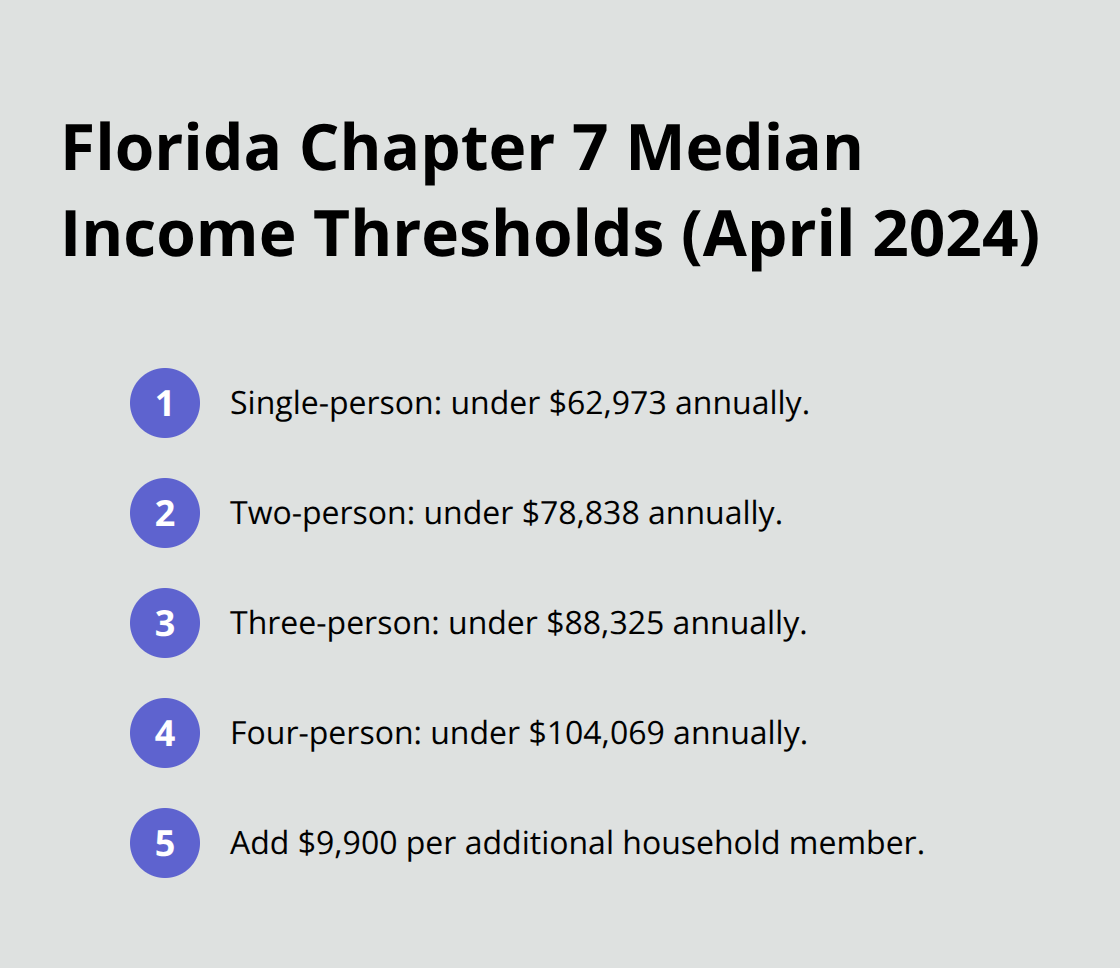
Florida’s median income figures determine automatic Chapter 7 qualification. As of April 2024, a single-person household qualifies with income below $62,973 annually. Two-person households must earn less than $78,838, three-person households under $88,325, and four-person households below $104,069. Households with more than four people add $9,900 for each additional member. The U.S. Department of Justice updates these figures twice yearly based on Census Bureau data.
Six-Month Income Calculation Method
The means test averages your gross income from the six months before you file. Include wages, tips, rental income, alimony, and child support in this calculation. Social Security benefits remain excluded from income calculations. Calculate each month’s total income, add the six monthly figures together, then divide by six for your average monthly income. Multiply this average by 12 to determine your annual income for comparison against Florida’s median thresholds. Income from all household members counts toward this total (regardless of whether they file bankruptcy).
What Happens When You Exceed Median Income
You don’t automatically lose Chapter 7 eligibility when you exceed Florida’s median income. The second part of the means test evaluates your disposable income after allowable expenses. The IRS provides standardized expense allowances for housing, food, transportation, and other necessities specific to Florida regions. Deduct mortgage payments, taxes, insurance premiums, child support, and secured debt payments from your income. If your disposable income falls below $9,075 over five years, you still qualify for Chapter 7. Between $9,075 and $15,150 requires additional calculations, while amounts above $15,150 typically indicate Chapter 13 status.
Special Exemptions from the Means Test
Certain situations exempt you from the standard means test requirements. Business debt that comprises more than 50% of your total debt allows you to bypass income limits entirely (this applies to both sole proprietors and business owners). Disabled veterans with at least a 30% disability rating who incurred debts during active duty also qualify for exemptions under the HAVEN Act. These exemptions provide alternative paths to Chapter 7 qualification even when income exceeds median thresholds. The court examines these exemptions carefully to prevent abuse of the system.
What Expenses Can You Deduct in Florida’s Means Test
IRS Standard Allowances for Florida Residents
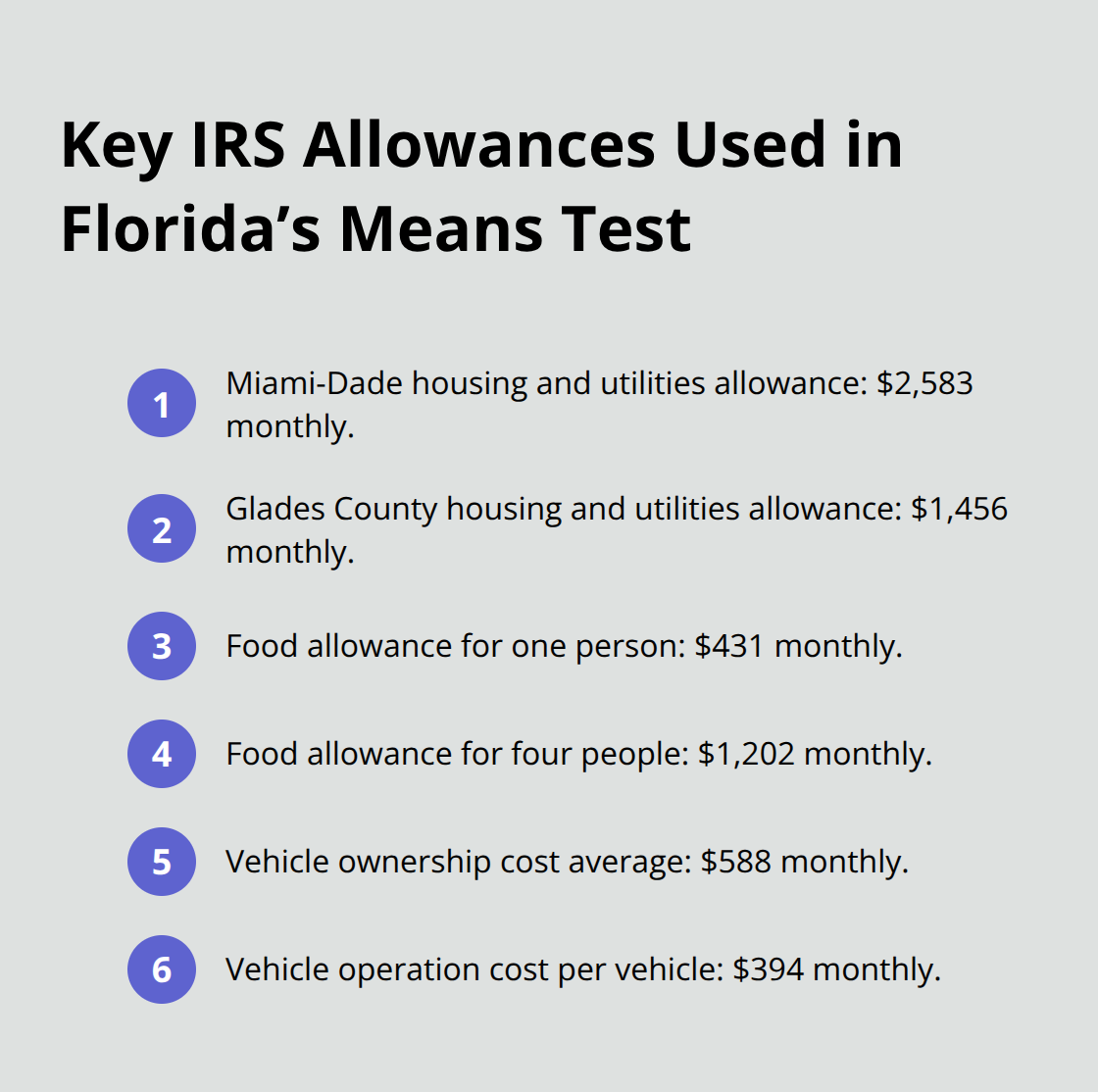
The IRS provides standardized expense allowances that Florida residents can deduct when they calculate disposable income for Chapter 7 qualification. Housing and utilities allowances vary by county, with Miami-Dade County residents allowed $2,583 monthly for costs while rural counties like Glades County permit only $1,456. Food allowances range from $431 for single-person households to $1,202 for four-person families. Transportation costs include both vehicle ownership expenses (which average $588 monthly) and operation costs of $394 per vehicle.
The IRS updates these figures annually, and you must use the amounts current at your date of filing.
Priority Debts and Secured Payments Receive Full Deduction
Child support, alimony, and tax obligations receive complete deduction from your monthly income calculation. Mortgage payments, car loans, and other secured debt payments also count as full deductions when you calculate your disposable income. Priority debts include recent income taxes, payroll taxes if you own a business, and domestic support obligations that cannot be discharged in bankruptcy. These deductions often make the difference between Chapter 7 qualification and forced Chapter 13 status. Florida residents with substantial mortgage payments frequently qualify for Chapter 7 even when their gross income exceeds state median levels because costs consume most of their available income.
Medical Bills and Extraordinary Circumstances Provide Additional Relief
Monthly medical expenses that exceed $75 for individuals or $150 for families qualify for additional deductions above standard allowances. Disability-related expenses, involuntary payroll deductions like union dues, and court-ordered payments also reduce your calculated disposable income. Florida residents who care for elderly parents or disabled family members can often deduct these care costs when they document them properly. The trustee will scrutinize every claimed deduction, so thorough documentation becomes essential before you file your case.
When your income still exceeds the limits after all allowable deductions, Chapter 7 may not be an option, but other debt relief solutions exist.
What Are Your Options if You Don’t Qualify for Chapter 7 in Florida
Chapter 13 Bankruptcy Offers Structured Debt Relief
Chapter 13 bankruptcy becomes the primary alternative when your income exceeds Chapter 7 limits in Florida. This option allows you to keep your property while you pay creditors through a three-to-five-year repayment plan based on your disposable income. Florida residents with steady income often prefer Chapter 13 because it stops foreclosure proceedings and allows you to catch up on missed mortgage payments over time.
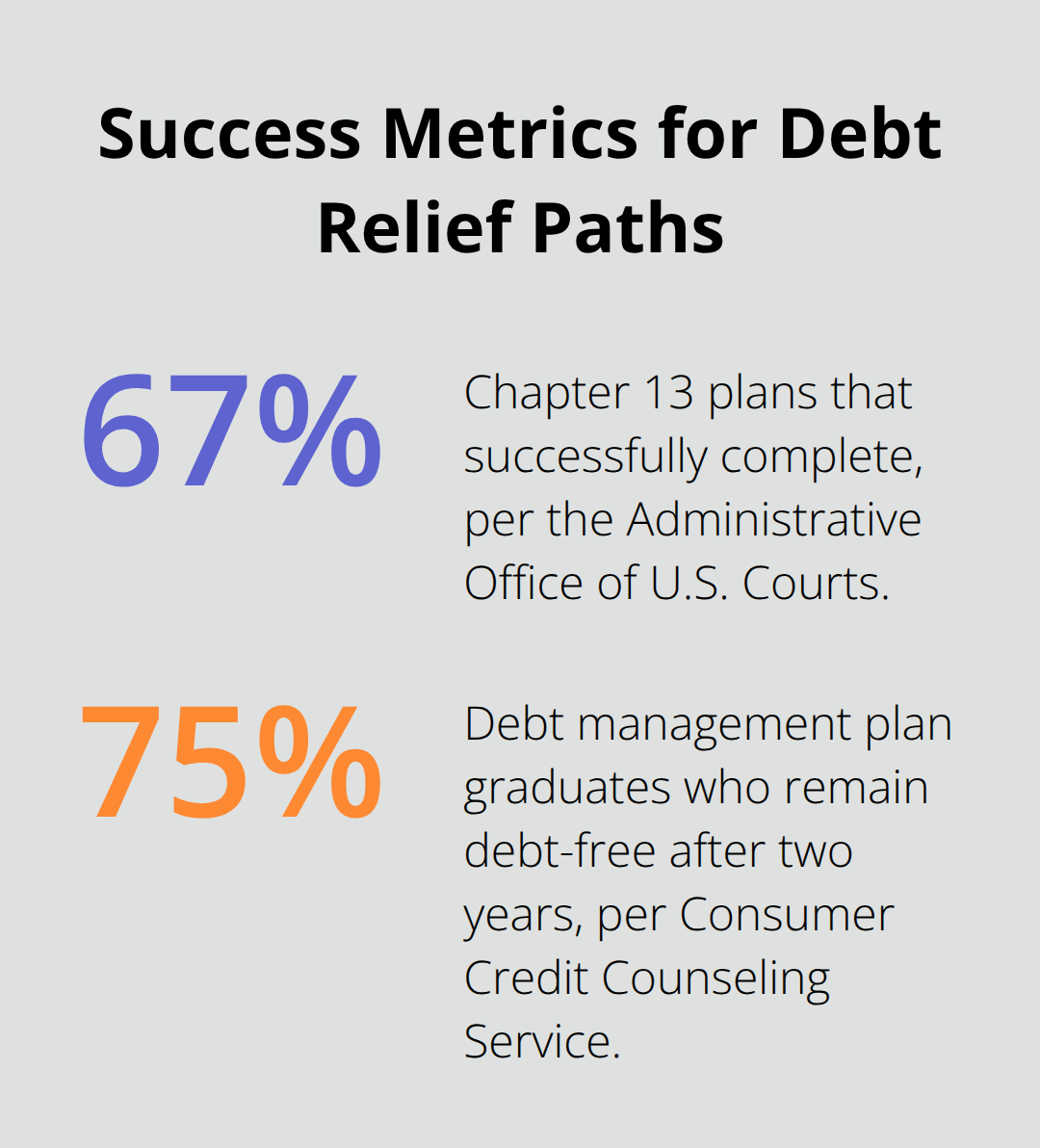
The plan typically requires you to pay only a portion of unsecured debts like credit cards and medical bills. According to the Administrative Office of U.S. Courts, approximately 67% of Chapter 13 cases successfully complete their payment plans. Chapter 13 also protects co-signers from collection efforts during your active plan period (which Chapter 7 cannot provide).
Debt Settlement Programs Present Mixed Results
Debt settlement programs allow you to negotiate reduced payoff amounts with creditors. These programs typically settle debts for 40-60% of original balances according to the International Association of Professional Debt Arbitrators. However, these programs damage your credit score significantly and create tax consequences since forgiven debt counts as taxable income.
The process often takes two to four years to complete and requires you to stop payments to creditors while you build settlement funds. Many creditors may sue you during this period, which creates additional stress and potential wage garnishment issues.
Debt Consolidation and Credit Counseling Provide Alternative Paths
Debt consolidation loans work best for Florida residents with good credit scores above 650. These loans offer interest rates between 6-36% depending on your creditworthiness and allow you to combine multiple debts into one monthly payment. Credit counseling agencies provide debt management plans that reduce interest rates and eliminate fees, but require full debt repayment over three-to-five years.
Consumer Credit Counseling Service reports that 75% of clients who complete debt management plans remain debt-free after two years. These alternatives avoid bankruptcy’s public record but often take longer to resolve debt problems than Chapter 7’s four-month timeline (making them less suitable for urgent financial crises).
Final Thoughts
Chapter 7 bankruptcy income requirements in Florida follow a structured means test that compares your household income to state median levels. If your income falls below Florida’s median thresholds, you automatically qualify for Chapter 7. When income exceeds these limits, the IRS standard expense deductions often still allow qualification (which reduces your calculated disposable income).
Florida residents who face overwhelming debt should act quickly to explore their options. The six-month income calculation period means recent job changes or income reductions can improve your qualification status. Financial documents including pay stubs, tax returns, and expense records help determine your best path forward.
We at Harnage Law, PLLC guide Florida families through every step of the bankruptcy process. Our firm helps clients discharge qualifying debts while protecting their assets. Contact us today for personalized legal guidance that addresses your specific financial situation.