Choosing between bankruptcy options can feel overwhelming when financial pressure mounts. The difference between bankruptcy Chapter 7 and 11 affects everything from your assets to your business operations.
We at Harnage Law, PLLC see Florida residents struggle with this decision daily. Understanding each chapter’s requirements and outcomes helps you make the right choice for your situation.
Understanding Chapter 7 Bankruptcy in Florida
Eligibility Requirements and Income Limits
Florida residents must pass specific income thresholds to qualify for Chapter 7 bankruptcy. As of April 2024, the median income for a one-person household in Florida stands at $62,973, with higher limits for larger families. If your income falls below these state medians, you automatically qualify for Chapter 7.
However, income above the median doesn’t disqualify you entirely. The means test calculation considers your monthly expenses, including secured debt payments, taxes, insurance premiums, and childcare costs. When your disposable income over five years totals less than $9,075, you likely qualify for Chapter 7. Income that exceeds $15,150 in disposable income typically disqualifies you, though exceptions exist for disabled veterans with at least 30% disability ratings or those whose debts stem primarily from business operations.
Types of Debts That Can Be Discharged
Chapter 7 bankruptcy eliminates most unsecured debts including credit card balances, medical bills, and personal loans. You cannot discharge child support, alimony, recent taxes, or student loans in most cases. The automatic stay provision requires creditors to immediately stop all collection activities after you file.
Most Chapter 7 cases are no-asset cases, which means you keep exempt property like home equity up to Florida’s generous homestead exemption, vehicle equity, and retirement accounts (including 401(k) plans and IRAs). The court protects these assets while you eliminate qualifying debts.
Timeline and Process Overview
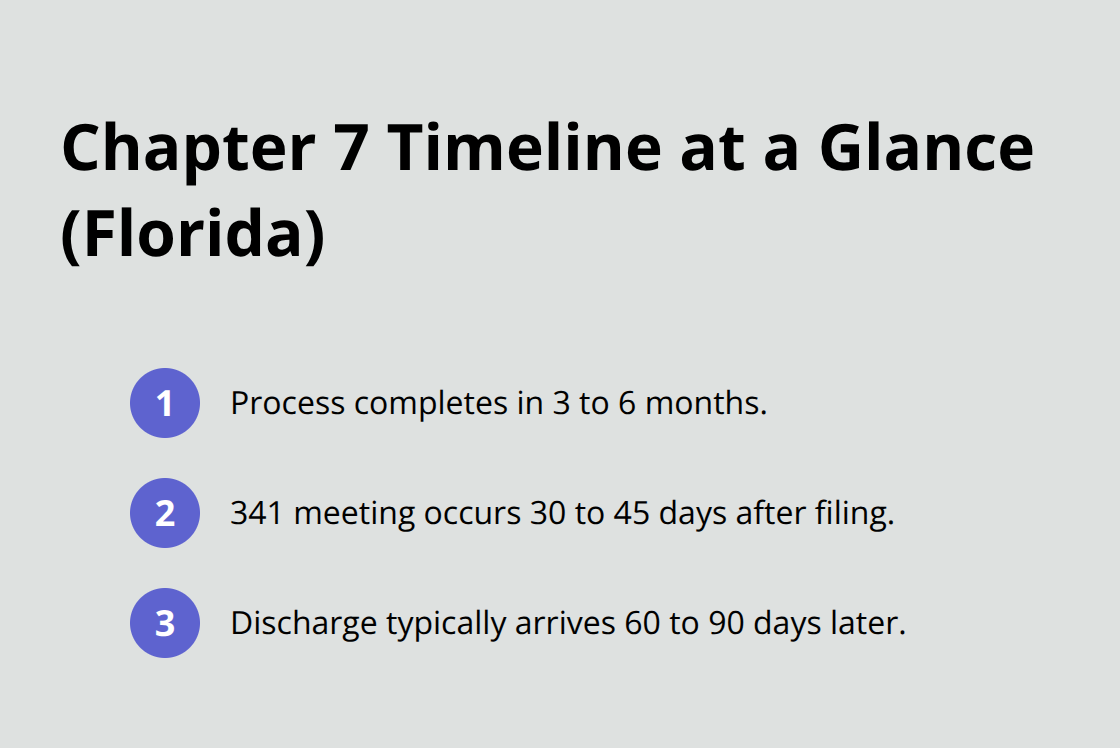
The Chapter 7 process moves quickly compared to other bankruptcy chapters. The entire process typically completes within three to six months of filing. The 341 meeting with creditors occurs within 30 to 45 days of filing, and your discharge typically arrives within 60 to 90 days afterward.
This rapid timeline makes Chapter 7 the preferred choice for individuals with limited income and few non-exempt assets. The speed of debt elimination provides immediate relief from financial stress and collection activities.
While Chapter 7 offers quick debt relief for individuals, businesses face different challenges that require a more complex approach to financial restructuring.
Understanding Chapter 11 Bankruptcy in Florida
Who Qualifies for Chapter 11 Protection
Chapter 11 bankruptcy serves businesses and high-debt individuals who need to restructure rather than liquidate. This chapter has no debt ceiling or income restrictions, which makes it available to corporations, partnerships, LLCs, and individuals with debts that exceed Chapter 13’s limits. The Small Business Reorganization Act of 2019 created Subchapter V for companies with debts under $3.4 million, which reduces administrative burdens and eliminates formal disclosure statement requirements.
Florida businesses must demonstrate they can propose a viable reorganization plan within 120 days of filing. Courts can extend this deadline up to 18 months when circumstances require additional time for complex restructuring.
Reorganization vs Liquidation Approach
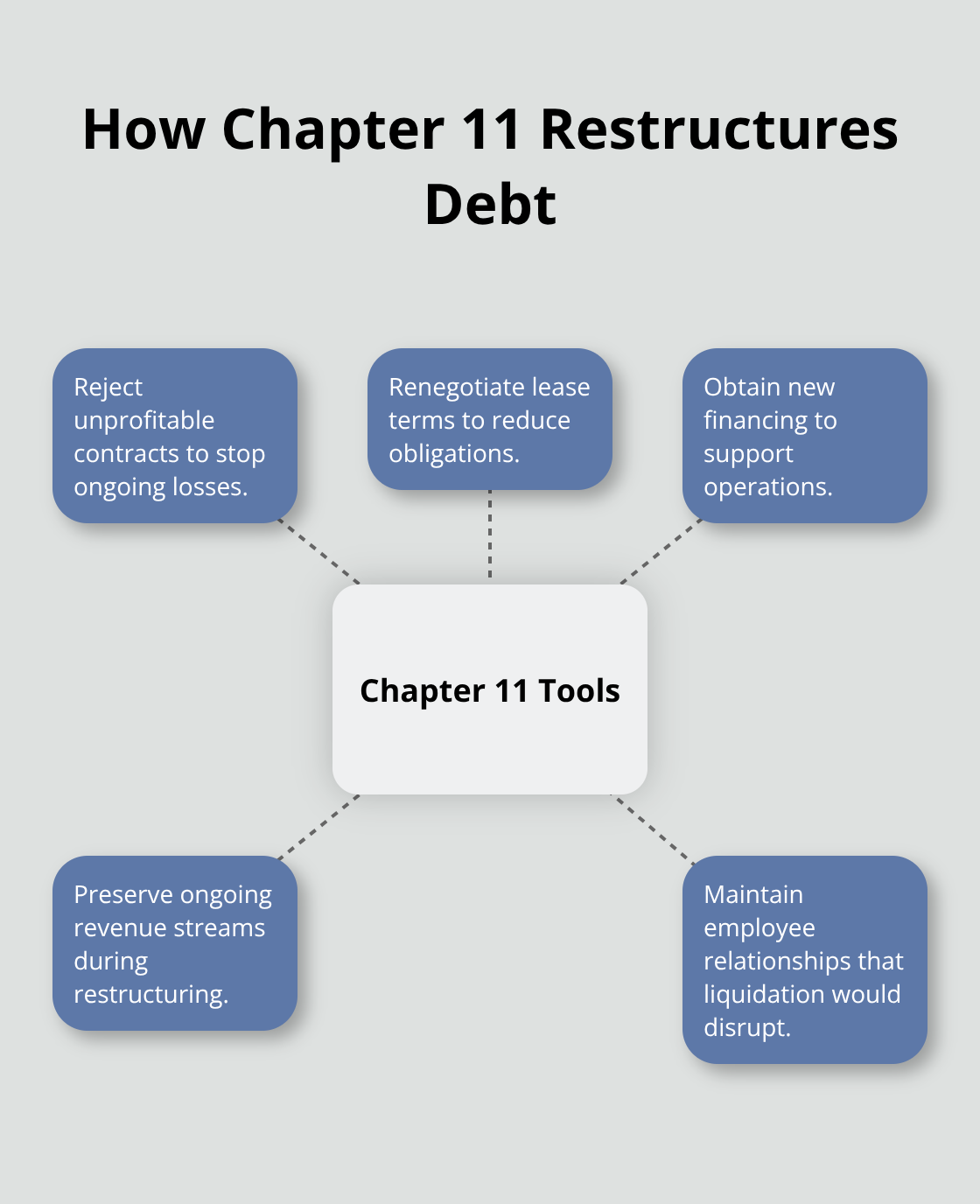
Chapter 11 takes a fundamentally different approach than Chapter 7’s liquidation model. This chapter preserves business operations while restructuring debt obligations, which protects ongoing revenue streams and employee relationships that liquidation would destroy. Companies can reject unprofitable contracts, renegotiate lease terms, and obtain new financing to support operations.
The reorganization plan must satisfy creditors that they’ll receive at least what Chapter 7 liquidation would provide. Secured creditors maintain priority under the absolute priority rule, though Subchapter V offers more flexibility by removing this requirement for small businesses (those with debts under $3.4 million).
Business Continuity During Proceedings
Chapter 11 allows businesses to continue operations as debtor-in-possession while they restructure debt obligations. The court supervises major business decisions like asset sales and organizational changes, but day-to-day operations remain under company control. Businesses must attend the 341 meeting with creditors while they maintain detailed financial reporting throughout the process.
Quarterly fee payments to the U.S. Trustee System Fund are required during the proceedings. The cramdown process allows court approval of reorganization plans despite creditor objections if terms are fair and equitable. Chapter 11 typically takes 12 to 24 months for complex cases, but it preserves business value that liquidation would eliminate.
The distinct approaches of these two bankruptcy chapters create significant differences in costs, asset protection, and long-term financial impact for Florida residents and businesses.
Key Differences Between Chapter 7 and Chapter 11 in Florida
Cost Comparison and Filing Fees
Chapter 7 bankruptcy costs significantly less than Chapter 11 in Florida. The court filing fee for Chapter 7 stands at $338, while Chapter 11 requires $1,717 upfront. Attorney fees for Chapter 7 typically range from $1,500 to $3,500 for straightforward cases, but Chapter 11 legal costs often exceed $50,000 due to complex restructuring requirements.
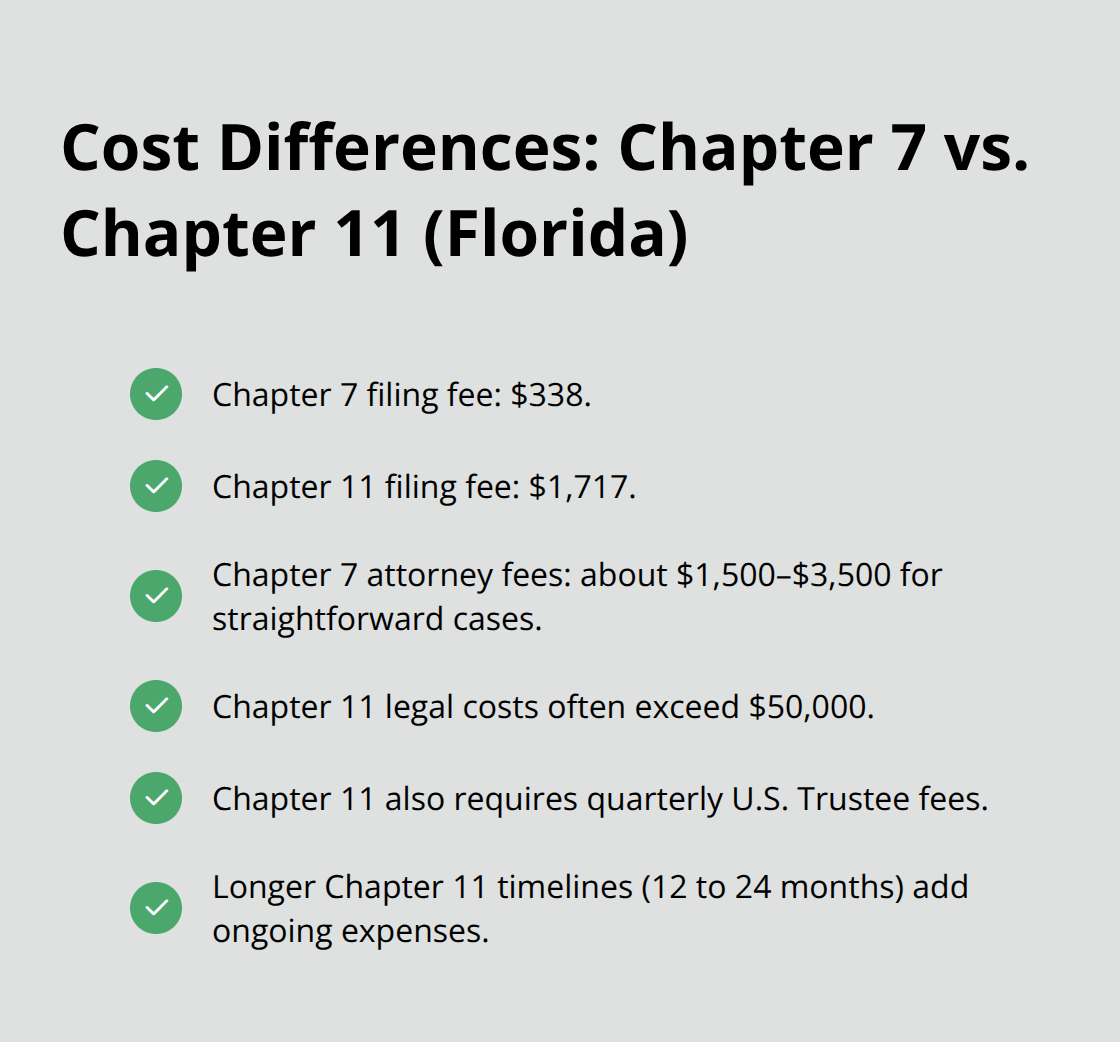
Chapter 11 also demands quarterly fees to the U.S. Trustee System Fund, which can add thousands in ongoing expenses throughout the 12 to 24-month process. These additional costs make Chapter 11 prohibitively expensive for many small businesses and individuals.
Asset Protection and Exemptions
Florida’s generous homestead exemption protects unlimited home equity in Chapter 7, while retirement accounts like 401(k) plans and IRAs remain completely safe. Chapter 11 offers different asset protection because businesses continue operations while they restructure debt obligations.
The debtor-in-possession status allows companies to keep all assets necessary for operations, but creditors maintain closer oversight of asset sales and major business decisions. Chapter 7 liquidates non-exempt assets immediately, while Chapter 11 preserves business value through continued operations (though under court supervision).
Impact on Credit Score and Future Borrowing
Chapter 7 bankruptcy remains on credit reports for 10 years but often allows faster score recovery because all qualifying debts disappear immediately. Many Chapter 7 filers see credit scores improve within 12 to 18 months as debt-to-income ratios drop to zero.
Chapter 11 stays on credit reports for 7 years after discharge, but the lengthy restructuring process means credit damage continues throughout the case duration. Businesses that emerge from Chapter 11 face ongoing scrutiny from lenders who view the reorganization as a red flag for future lending decisions. The extended timeline creates additional challenges for companies seeking new credit or investment opportunities.
Final Thoughts
The difference between bankruptcy Chapter 7 and 11 depends on your financial situation and goals. Chapter 7 works best for individuals with limited income who need quick debt relief and can pass Florida’s means test. Chapter 11 suits businesses or high-debt individuals who want to reorganize rather than liquidate assets.
You must complete mandatory credit counseling from an approved provider and gather comprehensive financial documentation before you file. Tax returns, asset schedules, and debt statements form the foundation of your case. Calculate your disposable income carefully to determine which chapter fits your circumstances.
Professional legal guidance proves invaluable when you navigate bankruptcy’s complexities (especially with Florida’s specific exemptions and requirements). We at Harnage Law, PLLC help Florida residents understand their options and guide them through every step of the Chapter 7 process. The right bankruptcy choice requires you to understand each chapter’s requirements, costs, and long-term consequences for your financial future.