Choosing the right bankruptcy option can feel overwhelming when you’re facing financial hardship. Understanding the Chapter 7 and Chapter 13 bankruptcy difference is the first step toward making an informed decision.
We at Harnage Law, PLLC see Florida residents struggle with this choice daily. The path you select will impact your financial future for years to come.
What Makes Chapter 7 Different from Chapter 13 in Florida
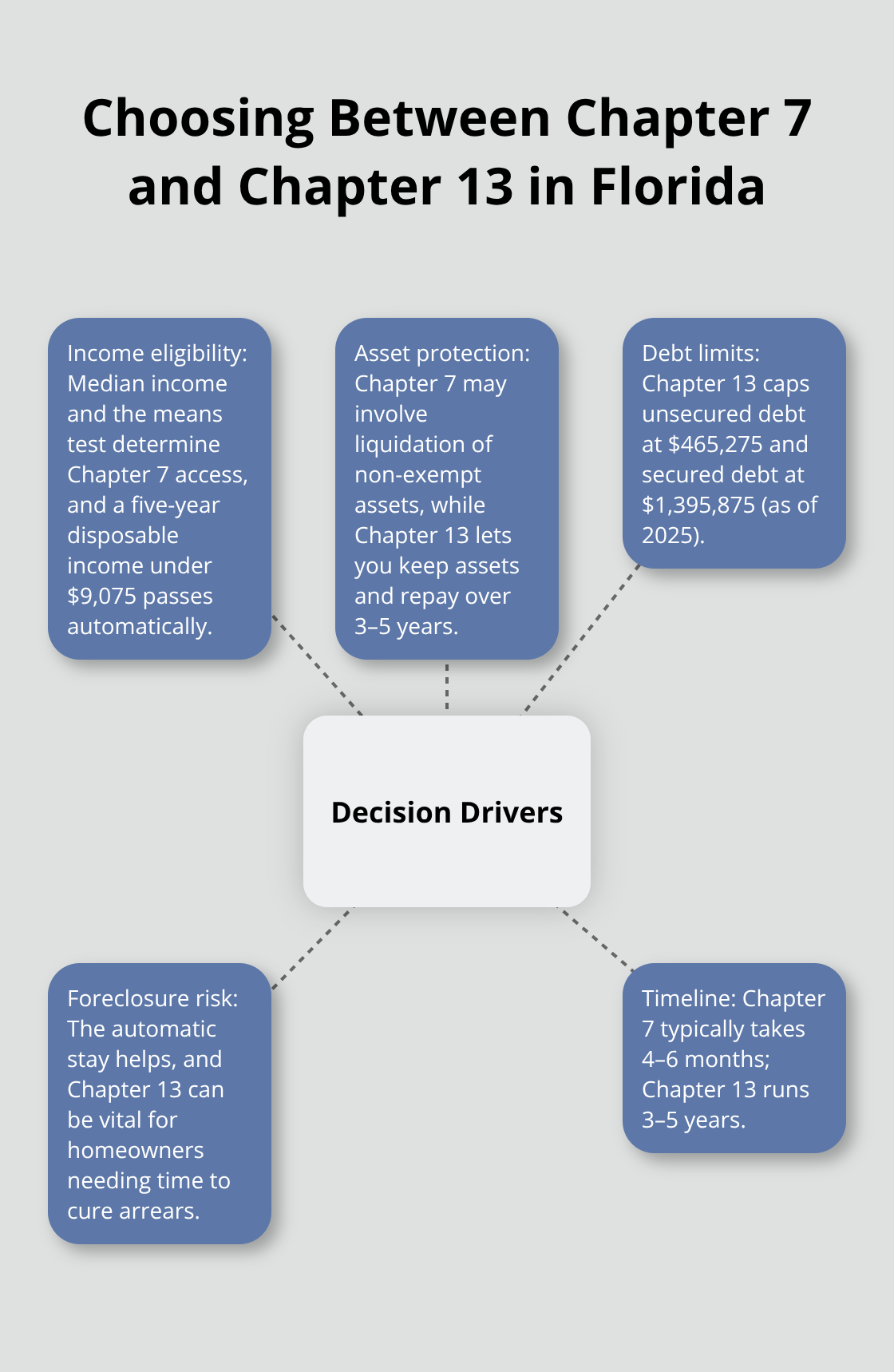
Chapter 7 bankruptcy operates as a liquidation process where qualifying debts disappear completely within 4-6 months. Non-exempt assets face potential sale to pay creditors, but most Florida residents keep their belongings through exemption protections. The median income test determines eligibility – single-person households in Florida must earn below $62,973 (as of April 2024). Chapter 13 functions as a reorganization plan where you keep assets while making payments to creditors over 3-5 years. This option works for people with regular income who exceed Chapter 7 income limits or want to catch up on missed mortgage payments.
Income Requirements Shape Your Options
The means test calculation becomes your gateway to Chapter 7 eligibility. Florida residents who earn above the median income can still qualify when they deduct legitimate expenses like secured debt payments, health insurance premiums, and childcare costs. If your disposable income over five years totals less than $9,075, you pass the means test automatically. Chapter 13 has no income ceiling but caps unsecured debt at $465,275 and secured debt at $1,395,875 (as of 2025). One missed mortgage payment can trigger foreclosure proceedings, which makes Chapter 13’s automatic stay protection valuable for homeowners who face immediate threats.
Asset Protection Strategies Differ Significantly
Chapter 7 allows you to protect up to $27,900 in home equity and $4,450 in vehicle equity when you use federal exemptions in 2025. Most cases become no-asset proceedings where you retain all possessions. Chapter 13 lets you keep everything while you restructure payments, plus offers lien stripping to eliminate underwater second mortgages. The best interests test requires Chapter 13 creditors to receive at least what they would get in Chapter 7 liquidation.
Credit Recovery Timeline Varies Between Chapters
Your credit score typically recovers within 2-3 years after discharge with responsible financial management, regardless of which chapter you choose. Chapter 7 remains on credit reports for up to 10 years, while Chapter 13 stays for 7 years. The faster debt elimination in Chapter 7 often leads to quicker credit rebuilding opportunities. These timeline differences become important factors when you evaluate which bankruptcy type aligns with your long-term financial goals.
Which Factors Should Drive Your Bankruptcy Decision
Your income calculation determines which bankruptcy path opens to you, but several financial factors work together to shape the best choice. Florida residents who earn above $62,973 for single households face the means test, which subtracts legitimate monthly expenses from gross income. Health insurance premiums average $456 monthly for individuals, childcare costs reach $1,230 per month statewide, and secured debt payments all reduce your calculated disposable income. When your five-year disposable income falls below $9,075, Chapter 7 becomes available regardless of your gross income. Chapter 13 accepts any income level but requires consistent monthly income to fund your repayment plan over three to five years.
Property Values Shape Your Strategy
Home equity protection becomes critical when you own real estate in Florida’s volatile market. Federal exemptions shield $27,900 in home equity for 2025, while Florida’s homestead exemption offers unlimited protection for your primary residence. Vehicle equity caps at $4,450 under federal exemptions, which makes Chapter 7 risky for owners of valuable cars or boats.
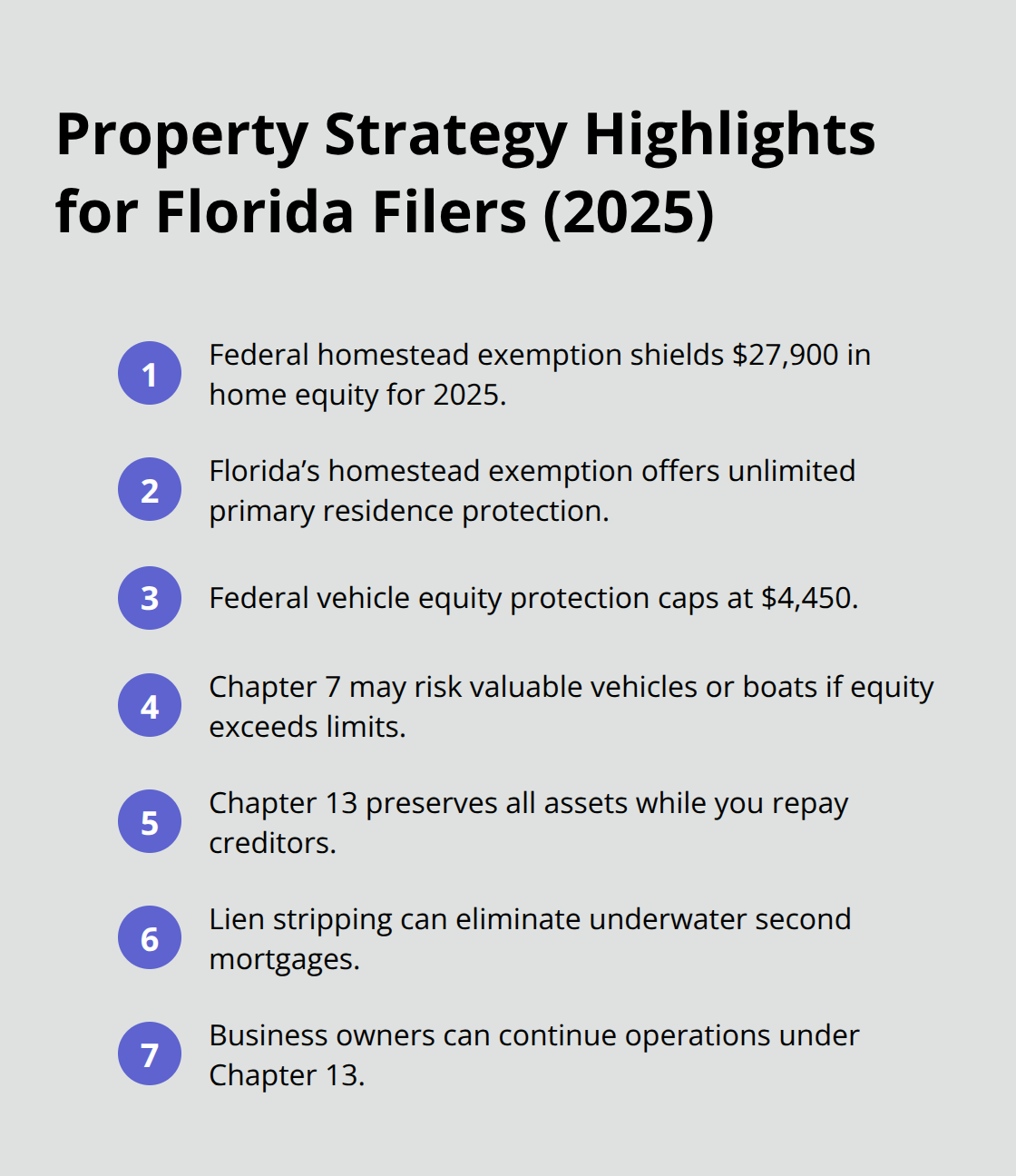
Chapter 13 preserves all assets while you pay creditors, plus eliminates second mortgages through lien stripping when your home value dropped below the first mortgage balance. Business owners face asset liquidation in Chapter 7, while Chapter 13 allows continued operations during the repayment period.
Debt Composition Drives Chapter Selection
Medical bills that total $50,000 or credit card balances that exceed $30,000 disappear completely in Chapter 7 within four months. Chapter 13 requires partial payment of unsecured debts based on your disposable income, often results in pennies on the dollar for credit card companies. Tax debts older than three years qualify for discharge in Chapter 7, while Chapter 13 spreads recent tax obligations over your payment plan. Student loans remain non-dischargeable in both chapters, which makes Chapter 7 preferable when educational debt represents a small portion of your total obligations.
Mortgage Arrearages and Foreclosure Threats
Mortgage arrearages that average $8,400 in Florida foreclosure cases get cured through Chapter 13’s catch-up provisions. Chapter 7 offers no protection for missed house payments, which leaves homeowners vulnerable to foreclosure proceedings. The automatic stay halts collection actions immediately upon filing, but Chapter 7’s brief timeline (4-6 months) provides limited foreclosure protection compared to Chapter 13’s extended repayment period. These differences become particularly important for Florida homeowners who face immediate foreclosure threats and need time to restructure their mortgage obligations.
When Chapter 7 Works Best in Florida
Chapter 7 bankruptcy eliminates credit card balances, medical bills, and personal loans within four months of filing. Florida residents who earn below $62,973 for single households qualify automatically, while those who earn more can still qualify through the means test when they deduct legitimate expenses. The $338 filing fee represents a small investment compared to the elimination of tens of thousands in unsecured debt. Most Chapter 7 cases become no-asset proceedings, which means you keep your possessions while debts disappear permanently.
Maximum Impact for Minimum Assets
Chapter 7 works perfectly when your assets fall within exemption limits and your debts primarily consist of credit cards or medical bills. Federal exemptions protect $27,900 in home equity and $4,450 in vehicle equity for 2025, which covers most middle-class Florida residents. Renters benefit significantly since they face no risk of real estate loss, while homeowners with minimal equity avoid liquidation concerns. The automatic stay stops collection calls, wage garnishments, and lawsuit threats immediately upon filing (providing instant relief from creditor harassment).
Income Timing Creates Opportunities
Chapter 7 eligibility depends on your current monthly income, not your earning potential or past financial success. Job loss, reduced hours, or temporary disability can create qualification windows even for high earners. The means test uses your average monthly income from the six months before filing, which means a recent pay cut or unemployment period can open Chapter 7 access. Florida’s unemployment benefits average $275 weekly (well below Chapter 7 income thresholds), which makes this timing strategy particularly effective for recently unemployed residents.
Quick Relief from Overwhelming Medical Debt
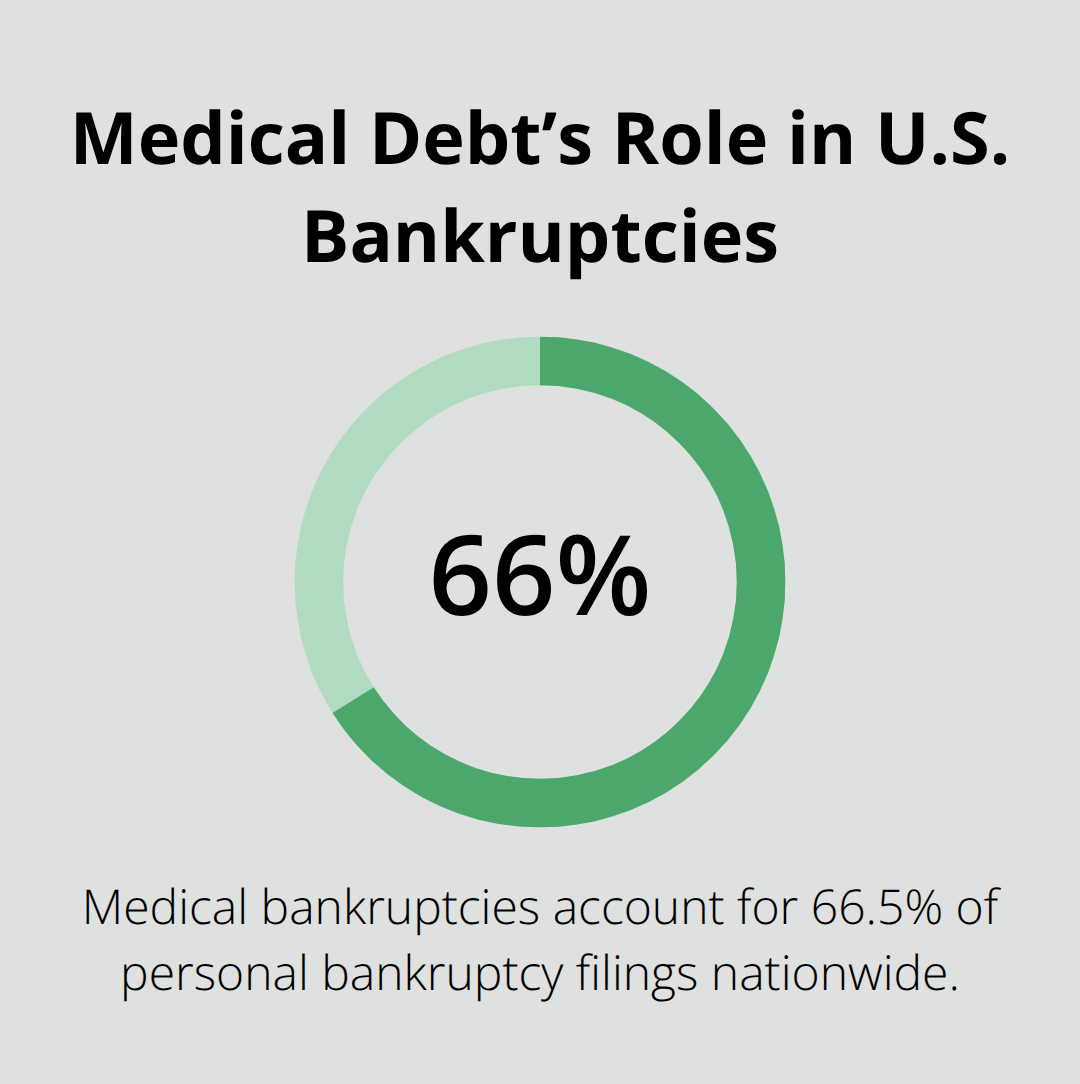
Medical bankruptcies account for 66.5% of personal bankruptcy filings nationwide, with average medical debt exceeding $25,000 per case. Chapter 7 discharges these obligations completely within four months, while Chapter 13 requires partial payment over three to five years.
Hospital bills, doctor fees, and prescription costs all qualify for discharge when they exceed your ability to pay. The speed of Chapter 7 becomes particularly valuable when medical creditors threaten wage garnishment or property liens (which can devastate already struggling families).
Final Thoughts
The Chapter 7 and Chapter 13 bankruptcy difference centers on your income, assets, and debt composition. Chapter 7 eliminates qualifying debts within four months for Florida residents who earn below $62,973 annually, while Chapter 13 creates payment plans over three to five years for higher earners or those who want to preserve non-exempt assets. Your specific financial circumstances dictate which path serves you best.
Chapter 7 works well for renters with minimal assets and overwhelming credit card or medical debt. Chapter 13 benefits homeowners who face foreclosure or business owners who need to maintain operations while they restructure obligations. Professional legal guidance becomes necessary when you navigate Florida’s bankruptcy laws and exemption choices (particularly when complex asset protection issues arise).
We at Harnage Law, PLLC help Florida families discharge qualifying debts, stop creditor harassment, and prevent wage garnishments through Chapter 7 bankruptcy representation. The automatic stay provides immediate relief from collection actions regardless of which chapter you choose. Your credit recovery typically begins within two to three years after discharge with responsible financial management.