
Filing Chapter 7 bankruptcy doesn’t automatically mean losing your vehicle. Many Florida residents successfully keep their cars through the bankruptcy process.
We at Harnage Law, PLLC see clients regularly ask “will I lose my car if I file bankruptcy?” The answer depends on your car’s value, loan balance, and Florida’s exemption laws.
Your ability to retain your vehicle hinges on specific financial calculations and strategic decisions made during your case.
What Car Exemptions Protect Your Vehicle in Florida Bankruptcy?
Florida’s motor vehicle exemption protects up to $5,000 of equity in your car during Chapter 7 bankruptcy as of July 2024. This represents a significant increase from the previous $1,000 limit that remained unchanged since 1993. Governor Ron DeSantis signed Senate Bill 158 to reflect rising costs and provide meaningful asset protection for Florida residents who face financial hardship.
How to Calculate Your Vehicle Equity
Your vehicle equity equals the current market value minus any outstanding loan balance. If your car is worth $12,000 and you owe $8,000, your equity totals $4,000. Since this falls under Florida’s $5,000 exemption, you can keep your vehicle. However, if your equity exceeds $5,000, the bankruptcy trustee may sell the car and return the exempt amount to you.
Florida residents who have lived in the state for at least two years must use state exemptions rather than federal ones. This requirement makes the calculation straightforward and predictable.
The Wildcard Exemption Strategy
Florida offers a $4,000 wildcard exemption that can supplement your vehicle protection if you don’t use the homestead exemption. This means you could potentially protect up to $9,000 in vehicle equity (combining the $5,000 motor vehicle exemption with the wildcard exemption). This strategy works particularly well for debtors who rent rather than own their homes, as they cannot claim the homestead exemption.
The wildcard exemption applies to any personal property, which gives you flexibility in protection of your most valuable assets. Understanding these exemption limits helps you determine whether your current vehicle fits within the protected amounts or if you need to explore other options to maintain your transportation after bankruptcy.
What Factors Determine Vehicle Retention in Florida Bankruptcy?
Three financial calculations directly impact whether you keep your car during Chapter 7 bankruptcy in Florida. Your vehicle’s current market value compared to outstanding loan amounts determines your equity position. The Kelly Blue Book trade-in value typically represents what trustees use for calculations, not retail prices.
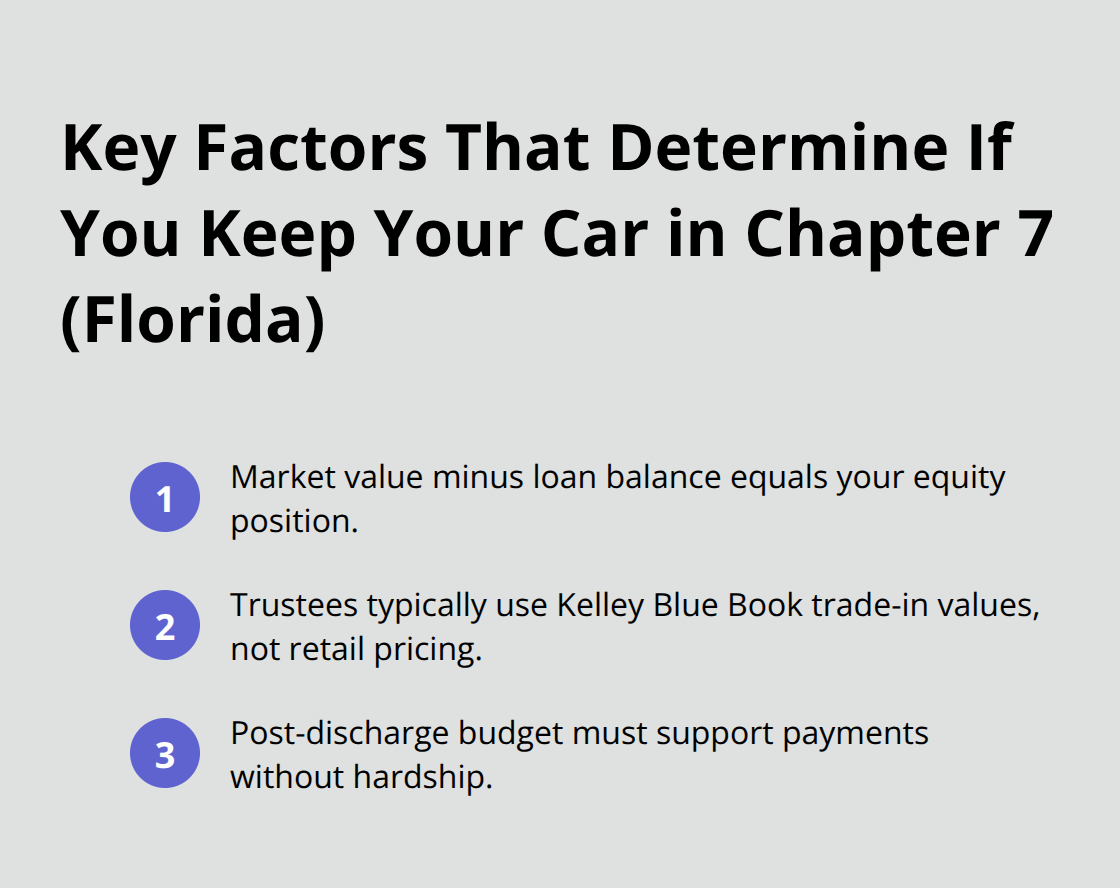
Your ability to afford monthly payments after bankruptcy discharge becomes paramount since bankruptcy eliminates your personal liability but not the lender’s security interest in the vehicle.
Market Value Assessment Methods
Florida bankruptcy trustees rely on National Automobile Dealers Association guides and Kelly Blue Book trade-in values to determine vehicle worth. These valuations often fall 15-20% below retail prices, which works in your favor when you calculate equity. If your car shows mechanical issues, high mileage, or damage, document these conditions thoroughly as they reduce market value assessments. Multiple valuation sources help you understand your equity position accurately before you file.
Post-Discharge Payment Capability
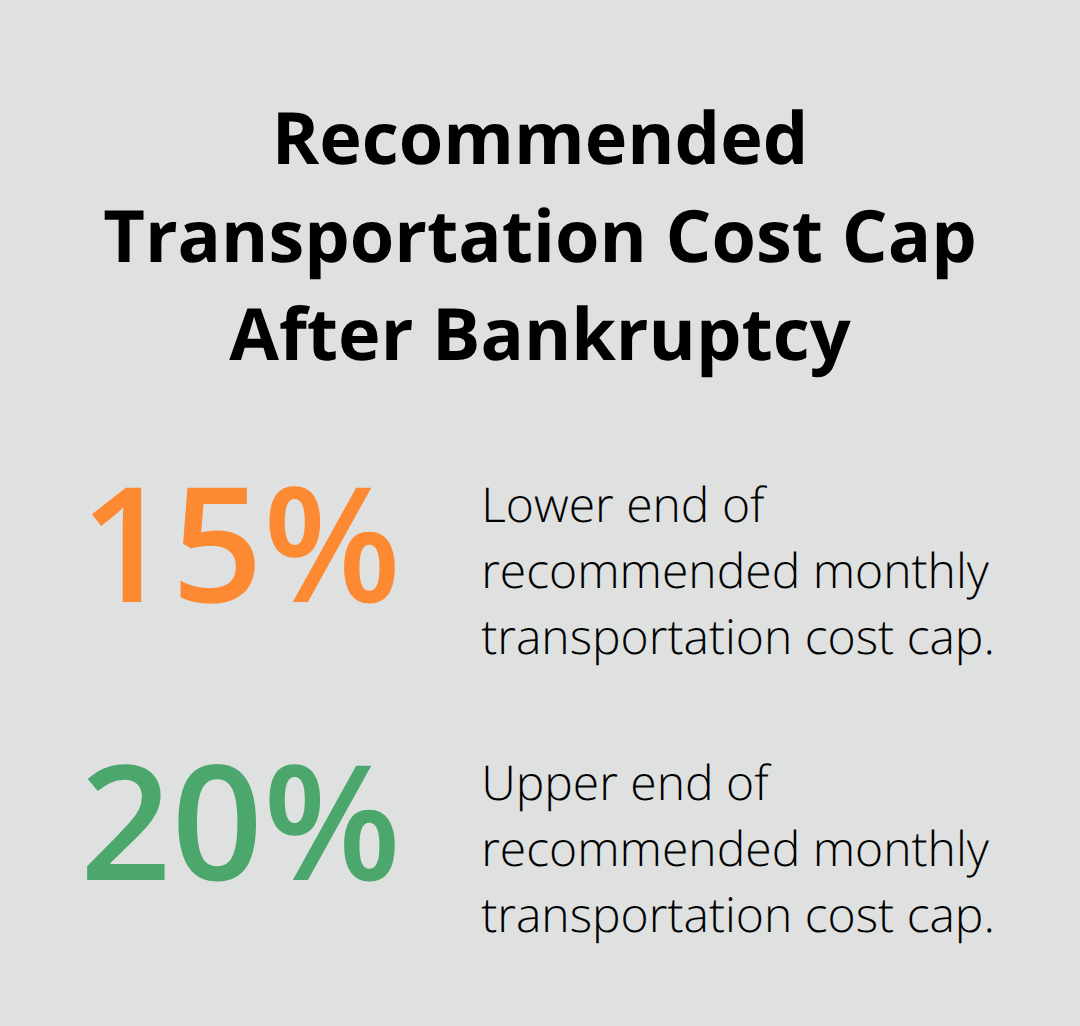
Your income after bankruptcy must support vehicle payments, insurance, and maintenance costs. Florida courts examine whether you can keep the car without creating financial hardship that could lead to future bankruptcy cases. Monthly transportation costs should not exceed 15-20% of your take-home income for sustainable financial recovery.
Vehicle Necessity Assessment
The necessity test considers whether you need the vehicle for work, medical appointments, or care for dependents (with employment-related transportation receiving the strongest protection from trustees). Courts evaluate your specific circumstances rather than apply blanket rules. A single parent who needs reliable transportation to maintain employment receives different consideration than someone with multiple transportation options.
These assessments lead directly to the strategic options available for vehicle protection during your bankruptcy case.
How Can You Protect Your Car Through Bankruptcy
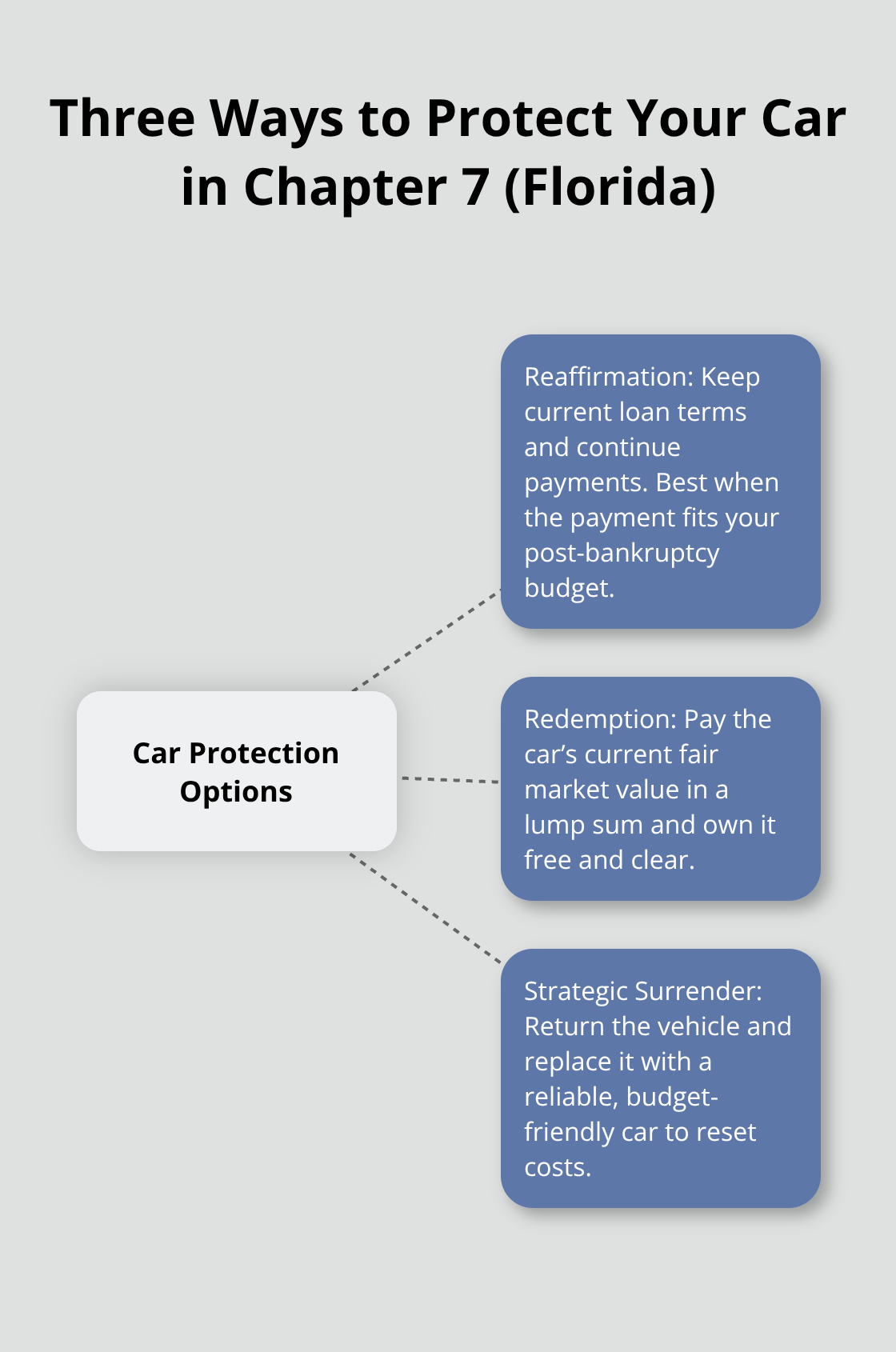
Three strategic approaches give you control over your vehicle during Chapter 7 bankruptcy in Florida. Each option addresses different financial situations and provides distinct advantages based on your circumstances.
Reaffirmation Agreements Maintain Current Terms
Reaffirmation agreements allow you to continue your current car loan payments despite the bankruptcy discharge. This option maintains your existing payment terms and keeps the vehicle in your possession. Florida courts require these agreements to pass an affordability test, which means your income must adequately cover the payment without financial hardship.
The agreement reinstates your personal liability for the debt. If you default after reaffirmation, you face both vehicle repossession and a potential deficiency judgment. This option works best when your monthly payment fits comfortably within your post-bankruptcy budget and the car’s value justifies the loan balance.
Redemption Provides Immediate Ownership
Redemption lets you purchase your vehicle outright for its current fair market value rather than the full loan balance. If your car is worth $8,000 but you owe $12,000, redemption allows you to pay the $8,000 and own the vehicle free and clear.
This strategy requires cash payment or alternative finance options, which makes it difficult for many bankruptcy filers. However, redemption eliminates monthly payments permanently and often saves thousands compared to continued loan payments. Some attorneys arrange redemption loans for bankruptcy cases (though these typically carry higher interest rates than traditional auto loans).
Strategic Surrender Creates Fresh Start
Vehicle surrender followed by replacement purchase often provides the most cost-effective long-term solution. This approach works well when your current car has negative equity or requires expensive repairs. After surrender, you can purchase a reliable used vehicle within your budget without problematic loan terms.
Many dealerships offer finance options to recent bankruptcy filers, though interest rates typically range from 12-18% initially. Focus on vehicles under $15,000 with good maintenance records rather than expensive cars that strain your finances. This clean-slate approach benefits clients whose current vehicle situation creates financial stress.
Final Thoughts
Florida Chapter 7 bankruptcy provides multiple pathways to keep your vehicle through the $5,000 motor vehicle exemption and strategic protection options. Your success depends on accurate equity calculations, realistic payment assessments, and the right protection strategy for your specific situation. Each case involves unique financial circumstances that determine the best approach.
The question “will I lose my car if I file bankruptcy” has no universal answer because individual situations vary significantly. Reaffirmation works when payments fit your budget, redemption benefits those with available cash, and surrender creates opportunities for better vehicle situations. Professional legal guidance becomes vital when you navigate these complex decisions.
Vehicle choices made during bankruptcy affect your transportation stability and financial recovery for years ahead. We at Harnage Law, PLLC help Florida residents protect their assets while they achieve debt discharge through Chapter 7 bankruptcy. Our guidance helps you make informed decisions about vehicle retention that support your long-term financial goals rather than create additional hardship.