Financial struggles can be overwhelming, leaving many Floridians wondering when to file Chapter 7 bankruptcy. At Harnage Law, PLLC, we understand the weight of this decision and its potential impact on your future.
This guide will help you recognize the signs that indicate it might be time to consider Chapter 7 bankruptcy in Florida. We’ll also explore the qualifications, advantages, and steps involved in the process to help you make an informed choice about your financial future.
Warning Signs for Chapter 7 Bankruptcy in Florida
Drowning in Debt
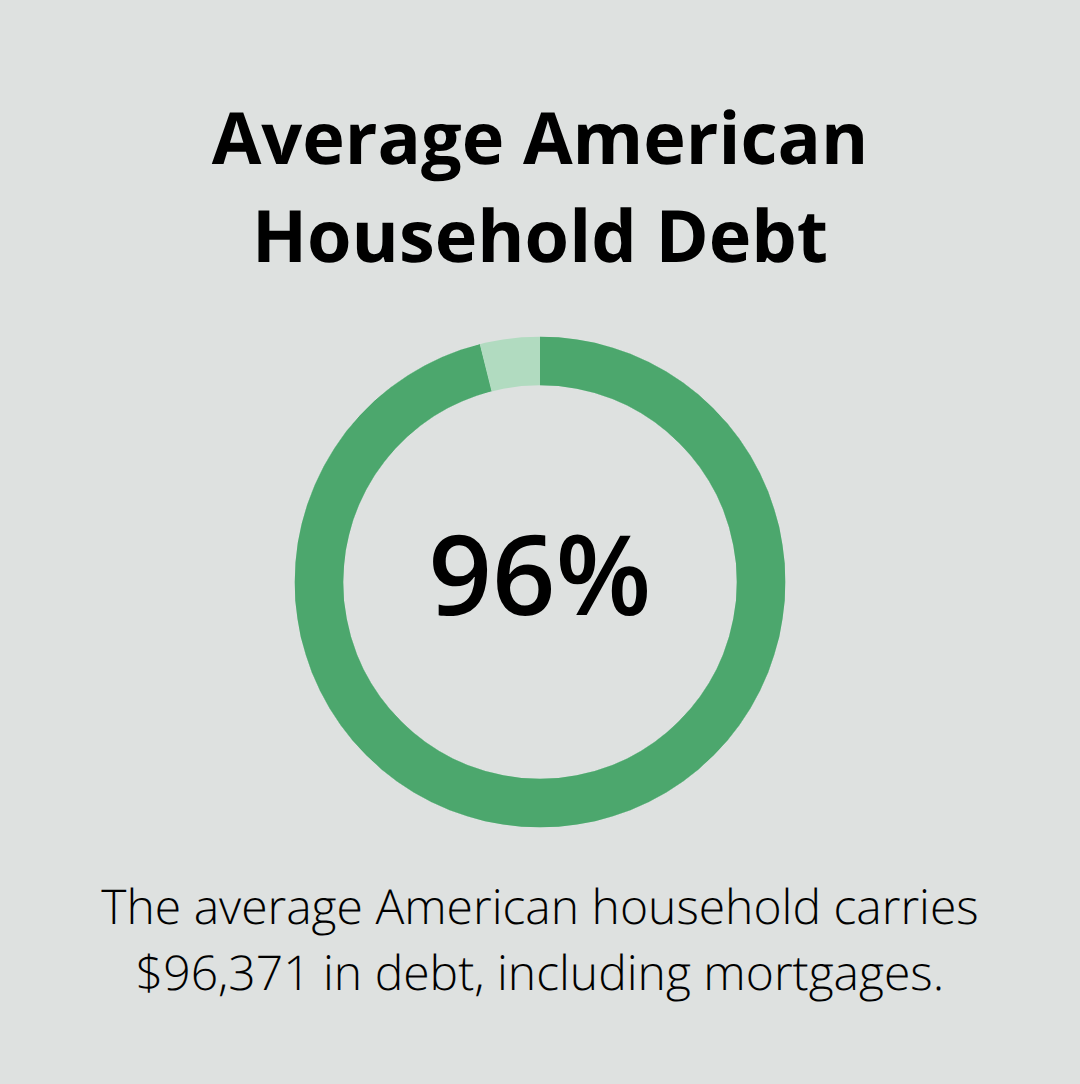
Financial distress often sneaks up on Floridians. If your debts consistently outpace your income, it’s a clear red flag. Using credit cards for essentials like groceries or utilities indicates serious financial trouble. The Federal Reserve Bank of New York reports that as of 2023, the average American household carries $96,371 in debt (including mortgages). A debt-to-income ratio exceeding 50% signals it’s time to evaluate your options.
Relentless Creditor Harassment
Do you screen calls to avoid debt collectors? The Fair Debt Collection Practices Act prohibits harassment, but some creditors push the limits. Multiple daily calls or threats from collection agencies point to an unmanageable debt situation. This constant pressure can take a toll on your mental health and relationships.
Legal Actions and Wage Garnishment
Creditors who resort to lawsuits or wage garnishment escalate the situation significantly. In Florida, creditors can take up to 25% of your disposable earnings. Facing legal action or seeing your paycheck docked indicates a critical point where Chapter 7 bankruptcy could provide immediate relief through the automatic stay provision.
Sacrificing Necessities for Debt Payments
Skipping meals, postponing medical care, or living without utilities to pay debts marks a critical juncture. The U.S. Census Bureau’s Household Pulse Survey revealed that in 2023, nearly 35% of adults struggled to pay for usual household expenses. If you find yourself in this group, it’s time to consider your legal options for debt relief.
Inability to Save or Plan for the Future
When every dollar goes towards debt repayment, saving for emergencies or planning for the future becomes impossible. This lack of financial cushion leaves you vulnerable to unexpected expenses and perpetuates the cycle of debt. If you can’t set aside even a small amount for savings, it’s a strong indicator that your current financial situation is unsustainable.
These warning signs often overlap, creating a perfect storm of financial distress. If you recognize any of these situations in your life, it’s crucial to understand your options. The next section will explore the qualifications for Chapter 7 bankruptcy in Florida, helping you determine if this path could offer the fresh start you need.
Are You Eligible for Chapter 7 Bankruptcy in Florida?
Understanding the Means Test
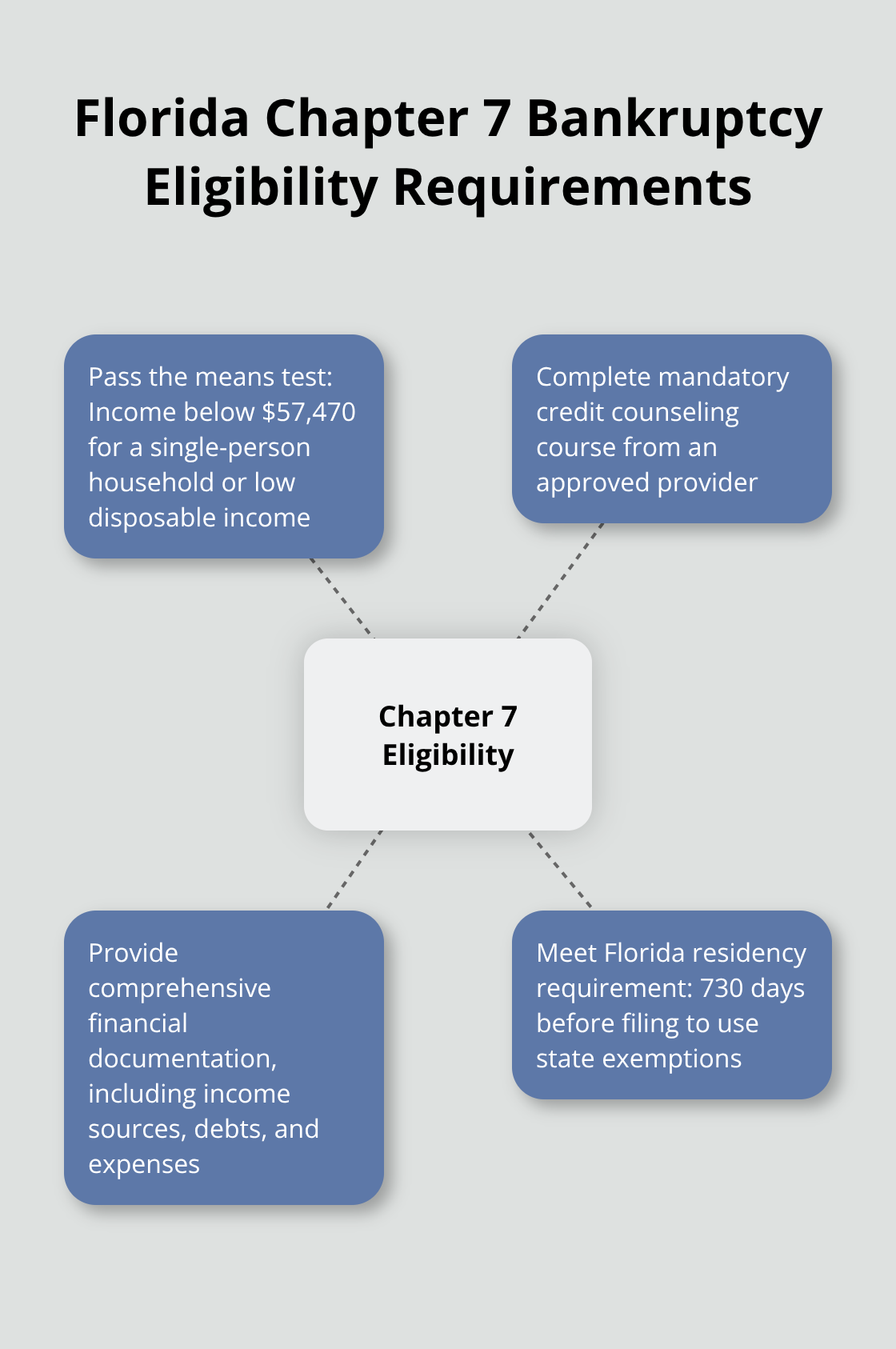
The means test determines your eligibility for Chapter 7 bankruptcy in Florida. This test compares your income to the state’s median income for a household of your size. As of 2023, the median annual income for a single-person household in Florida is $57,470. If your income falls below this threshold, you automatically qualify for Chapter 7.
Don’t lose hope if your income exceeds this amount. You may still qualify after accounting for certain expenses. The means test calculates your disposable income by subtracting allowed expenses from your current monthly income. If your disposable income is low enough, you can still file for Chapter 7.
Florida’s Generous Bankruptcy Exemptions
Florida offers notably generous bankruptcy exemptions, especially for homestead protection. To use these state-specific exemptions, you must have lived in Florida for at least 730 days before filing.
The homestead exemption is unlimited for properties up to half an acre in a municipality (or 160 acres elsewhere). This means you could potentially keep your home regardless of its value. Other significant exemptions include up to $1,000 in personal property and $1,000 in vehicle equity.
Required Documentation and Financial Disclosures
Transparency is essential in the bankruptcy process. You must provide a comprehensive picture of your financial situation, including:
- A list of all creditors and amounts owed
- Income sources and amounts
- A list of all property
- Monthly living expenses
- Recent tax returns
- Pay stubs from the last 60 days
Accuracy is paramount. Providing false information can lead to serious consequences (including denial of your bankruptcy discharge or even criminal charges).
Mandatory Credit Counseling Requirement
Before filing, you must complete a credit counseling course from an approved provider. This course helps you understand your options and potentially explore alternatives to bankruptcy. After filing, you’ll also need to complete a debtor education course to receive your discharge.
The bankruptcy process can seem daunting, but understanding these requirements is the first step towards financial relief. In the next section, we’ll explore the advantages of filing Chapter 7 bankruptcy in Florida, which can help you decide if this path is right for your situation.
How Chapter 7 Bankruptcy Benefits Floridians
Debt Elimination
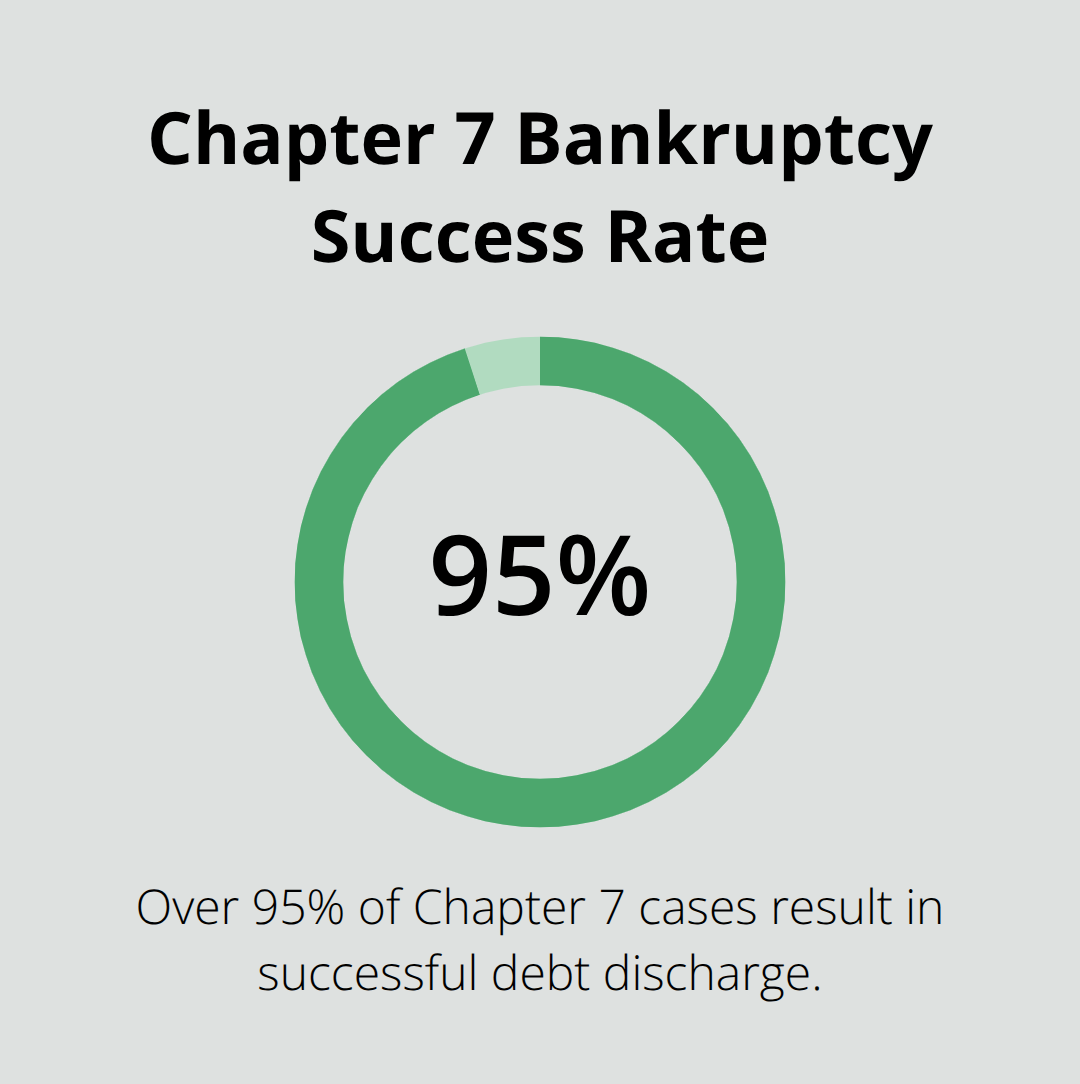
Chapter 7 bankruptcy offers Floridians a powerful tool to eliminate qualifying unsecured debts. Credit card balances, medical bills, and personal loans often vanish through this process. The American Bankruptcy Institute reports that over 95% of Chapter 7 cases result in successful debt discharge. This clean slate allows individuals to rebuild their financial lives without the burden of past obligations.
Immediate Creditor Protection
The moment a person files for Chapter 7 bankruptcy, an automatic stay takes effect. This legal shield halts all collection activities, including phone calls, letters, and lawsuits. Many Floridians find relief from constant creditor harassment, which provides much-needed peace of mind. The automatic stay also stops wage garnishments, allowing individuals to keep more of their earnings.
Asset Protection
Florida’s generous exemption laws allow many Chapter 7 filers to keep their homes, cars, and personal property. The state’s unlimited homestead exemption (a standout feature of Florida’s bankruptcy laws) potentially allows residents to protect the full value of their primary residence. This means individuals can obtain debt relief without losing the roof over their heads.
Quick Financial Recovery
Chapter 7 bankruptcy offers a relatively fast path to financial recovery. Most cases conclude within 3-6 months, which allows individuals to start rebuilding credit sooner. While bankruptcy remains on a credit report for 10 years, many people see significant improvements in their credit scores within 12-18 months after filing. This rapid turnaround proves essential for those who need to secure housing, employment, or future loans.
Stress Reduction
Financial struggles often lead to severe stress, affecting physical and mental health. Chapter 7 bankruptcy can alleviate this burden. The elimination of debt and the cessation of creditor harassment often result in improved overall well-being. Many individuals report better sleep, reduced anxiety, and a renewed sense of hope for the future after completing the bankruptcy process.
Final Thoughts
The decision to file Chapter 7 bankruptcy in Florida requires careful consideration. Warning signs like overwhelming debt, creditor harassment, and financial sacrifices indicate it’s time to explore this option. Chapter 7 bankruptcy offers a powerful solution for those struggling with insurmountable debt, providing a fresh start and the opportunity to rebuild financial stability.
The bankruptcy process involves complex legal procedures and can affect your financial future. An experienced bankruptcy attorney can assess your situation, guide you through the means test, and explain how Florida’s bankruptcy exemptions apply to your case. At Harnage Law, PLLC, we offer personalized guidance for Chapter 7 bankruptcy to individuals and families in Florida.
Bankruptcy is a legal tool designed to provide relief and a second chance. If you wonder when to file Chapter 7 bankruptcy, now might be the time to take that first step towards financial freedom. With the right legal support, you can overcome your current financial challenges and look forward to a brighter, debt-free future.