
At Harnage Law, PLLC, we understand that financial hardship often leads to questions about bankruptcy. Many Floridians wonder, “How can I file bankruptcy with no money?”
The truth is, filing for bankruptcy does come with costs. However, there are options available for those with limited funds.
In this post, we’ll explore the expenses associated with bankruptcy in Florida and discuss alternatives for those who can’t afford the traditional filing process.
How Much Does Bankruptcy Cost in Florida?
Court Filing Fees
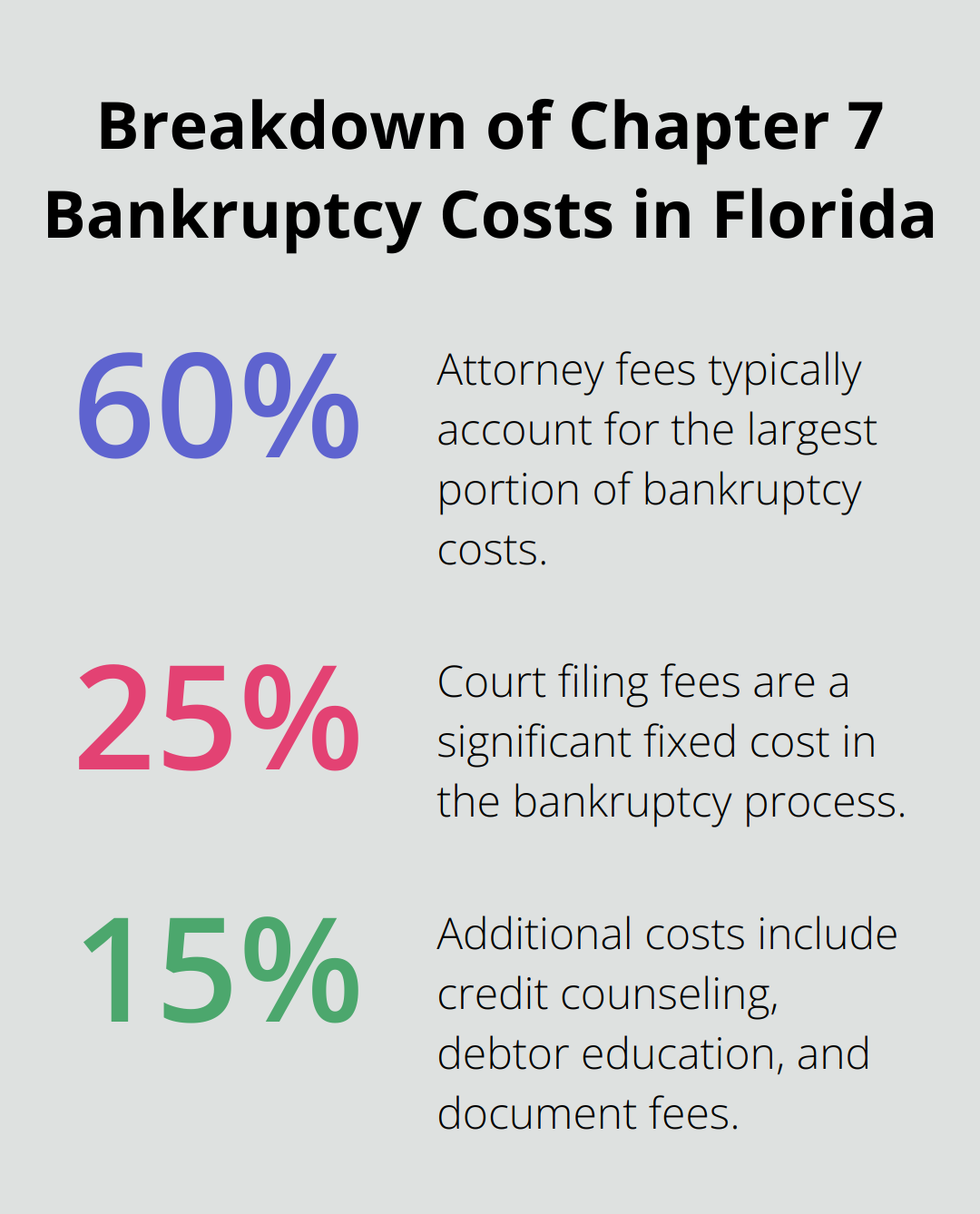
The U.S. Bankruptcy Court charges $338 for a Chapter 7 bankruptcy filing in Florida. This fee is standard across all states and must be paid when you submit your petition. If you can’t afford this fee, you might qualify for a fee waiver or an installment plan (more on these options later).
Attorney Fees
Legal representation is essential for navigating the complex bankruptcy process. Attorney fees for Chapter 7 bankruptcy in Florida typically range from $1,000 to $2,500, depending on the complexity of your case. While this might seem steep, a knowledgeable attorney can save you money in the long run by ensuring your case is handled correctly.
Additional Costs
Beyond court and attorney fees, you’ll need to factor in a few other expenses:
- Credit Counseling Course: Before filing, you must complete a credit counseling course. This usually costs between $20 and $50.
- Debtor Education Course: After filing, you’re required to take a debtor education course. This typically costs $50 to $100.
- Credit Reports: You’ll need copies of your credit reports, which can cost up to $60 for reports from all three major credit bureaus.
- Miscellaneous Expenses: Don’t forget about potential costs for obtaining necessary documents, making copies, or mailing forms.
Total Cost Estimate
All in, you’re looking at approximately $1,500 to $3,000 to file Chapter 7 bankruptcy in Florida. This might seem like a lot when you’re already struggling financially. However, it’s important to weigh this cost against the potential relief of discharging thousands of dollars in debt.
Flexible Payment Options
Many bankruptcy attorneys (including those at Harnage Law, PLLC) offer flexible payment options to help make the process more affordable. These may include payment plans or reduced fees based on your financial situation. It’s worth discussing these options with your chosen attorney to find the most cost-effective way to file your bankruptcy.
Now that we’ve outlined the costs associated with filing bankruptcy in Florida, let’s explore some options for those who find these expenses challenging to meet.
How to File Bankruptcy in Florida with Limited Funds
Fee Waiver Applications
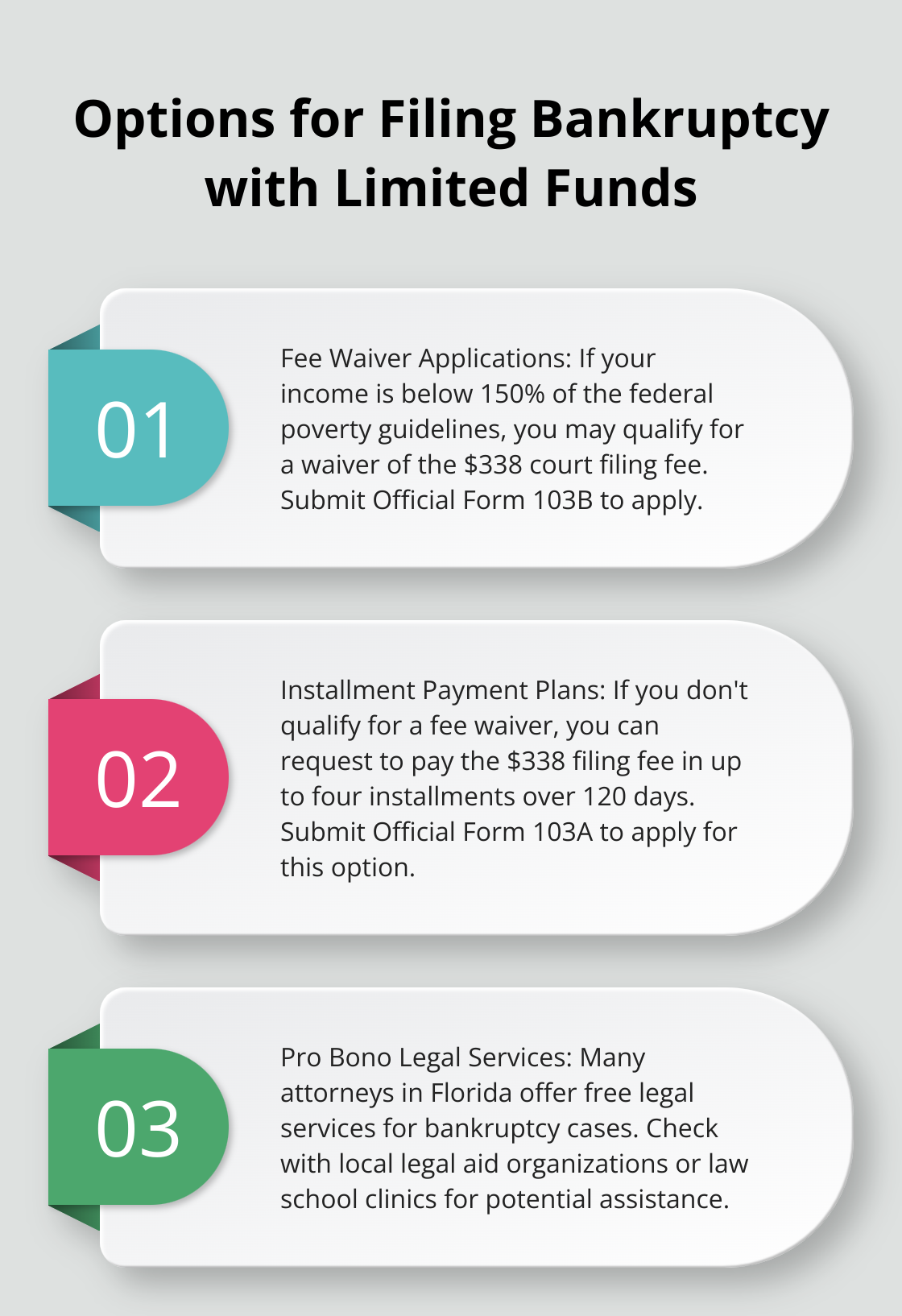
If your income falls below 150% of the federal poverty guidelines, you might qualify for a fee waiver. This waiver covers the $338 court filing fee for Chapter 7 bankruptcy. To apply, you must submit Official Form 103B to the bankruptcy court. This form requires detailed information about your income, expenses, and assets. The court will review your application and decide whether to grant the waiver based on your financial situation.
Installment Payment Plans
If you don’t qualify for a fee waiver, you can ask the court to pay the filing fee in installments. This option allows you to spread the $338 fee over up to four payments within 120 days of filing. To request this, you must submit Official Form 103A to the court. It’s important to stick to the payment schedule, as missing a payment could result in your case being dismissed.
Pro Bono Legal Services
Many attorneys in Florida offer pro bono (free) legal services for bankruptcy cases. The Florida Bar’s website lists pro bono programs by county. For example, the Put Something Back program in Miami-Dade County connects low-income individuals with volunteer attorneys for bankruptcy assistance. Legal Aid Service of Broward County offers free bankruptcy clinics and potential representation for qualifying individuals.
Legal Aid Organizations
Florida has several legal aid organizations that provide free or low-cost bankruptcy assistance. Community Legal Services of Mid-Florida offers bankruptcy services to eligible clients in 12 counties. These organizations often have income requirements (check their websites or call for specific eligibility criteria).
Law School Clinics
Some law schools in Florida operate bankruptcy clinics where law students, supervised by experienced attorneys, provide free legal assistance. The University of Miami School of Law’s Bankruptcy Assistance Clinic is one such example. These clinics offer valuable experience for students while providing much-needed help to those who can’t afford traditional legal representation.
While filing for bankruptcy without proper legal guidance can be risky, there are options available for those with limited funds. Even if you can’t afford full representation, try to seek at least a free consultation with a bankruptcy attorney. Many firms offer free initial consultations where you can get valuable advice about your options.
Now that we’ve explored ways to file bankruptcy with limited funds, let’s look at some alternatives to traditional bankruptcy filing in Florida.
Exploring Alternatives to Bankruptcy in Florida
Debt Negotiation and Settlement
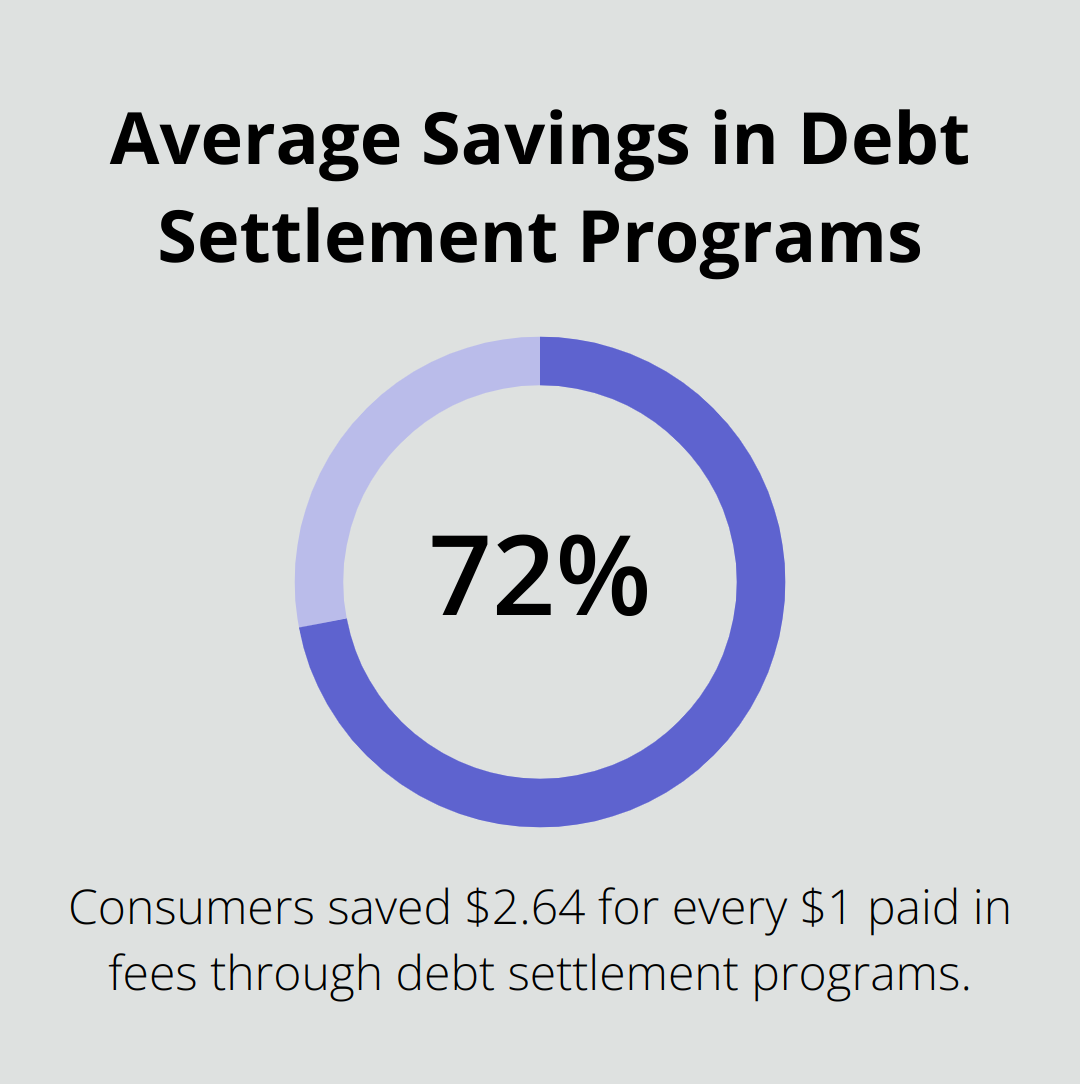
Debt negotiation involves direct communication with creditors to reduce the amount you owe. This approach can be particularly effective for unsecured debts like credit cards. A study by the American Fair Credit Council found that consumers who completed debt settlement programs saved an average of $2.64 for every $1 paid in fees.
To negotiate effectively:
- Collect all your financial information
- Contact creditors directly
- Explain your financial hardship
- Offer a lump-sum payment (if possible)
- Obtain any agreement in writing
Keep in mind that settled debts may appear as “settled for less than the full amount” on your credit report, which can affect your credit score.
Credit Counseling Services
Credit counseling agencies provide free or low-cost financial education and advice. They can help you create a budget, manage your debts, and potentially set up a debt management plan (DMP).
In a DMP, the counseling agency works with your creditors to lower interest rates and waive fees. You make a single monthly payment to the agency, which then distributes funds to your creditors.
The National Foundation for Credit Counseling reports that clients who completed a DMP paid off an average of $17,548 in unsecured debt.
Debt Consolidation Options
Debt consolidation involves taking out a new loan to pay off multiple existing debts. This can simplify your payments and potentially lower your interest rate.
Options include:
- Personal loans: Experian reported that the average personal loan interest rate in 2021 was 9.09% (potentially lower than many credit card rates).
- Home equity loans or lines of credit: These often have lower interest rates but put your home at risk if you default.
- 401(k) loans: This option avoids a credit check but risks your retirement savings and may trigger penalties if not repaid.
Before choosing debt consolidation, calculate whether the new loan truly saves you money in the long run.
While these alternatives can be effective, they’re not suitable for everyone. If you find yourself overwhelmed by debt, speaking with a bankruptcy attorney can help clarify your options. At Harnage Law, PLLC, we offer free initial consultations to assess your situation and recommend the best path forward.
Final Thoughts
Filing for bankruptcy without money in Florida presents challenges, but options exist. Fee waivers, installment plans, and pro bono services can make the process more accessible. Professional advice remains essential due to the complexity and long-term implications of bankruptcy.
We recommend you gather your financial documents and seek a free consultation with a bankruptcy attorney. At Harnage Law, PLLC, we offer initial consultations at no cost to assess your situation and suggest the best path forward. We understand the difficulties of filing bankruptcy with limited funds.
Bankruptcy marks a potential new beginning in your financial journey. With proper guidance, you can navigate this process and work towards stability. If you wonder how to file bankruptcy with no money, don’t hesitate to reach out for professional help.
