Debt doesn’t disappear on its own, and neither should your options for handling it. Chapter Seven relief options in Florida range from straightforward no-asset cases to strategic conversions from other bankruptcy chapters, each with distinct advantages depending on your financial situation.
We at Harnage Law, PLLC help clients evaluate which path actually works for their circumstances rather than pushing a one-size-fits-all approach. This guide walks through six distinct Chapter 7 strategies so you can see which one matches your reality.
How Chapter 7 Works in Florida
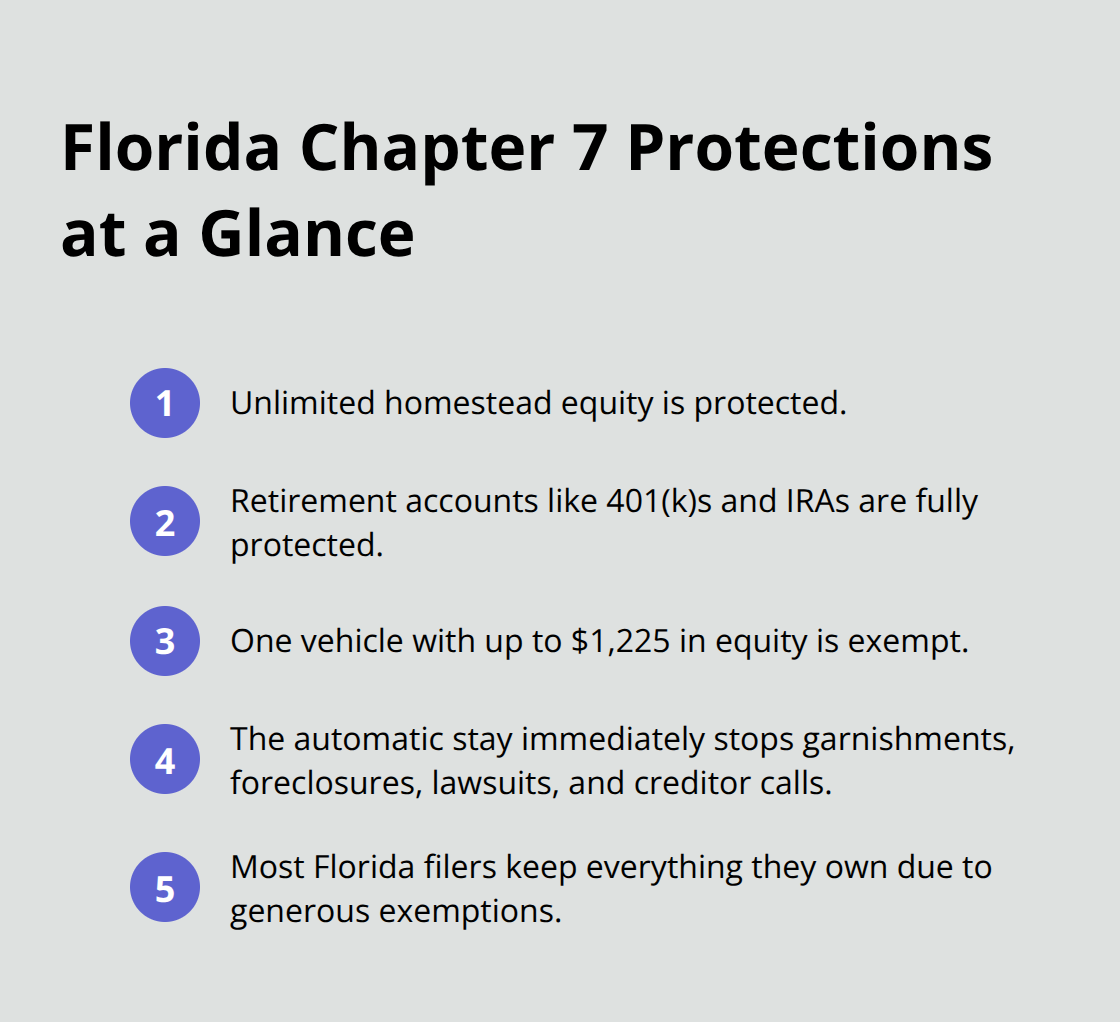
Chapter 7 bankruptcy liquidates nonexempt assets to pay creditors, but most Florida filers keep everything they own because state exemptions are generous. Federal law protects retirement accounts like 401(k)s and IRAs completely, while Florida exemptions shield your primary residence with unlimited equity protection, one vehicle up to $1,225 in equity, and essential household goods. The automatic stay activates the moment you file, stopping wage garnishments, foreclosures, lawsuits, and creditor calls immediately. Creditors cannot contact you after filing because the court prohibits all collection efforts. This protection applies across all debts simultaneously, not just one creditor or one account, which is why filing stops multiple collection actions at once.
Your timeline from filing to discharge runs 4 to 6 months in most Florida cases. The means test determines eligibility by comparing your household income to the Florida median income; if you fall below the median, you qualify without further calculations. The process includes mandatory credit counseling before filing, gathering financial documents like tax returns and bank statements, attending a 341 meeting with the trustee roughly 30 days after filing, and completing a debtor education course before discharge. Discharge typically arrives 90 to 120 days after your meeting with the trustee, eliminating eligible unsecured debts permanently so creditors cannot pursue collection afterward. Most Chapter 7 cases discharge more than 99 percent of eligible debts, making this the fastest debt relief option available in Florida.
Understanding which Chapter 7 path fits your situation depends on whether you have nonexempt assets to protect or debts that require strategic planning. The six relief options ahead show how different circumstances call for different approaches to maximize your fresh start.
1. No-Asset Chapter 7 Cases
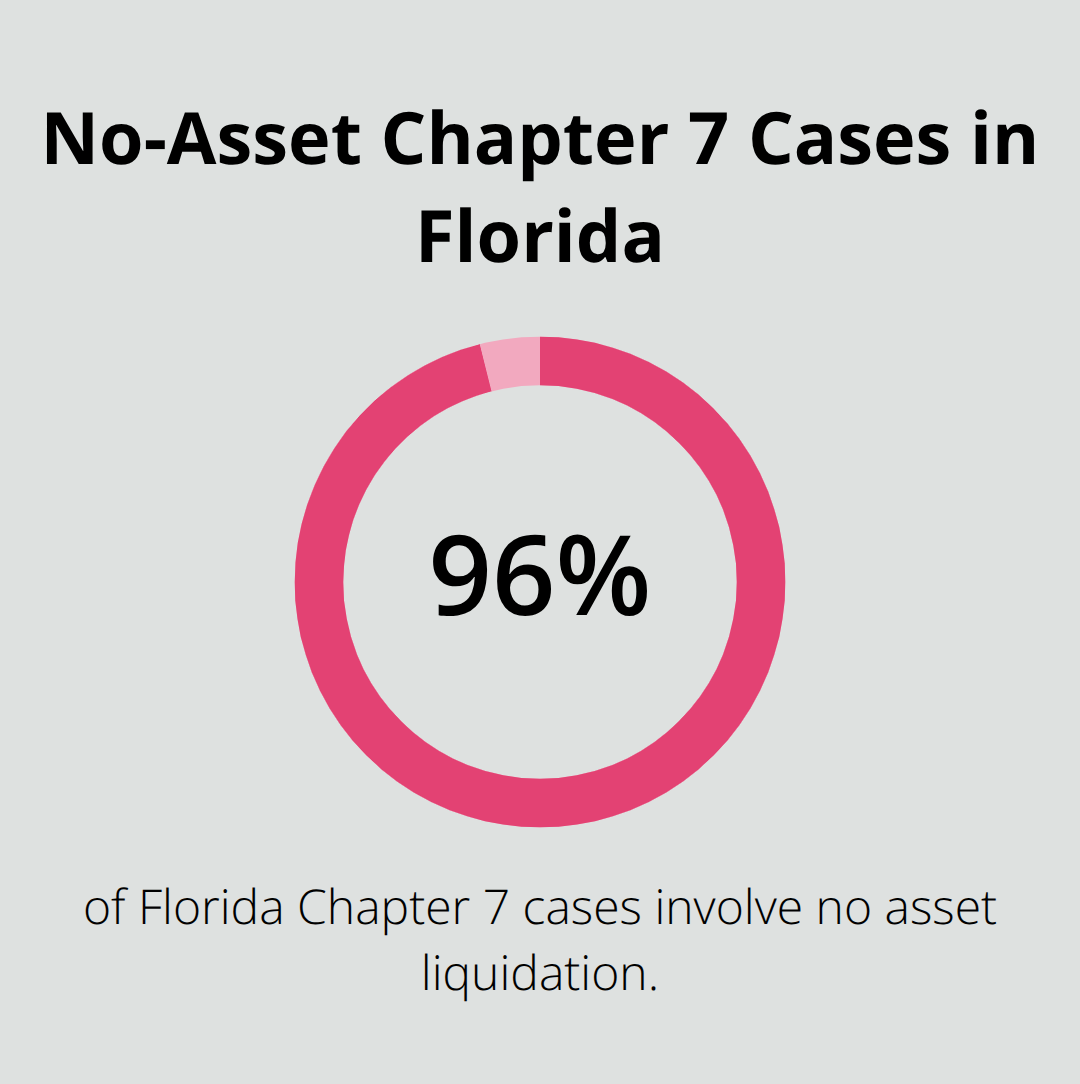
A no-asset case means the trustee finds no nonexempt property to liquidate, which happens in the majority of Florida Chapter 7 filings. Florida exemptions rank among the most debtor-friendly in the nation, with unlimited homestead protection, complete retirement account shielding, and $1,225 vehicle equity protection. The U.S. Bankruptcy Courts report that roughly 96 percent of Chapter 7 cases in Florida involve no asset liquidation, meaning creditors receive nothing from property sales and your discharge moves forward without delays.
In a no-asset case, the trustee still conducts the 341 meeting, but the focus shifts entirely to verifying your financial information rather than planning asset sales. Creditors receive notification that no assets exist for distribution, which typically ends their interest in pursuing claims against you.
Your discharge timeline accelerates in no-asset cases because no liquidation process slows things down. Most no-asset Chapter 7 cases reach discharge within 90 to 120 days after your 341 meeting, compared to asset cases that can stretch longer due to trustee liquidation work. You keep your home, car, retirement accounts, and household belongings without negotiation or court approval because Florida law protects these items automatically. The only debts that survive discharge are those exceeding Chapter 7 exceptions-child support, recent taxes, and student loans in most situations-but credit card debt, medical bills, personal loans, and utility arrears vanish completely. When your financial situation fits within state exemption limits, this straightforward path becomes the fastest route to eliminating unsecured debt, which is why many Florida residents with modest assets qualify for this option before exploring whether asset cases or other strategies might apply to their circumstances.
2. Asset Chapter 7 Cases with Strategic Planning
Not all Florida filers fall into the no-asset category, and that doesn’t mean Chapter 7 stops working for you. When you own property exceeding state exemptions-a second vehicle, investment accounts, rental property, or valuable collectibles-the trustee will liquidate those nonexempt assets to pay creditors. The key distinction is that liquidation doesn’t eliminate your discharge; it simply means some assets fund creditor payments before your remaining debts vanish. Florida law allows unlimited homestead equity, which protects most primary residences completely, but a second property or investment real estate counts as nonexempt and becomes part of the estate.
Maximizing exemptions requires understanding Florida’s specific protections and acting strategically before filing. Your primary vehicle enjoys $1,225 in equity protection, but a paid-off luxury car or a second truck exceeds that limit and becomes liquidation property. Retirement accounts including 401(k)s, IRAs, and pension plans receive complete federal protection under all circumstances, meaning these never face trustee liquidation. Household goods and furnishings have no dollar limit under Florida exemptions, protecting your furniture, appliances, and personal belongings regardless of value. Some filers adjust their filing timeline to pay down nonexempt assets, though this strategy requires careful timing since transfers within 90 days before filing trigger trustee scrutiny.
Asset cases typically extend your timeline to 5 to 7 months from filing to discharge, compared to the 4 to 6 month no-asset timeline, because liquidation and distribution processes require additional trustee work. The trustee’s role isn’t to punish you but to maximize returns for unsecured creditors, so transparency about your assets and exemptions protects your case from complications. When you file with nonexempt property, the trustee notifies creditors of the liquidation plan and distributes proceeds according to bankruptcy priority rules. Understanding which assets face liquidation and which ones Florida law shields allows you to approach your case with realistic expectations about what happens next.
3. Joint Filing for Married Couples
Filing Chapter 7 together as a married couple in Florida doubles your exemption amounts, which means your household keeps significantly more property than either spouse filing alone. When you file jointly, Florida law treats your exemptions as a combined pool, so your primary residence receives unlimited equity protection for both spouses, your vehicles gain $1,225 per person in equity protection instead of one vehicle total, and retirement accounts remain completely shielded for each spouse. The U.S. Bankruptcy Courts data shows that approximately 60 percent of Chapter 7 filings involve married couples, and most joint filers retain all household assets because the doubled exemptions cover what individual filers might lose. Filing together also simplifies the process since one bankruptcy case handles all shared debts, eliminates confusion about who owes what, and costs less in filing fees than two separate cases. Your 341 meeting involves both spouses answering questions from the trustee, but the timeline remains identical to single-filer cases at 4 to 6 months from filing to discharge.
Managing shared and individual debts becomes straightforward in a joint filing because all debts belonging to either spouse discharge together regardless of whose name appears on the account. Joint credit card debt, shared medical bills, and mortgages all vanish through one discharge order, while separate debts incurred before marriage or in one spouse’s name alone also receive discharge protection. Community property considerations matter less in Florida than in western states since Florida recognizes both community and separate property, but joint filing protects both types equally. The critical advantage appears when one spouse has significant individual debts and the other has minimal debt, because filing together discharges both spouses’ obligations while preserving double exemptions for household assets. Couples should file jointly unless one spouse has recent income that pushes the combined household over the Florida median income threshold on the means test, which occasionally makes separate filing the better strategy-a distinction that matters when you evaluate whether protecting one spouse’s income becomes more valuable than doubling your exemptions.
4. Individual Filing While Protecting a Spouse
Solo filing makes financial sense when one spouse earns significantly more income than the other, pushing your combined household over Florida’s median income threshold on the means test. Filing individually allows the lower-earning spouse to qualify for Chapter 7 while the higher-earning spouse stays outside the bankruptcy, protecting that income stream from the means test calculation entirely. This strategy works particularly well when one spouse has minimal debt compared to the other, since the filing spouse’s debts discharge while the non-filing spouse avoids bankruptcy’s seven to ten year credit report impact. The non-filing spouse’s credit score remains unaffected, which matters when you need to refinance a mortgage, qualify for a car loan, or maintain access to credit during the bankruptcy process. Courts in Florida’s Eastern and Southern Districts see this approach regularly, and it requires careful handling of jointly held accounts to prevent complications during the 341 meeting.
Jointly held accounts and property demand immediate attention before filing because creditors may attempt collection from either account holder. Close joint credit cards before filing to prevent the non-filing spouse from facing collection calls on debts they didn’t incur individually, and separate bank accounts so the trustee cannot claim funds belonging to the non-filing spouse. Your primary residence presents a more complex situation since both spouses typically hold title, but Florida’s unlimited homestead exemption protects the home regardless of who files, meaning the non-filing spouse retains full ownership rights and the property never faces trustee liquidation. Tax implications matter significantly because jointly filed tax returns from prior years show income from both spouses, which the trustee uses to calculate means test eligibility, so you’ll need to demonstrate separate income sources clearly during the filing process. Individual filing requires more detailed financial documentation than joint filing, but the payoff appears when one spouse avoids bankruptcy’s credit consequences while both maintain household assets and receive debt relief, setting the stage for exploring conversion strategies if your circumstances change after filing.
5. Chapter 7 After Failed Debt Settlement or Credit Counseling
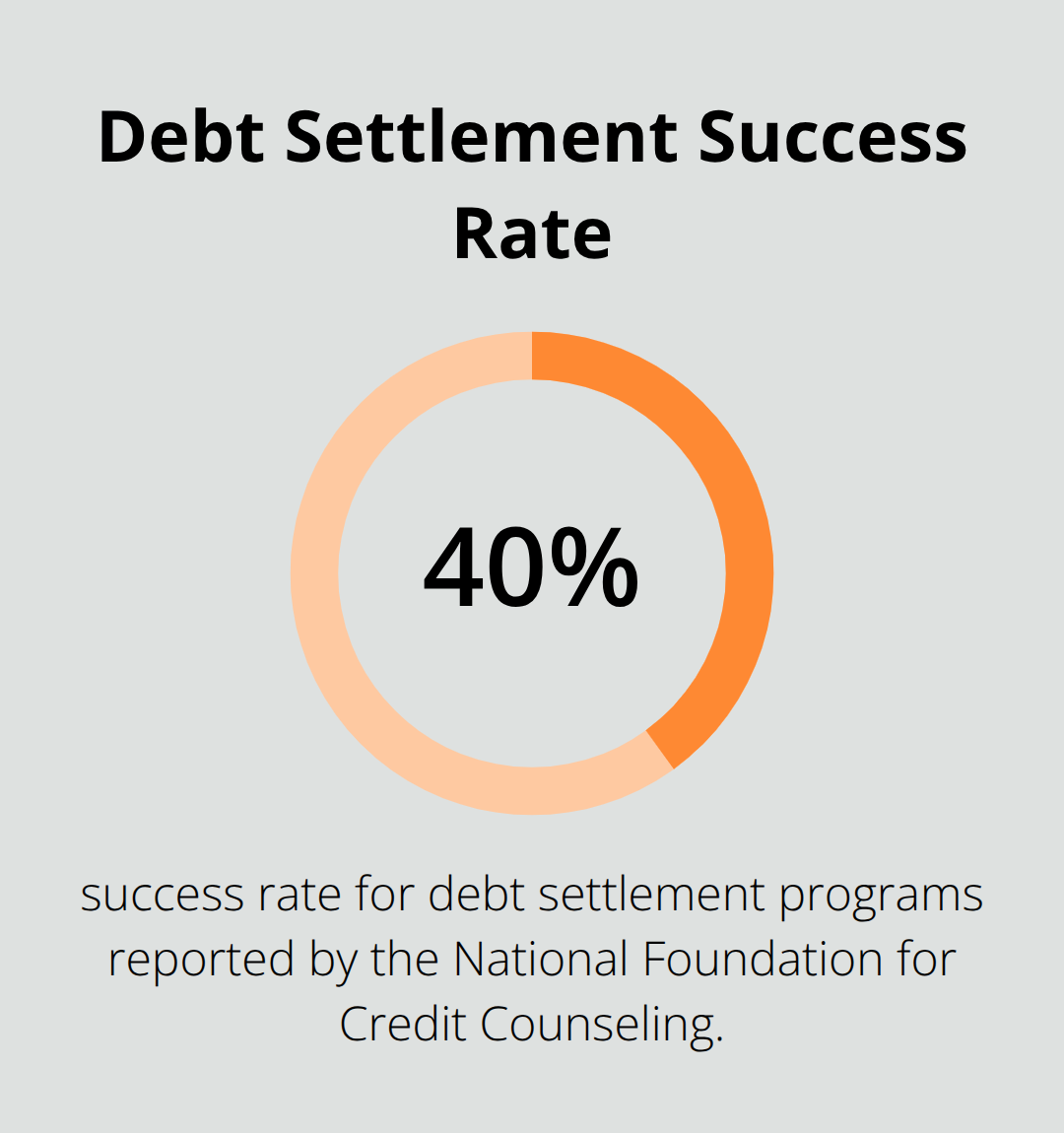
Debt settlement programs promise relief but often leave you worse off than before you started. These programs typically require you to stop paying creditors while a company negotiates reduced payoffs, which tanks your credit score immediately and invites aggressive collection calls, lawsuits, and wage garnishments during the negotiation period. The National Foundation for Credit Counseling reported that debt settlement success rates hover around 40 percent, meaning roughly 60 percent of people who enter these programs fail to reach agreements with creditors. Meanwhile, your debts balloon with interest and late fees accumulating month after month, sometimes doubling the original balance before negotiations conclude.
Chapter 7 bankruptcy eliminates these massive debts in a single filing after settlement fails.
Credit counseling agencies offer budget planning and creditor negotiation, but they cannot force creditors to accept lower payments or stop collection actions. Many credit counseling programs funnel clients into debt management plans requiring monthly payments for three to five years, during which your credit remains severely damaged and your income stays tied up in repayment. Filing Chapter 7 after these failed attempts stops all collection activity immediately through the automatic stay, discharges the grown balances that accumulated during settlement or counseling attempts, and gets you to discharge within four to six months instead of years of struggling payments. Your credit score actually recovers faster after Chapter 7 discharge than after years trapped in unsuccessful debt management, since creditors cannot report ongoing collection efforts once discharge enters. The fresh start Chapter 7 provides means you regain control of your income immediately rather than watching settlement programs drain your resources while your debt situation worsens, positioning you to evaluate whether conversion strategies or other specialized approaches might apply if your circumstances shift after filing.
6. Conversion from Chapter 13 to Chapter 7
Chapter 13 repayment plans fail more often than people realize, with approximately 40 percent of filers unable to complete their three to five year payment schedules according to U.S. Bankruptcy Courts data. When your income drops, your job changes, or unexpected expenses make the monthly plan payment impossible, converting to Chapter 7 becomes your fastest escape route. Florida bankruptcy code allows conversion without waiting periods or additional filing fees beyond modest conversion paperwork, meaning you can switch chapters within days once your circumstances shift. The trustee assigned to your Chapter 13 case automatically transitions to oversee your Chapter 7 conversion, eliminating the need to restart the process with new court filings or additional 341 meetings in most situations. This conversion option exists specifically for debtors whose financial reality no longer supports repayment plans.
Previously paid amounts under your Chapter 13 plan go directly toward your unsecured debts, reducing the total amount creditors would receive if liquidation occurs during conversion. Remaining debts discharge completely when your Chapter 7 case concludes, meaning you stop paying the moment conversion finishes rather than continuing payments under an unmanageable plan. Florida courts recognize that job loss, medical emergencies, or reduced hours make plan payments unrealistic, and conversion protects you from dismissal or forced completion of agreements you cannot afford. Your assets remain protected under the same Florida exemptions that governed your Chapter 13 case, so conversion never forces you to liquidate property you successfully shielded during your original filing. If your Chapter 13 plan becomes unmanageable within the first year or two of a five year schedule, converting to Chapter 7 recovers the income you’ve already committed to repayment while delivering the discharge you originally sought.
Understanding which conversion scenario matches your situation requires evaluating your current income, job stability, and remaining plan obligations-details that shape whether conversion makes sense or whether other strategies might serve you better moving forward.
Final Thoughts
Your specific circumstances determine which Chapter 7 relief option delivers the fastest discharge and strongest asset protection in Florida. No-asset cases reach discharge within four to six months, while strategic planning before filing maximizes what you keep if you own nonexempt assets. Married couples benefit from doubled exemptions through joint filing, individual filing protects a higher-earning spouse’s income, those trapped in failed debt settlement programs find faster relief through Chapter 7, and conversion from Chapter 13 stops unmanageable payments immediately.
Comparing your situation to each Chapter Seven relief option requires honest assessment of your income, assets, debts, and family circumstances. The means test determines whether you qualify for Chapter 7 or need Chapter 13, but understanding which relief strategy matches your reality separates rushed decisions from informed choices. We at Harnage Law, PLLC analyze your specific debt profile, calculate which debts discharge under your chosen path, and identify which assets Florida law protects in your case.
Contact Harnage Law, PLLC to schedule your free case evaluation and take the first step toward discharge. We discuss your circumstances, answer questions about the bankruptcy process, and explain which Chapter 7 relief options apply to your situation. Your fresh start in Florida begins with one conversation.