
Chapter 7 bankruptcy affects more than just your credit score-it reshapes your entire family’s financial picture. At Harnage Law, PLLC, we help families understand how this process impacts their assets, their future borrowing ability, and their long-term stability.
Chapter Seven family planning means making informed decisions now to protect what matters most and rebuild stronger later.
How Chapter 7 Reshapes Your Family’s Financial Picture
Your Credit Score Takes a Hit, Then Recovers
Your credit score will drop immediately after filing, typically falling 130 to 200 points depending on your starting score, according to research from the Federal Reserve. This hit is painful but temporary. The score stabilizes within two to three years for most families who avoid new debt and make on-time payments. Lenders view a Chapter 7 discharge differently than ongoing defaults. A bankruptcy shows creditors you addressed your debt problem rather than ignoring it.
Within 18 to 24 months, you can qualify for secured credit cards or auto loans at reasonable rates. Some families even secure mortgage approval within three years of discharge, though rates will be higher than pre-bankruptcy levels. The key is consistent payment history after discharge. Missing even one payment post-bankruptcy sets recovery back significantly.
Your Spouse and Children Remain Protected
Your spouse faces no automatic liability for debts you discharge unless they co-signed the obligation. This protection is absolute under federal law. Children are completely shielded from your bankruptcy. Their future borrowing, college financial aid eligibility, and credit prospects remain unaffected.
However, if you have joint accounts with your spouse or if they guaranteed any of your debts, those creditors can pursue them separately. Review all joint obligations before filing to identify which debts expose your spouse to liability.
The Discharge Timeline and Cash Flow Impact
The discharge typically arrives four to six months after your meeting of creditors, which occurs 21 to 40 days after filing. Once discharged, you stop paying those debts immediately. This frees up cash flow for rebuilding. Many families redirect the money they previously spent on minimum payments toward savings accounts and emergency funds.
The first 12 months after discharge are critical. Statistics from credit bureaus show families who establish a savings buffer of $1,000 to $2,000 within the first year experience significantly better long-term financial stability. Your bankruptcy remains on your credit report for ten years, but its impact weakens substantially after five years. New positive accounts, paid-on-time credit, and clean payment history gradually overshadow the bankruptcy notation. Families who treat the discharge as a genuine restart, not a temporary reprieve, see the strongest recoveries.
Understanding how Chapter 7 affects your family’s immediate finances sets the stage for protecting your assets throughout the process.
Protecting Your Family’s Assets During Chapter 7 Bankruptcy in Florida
Florida’s bankruptcy laws provide robust protection for family assets that might otherwise face liquidation in other states. This protection stems from Florida’s generous homestead exemption and broad personal property exemptions, which shield far more wealth than federal exemptions allow. Understanding what you keep versus what creditors can claim shapes your family’s post-bankruptcy financial position.
Florida’s Homestead Exemption Shields Your Primary Residence
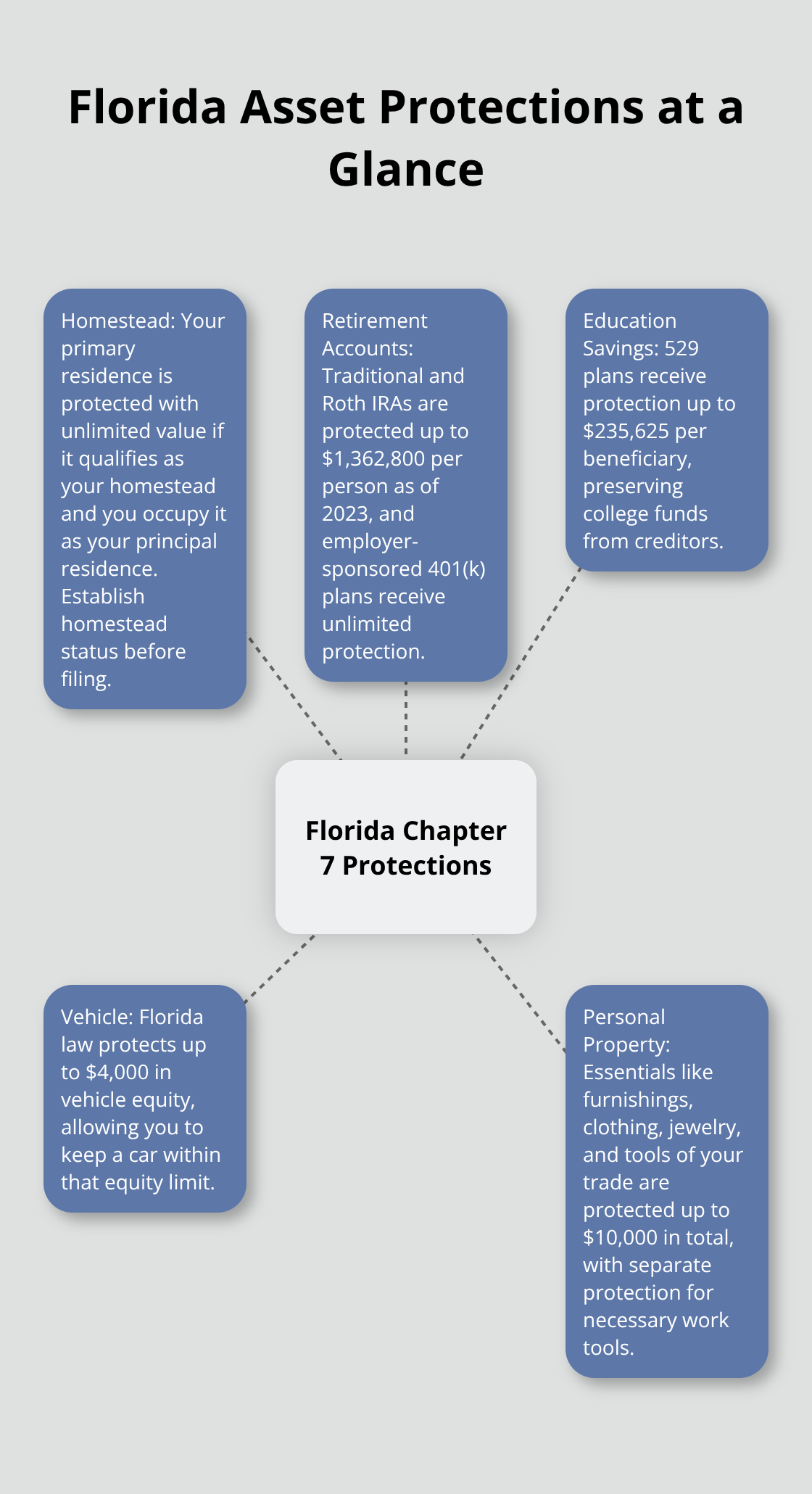
Florida’s homestead exemption ranks among the strongest in the nation, protecting your primary residence from unsecured creditors with unlimited value protection. Your family home remains yours regardless of how much equity you’ve built, provided it qualifies as your homestead and you occupy it as your principal residence. You must establish your homestead status before filing for bankruptcy protection to apply. If you own a second residence or investment property, that asset falls outside homestead protection and becomes part of your bankruptcy estate.
Retirement Accounts Receive Substantial Federal Protection
Your retirement accounts, including traditional IRAs, Roth IRAs, and 401(k) plans, receive substantial protection under federal law, which applies nationwide including Florida. The 2005 Bankruptcy Abuse Prevention and Consumer Protection Act protects up to $1,362,800 in traditional and Roth IRAs per person as of 2023, according to the U.S. Courts, though this figure adjusts periodically. Employer-sponsored 401(k) plans and similar qualified retirement accounts receive unlimited protection, meaning creditors cannot touch these funds even in bankruptcy.
Education Savings and Vehicle Exemptions Protect Family Priorities
Education savings plans like 529 plans receive protection up to $235,625 per beneficiary under current federal exemption rules, safeguarding your children’s college funding from creditors. Your vehicle receives protection up to $4,000 in equity under Florida law, meaning you can keep a car with that amount of equity even if you still owe on it.
Personal Property Exemptions Cover Household Essentials
Personal property including household furnishings, clothing, jewelry, and tools of your trade receives exemptions totaling $10,000 in aggregate value. These exemptions cover everyday items your family needs to function, so your furniture, kitchen appliances, and children’s belongings remain protected. If you own tools required for your occupation, those receive separate protection to maintain your employment after discharge.
Most families in Florida find that their essential assets fall within these exemptions, which explains why Florida bankruptcy cases are frequently no-asset cases where the trustee has nothing to liquidate.
This outcome means you discharge your debts without surrendering significant property, preserving your family’s stability. With your assets protected through Chapter 7, the next step involves rebuilding your financial foundation and establishing sustainable money management practices that support long-term stability.
Rebuilding Your Family’s Financial Foundation After Chapter 7
Calculate Your New Cash Flow and Prioritize Savings
Your discharge arrives, debts vanish, and suddenly you control cash that once went to creditors. This moment demands immediate action, not celebration. The families who recover strongest treat the first 12 months after discharge as a reconstruction period with specific financial targets. Start with calculating exactly how much monthly cash flow your discharge freed up. If you paid $800 monthly across credit cards and personal loans, that $800 now belongs to your family’s future.
Allocate half of it immediately to an emergency savings account before you spend it elsewhere. Data from the National Foundation for Credit Counseling shows families who build a $1,000 to $2,000 emergency buffer within the first year after discharge experience 40 percent fewer financial crises in the following five years. This buffer protects your family from sliding back into debt when unexpected expenses arrive.
Create a Realistic Budget Based on Actual Spending
The other half of your freed cash funds a realistic monthly budget that accounts for every dollar your family spends. Many people fail post-bankruptcy because they create budgets on paper that don’t match reality. Instead, track your actual spending for 30 days before writing your budget. You’ll discover where money actually goes, not where you think it goes.
Include line items for irregular expenses like car insurance, property taxes, and medical costs that appear quarterly or annually. Families who ignore these predictable irregular expenses find themselves short on cash when bills arrive, forcing them back into debt. Your budget should also include a line item for debt you kept, like a mortgage or car loan. Ensure those payments arrive on time, every time. One missed payment post-bankruptcy damages your credit recovery more severely than pre-bankruptcy defaults because creditors view it as proof you haven’t changed.
Secure New Credit Strategically
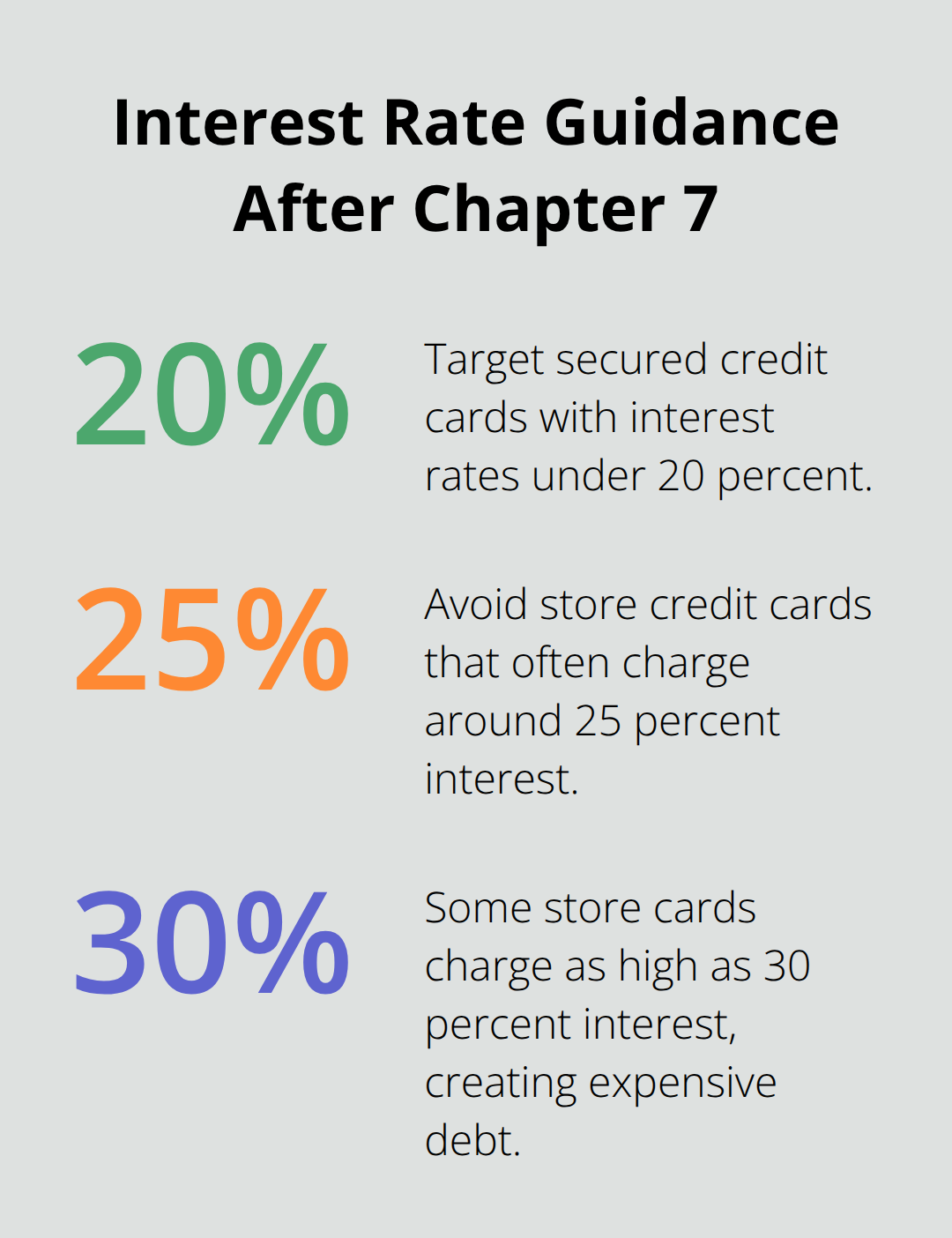
Credit card companies actively pursue bankruptcy dischargees because they represent lower risk than the general population. However, accept only secured credit cards with $500 to $1,000 limits and interest rates under 20 percent. Avoid store credit cards and cards advertising no credit check, as those typically charge 25 to 30 percent interest and trap families in expensive debt cycles.
After six months of on-time payments on a secured card, you qualify for an unsecured card with better terms. Build a credit file with exactly three active accounts within 18 months of discharge: one secured credit card, one auto loan or mortgage, and one installment account. Use each account monthly and pay in full or on time without exception.
Leverage Recent Payment History for Score Recovery
Credit bureaus weight recent payment history heavily, so 24 months of perfect payment history after discharge substantially offsets the bankruptcy notation. According to Experian, individuals who maintain clean payment records for two years post-discharge see credit score improvements of 100 to 150 points beyond the initial recovery. Avoid the temptation to apply for multiple credit products simultaneously, as each application generates a hard inquiry that temporarily lowers your score.
Your family’s long-term stability depends on treating credit as a tool, not a solution. Many families fall back into bankruptcy because they view new credit as permission to spend rather than as a means to rebuild creditworthiness. Before making major purchases like a home, wait at least three years post-discharge and ensure your credit score reaches 620 or higher. Mortgage lenders typically require a 620 minimum and charge higher rates for borrowers within five years of discharge, but approval remains possible with disciplined financial management and proper documentation of income stability.
Final Thoughts
Chapter 7 bankruptcy fundamentally reshapes your family’s financial trajectory, but the outcome depends entirely on decisions you make after discharge. The process stops creditor harassment, halts wage garnishments, and eliminates qualifying debts within four to six months. Florida’s homestead exemption and generous personal property protections mean most families retain their primary residence, vehicles, and retirement accounts throughout the process.
Chapter Seven family planning requires treating your discharge as a genuine restart, not a temporary reprieve. The families who rebuild strongest establish emergency savings within the first year, create realistic budgets based on actual spending patterns, and secure new credit strategically rather than impulsively. Your freed cash flow becomes your most valuable asset during this period-allocate half toward emergency savings and half toward sustainable monthly budgeting to create the financial stability that prevents sliding back into debt.
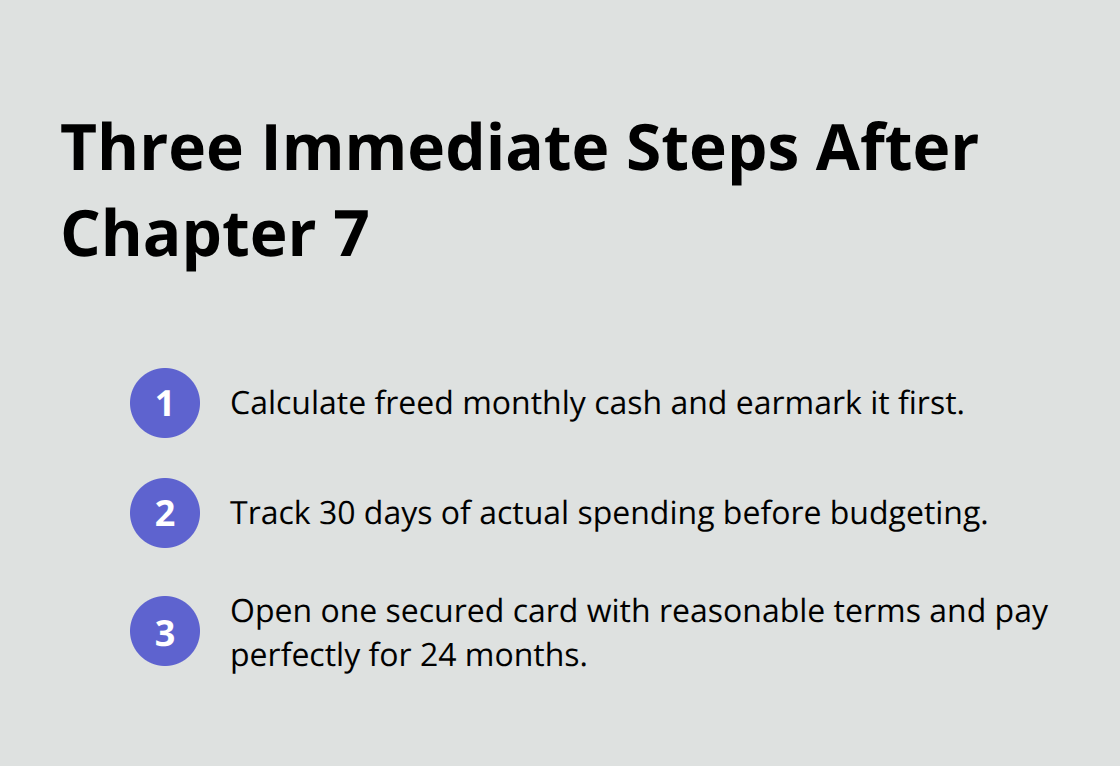
Three concrete steps move your family forward immediately: calculate exactly how much monthly cash your discharge freed and commit that amount to savings and budgeting before spending it elsewhere, track your actual spending for 30 days and build a budget that reflects reality, and secure one secured credit card with reasonable terms while maintaining perfect payment history for 24 months. We at Harnage Law, PLLC assist individuals and families in overcoming financial challenges by providing legal guidance and representation through every step of the bankruptcy process.
Contact Harnage Law, PLLC to discuss your specific situation and develop a personalized plan for long-term financial stability.