
Filing Chapter 7 bankruptcy in Florida means navigating several required steps, and the 341 meeting is one of the most important ones. This meeting with the bankruptcy trustee can feel intimidating if you don’t know what to expect.
We at Harnage Law, PLLC have guided countless clients through this process. This guide walks you through everything you need to know before, during, and after your 341 meeting Chapter 7.
What Exactly Is a 341 Meeting in Florida Chapter 7 Bankruptcy
Understanding the 341 Meeting Basics
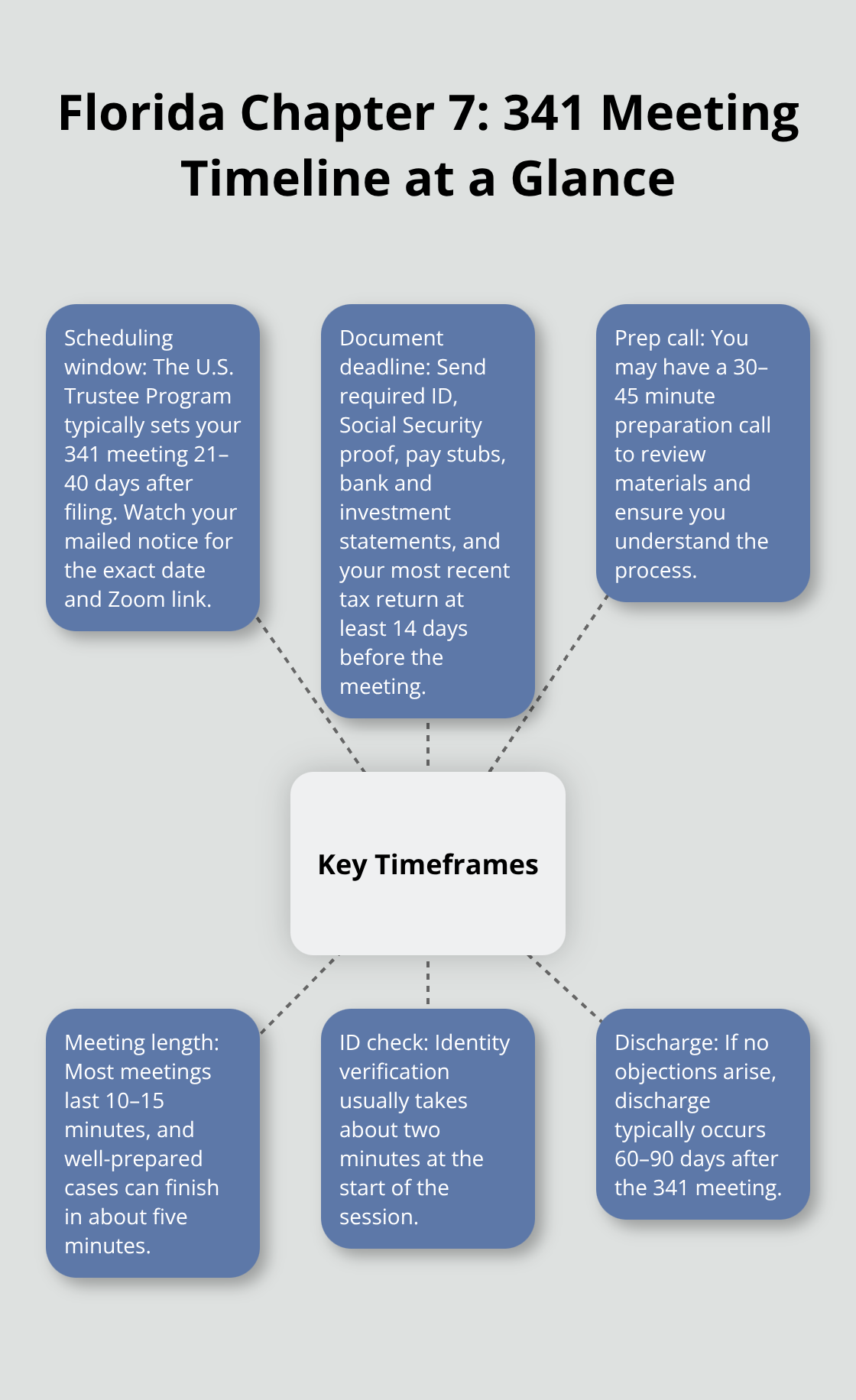
A 341 meeting is a mandatory examination under oath conducted by a bankruptcy trustee after you file Chapter 7 bankruptcy in Florida. The name comes from Section 341 of the Bankruptcy Code, and it gives the trustee a formal opportunity to verify that everything in your petition and schedules is accurate and complete. This meeting is not a court hearing, and no judge will be present. According to the U.S. Trustee Program, the trustee administers your bankruptcy estate, locates assets to liquidate, and distributes funds to unsecured creditors and the government-not to advocate for you. The meeting typically lasts between 10 and 15 minutes per debtor, though you may have a 30 to 45 minute phone call as part of the preparation process. Most 341 meetings in Florida now occur virtually via Zoom, which means you can participate from home if you have reliable internet access.
What the Trustee Will Ask You
The trustee asks questions drawn directly from your bankruptcy schedules to confirm your identity, verify your income and assets, and check that you haven’t omitted any debts or property. Creditors rarely attend these meetings, so you won’t face questioning from the people you owe money to. What matters most is that you answer honestly and completely-the testimony is recorded and can be used against you in disputes if information later proves inaccurate.
Timeline and Document Deadlines
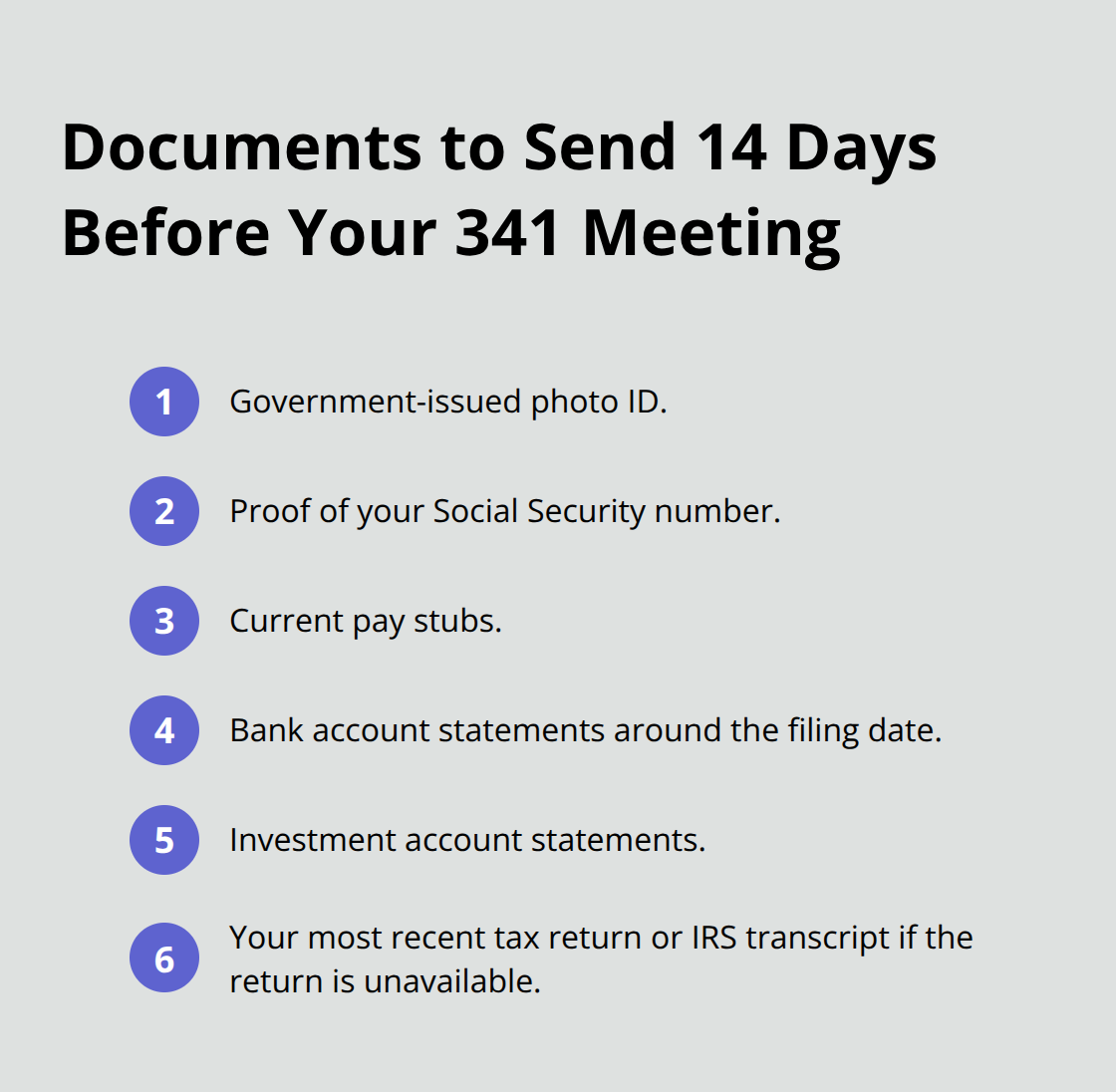
The U.S. Trustee Program schedules these meetings within 21 to 40 days after your Chapter 7 filing. You’ll receive notice of your specific meeting date, time, and Zoom link in the mail, along with instructions for joining. If you live in the Miami, Fort Lauderdale, or West Palm Beach areas, your notice will include the meeting location details. You must submit required documents to the trustee at least 14 days before your meeting, including government-issued photo identification, proof of your Social Security number, current pay stubs, bank and investment account statements, and your most recent tax return. Failing to submit these documents on time results in your meeting being rescheduled, which delays your path to discharge.
For Chapter 7, discharge typically occurs within 60 to 90 days after your 341 meeting, assuming no objections and full compliance with all requirements.
Understanding what documents you need and when to submit them sets the foundation for a smooth meeting. The next section covers exactly what you should bring and how to prepare your materials before the trustee calls your name.
How to Prepare for Your 341 Meeting in Florida
Gather Your Documents Early
Gathering the right documents before your 341 meeting separates a smooth process from unnecessary delays and rescheduling. The U.S. Trustee Program requires you to submit government-issued photo identification, proof of your Social Security number, your most recent pay stub, statements from every bank and investment account covering the period around your filing date, and a copy of your most recent tax return. Send these materials to the trustee at least 14 days before your scheduled meeting. If you’re missing your tax return, provide a transcript from the IRS or a written statement explaining why it doesn’t exist.
Many debtors underestimate how detailed the trustee’s scrutiny becomes when documents arrive late or incomplete. Missing any single item forces a rescheduling that pushes your discharge timeline back by weeks.
Answer Under Oath With Complete Honesty
The trustee will ask you under oath whether you reviewed your bankruptcy schedules, and your answer determines whether the meeting moves forward smoothly or gets derailed by follow-up questions. Answer every question with complete honesty. The testimony is recorded and becomes part of the official record. If the trustee later discovers you misrepresented your assets, income, or transfers to family members, that recording becomes evidence against you in disputes or objections to your discharge.
Know What Questions the Trustee Will Ask
The trustee’s questions focus on verifying information you already provided in your schedules rather than surprising you with new topics. Expect questions about whether you listed all assets, including real property and personal items like jewelry or vehicles. The trustee will ask whether you disclosed every creditor and whether you made any transfers, gifts, or sales of property within the past four years. If you moved since filing, you’ll confirm your current address. If you paid down a mortgage or contributed to retirement accounts in the past 12 months, be ready to explain those transactions. If you have domestic support obligations like child support or alimony, disclose whether you’re current on post-petition payments.
Master the Art of Concise Answers
Answer with a simple yes or no when possible, then add brief details only if the trustee asks follow-up questions. Avoid saying you don’t remember or don’t know, because those responses signal evasiveness and invite deeper questioning. If you genuinely cannot recall a detail, say so honestly but then commit to finding the information and sending it to the trustee afterward.
Review Your Petition Multiple Times
Before your meeting, review every page of your petition and schedules multiple times. Walk through the document line by line so you can confidently confirm each entry without hesitation. This preparation alone cuts meeting time from 15 minutes to 5 minutes or less, because the trustee sees immediately that you’re prepared and truthful. Your confidence and knowledge of your own financial documents set the stage for what happens when you actually sit down (or log in via Zoom) for the meeting itself.
What Happens During Your 341 Meeting in Florida
How the Meeting Starts
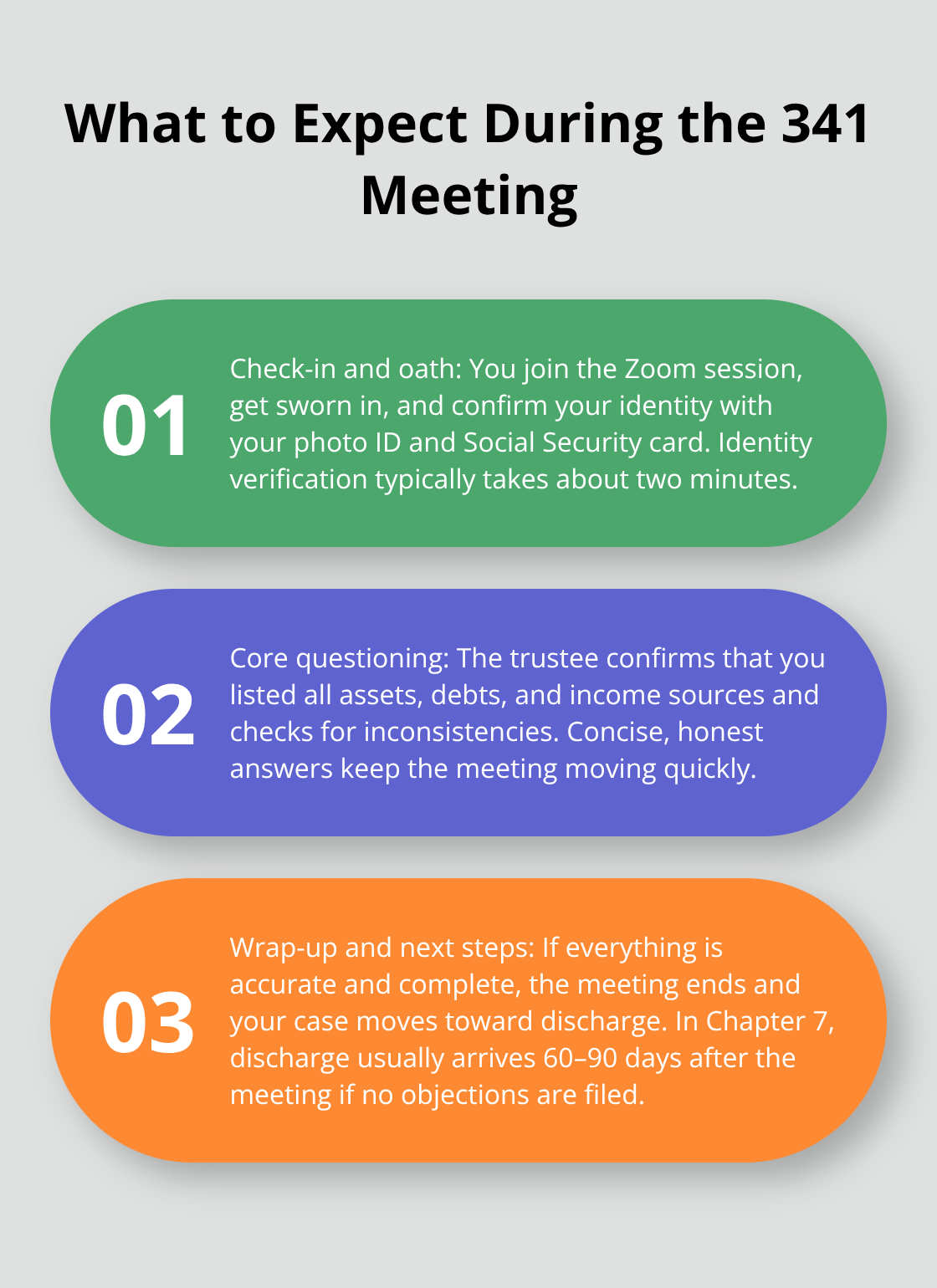
You log into Zoom at the time specified in your notice, and you may see other debtors scheduled before or after you in the same virtual session. The trustee swears you in, confirms your identity by asking you to state your name and address, and verifies that you have your government-issued photo ID and Social Security card available. This identity verification takes about two minutes. The U.S. Trustee Program reports that most meetings conclude in 10 to 15 minutes total, though some finish in five minutes or less if you prepare thoroughly.
The Trustee’s Core Questions
The trustee moves through questions drawn directly from your schedules, asking you to confirm that you listed all assets, all debts, and all income sources. If you answer with a simple yes and the trustee sees no red flags in your documents, the questioning moves quickly. The trustee’s job is to administer your bankruptcy estate and verify accuracy, not to argue with you or challenge your filing unless something appears inconsistent or incomplete.
Topics the Trustee Will Cover
The trustee asks whether you made any transfers of money or property to family members or friends within the past four years, particularly any gifts or sales over one thousand dollars. You answer questions about real estate ownership, including any property outside Florida or overseas, and what happened to the proceeds if you sold property recently. If you paid down a mortgage or made significant contributions to retirement accounts like a 401(k) or IRA in the past twelve months, the trustee asks about those transactions. If you own a business or have claims against others (such as a personal injury case), you disclose those now. The trustee confirms your current address and whether you moved since filing.
If Creditors Attend
Creditors rarely attend 341 meetings, but if one appears, the trustee controls the questioning and prevents creditors from harassing you. Creditors typically ask about nonexempt assets or recent transfers, but their questions follow the same format as the trustee’s.
What Happens After Your Meeting Concludes
Once the trustee confirms that all information is accurate and complete, the meeting ends. You receive written confirmation that you completed your 341 meeting, and your case moves toward discharge. For Chapter 7 in Florida, discharge typically arrives within 60 to 90 days after your meeting, assuming the trustee filed no objections and you complied with all requirements.
Final Thoughts
Your 341 meeting Chapter 7 becomes straightforward when you prepare properly. The trustee verifies that your petition and schedules are accurate and complete, not to challenge your right to file or argue your case. Most debtors who prepare thoroughly finish in five to ten minutes with no complications.
After your meeting concludes, your case moves toward discharge. For Chapter 7 bankruptcy in Florida, you typically receive your discharge order within 60 to 90 days, assuming the trustee filed no objections and you met all requirements. Once discharge arrives, qualifying debts disappear, and you gain the fresh financial start you filed for.
We at Harnage Law, PLLC guide clients through every phase of Chapter 7 bankruptcy in Florida, from initial consultation through discharge and beyond. Our team helps you gather required documents, prepare for your 341 meeting, and handle any trustee requests that arise. Contact Harnage Law, PLLC to discuss your situation with someone who understands Florida bankruptcy law and your specific circumstances.