Credit counseling sounds helpful, but it rarely stops creditors from calling or suing you. It also locks you into repayment plans that drag on for five to seven years.
Chapter 7 bankruptcy works differently. It stops collection activity immediately and wipes out qualifying debts within months. We at Harnage Law, PLLC help Florida residents understand how the right file strategy can protect your home, eliminate medical debt, and give you a genuine fresh start.
Why Credit Counseling Rarely Stops the Calls
Credit counseling agencies operate within strict limits that most people don’t realize until they’re already enrolled. A debt management plan consolidates your debts into one monthly payment and may lower your interest rates, but it does nothing to stop creditors from calling, suing, or garnishing your wages. The counselor negotiates with creditors, but participation is entirely voluntary on the creditor’s side. According to the Consumer Financial Protection Bureau, not all creditors participate in these plans, which means some of your high-interest debt stays outside the agreement and creditors continue pursuing collection. If you miss even one payment on the plan, the concessions vanish and your credit report gets updated with that default.
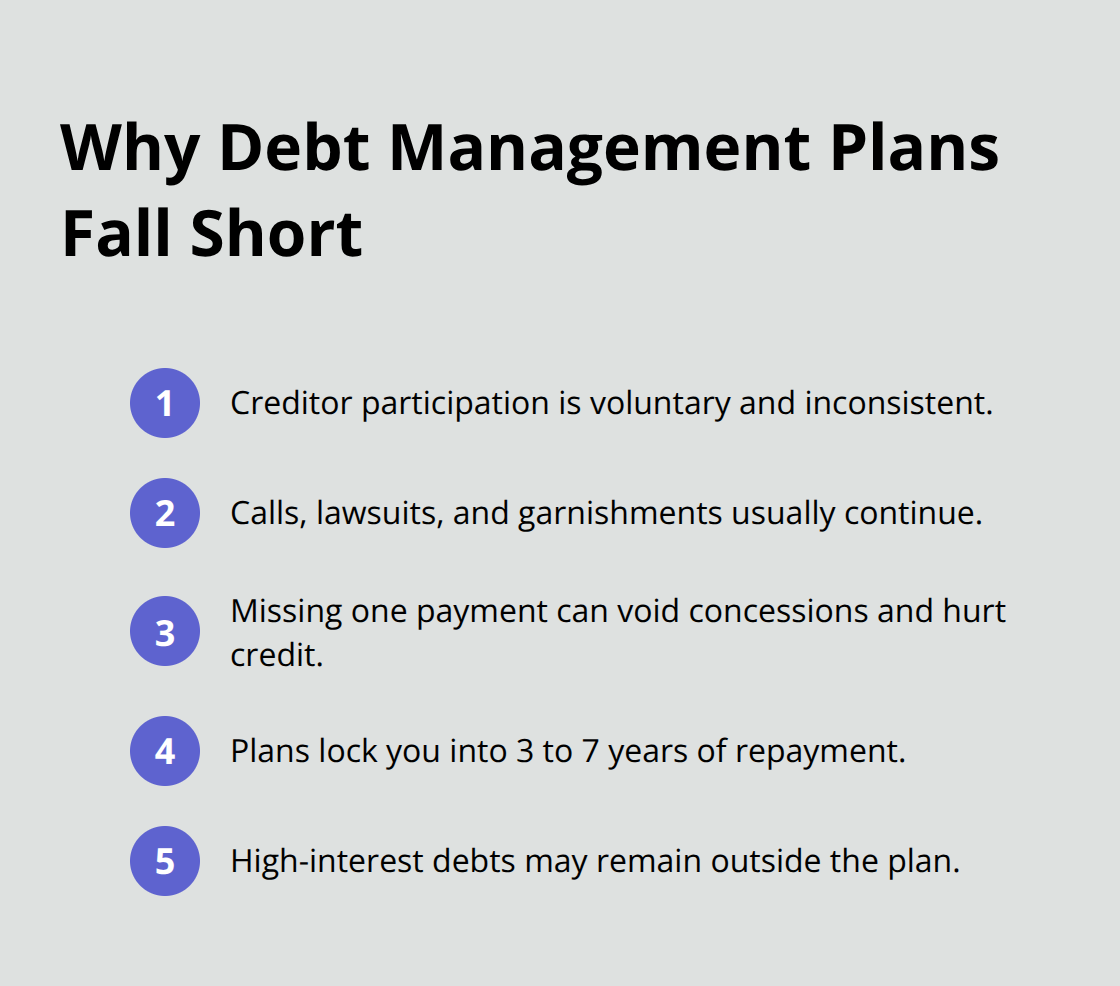
You remain locked into repayment for three to seven years, watching your money go toward interest while creditors maintain their legal right to take action against you.
Wage Garnishment Continues Under Counseling
Wage garnishment does not stop under credit counseling. Creditors can still obtain court orders to seize a portion of your paycheck every week, and counseling offers no legal shield. You would need to file documents separately with the county court to lift a garnishment, notify the garnishment attorney, and inform your payroll department, but this only addresses one creditor at a time. Chapter 7 bankruptcy stops wage garnishment immediately after the petition is filed, protecting your entire paycheck from that moment forward. The automatic stay, triggered by filing, halts all collection activity including lawsuits and garnishments across all creditors simultaneously. Credit counseling leaves you vulnerable to multiple simultaneous garnishments, court judgments, and ongoing harassment because no legal mechanism prevents creditors from acting.
The Years-Long Repayment Trap
Counseling stretches your debt repayment across years while creditors continue harassing you and damaging your credit. Research from OSU economist Stephanie Moulton indicates that credit scores improve about 2.5 years after starting a debt management plan, meaning you endure years of negative credit impact before seeing improvement. Chapter 7 bankruptcy discharges qualifying debts completely within months, and many people qualify for credit-building opportunities within two to three years after discharge. The difference matters in real terms: under counseling, you pay creditors while they call your employer, threaten your home, and deteriorate your financial standing. Under bankruptcy, those qualifying debts vanish, the calls stop immediately, and you begin rebuilding from a cleaner position far sooner.
What Bankruptcy Accomplishes That Counseling Cannot
The automatic stay provides immediate legal protection that counseling cannot match. Once you file Chapter 7, creditors must stop collection efforts, cease phone calls, and halt lawsuits-all at once. Counseling negotiates on your behalf, but creditors retain the right to ignore those negotiations and pursue collection anyway. Bankruptcy eliminates this uncertainty through federal law, not through voluntary cooperation. Your qualifying debts (credit cards, medical bills, personal loans) get discharged completely, whereas counseling only restructures what you owe. This fundamental difference explains why Florida residents facing serious financial pressure often find that bankruptcy offers solutions counseling simply cannot provide.
Chapter 7 Bankruptcy Triggers Immediate Legal Protection
The Automatic Stay Stops All Collection Activity
Filing Chapter 7 bankruptcy activates the automatic stay-a federal protection that credit counseling cannot replicate. The moment your petition reaches the court, creditors must stop collection efforts immediately. Collection calls cease, lawsuits halt, wage garnishments freeze, and creditors lose the right to contact you directly. The automatic stay applies to all your creditors at once, not sequentially. A single creditor cannot ignore this order or negotiate around it because federal law compels compliance. Within days of filing, your paycheck protection takes effect, your employer receives notice to stop any garnishment, and the constant barrage of legal threats ends. Credit counseling offers no equivalent protection because it relies on voluntary creditor cooperation, which many creditors refuse to provide.
Qualifying Debts Vanish Completely
The debts that qualify for discharge under Chapter 7 disappear entirely, not get restructured over years. Credit card balances, medical debt, personal loans, and most unsecured obligations vanish after your case concludes, typically within four to six months from filing to discharge. You do not repay these debts; the court legally eliminates them. This differs fundamentally from credit counseling, which consolidates what you owe and stretches repayment across three to seven years while creditors maintain their claims against you.
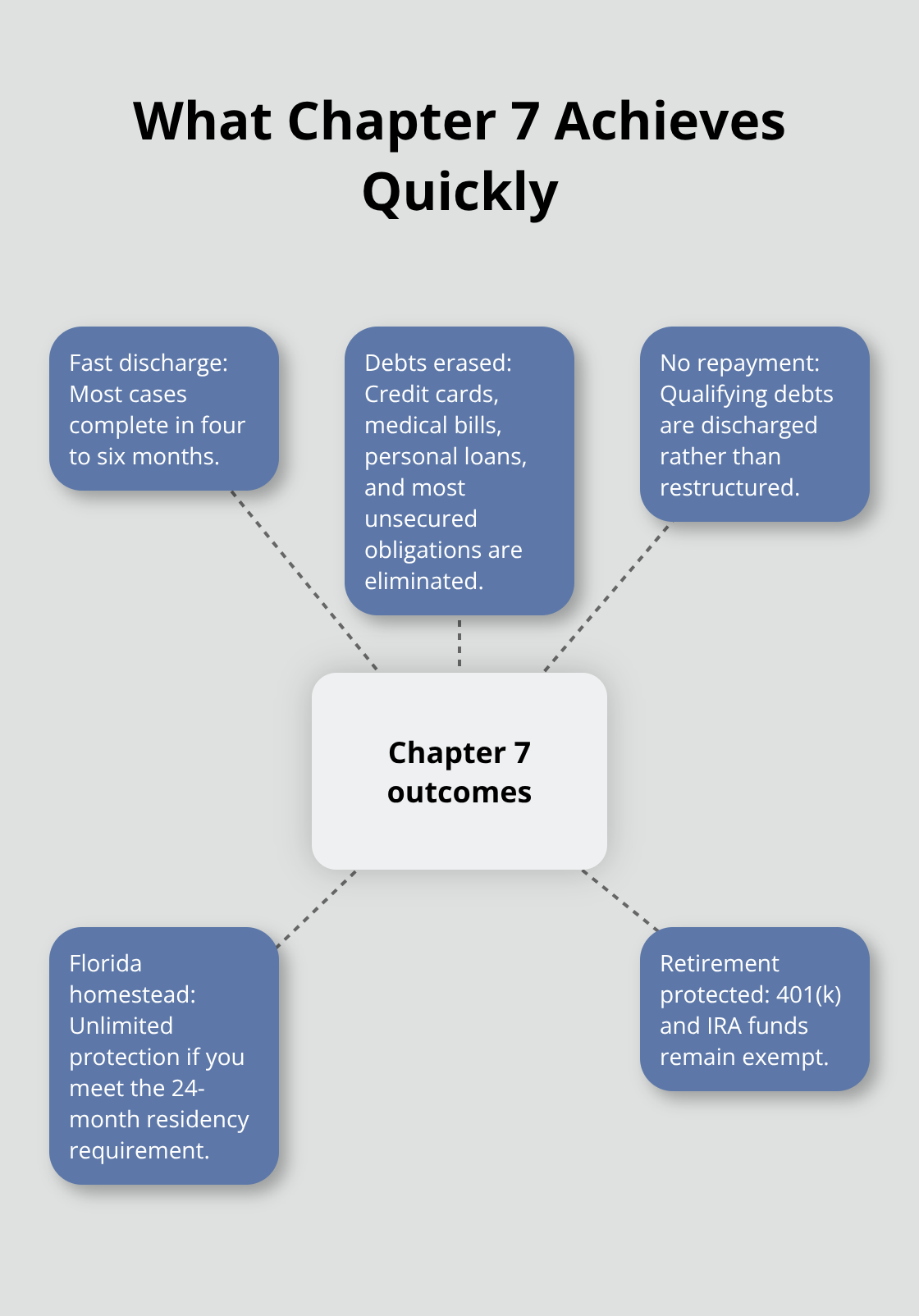
Florida residents filing Chapter 7 benefit from state exemptions that protect significant assets during this process, including your home under the homestead exemption (if you meet the 24-month residency requirement) and your retirement accounts like 401(k) and IRA funds.
Credit Recovery Accelerates After Discharge
The fresh financial start arrives quickly after your Chapter 7 discharge concludes. Many people rebuild credit scores and qualify for new credit within two to three years after discharge, compared to the 2.5 years of negative impact that OSU research found for those stuck in debt management plans. Your credit report reflects the bankruptcy for up to ten years, but the damage from active collection activity, wage garnishments, and lawsuits stops immediately upon filing. This rapid transition from crisis to recovery distinguishes bankruptcy from the prolonged financial strain that credit counseling imposes. As your case moves forward, understanding what happens during the trustee review process becomes essential to protecting your remaining assets.
Why Florida Residents Pick Bankruptcy Over Counseling
Florida’s Homestead Exemption Protects Your Home
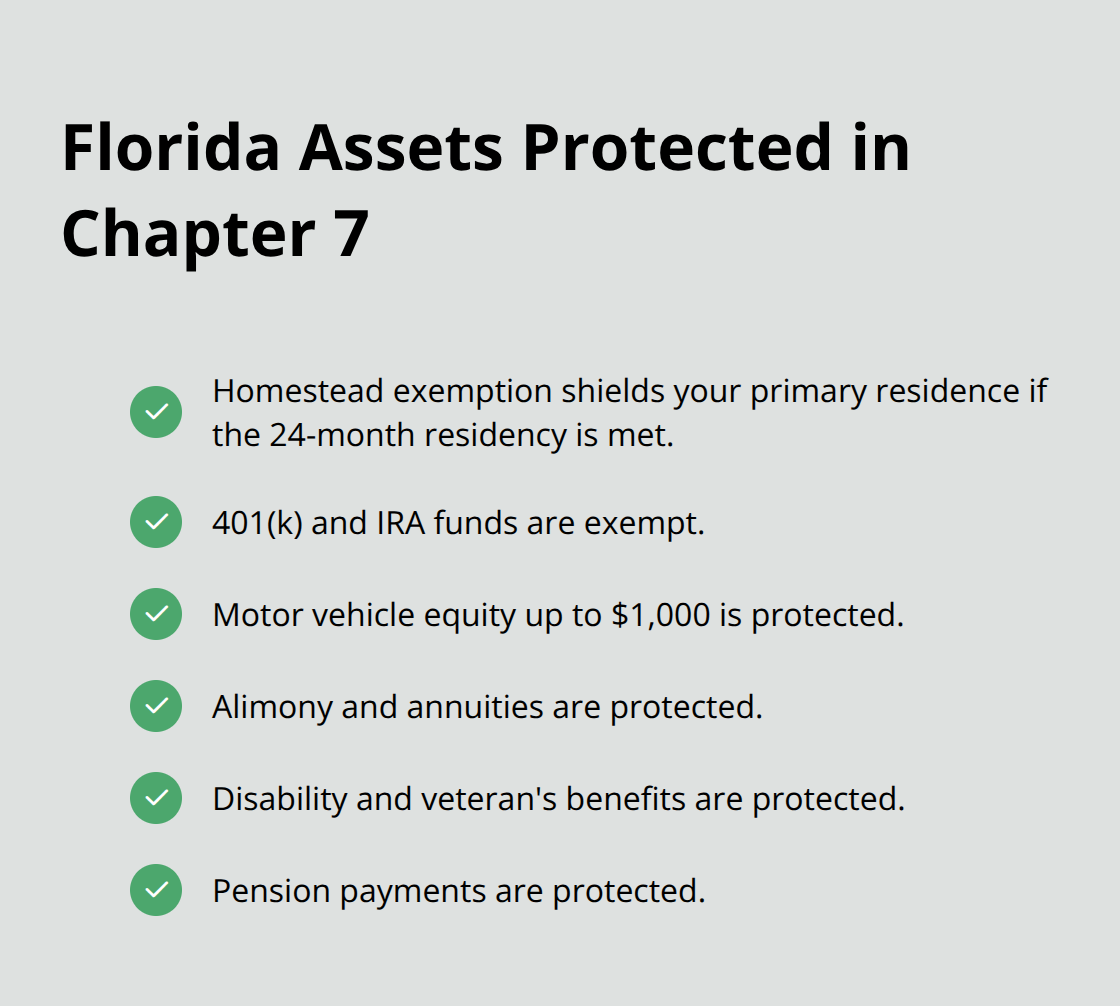
Florida’s bankruptcy laws offer protections that credit counseling cannot match. The state homestead exemption stands as the most powerful protection available to Florida filers. If you have lived in Florida continuously for at least 24 months before filing, your primary residence receives unlimited protection, meaning creditors cannot force a sale of your home to satisfy debts. This differs dramatically from credit counseling, which offers zero asset protection while you spend years repaying debts that could have been discharged. Your home stays yours under Chapter 7, regardless of how much debt you carry.
Additional Florida Exemptions Safeguard Your Assets
Beyond your home, Florida exemptions protect retirement accounts including 401(k) and IRA funds, your motor vehicle up to $1,000, alimony and annuities, disability benefits, veteran’s benefits, and pension payments. These protections apply automatically when you file Chapter 7 in Florida. Credit counseling provides no equivalent asset shield while you negotiate repayment with creditors who may refuse to participate anyway.
The Consumer Financial Protection Bureau confirms that not all creditors engage with debt management plans, leaving portions of your debt outside any agreement and creditors free to pursue collection.
Medical Debt and Credit Card Balances Vanish
Medical debt and credit card balances that plague Florida households simply disappear under Chapter 7. These qualifying debts receive complete discharge rather than restructuring across years of repayment. Credit counseling forces you to negotiate with creditors who retain the right to ignore those negotiations and continue collection efforts. The difference in outcome proves substantial: under bankruptcy, your debts vanish; under counseling, you remain liable for years.
Credit Recovery Happens Faster After Discharge
Credit recovery after Chapter 7 discharge accelerates compared to the extended timeline that credit counseling imposes. Research from OSU economist Stephanie Moulton found that credit scores improve approximately 2.5 years after starting a debt management plan. Many Florida residents qualify for credit-building opportunities and new credit within two to three years after discharge. Your credit report reflects the bankruptcy filing for up to ten years, yet the active damage from collection calls, lawsuits, and wage garnishments stops immediately upon filing. This means your financial situation stabilizes and begins improving far sooner than it would under counseling, where creditors maintain active collection efforts for years.
Speed and Legal Protection Matter Most
The timeline difference between bankruptcy and counseling proves decisive for Florida residents facing serious financial pressure. Chapter 7 stops collection activity within days of filing and discharges qualifying debts within months. Counseling stretches repayment across three to seven years while creditors maintain their legal right to pursue collection. When medical debt, credit card balances, and asset protection concerns dominate your financial picture, the speed and legal certainty of Chapter 7 offer solutions that counseling simply cannot provide.
Final Thoughts
Credit counseling traps you in years of repayment while creditors maintain their legal right to call, sue, and garnish your wages. Chapter 7 bankruptcy delivers what counseling cannot: immediate legal protection, complete debt discharge, and a genuine fresh start. The automatic stay stops collection activity the moment you file, wage garnishments freeze, and qualifying debts vanish within months rather than stretching across years.
For Florida residents, state exemptions protect your home under the homestead exemption, your retirement accounts, and your motor vehicle while you rebuild financially. A proper file strategy protects your assets while eliminating debts that counseling would force you to repay for years. Your credit recovery accelerates after discharge, with many people qualifying for new credit within two to three years compared to the extended damage that credit counseling imposes.
If you face serious financial pressure and want to understand whether Chapter 7 offers solutions for your situation, contact Harnage Law, PLLC for a consultation to learn how we can help you move forward.