Ignoring debt collectors in Florida doesn’t make your debts disappear-it makes them worse. Wage garnishment, bank levies, and lawsuits become real threats when you avoid contact.
We at Harnage Law, PLLC know that many people don’t realize a bankruptcy filing can stop these actions immediately. Chapter 7 bankruptcy offers an automatic stay that halts all collection activities and gives you a genuine path forward.
What Happens When You Ignore Debt Collectors in Florida
Lawsuits and Default Judgments
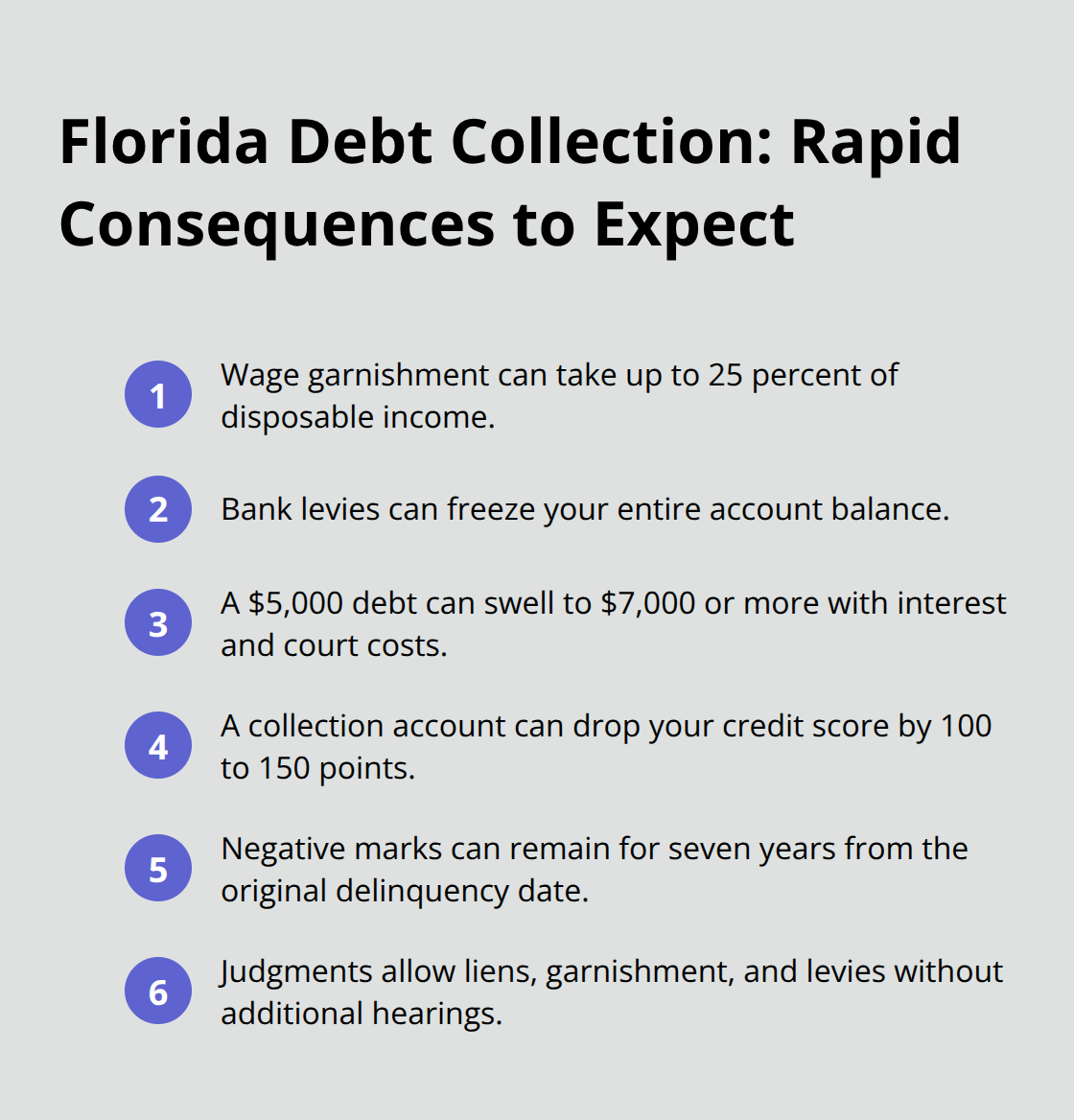
Debt collectors in Florida operate under clear legal authority. Under Florida Statutes Chapter 559, they can file lawsuits against you, and if you fail to respond to a properly served lawsuit, a judge will enter a default judgment without hearing your side. This judgment transforms the collector from a creditor into a legal authority with enforcement power. Once the judgment exists, the collector can pursue wage garnishment, bank levies, and property liens-all without additional court hearings.
Wage Garnishment and Bank Levies
Wage garnishment in Florida allows creditors to take up to 25 percent of your disposable income before taxes, reducing your paycheck every week. Bank levies work differently but with equal impact: a collector can freeze your entire account balance and seize funds to satisfy the judgment. These actions happen automatically once the judgment exists. Interest and court costs continue mounting on your original debt, so a $5,000 debt can balloon to $7,000 or more by the time collection efforts begin.
Credit Score Collapse and Long-Term Damage
Your credit score drops 100 to 150 points the moment a collection account appears on your reports. This damage persists for seven years from the original delinquency date, affecting your ability to obtain credit cards, auto loans, mortgages, and rental housing. Many landlords and employers in Florida check credit reports during screening, so a judgment and collection account can cost you housing and employment opportunities.
Why Negotiation Becomes Impossible
The real trap emerges once a lawsuit reaches judgment. Collectors have already won in court and have no incentive to settle. Negotiation becomes nearly impossible because your options narrow dramatically-you can either pay the full judgment amount or watch garnishment and levies drain your finances indefinitely. This is why understanding what happens before judgment matters, and why Chapter 7 bankruptcy functions as a defensive tool that stops these actions before they destroy your financial life.
What Debt Avoidance Really Costs You
The Debt Grows Faster Than You Think
Ignoring a debt collector’s first contact sets off a financial cascade that accelerates faster than most people realize. The original debt amount becomes almost irrelevant within months. A $3,000 credit card charge-off grows to $4,500 or more once collection agencies add interest, late fees, court costs, and attorney fees under Florida law. Florida Statutes Chapter 559 permits collectors to add these expenses to your balance, meaning every month you avoid contact, the debt grows larger and becomes harder to negotiate. The math works against you immediately: if a collector purchased your $3,000 debt for $300, they can afford to settle for far less than the original amount, but only if you negotiate early.
Settlement Disappears After Judgment
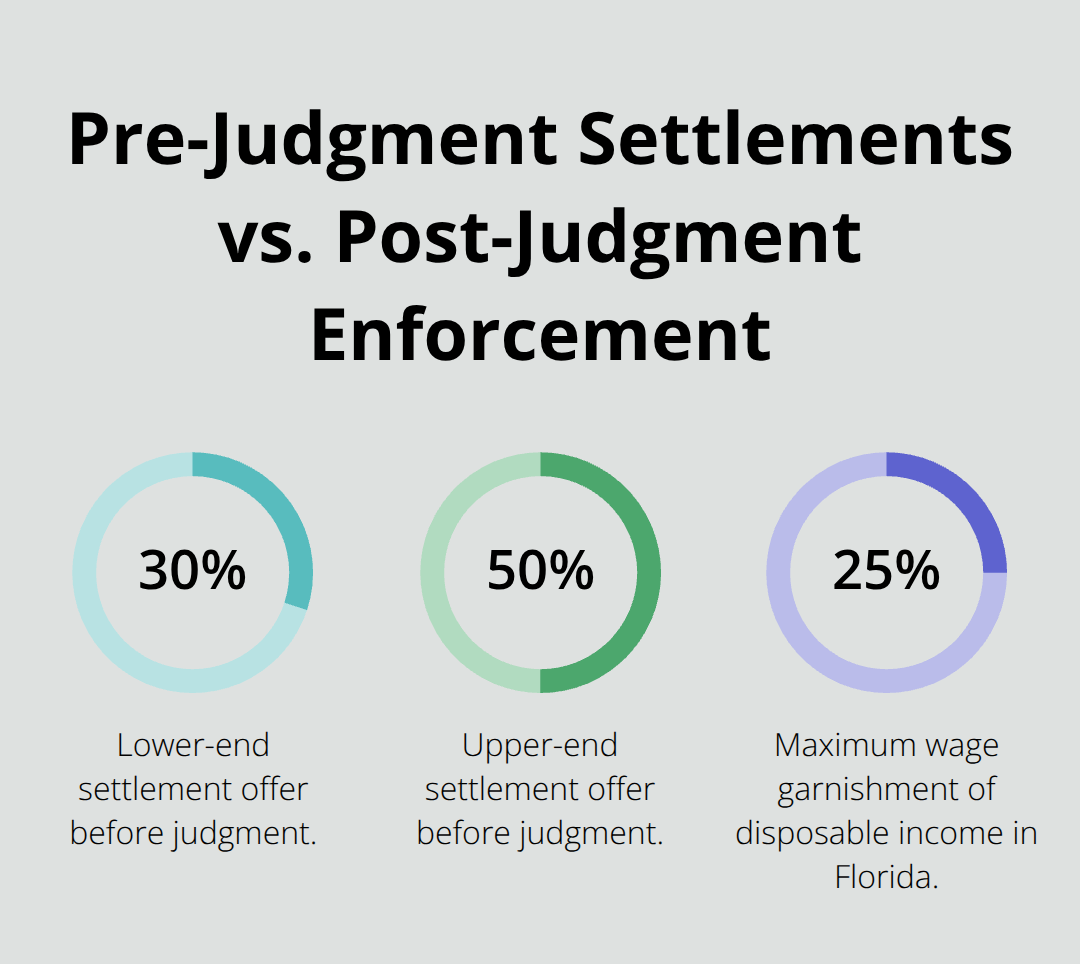
Once collectors file suit and obtain judgment, their leverage shifts completely. They no longer need your cooperation because the court has already sided with them. At this point, settlement discussions end because they hold all the cards. Before judgment, collectors understand that many debts never fully recover, so they pursue settlements at 30 to 50 percent of the balance. After judgment, that incentive vanishes entirely.
Wage Garnishment and Growing Debt
Your silence transforms debt collection from a negotiable problem into a legal enforcement action. Florida allows wage garnishment up to 25 percent of your disposable income, and bank levies can freeze your entire account with no warning. Court costs, which can reach $500 to $1,000, get added to your debt. Each month of avoidance also means additional interest accrual on the judgment itself, creating a debt that grows while you work (and while you sleep).
The Window for Action Closes Permanently
The real damage surfaces when you finally decide to act: the only leverage you ever possessed was the collector’s uncertainty about recovery. Once a lawsuit reaches the judgment stage, that leverage vanishes. A debt that seemed manageable at $3,000 transforms into an unmanageable $7,000 or more through accumulated fees, interest, and court costs. The collector no longer needs to negotiate because Florida law grants them direct access to your paycheck and bank accounts. This progression from avoidance to enforcement happens quickly, and the consequences compound with each passing month. Understanding what happens during this window matters because it determines whether you retain any control over your financial situation or lose it entirely to the court system.
How Chapter 7 Bankruptcy Stops Debt Collector Actions
The Automatic Stay Takes Effect Immediately
Filing Chapter 7 bankruptcy in Florida triggers an automatic stay under 11 U.S.C. § 362 the moment your petition reaches the court. This stay stops wage garnishment, bank levies, lawsuits, collection calls, and every other collection tactic instantly. Unlike negotiation or settlement offers that take weeks to arrange, the automatic stay works right away. The collector cannot contact you, cannot garnish your wages, cannot freeze your accounts. If a collector violates the stay, you can sue them for actual damages plus statutory damages of $1,000 per violation under bankruptcy law.
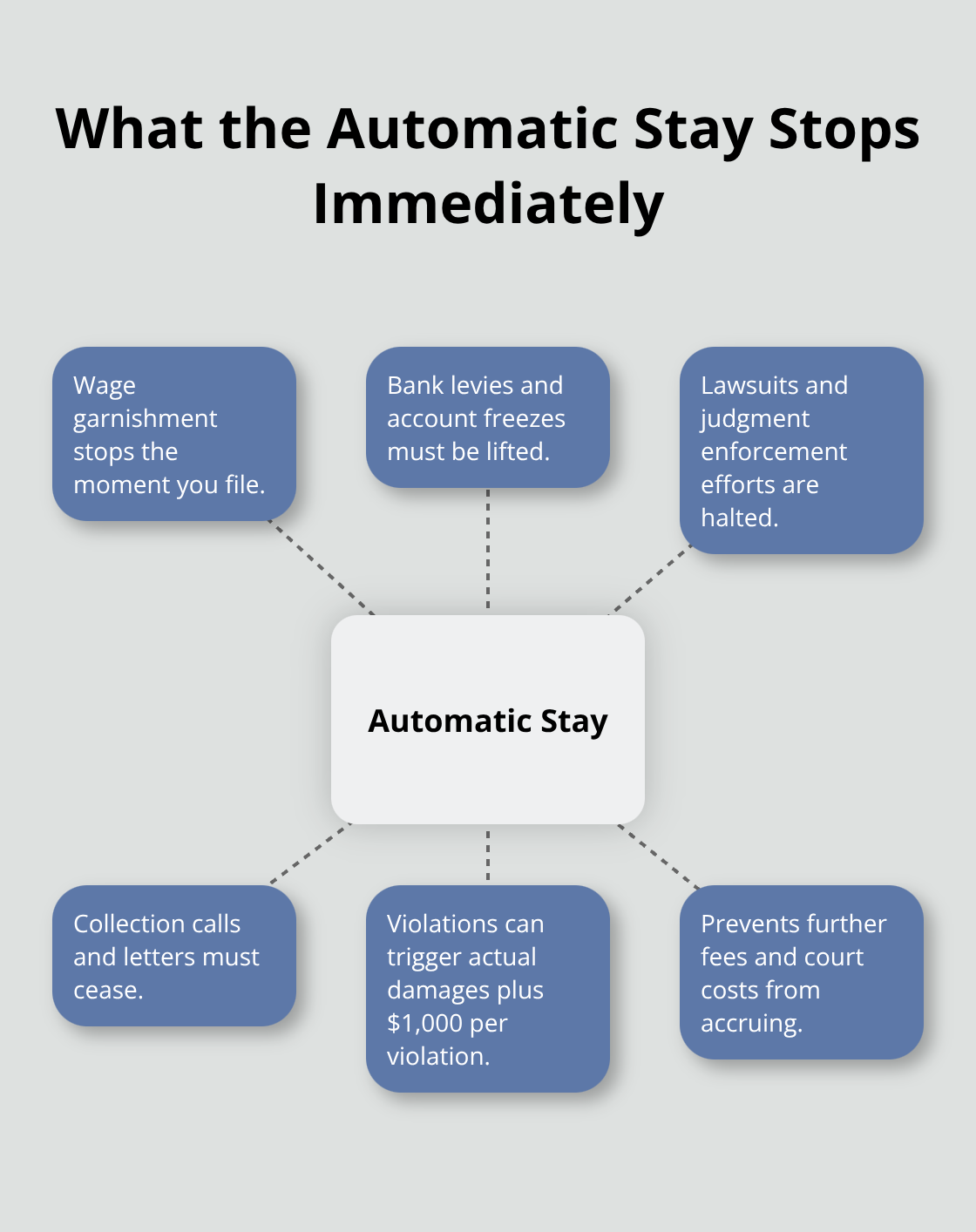
This immediate halt prevents the debt from growing further through accumulated fees and court costs.
The Creditors’ Meeting and Discharge Timeline
Within 21 to 40 days after filing, you attend the creditors’ meeting where you testify under oath. Collectors rarely appear because the stay already protects you. The trustee files a report with the court within about 10 days, and if your case qualifies, you receive a discharge roughly 60 to 90 days after the meeting. This discharge releases you from most debts, meaning the collector has no legal claim against you anymore. Debts that qualify for discharge include credit card balances, medical bills, personal loans, and most unsecured debts that plague Florida residents.
What Debts Survive Discharge
Certain debts remain non-dischargeable under 11 U.S.C. § 523(a), including alimony, child support, recent taxes, and government-backed student loans in most cases. These represent a small portion of what most people owe. The filing fee totals $395, which you can pay in installments if you cannot afford the full amount upfront. Very low-income filers can request a waiver using Official Bankruptcy Form 103B. Pre-filing credit counseling from an approved agency is mandatory, and you must file a personal financial management course certificate within 60 days after the creditors’ meeting to finalize your discharge.
Asset Protection Through Exemptions
Chapter 7 protects your assets through exemptions. Federal or state exemptions under 11 U.S.C. § 522(b) allow you to keep essential property like your home equity up to certain limits, your car, retirement accounts, and personal belongings. Many Chapter 7 cases are no-asset cases, meaning the trustee finds no nonexempt property to liquidate, so you keep everything while still receiving a discharge. This outcome occurs in thousands of Florida cases annually because most people lack significant nonexempt assets after exemptions apply.
Filing Requirements and Joint Petitions
The process requires you to file detailed schedules including assets, liabilities, income, expenses, and financial affairs. These forms guide you through the disclosure process step by step. If you file jointly with a spouse, both petitioners sign and both receive protection from the automatic stay, though only one spouse can file if the other has insufficient income or separate debts. The practical result is straightforward: collectors lose their legal tools, your debts disappear through discharge, and you retain protected assets while starting fresh.
Final Thoughts
Ignoring debt collectors in Florida creates a cascade of consequences that destroys your financial stability. Wage garnishment takes 25 percent of your paycheck, bank levies freeze your accounts without warning, and default judgments give collectors permanent legal authority over your finances. Your credit score collapses by 100 to 150 points, affecting housing and employment opportunities for seven years, while the debt itself balloons through accumulated interest, late fees, and court costs.
Chapter 7 bankruptcy stops this destruction immediately when you file. The automatic stay halts wage garnishment, bank levies, lawsuits, and collection calls the moment your petition reaches the court, and within 60 to 90 days you receive a discharge that eliminates most unsecured debts like credit cards, medical bills, and personal loans. Federal and state exemptions protect your essential assets, including home equity, your vehicle, and retirement accounts, with many cases resulting in no-asset situations where you keep everything while still receiving a complete discharge.
The window for action closes quickly once collectors file suit, as every month you delay costs you thousands in accumulated fees and lost negotiation opportunities. We at Harnage Law, PLLC help individuals and families overcome financial challenges through Chapter 7 bankruptcy, assisting you in discharging qualifying debts, stopping creditor harassment, and protecting your assets. Contact us today to discuss your situation and take control of your financial future before the consequences become irreversible.