
Waiting to file Chapter 7 bankruptcy in Florida costs you money every single day. Court fees rise annually, creditors intensify collection efforts, and wage garnishments drain your paycheck while you hesitate.
At Harnage Law, PLLC, we’ve seen countless clients regret postponing their bankruptcy strategy. Filing now stops creditor harassment immediately and puts you on the path to rebuilding your credit faster than waiting ever will.
What Delay Costs You Right Now
Court Fees and Creditor Collection Escalation
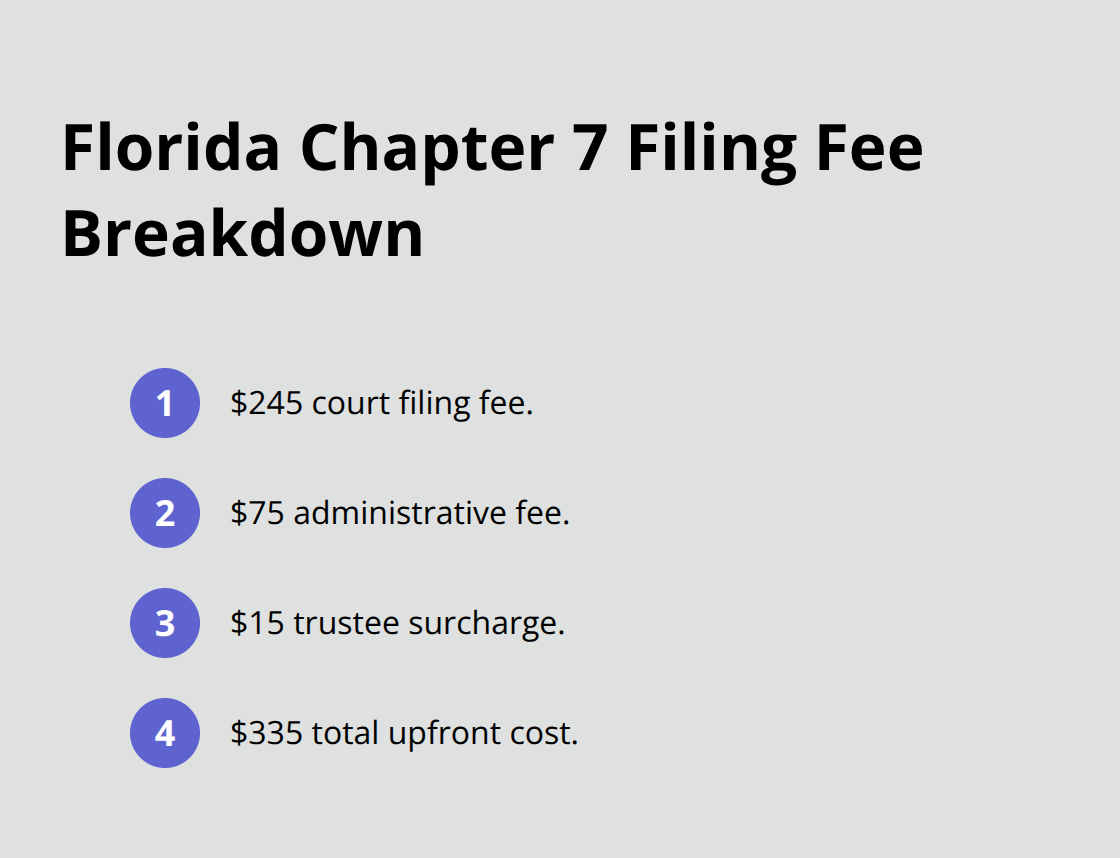
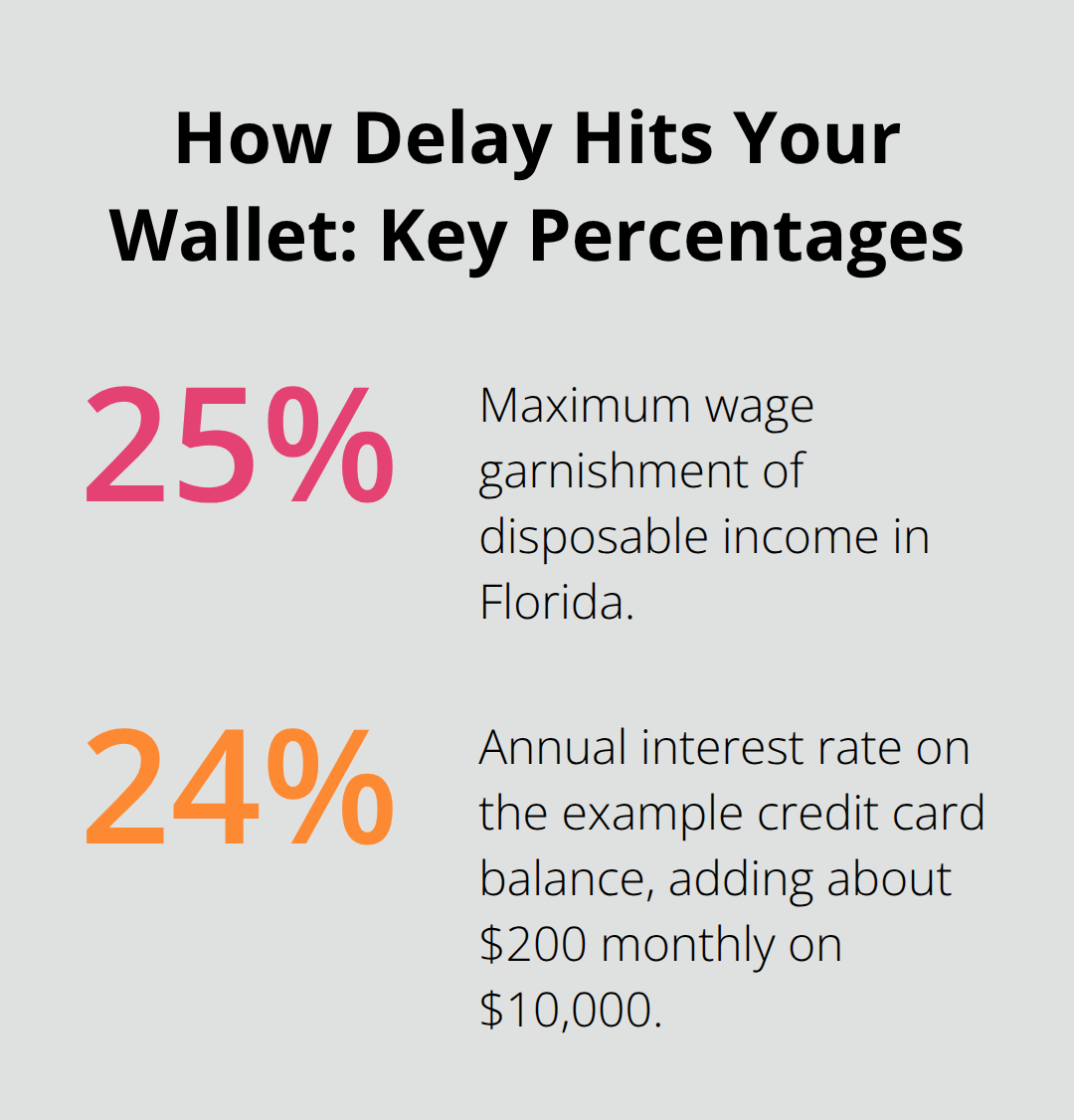
Every month you postpone filing Chapter 7 in Florida, creditors escalate their collection tactics while your financial situation deteriorates. Court filing fees total $245 plus a $75 administrative fee and $15 trustee surcharge, adding up to $335 total. These fees remain stable year to year under federal statute, but the real cost of delay lies in what creditors do while you hesitate. Wage garnishments in Florida can reach up to 25% of your disposable income after taxes and mandatory deductions, meaning a $2,000 monthly paycheck loses $400 or more to creditors every pay period.
A single creditor judgment allows them to garnish your wages indefinitely until the debt is paid, and multiple judgments stack on top of each other.
The Price of Waiting on Your Paycheck
Six more months of delay costs you approximately $2,400 in garnishments alone. Bank levies work similarly-creditors freeze your account and take funds directly, leaving you unable to pay rent or utilities. The automatic stay that triggers immediately upon filing stops all these collection actions, but only if you file now. Delaying means creditors continue harassing you with calls and letters, which research shows increases stress-related health problems and damages your ability to focus at work. The longer you wait, the more creditor judgments accumulate against you, creating a compounding debt problem that becomes harder to manage financially and emotionally.
How Waiting Weakens Your Exemptions
Florida’s homestead exemption provides unlimited equity protection in your primary residence, but only if you meet strict residency and ownership requirements. You must have lived in Florida at least 730 days before filing and owned the property at least 1,215 days prior to filing to claim the full exemption. If you’re approaching these thresholds, waiting costs you the full protection-falling short means a federal cap of around $214,000 applies instead, potentially exposing significant home equity to the trustee. Vehicle exemptions in Florida allow you to protect $5,000 of equity per debtor, or $10,000 for joint filers. If your car’s value drops while you delay, you lose the benefit of today’s exemption calculation.
Retirement Protection and Income Thresholds
Retirement account protections through IRAs and Roth IRAs reach over $1.7 million per person through 2028 under current inflation adjustments, and these protections apply based on your filing date. Filing now locks in your current asset values and exemption levels, whereas waiting allows creditors to claim portions of assets that could otherwise be shielded. Your income situation may also change-a promotion or new job could push you above Florida’s median income threshold and force you into Chapter 13 instead of Chapter 7, requiring a three to five year repayment plan rather than a faster discharge. The longer you wait, the more of your income gets consumed by creditors, leaving less available to protect through exemptions. Understanding how timing affects your specific situation matters significantly, which is why the next section covers the immediate benefits that filing today provides.
Immediate Benefits of Filing Chapter 7 Bankruptcy Today
The Automatic Stay Stops Collection Actions Instantly
Filing Chapter 7 bankruptcy in Florida triggers the automatic stay under 11 U.S.C. § 362, and this protection activates the moment your petition reaches the court. Creditors must stop all collection actions immediately-wage garnishments halt, bank levies freeze, and collection lawsuits pause. If a creditor violates the automatic stay after you file, you can pursue damages against them for the violation. The practical effect is stark: a paycheck that was losing $400 monthly to garnishments stays intact starting day one.
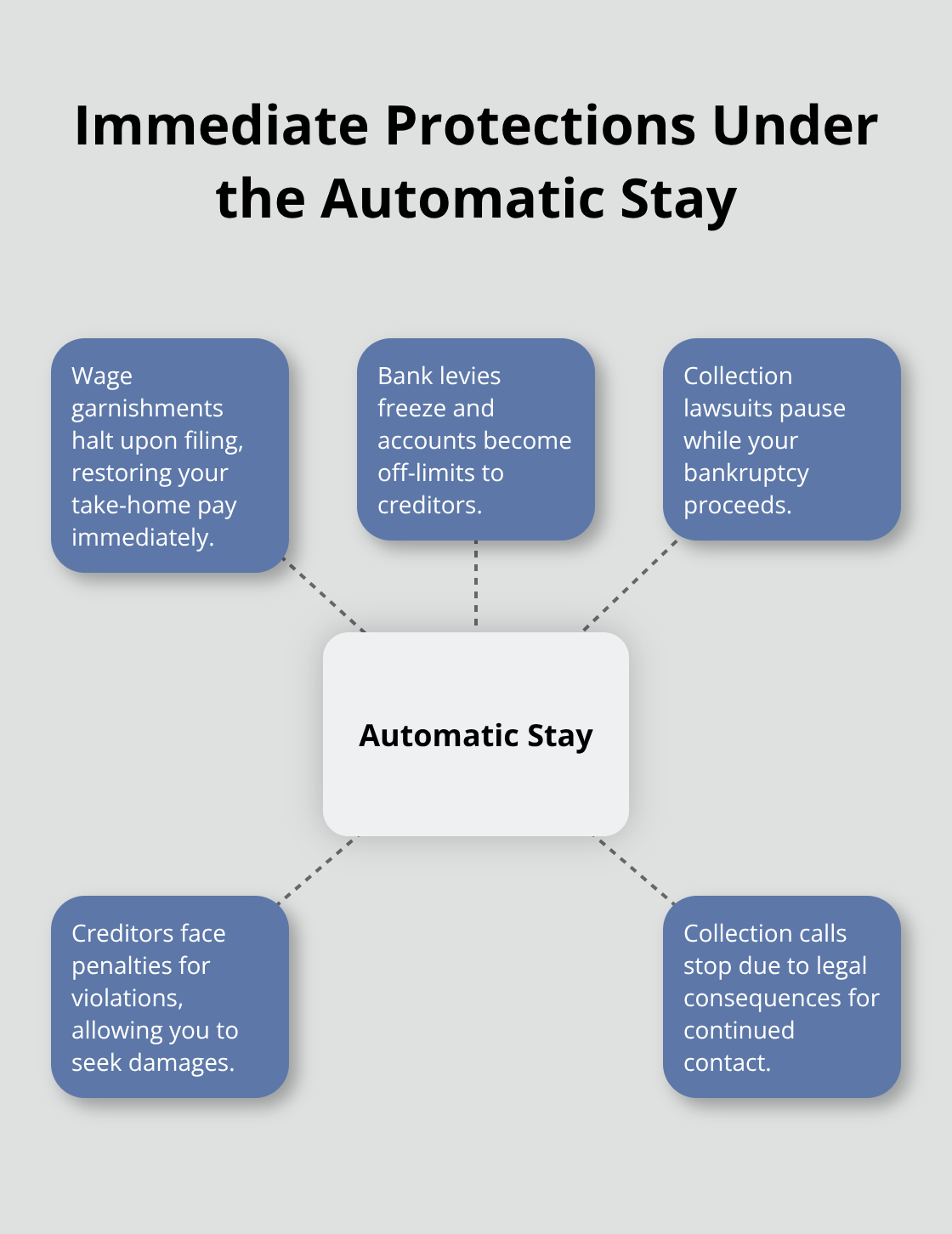
Your bank account, which creditors were preparing to levy, becomes off-limits. Collection calls stop because creditors face legal consequences for continuing contact.
Your Cash Flow Changes Within Days
This immediate relief transforms your budget dramatically. If you were losing 25% of your disposable income to wage garnishment, that money returns to your budget within days of filing. For someone earning $2,000 monthly, that means an extra $400 available for rent, food, or utilities immediately. The automatic stay also protects your home from foreclosure proceedings and can pause eviction actions in certain situations, giving you breathing room to stabilize your housing while the bankruptcy process unfolds.
Filing Now Locks In Your Eligibility and Exemptions
Your income for means testing purposes is calculated as the six-month average before filing, according to the bankruptcy code. If you’re currently below Florida’s median income threshold for your household size or if your disposable income falls below $9,075 over five years, filing now preserves your Chapter 7 eligibility at these favorable levels. Waiting even six months could mean a job promotion, inheritance, or other income increase that disqualifies you from Chapter 7 entirely, forcing you into a Chapter 13 repayment plan instead.
Your asset exemptions are determined by your property values and filing date. Vehicle equity of $5,000 per debtor in Florida is fully protected in Chapter 7 if you file before your car appreciates further. Your home equity calculations for exemption purposes are locked in at filing, meaning waiting allows creditors additional time to pursue judgments against assets you could otherwise shield. Retirement account protections through IRAs and Roth IRAs reach over $1.7 million per person through 2028 under current inflation adjustments, and these protections apply based on your filing date.
Your Discharge Arrives in Months, Not Years
The discharge itself typically arrives within 60 to 90 days after your creditors’ meeting, according to U.S. Courts data, while the overall process concludes in roughly three to four months. Filing now means your fresh start arrives sooner, allowing you to begin rebuilding your credit score during months when you could be earning income without creditor interference. The next section covers how this faster timeline translates into measurable financial and personal advantages that extend far beyond the initial filing.
Why Your Credit Recovers Faster After Filing
Credit Score Improvement Starts Immediately After Discharge
Filing Chapter 7 bankruptcy today sets your credit recovery in motion immediately, whereas waiting extends the timeline for rebuilding. Your credit report will carry the bankruptcy entry for up to 10 years under the Fair Credit Reporting Act, but this does not mean your score remains damaged for a decade. The reality is far more favorable: most filers see measurable credit score improvement within 12 to 18 months after discharge, according to credit reporting data. This happens because bankruptcy removes the collection accounts, charge-offs, and ongoing delinquencies that actively damage your score month after month.
Once those accounts are discharged, they stop reporting negative activity, and your score begins climbing immediately. Someone filing Chapter 7 today reaches a score of 650 or higher within two years in many cases, which qualifies for conventional mortgages and auto loans at reasonable rates. Waiting another year means that year of additional collection accounts, wage garnishments, and creditor judgments stays on your report, pushing your recovery timeline back by 12 months.
Interest Charges Stop Accumulating the Day You File
Each month you postpone costs you compound interest on your debts, which means higher total payments if you eventually pursue settlement or repayment instead of bankruptcy. A credit card balance of $10,000 at 24% annual interest grows by approximately $200 monthly in interest alone, meaning six months of delay adds $1,200 to the total you owe. Bankruptcy stops this interest accumulation entirely through discharge, but only if you file before more interest accrues.
The math is straightforward: file now and eliminate interest charges starting today, or delay and watch your total debt grow while creditors continue reporting negative information. Your paycheck stays intact, your bank account remains accessible, and your debt stops expanding the moment the automatic stay activates.
Stress Relief Arrives Within Days of Filing
Your peace of mind begins the moment the automatic stay activates, not months or years into a repayment plan. The stress of creditor calls, wage garnishments, and collection lawsuits disappears within days of filing, according to research on financial stress outcomes. This immediate relief translates into better sleep, improved focus at work, and reduced anxiety-related health problems.
Filing now means you stop losing money to interest charges, stop losing income to garnishments, and stop losing mental energy to creditor harassment. The combination of faster credit recovery, eliminated interest payments, and immediate stress relief creates a compelling financial and personal case for acting today rather than postponing.
Final Thoughts
The evidence is clear: filing Chapter 7 bankruptcy in Florida today delivers measurable financial relief that waiting simply cannot match. Every month you postpone costs you approximately $2,400 in wage garnishments alone, plus accumulated interest charges that expand your total debt. Your credit score begins recovering within months of discharge rather than years of continued collection damage, and the automatic stay stops creditor harassment immediately upon filing.
Delaying your bankruptcy strategy means creditors continue escalating collection actions while your financial situation deteriorates. You lose the opportunity to lock in favorable exemption levels for your home, vehicle, and retirement accounts based on today’s asset values and income thresholds. A future job promotion or income increase could disqualify you from Chapter 7 entirely, forcing you into a three to five year Chapter 13 repayment plan instead (one that requires monthly payments to a trustee rather than a single discharge).
We at Harnage Law, PLLC help individuals and families overcome financial challenges through the Chapter 7 process by stopping creditor harassment, preventing wage garnishments, and halting lawsuits while you discharge qualifying debts and protect your assets. Contact us today for a free consultation to discuss your situation and learn whether filing now makes sense for your specific circumstances. Your fresh financial start could arrive within three to four months-reach out to us and take the first step toward the relief you deserve.