Foreclosure notices arrive without warning, and panic sets in fast. When your Florida home is at risk, Chapter 7 bankruptcy offers immediate protection through the automatic stay, which halts all collection actions instantly.
We at Harnage Law, PLLC understand that debt resolution during a housing crisis requires swift action. Filing Chapter 7 before foreclosure proceeds can be the difference between keeping your home and losing it.
How Chapter 7 Bankruptcy Stops Foreclosure in Florida
The Automatic Stay Takes Effect Immediately
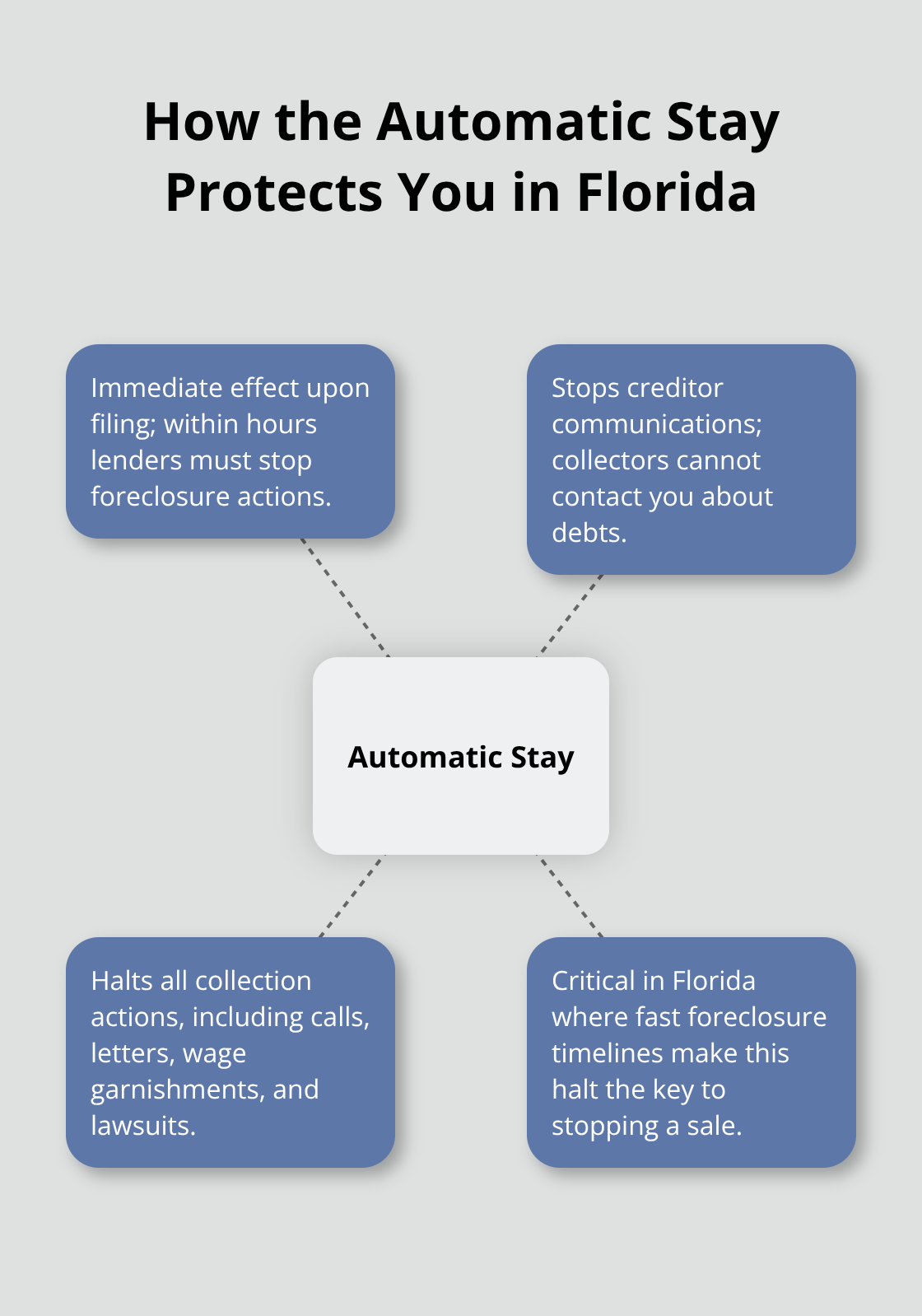
The automatic stay is not a suggestion or a courtesy notice-it is a federal injunction that takes effect the moment your Chapter 7 petition is filed with the court. Within hours of filing, lenders must stop all foreclosure actions, and creditors cannot contact you about debts. This protection applies to every collection action, including phone calls, letters, wage garnishments, and lawsuits. In Florida, where foreclosure timelines move aggressively, this immediate halt is often the only tool that prevents a foreclosure sale from proceeding to completion.
How Long the Stay Protects You
The automatic stay remains in place for the entire duration of your bankruptcy case, typically 90 to 120 days from filing to discharge. If a creditor violates the stay and continues collection efforts after receiving notice of your bankruptcy filing, that violation can result in contempt sanctions and potential damages against them. Timing is everything in Florida foreclosure defense-you must file before the foreclosure sale occurs because once the sale concludes, the automatic stay cannot reverse it, though other remedies may still be available.
What Happens to Your Home During Chapter 7
What happens to your home depends on whether you have equity and whether you can reaffirm the mortgage debt. If your home is underwater (you owe more than it is worth), the trustee typically has no reason to liquidate it because there is nothing to distribute to creditors. If you have equity, Florida’s homestead exemption may protect it entirely, provided you have owned the property for at least 1,215 days and it does not exceed ½ acre inside a city or 160 acres outside. If you meet these requirements, the bankruptcy trustee cannot sell your home to reach equity beyond the exemption limit.
Keeping Your Home After Discharge
If you wish to keep your home and remain current on mortgage payments after discharge, you can sign a reaffirmation agreement that allows you to continue paying the mortgage while unsecured debts are eliminated. This approach preserves your home while wiping out credit card debt, medical bills, and other qualifying obligations. The discharge typically arrives 90 to 120 days after filing, once you complete the required post-filing credit counseling course and any discharge hearing concludes. Understanding these protections sets the stage for evaluating whether Chapter 7 is right for your situation or whether another bankruptcy option might serve your Florida home better.
Chapter 7 Versus Chapter 13 for Florida Homeowners
How the Two Bankruptcy Chapters Differ
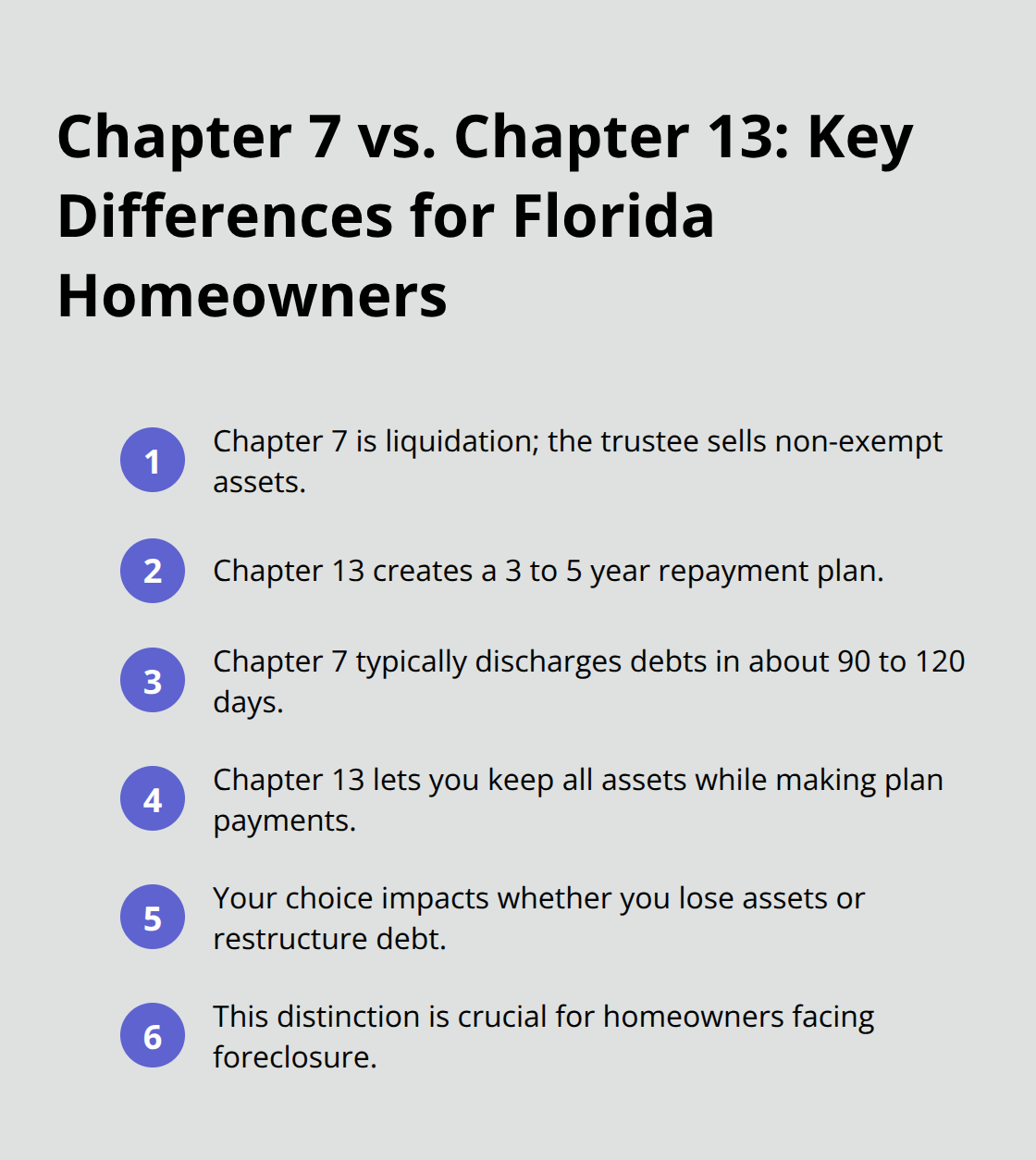
Chapter 7 and Chapter 13 operate on fundamentally different principles, and your choice between them determines whether you lose assets or restructure debt. Chapter 7 is liquidation bankruptcy-the trustee sells non-exempt assets to pay creditors, and you receive a discharge of remaining debts within 90 to 120 days. Chapter 13 creates a repayment plan lasting 3 to 5 years, during which you pay back a portion of your debts while keeping all your assets. For homeowners facing foreclosure, this distinction matters enormously.
When Chapter 7 Makes Sense for Your Florida Home
Chapter 7 works best if you have minimal equity, qualify for Florida’s homestead exemption, and want a fast exit from debt. The automatic stay protects your home equally under both chapters, but what happens after the stay lifts differs dramatically. In Chapter 7, once your debts discharge, creditors cannot pursue collection, and if your home is underwater, the foreclosure claim simply disappears. If you have equity but meet Florida’s 1,215-day homestead requirement, the trustee cannot touch it. Florida homeowners with equity below the homestead exemption threshold should file Chapter 7 because it eliminates unsecured debt faster and costs less overall.
When Chapter 13 Protects More Assets
Chapter 13 works best if you have significant equity you want to protect, steady income to fund a repayment plan, and the ability to catch up on missed mortgage payments over time. The National Consumer Law Center identifies Chapter 13 as often the most effective option to stop foreclosure because it allows you to catch up on arrears while keeping your home intact. In Chapter 13, the repayment plan explicitly addresses the mortgage arrearage-missed payments get rolled into your plan and paid over 36 to 60 months while you remain current on ongoing payments. This approach prevents foreclosure entirely if you comply with the plan, but it requires stable income and discipline for several years. Homeowners with substantial equity or income that supports a repayment plan should explore Chapter 13 to avoid losing assets.
Choosing the Right Path Forward
Chapter 7 offers speed and finality that Chapter 13 cannot match, making it superior when time is critical and your home has no equity. The decision ultimately rests on your financial circumstances, home equity position, and whether you can sustain a multi-year repayment obligation. Understanding these differences prepares you to take the next critical step: gathering the financial documents and information required to file before foreclosure proceeds further.
Steps to File Chapter 7 Bankruptcy Before Foreclosure
Collect Your Financial Documents Immediately
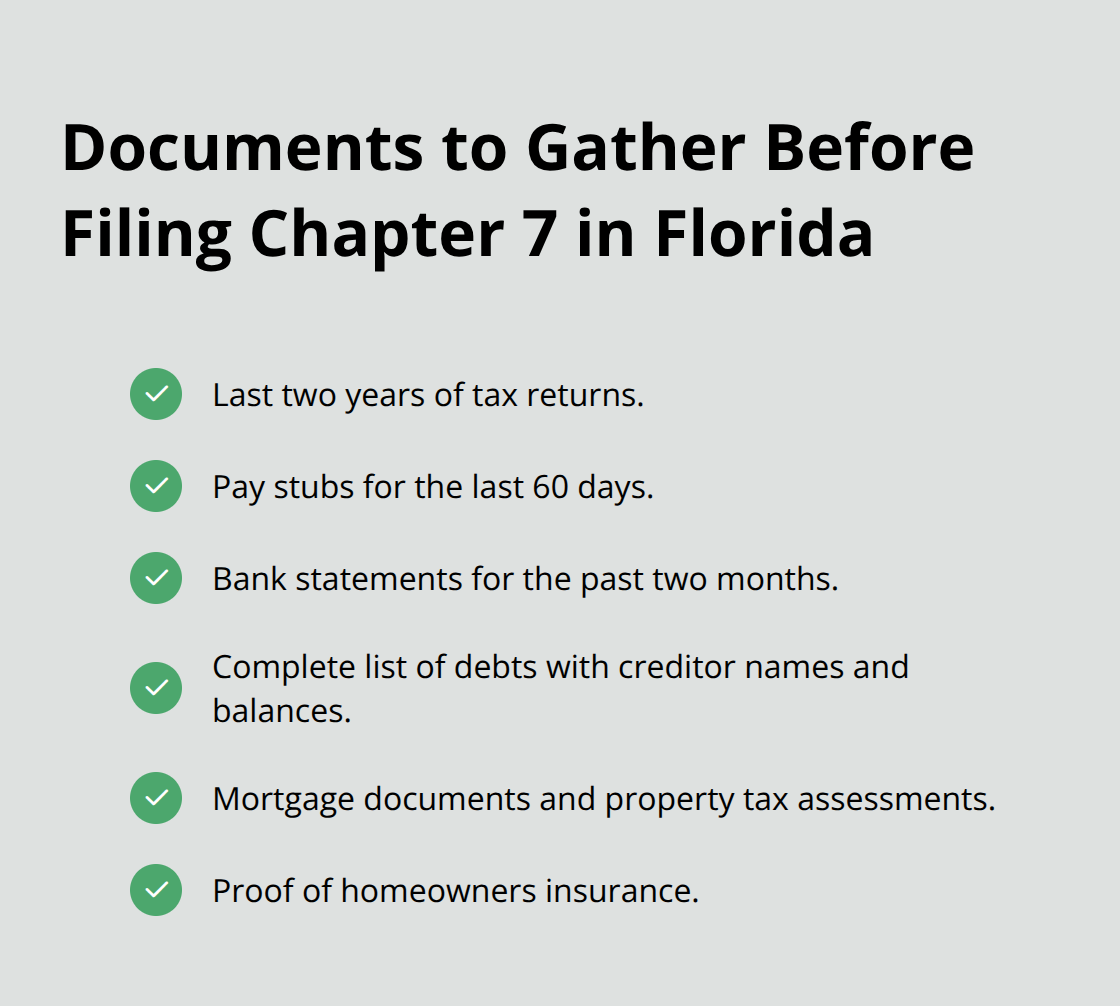
Filing Chapter 7 before your foreclosure sale concludes requires speed and precision. The moment you decide to file, you have roughly 30 to 60 days depending on where your case stands in the foreclosure timeline. Start by collecting your most recent tax returns from the past two years, current pay stubs covering the last 60 days, bank statements from all accounts for the past two months, and a complete list of debts with creditor names and account balances. You will also need mortgage documents, property tax assessments, and proof of homeowners insurance.
The bankruptcy court requires this financial snapshot to calculate your income against the median income threshold for Florida and determine whether you qualify for Chapter 7. If your income exceeds the state median, you must pass the Means Test, which accounts for living expenses and demonstrates that you lack sufficient disposable income to repay debts. Many Florida filers wait until the foreclosure sale date approaches, which creates unnecessary pressure and increases the risk that you miss the filing deadline. Start collecting documents now, even if you have not yet consulted an attorney.
Complete the Required Credit Counseling Course
Federal law mandates that you complete a credit counseling course from an approved nonprofit agency before filing your petition. This course takes approximately 60 to 90 minutes and covers budgeting, debt management alternatives, and the bankruptcy process itself. The course costs between $10 and $50 and must be completed before filing your petition. Once you file, you have an additional deadline: you must complete a second financial management course within 60 days after filing to qualify for discharge. These courses are non-negotiable requirements, and skipping either one will result in your case being dismissed. The U.S. Trustee oversees these requirements strictly.
File Your Petition With the Bankruptcy Court
After completing the initial counseling, you file your Chapter 7 petition with the bankruptcy court, which immediately triggers the automatic stay that halts your foreclosure. The filing fee is $338 as of 2026, though individuals with income below 150 percent of the federal poverty line may request a fee waiver or pay in installments using Form B103A. The petition must be complete and accurate to survive court scrutiny. An attorney handles the filing to ensure that your petition meets all requirements and reaches the court before your foreclosure sale concludes-the single most critical factor in preserving your home.
Prepare for the 341 Meeting of Creditors
The 341 meeting of creditors occurs approximately 40 days after filing and requires you to answer questions about your income, debts, and bankruptcy intentions under oath. You must bring photo identification, proof of your Social Security number, and any documents the trustee requests. Your attorney attends this meeting to assist you and protect your interests. The trustee seeks to understand your financial situation and verify that the information in your petition is accurate. Preparation for this meeting involves reviewing your petition thoroughly and understanding your assets, liabilities, and income sources.
Final Thoughts
Chapter 7 bankruptcy stops foreclosure through the automatic stay, which halts your lender’s collection efforts the moment your petition reaches the court. This protection buys you time to explore debt resolution options and prevents a foreclosure sale from completing. The discharge that follows, typically within 90 to 120 days, eliminates unsecured debts entirely and allows you to move forward without credit card balances, medical bills, and other qualifying obligations.
If you have equity in your home and meet Florida’s homestead exemption requirements, your property remains protected even as the trustee evaluates other assets. After filing, you attend the 341 meeting of creditors, complete the required post-filing financial management course, and work with your attorney to address any trustee inquiries. Once your discharge arrives, you can decide whether to reaffirm your mortgage and keep your home or pursue other housing options.
Timing determines whether the automatic stay can actually prevent the loss of your home, so you must act before your foreclosure sale concludes. Contact Harnage Law, PLLC today to discuss whether Chapter 7 is the right path for your situation and to start the filing process before your foreclosure deadline arrives.