Losing your job creates financial pressure that makes bankruptcy timing critical. The good news is that unemployment doesn’t disqualify you from Chapter 7 relief in Florida.
We at Harnage Law, PLLC help people navigate bankruptcy when employment ends. This guide walks you through filing Chapter 7 after job loss, protecting your assets, and rebuilding your financial foundation.
How Unemployment Affects Your Chapter 7 Eligibility in Florida
The Six-Month Income Look-Back Period
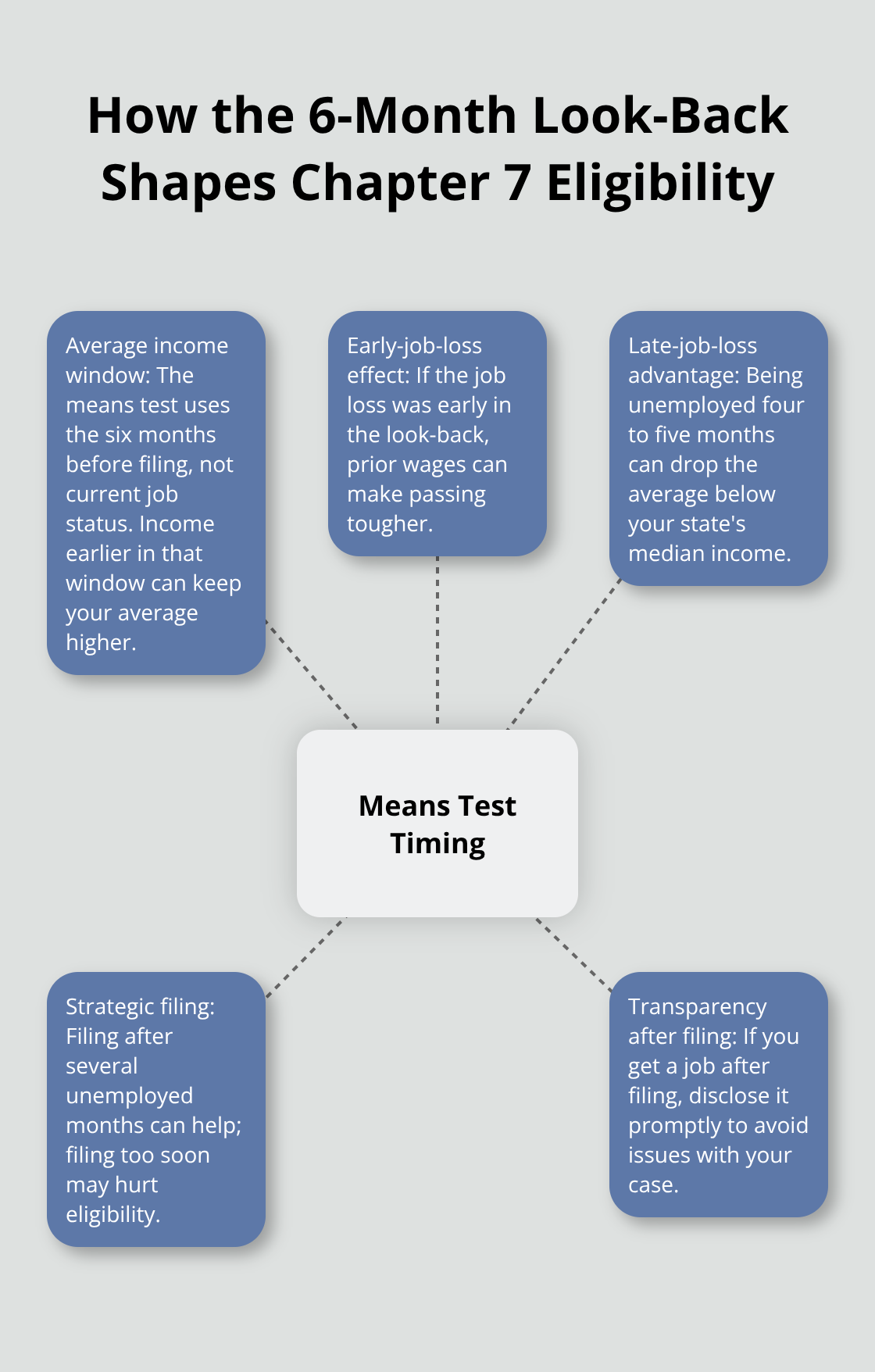
Unemployment doesn’t automatically disqualify you from Chapter 7 in Florida. The means test-the primary eligibility hurdle-uses your average income from the six months before filing, not your current employment status. If you lost your job three months ago, the means test still includes income from those three months plus three more months of prior earnings. This timing matters significantly. A job loss that occurred early in your six-month look-back period means higher average income and a tougher means test. Conversely, if you’ve been unemployed for four or five months, your six-month average drops substantially, often pushing you below your state’s median income threshold.
Florida’s Median Income Thresholds
In Florida, the median income varies by family size. A single person earned a median of approximately $32,000 annually as of recent data, while a family of four was around $67,000. If your six-month average falls below these figures, you pass the means test automatically and qualify for Chapter 7. Most unemployed filers still meet this requirement because unemployment benefits typically don’t generate enough income to push you over the median in Florida.
Strategic Timing for Your Filing
Timing your filing strategically makes a real difference. Filing too soon after job loss-when your six-month average still includes substantial employment income-can create problems. Filing after you’ve been unemployed for several months works in your favor because the average income decreases. However, waiting too long carries its own risk: if you have no income and mounting debt with no prospect of employment, creditors may accelerate collection efforts or garnish future wages once you return to work. The automatic stay that activates when you file stops most collection actions immediately, protecting you during your vulnerable period.
Disclosing Income Changes After Filing
If you obtain employment after filing, you must disclose it and update your income schedules with the trustee. This doesn’t automatically disqualify your case-transparency is what matters. Courts understand that income changes happen, and failing to report a new job raises fraud concerns that can derail your discharge. The key is reporting changes promptly and accurately rather than hiding them. Understanding these income dynamics prepares you for the next critical step: protecting the assets and income you do have throughout the Chapter 7 process.
What Assets and Income Stay Protected in Florida Chapter 7
Florida’s Asset Protection Through Exemptions
Chapter 7 bankruptcy does not strip you of all your possessions. Florida law shields specific assets through exemptions, and understanding which property you retain versus what the trustee can liquidate fundamentally changes how you approach filing after job loss. The federal bankruptcy code allows exemptions up to $27,900 for a single person’s personal property and $55,800 for a married couple filing jointly as of 2024, though Florida also offers its own state exemptions that sometimes provide better protection. Your primary residence receives homestead protection under Florida law, meaning your home equity stays shielded from liquidation in Chapter 7 if you meet residency requirements. One vehicle per debtor typically receives protection up to a certain value, making it possible to keep your car even after filing. Retirement accounts like 401(k)s and IRAs receive strong protection because they’re designed for future financial security, and the trustee generally cannot touch them. Household items, clothing, and personal effects have exemption coverage as well, so you won’t lose basic necessities.
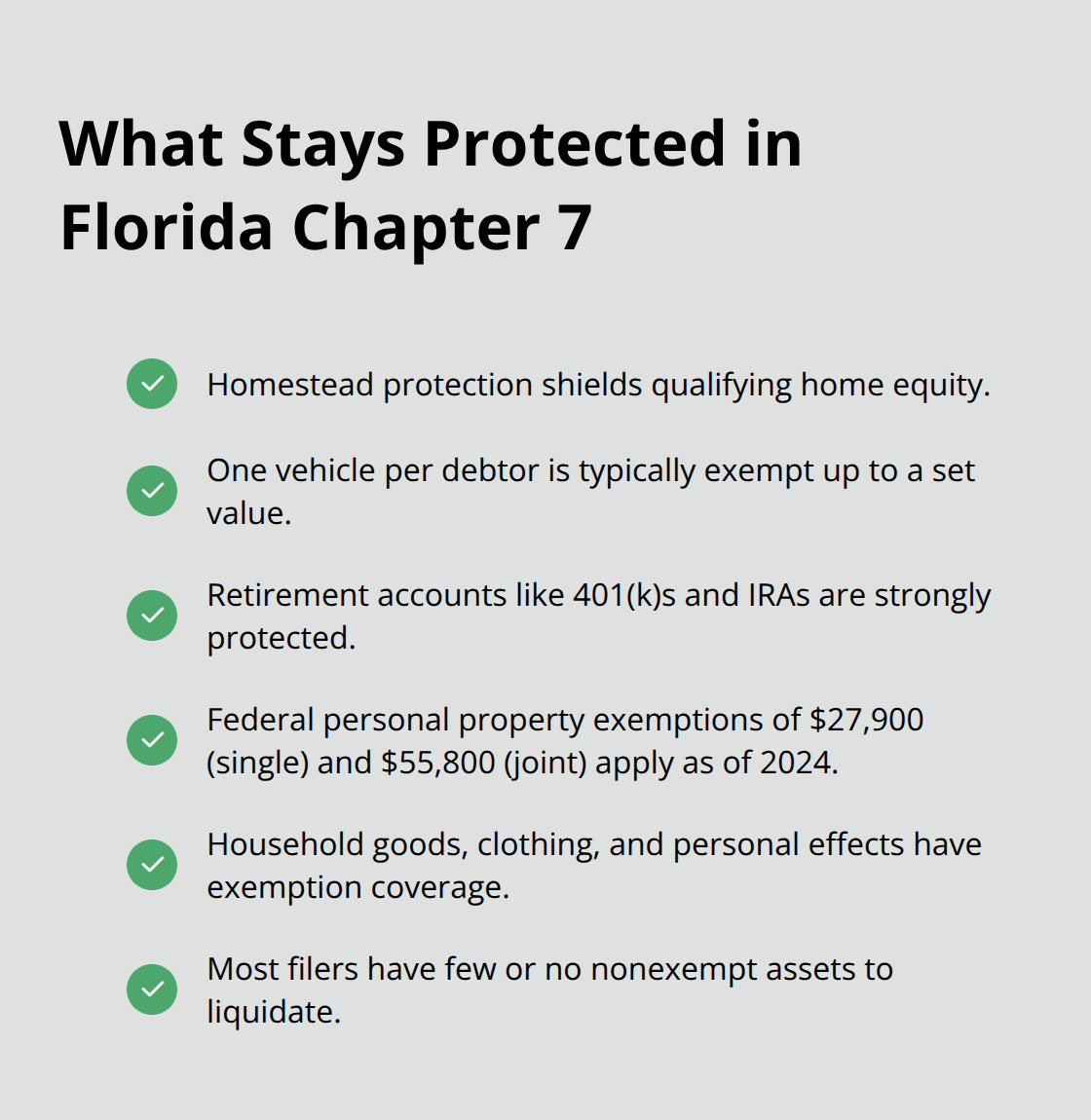
The practical reality is that most people filing Chapter 7 in Florida have few or no nonexempt assets to liquidate, meaning creditors receive little to nothing while you discharge unsecured debts like credit cards and medical bills.
How Courts Treat Unemployment Benefits
Unemployment benefits present a more nuanced situation in bankruptcy. Courts in Florida have generally not counted unemployment benefits as income for the means test if they’re treated as temporary assistance rather than ongoing wages, though this varies by specific circumstances and judicial interpretation. If unemployment benefits do count toward your six-month average income, they typically don’t generate enough monthly income to disqualify you because the benefit amounts remain modest compared to median income thresholds. This distinction matters because it affects whether you pass the means test and qualify for Chapter 7 relief.
Protecting Your Future Wages From Garnishment
Wage garnishment becomes a serious threat once you return to work, which is exactly why filing during unemployment protects your future income before creditors can tap it. The automatic stay activated when you file stops pending garnishment actions immediately, preventing creditors from seizing portions of your paycheck once employment resumes. Some creditors will attempt collection on discharged debts even after your case closes, but you have legal recourse against illegal collection attempts and can report harassment to the bankruptcy court. The key actionable step is filing before you secure new employment if possible, since this prevents creditors from establishing garnishment orders that would otherwise drain your income during financial recovery. If you’ve already secured a new job before considering filing, disclose it fully to your attorney and the court because transparency protects your discharge rather than jeopardizing it. Understanding these protections sets the stage for the next critical phase: gathering the financial documents and information the trustee requires, even when your employment status has recently changed.
Filing Chapter 7 in Florida When Unemployed
Collecting Financial Documents Without Current Employment Income
Gathering the right financial documents becomes harder when you lack current paystubs, but the trustee needs a complete picture of your finances regardless of employment status. Start with your tax returns from the past two years-these form the backbone of your income verification and the trustee will request them immediately. If you’re unemployed, document your unemployment benefits by collecting statements from your state’s unemployment office showing benefit amounts and duration. Pull together bank statements covering the last two to three months to show the trustee how you’re currently meeting living expenses without employment income.
List all debts with creditor names, account numbers, and balances; medical bills, credit cards, personal loans, and any other obligations must be included. Create a detailed inventory of your assets, including your vehicle’s make, model, year, and current market value, any real estate you own, retirement account statements, and household items of significant value. Gather utility bills, rental agreements or mortgage statements, insurance policies, and any child support or alimony obligations because these expenses directly impact whether you qualify under the means test.
Completing Required Bankruptcy Forms and Schedules
The Federal Rules of Bankruptcy Procedure require you to file a completed Schedule I showing current income and Schedule J showing monthly expenses within 14 days of filing. Without employment income, your Schedule I will show only unemployment benefits, disability payments, or other income sources. The trustee will scrutinize these documents carefully because filing while unemployed raises questions about your ability to pay and whether circumstances have changed since your six-month look-back period.
This is precisely why transparency matters-courts understand job loss happens, but hidden income or misleading asset values trigger fraud investigations that derail discharges. Your attorney will guide you through which forms to complete and how to answer sensitive questions about your job loss and financial situation.
Preparing for the Meeting of Creditors
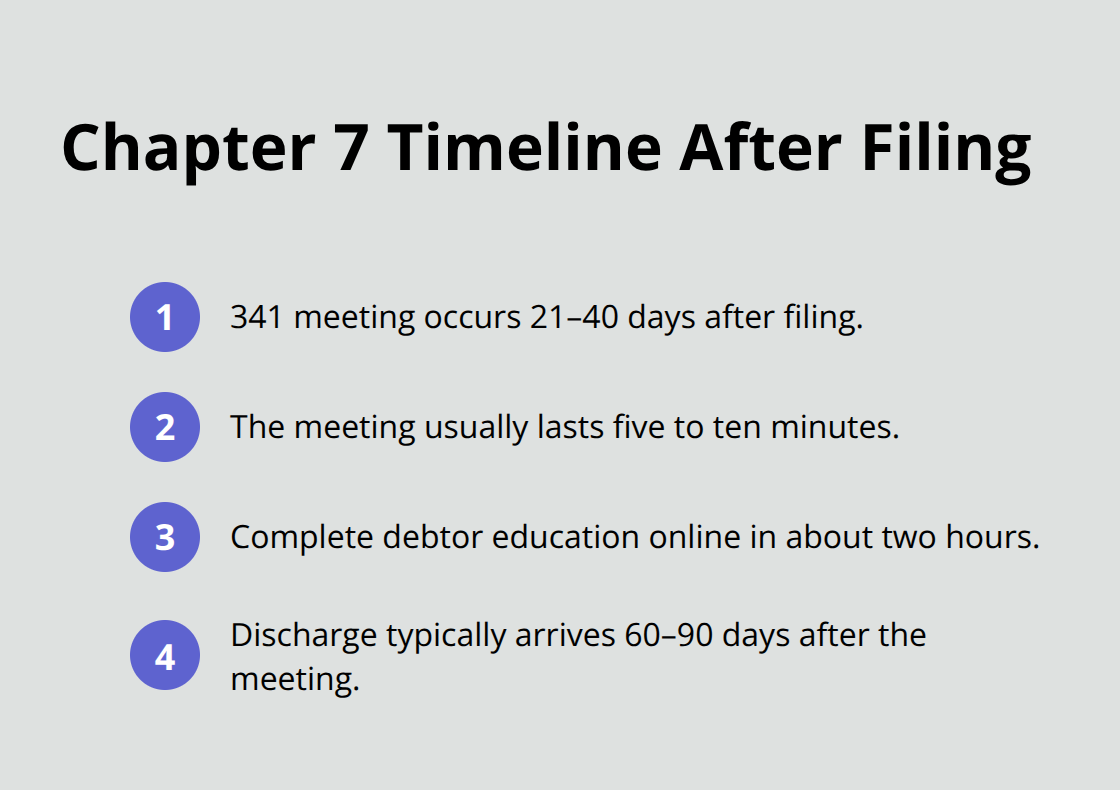
The meeting of creditors, formally called the 341 meeting under 11 U.S.C. Section 343, typically occurs 21 to 40 days after filing and rarely lasts more than five to ten minutes. The trustee will ask questions about your debts, assets, income changes, and whether you understand the consequences of filing-expect straightforward inquiries rather than adversarial cross-examination. Creditors rarely attend these meetings, and when they do, they focus on whether assets exist to liquidate rather than challenging your discharge.
Prepare for questions about your job loss timeline, when you last earned income, whether you’re actively seeking employment, and what your income prospects look like. Answer honestly and directly; the trustee has already reviewed your paperwork and knows if something doesn’t add up. Bring photo identification and your Social Security card to the meeting.
Completing Debtor Education and Receiving Your Discharge
After the meeting concludes, you will complete a debtor education course-most are online and take about two hours-which must be finished before your discharge becomes final. The discharge typically arrives within 60 to 90 days after the creditors’ meeting, releasing you from personal liability on most unsecured debts. Courts in Florida process Chapter 7 cases efficiently, and unemployment doesn’t slow the timeline because your income situation is already reflected in your filed documents.
Final Thoughts
Chapter 7 discharge marks the beginning of your financial recovery, not the end of your journey. Once the court releases you from personal liability on unsecured debts, you regain control over your income and redirect money toward rebuilding rather than servicing old obligations. Your credit report will show the Chapter 7 filing for approximately ten years, but the negative impact fades significantly over time, with most people seeing their credit scores rebound within two to three years after discharge.
Bankruptcy timing played a critical role in your decision to file during job loss, and that same strategic thinking applies to your recovery. Focus on increasing income through employment or additional work before taking on new debt, and build an emergency fund to prevent future financial crises. Track your spending to identify patterns that led to the original debt accumulation, then establish new payment patterns that demonstrate responsible borrowing to potential lenders.
We at Harnage Law, PLLC understand that filing Chapter 7 during unemployment requires careful planning and honest financial disclosure. If you’re considering bankruptcy after job loss, contact our Florida bankruptcy firm for a free consultation to discuss whether Chapter 7 offers the relief you need.