
Filing Chapter 7 bankruptcy in Florida protects you from creditors, but it leaves your cosigners completely exposed. When you discharge your debts, they remain legally responsible for the full amount.
We at Harnage Law, PLLC see this situation damage relationships and finances regularly. Understanding how your bankruptcy affects cosigners is the first step toward protecting everyone involved.
Your Cosigner’s Legal Obligation Doesn’t Disappear When You File Chapter 7 Bankruptcy in Florida
When you file Chapter 7 bankruptcy in Florida, the discharge you receive is personal to you alone. Your cosigner receives no such protection. According to Nolo’s 2023 analysis on cosigner liability in bankruptcy, cosigners remain legally responsible for the full debt amount even after the primary borrower’s discharge is finalized. If you borrowed $15,000 for a car and your friend cosigned, that friend owes the entire $15,000 when you file Chapter 7, regardless of what the bankruptcy court decides about your obligation. Creditors don’t care about your discharge papers when they contact your cosigner. They see a legally binding signature on the original loan agreement, and that signature created an independent obligation separate from yours.
What Creditors Will Actually Do After Your Discharge
The moment your Chapter 7 case closes, creditors shift their collection efforts directly to your cosigner. They send demand letters, make phone calls, and file lawsuits against the cosigner’s wages and bank accounts. Cosigners on joint credit card accounts face liability for the full balance, not just their portion. On mortgages and auto loans, the co-borrower remains on the hook entirely, and creditors pursue them for every missed payment plus accumulated interest and fees.
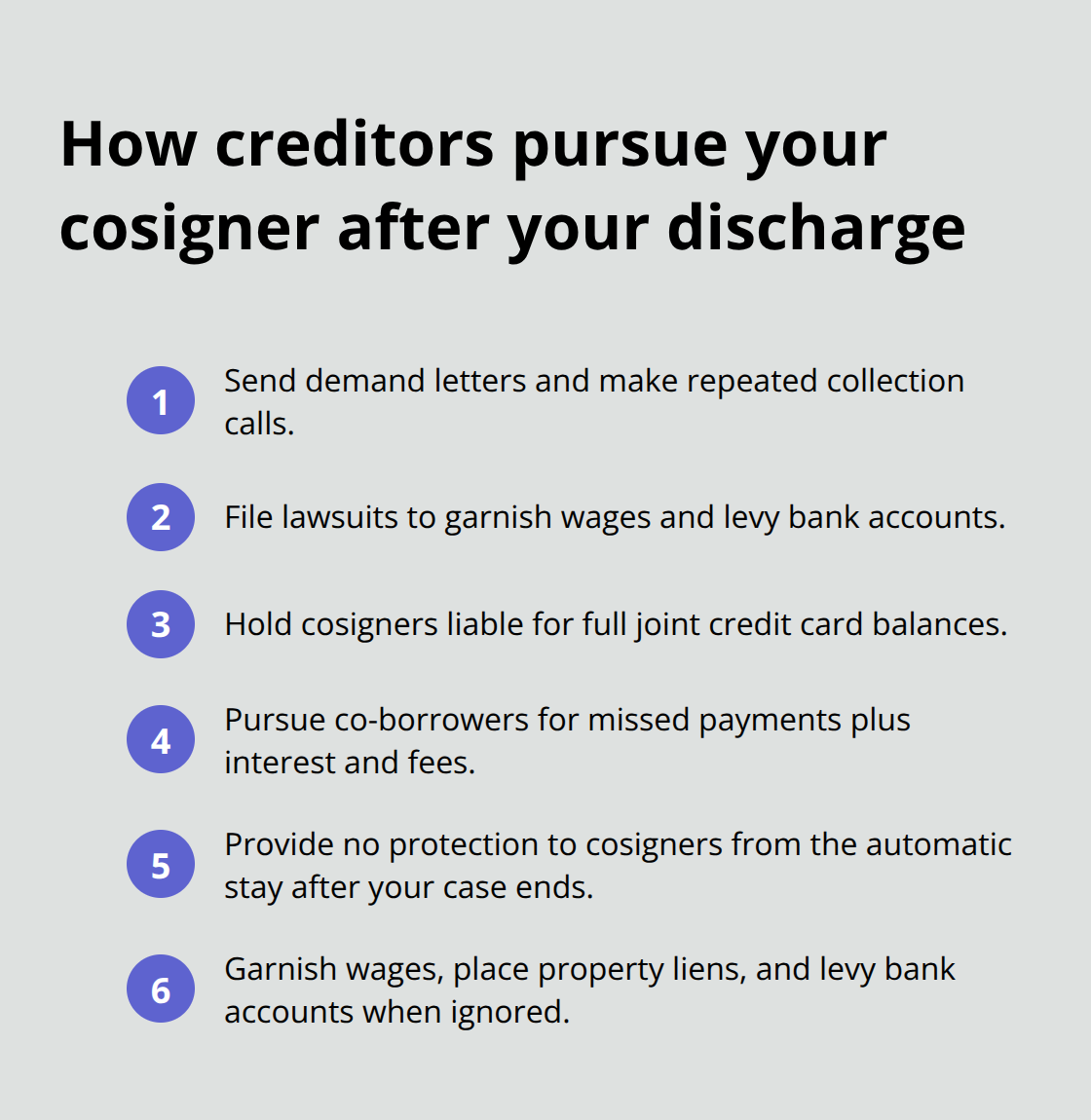
The automatic stay that protected you during bankruptcy provides zero protection to your cosigner once your case concludes. If your cosigner ignores collection calls, creditors can garnish their wages, place liens on their property, and levy their bank accounts. Many cosigners only discover this risk after they receive a lawsuit notice, at which point defensive options become limited and expensive.
How Joint Accounts Create a Different Problem
Joint bank accounts and joint loans operate under different rules than simple cosigned debts. If you held a joint savings account with your cosigner and used those funds to pay debts you later discharged, creditors may pursue the cosigner for recovery. On joint mortgages or car loans, both parties are equally liable regardless of who actually uses the property. Your cosigner cannot claim they weren’t responsible because their name appears on the loan documents. The distinction matters because joint account holders sometimes believe they can avoid liability by claiming they didn’t benefit from the debt. Courts and creditors reject this argument consistently. The damage compounds quickly once creditors begin collection efforts, which is why addressing these joint obligations before filing produces far better outcomes than handling them afterward.
How Your Bankruptcy Damages Your Cosigner’s Financial Life
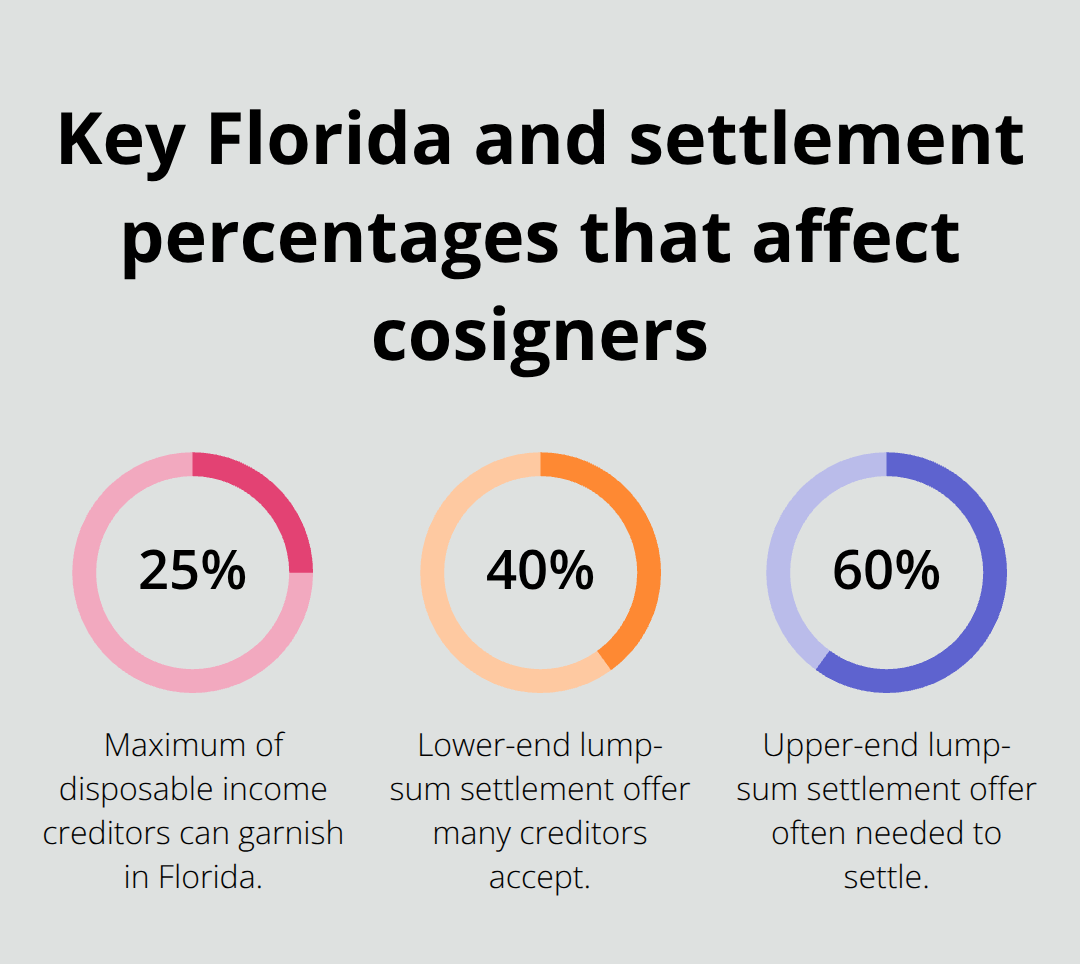
Your discharge ends creditor contact with you, but it intensifies collection pressure on your cosigner immediately. Creditors shift tactics the moment your Chapter 7 case closes, moving from phone calls to wage garnishment and bank levies. Florida law allows creditors to garnish up to 25% of your cosigner’s disposable income after obtaining a judgment, which happens routinely in cosigner cases. If your cosigner earns $3,000 monthly with $750 in garnishable income, creditors take roughly $187 per paycheck indefinitely until the debt satisfies.
Your cosigner’s employer notifies them of the garnishment order, leaving them scrambling to cover basic expenses with reduced income. The financial damage extends beyond wages because creditors also freeze bank accounts and place liens on property, making it impossible for your cosigner to access savings or refinance existing debts.
Wage Garnishment Reduces Your Cosigner’s Monthly Income
Creditors pursue wage garnishment as their primary collection tool against cosigners after your discharge finalizes. Florida courts approve garnishment orders that redirect a portion of your cosigner’s paycheck directly to creditors before your cosigner receives it. The 25% garnishment rate applies to disposable income (earnings after taxes and mandatory deductions), which means your cosigner loses a substantial portion of take-home pay. A cosigner earning $4,000 monthly in disposable income loses approximately $1,000 per month to garnishment, creating immediate hardship for rent, food, and utilities. Creditors maintain garnishment orders for years, sometimes indefinitely, until the debt satisfies completely. Your cosigner cannot escape this obligation through job changes because creditors simply issue new garnishment orders to new employers.
Credit Score Damage Lasts Seven Years
Your bankruptcy filing and subsequent discharge do not appear on your cosigner’s credit report, but the defaulted debt absolutely does. Creditors report missed or late payments on the cosigned account to credit bureaus, damaging your cosigner’s credit score significantly. A single late payment drops credit scores by 100 to 150 points depending on the scoring model. Your cosigner’s score decline makes obtaining new credit nearly impossible, and any new borrowing comes with substantially higher interest rates. If your cosigner needs a car loan or mortgage refinancing after you file Chapter 7, lenders view them as high-risk due to the collection account on their record. The damage persists for seven years from the date of first missed payment, meaning your cosigner faces years of financial limitation because of your bankruptcy. Many cosigners do not realize this consequence until they apply for credit and receive rejection or unfavorable terms.
Collection Lawsuits Create Enforceable Judgments
Collection calls intensify dramatically once creditors determine your discharge removes you as a collection target. Your cosigner receives multiple calls daily from collection agencies, original creditors, and law firms pursuing the debt. Creditors file lawsuits within months if your cosigner ignores these calls, obtaining judgments that enable wage garnishment and asset seizure. Court judgments in Florida remain enforceable for 20 years, meaning creditors can pursue your cosigner well into the future if the debt remains unpaid. Some cosigners face lawsuits they never expected because they assumed the primary borrower’s bankruptcy would resolve the obligation. The legal process costs your cosigner money for court fees and attorney defense if they choose to fight, adding financial burden on top of the original debt liability. Creditors know cosigners often lack bankruptcy protection and pursue them aggressively as their primary collection avenue after the primary borrower’s discharge.
Protecting Your Cosigner Requires Immediate Action
The window for protecting your cosigner closes quickly once you file Chapter 7 bankruptcy in Florida. Creditors begin collection efforts within weeks of your discharge, and early intervention prevents the worst financial consequences. Your cosigner can negotiate with creditors for debt settlement, refinance the loan to remove themselves from the obligation, or explore other protective strategies before collection escalates. Understanding which debts carry cosigner liability and communicating openly about these obligations allows both parties to plan defensively. The steps your cosigner takes now determine whether they face years of wage garnishment, credit damage, and legal action-or whether they protect their financial future before creditors act.
What Cosigners Must Do Immediately After Your Chapter 7 Filing in Florida
Act Within 30 Days to Stop Collection Efforts
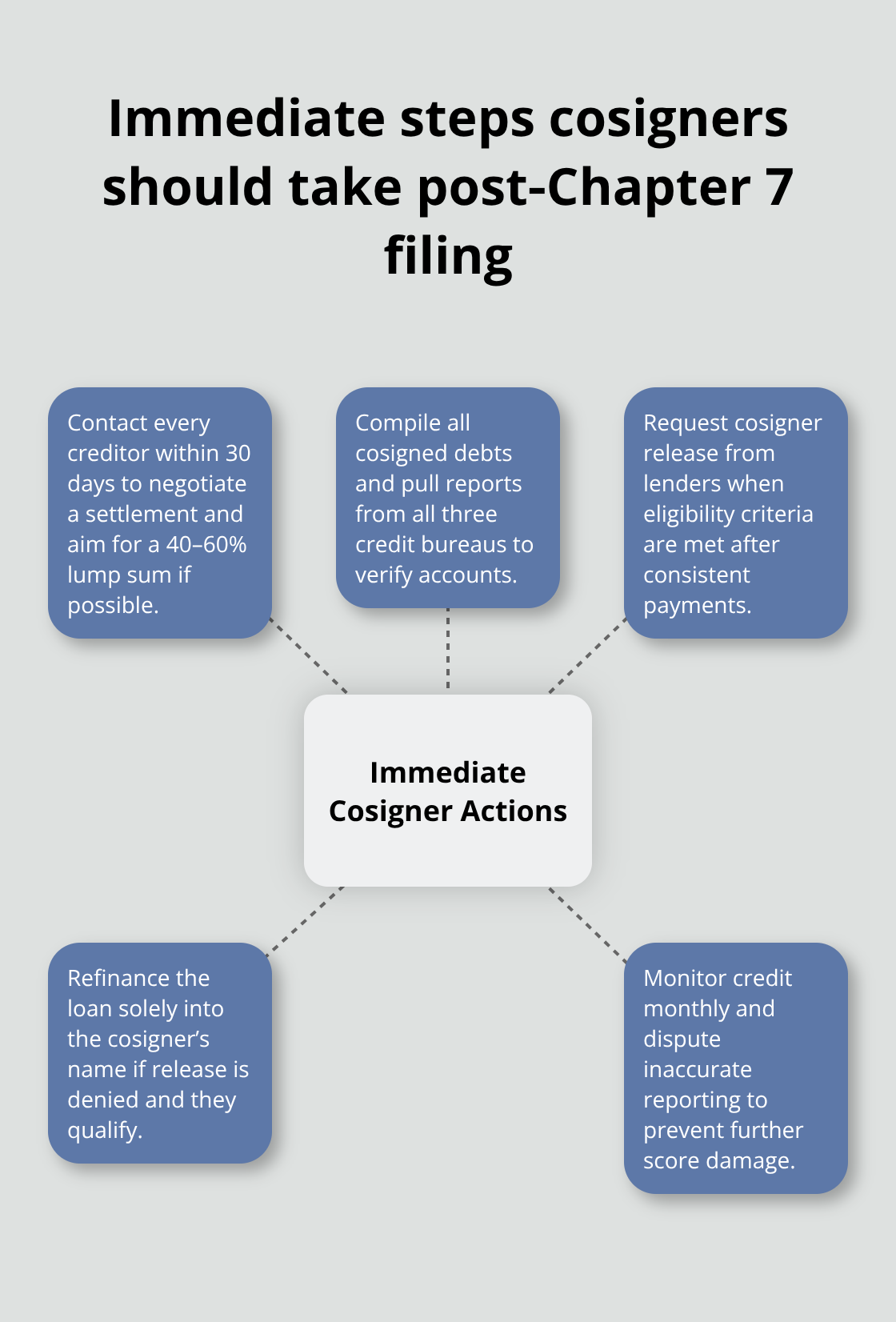
Cosigners who learn about your bankruptcy filing face a compressed timeline for protective action. The first 30 days after your discharge are critical because creditors typically start collection efforts within weeks, and early intervention stops wage garnishment and lawsuits before they start. Your cosigner needs to contact each creditor holding cosigned debt and request a settlement negotiation immediately, offering a lump-sum payment of 40 to 60 percent of the balance if possible.
Many creditors accept settlements rather than pursue costly collection litigation, especially if your cosigner demonstrates financial hardship from your bankruptcy. Your cosigner should obtain written settlement agreements before sending any payment, confirming the creditor will remove the collection account from their credit report and cease all collection activity. This written documentation prevents creditors from accepting payment and then continuing collection efforts anyway.
Identify All Cosigned Debts Before Creditors Act
Your cosigner must obtain a complete list of all cosigned debts and verify which accounts appear on their credit report simultaneously. Many cosigners discover debts they forgot about only after creditors start collection, which wastes valuable time for negotiation or settlement. Your cosigner can request free credit reports from all three bureaus and should check for any accounts showing late payments or collection activity. Once your cosigner identifies cosigned debts, they should contact the lender and explore removal options before collection escalates. Some lenders offer cosigner release after consistent on-time payments, and your cosigner can request accelerated release given your bankruptcy filing.
Explore Refinancing and Cosigner Release Options
If the lender refuses cosigner release, your cosigner should investigate refinancing the loan into their name alone, which removes the primary borrower’s obligation entirely and consolidates liability. This option works best when your cosigner has strong credit and stable income to qualify independently. Your cosigner must monitor their credit report monthly after your bankruptcy discharge because creditors sometimes report inaccurate payment status or fail to update accounts properly. Disputing inaccurate entries with credit bureaus takes minutes online and prevents further score damage from false late payment reporting. Some creditors refuse settlement negotiations, but attempting negotiation costs nothing and often succeeds, particularly with original creditors rather than third-party collection agencies.
Final Thoughts on Chapter 7 Bankruptcy in Florida
Ignoring your cosigner’s situation after filing Chapter 7 bankruptcy in Florida creates financial and relational damage that extends far beyond your discharge. When you fail to communicate about cosigned debts or take protective steps beforehand, your cosigner absorbs the full impact of creditor collection efforts, including wage garnishment, credit score damage, and potential lawsuits. Your cosigner may eventually file their own Chapter 7 bankruptcy to escape the liability you created, which damages their credit score and financial future independently.
Preventive communication before filing Chapter 7 protects everyone involved and preserves relationships that matter. Discussing your bankruptcy plans with cosigners gives them time to negotiate settlements, explore refinancing, or pursue cosigner release before collection begins. This transparency allows both parties to develop a coordinated strategy that minimizes damage to the cosigner’s finances and credit, and it demonstrates respect for the cosigner’s financial wellbeing and the obligation they accepted when they signed the original loan documents.
We at Harnage Law, PLLC help clients understand how their Chapter 7 bankruptcy affects cosigners and develop chapter protection strategies that minimize cosigner liability before you file. Contact our firm to discuss your specific situation and learn how to protect everyone involved in your bankruptcy case.