
Filing Chapter 7 bankruptcy in Florida means you get to keep certain assets protected by state law. These Florida exemptions Chapter 7 protections can make a real difference in what you retain after discharge.
At Harnage Law, PLLC, we help clients understand exactly which assets are safe from creditors. This guide walks you through the exemptions available to you.
Understanding Florida Homestead Exemptions
Unlimited Equity Protection for Your Primary Residence
Florida’s homestead exemption stands apart from most states because it protects unlimited equity in your primary residence, with no dollar cap. This means if your home is worth $500,000 or $1 million, the entire value remains protected from creditors in Chapter 7 bankruptcy, provided you meet the ownership and residency requirements. The protection applies to homes up to half an acre within city limits or 160 acres outside municipalities, making it exceptionally generous for protecting real estate.
The 1,215-Day Ownership Requirement
The unlimited protection only applies if you own the property for at least 1,215 days before filing. This timeline-roughly three years and four months-catches many people off guard. If you haven’t met this 1,215-day requirement, federal law caps your protection at $214,000 of home equity according to 11 U.S.C. Section 522(p). This federal cap still provides meaningful protection but not the unlimited benefit Florida offers. Calculating your exact ownership timeline before you file matters significantly, since timing your filing can mean the difference between full protection and a substantial federal cap.
Residency and Primary Residence Requirements
You must have resided in Florida for at least two years before filing to use Florida exemptions at all; otherwise, exemptions from your previous state may apply. The property itself must be your primary residence, not a rental or investment property. The size restrictions are generous enough that most residential homes qualify. If your ownership date approaches the 1,215-day mark, waiting even a few months could protect significantly more equity.
How Homestead Protection Works in Chapter 7
The mechanics of homestead protection in Chapter 7 work straightforwardly once you understand the ownership threshold. You must own your home for 1,215 days to claim the unlimited exemption. Additionally, you must satisfy the two-year Florida residency requirement and designate the property as your primary residence. These conditions work together to determine whether you receive unlimited protection or fall back to the federal $214,000 cap.
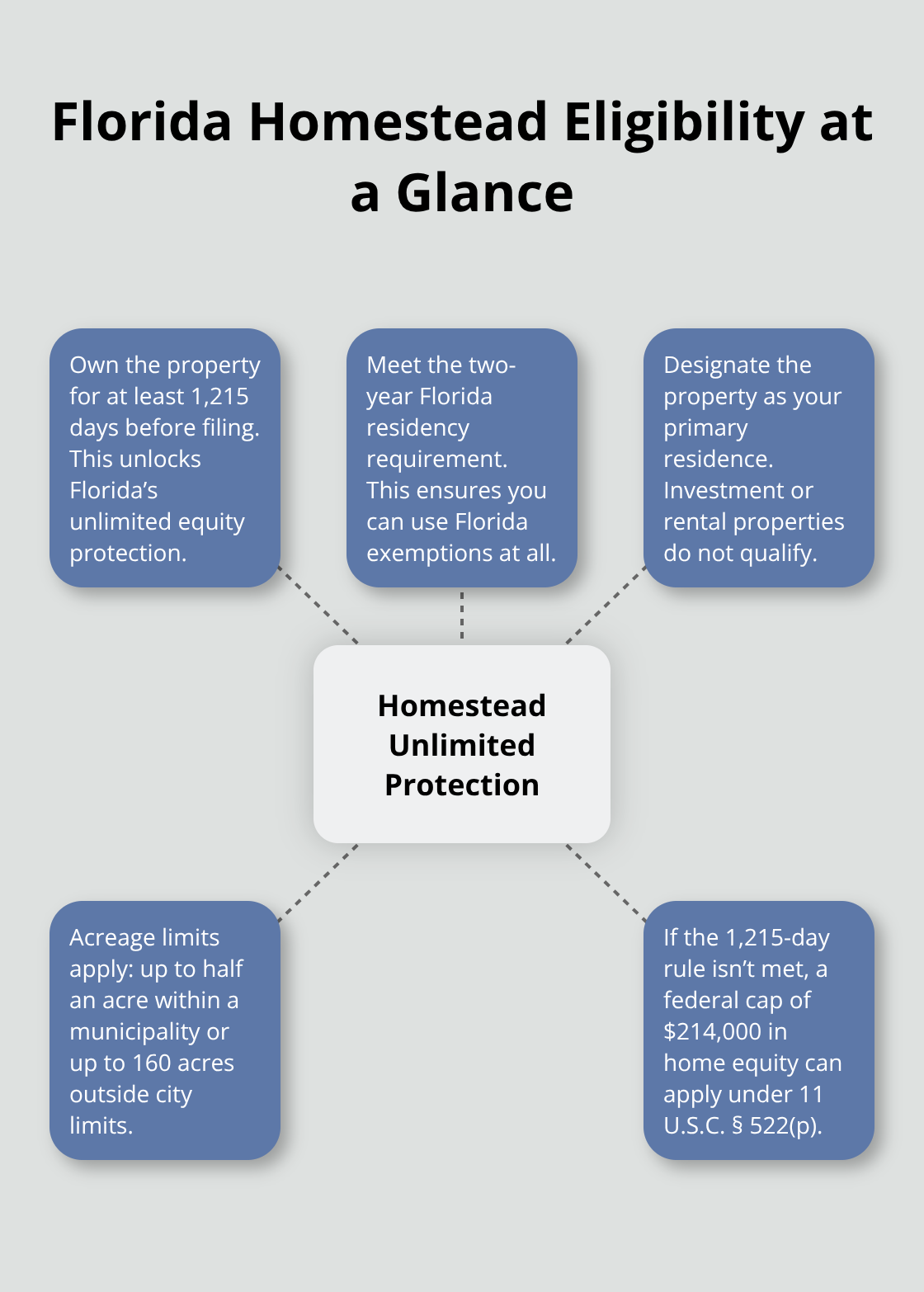
Understanding these mechanics helps you plan your filing strategy and protect the maximum amount of home equity possible.
With homestead protection established, the next layer of Florida exemptions protects your personal property-from vehicles to household goods-allowing you to retain even more assets through Chapter 7 bankruptcy.
What Personal Property Can You Protect in Florida Chapter 7
Vehicle Equity and Transportation Assets
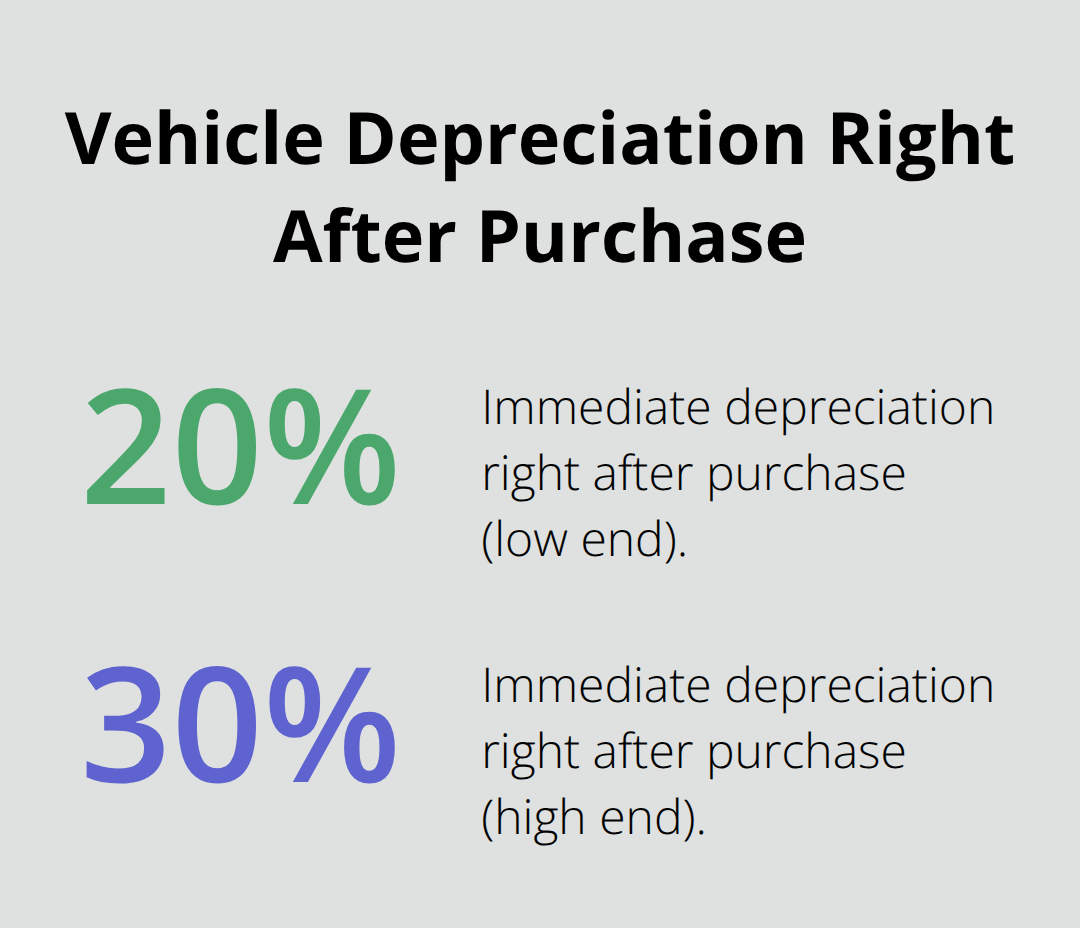
Beyond your home, Florida law shields a meaningful range of personal assets in Chapter 7 bankruptcy. The vehicle exemption protects up to $5,000 of equity in a single car under Florida Statute Section 222.25. If your vehicle is worth $7,000 and you owe $2,000 on the loan, you have $5,000 in equity-fully protected under this exemption. Most vehicles depreciate 20 to 30 percent immediately after purchase, which works in your favor because negative equity (owing more than the car is worth) means the vehicle faces no risk of liquidation.
Household Goods and Personal Property
Household goods including furniture, appliances, electronics, and clothing receive protection up to $1,000 per person under Florida’s personal property exemption. This amount increases to $4,000 if you do not claim the homestead exemption, making it a strategic choice for renters or homeowners with minimal home equity. Valuing these items at replacement cost rather than original purchase price keeps your listed values realistic and reduces trustee scrutiny.
Retirement Accounts and Insurance Proceeds
Retirement accounts receive exceptionally strong protection in Florida Chapter 7. According to Florida Statute Section 222.21, most 401(k)s, 403(b)s, and IRAs are fully exempt with no dollar limit. The federal cap for retirement accounts stands at $1,711,975 per person for filings between April 1, 2025 and March 31, 2028, but Florida exemptions often provide complete protection regardless of account size. Life insurance death benefits payable to a named beneficiary are 100 percent exempt under Florida Statute Section 222.13, meaning creditors cannot touch these proceeds. Whole life insurance cash surrender value is also fully protected if the policy is on your life. Health Savings Accounts receive the same protection as medical savings accounts, provided they comply with IRS rules.
Protected Income and Benefit Accounts
Social Security payments, disability benefits, and workers compensation settlements are entirely exempt when kept in separate accounts from other income. Commingling exempt funds like Social Security or disability payments with non-exempt income can jeopardize their protected status, so maintain separate accounts when possible. This separation strategy protects what matters most during your financial fresh start.
Documentation and Valuation Strategies
The key to maximizing these protections lies in accurate documentation and proper asset characterization before you file. List all personal property with current replacement values, not original prices, and keep receipts or photographs of significant items. If you own multiple vehicles, document why each one is necessary for work or daily responsibilities-the exemption typically covers one primary vehicle, though courts may allow additional exemptions with proper justification. Mischaracterizing assets or overstating values can trigger bankruptcy fraud penalties up to $250,000 and 20 years in prison according to federal law, making accuracy non-negotiable during your filing. These personal property protections form only part of your overall asset defense strategy in Chapter 7, and understanding how to combine them with other exemptions determines your true financial protection.
Strategies to Maximize Your Exemptions in Florida Chapter 7
Time Your Filing Around the 1,215-Day Ownership Milestone
Timing your Chapter 7 filing matters far more than most people realize, and the difference between filing today versus waiting six months can mean protecting an additional $214,000 or more in home equity. If you own your home and are approaching the 1,215-day ownership milestone, waiting until after that date provides unlimited homestead protection instead of the federal $214,000 cap. This calculation alone should drive your filing decision if you are within months of meeting the requirement.
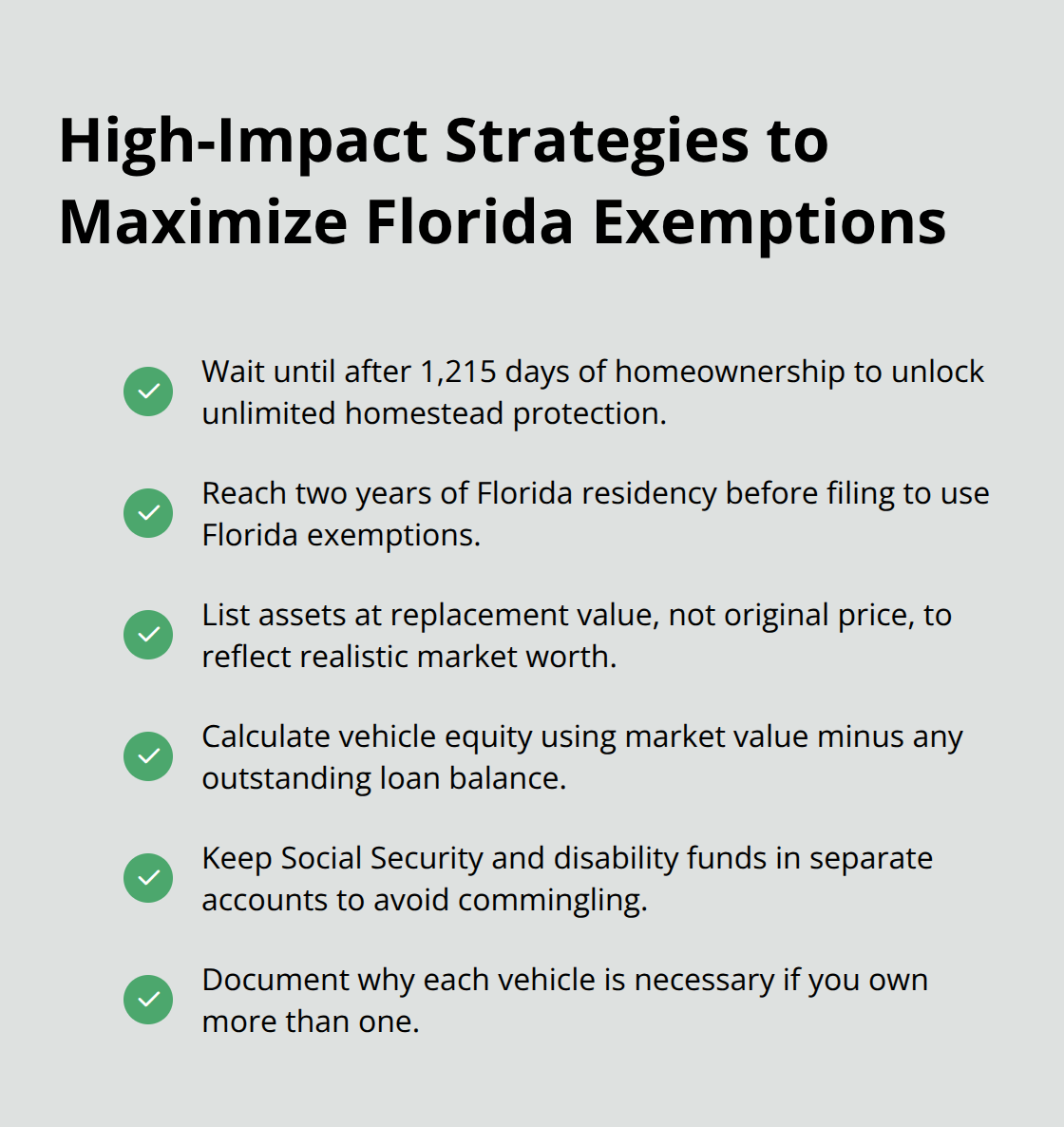
Similarly, if you have not lived in Florida for the full two years required to claim Florida exemptions, waiting until you reach that residency threshold prevents your exemptions from reverting to your previous state’s rules, which may offer significantly less protection. A three-to-six month delay can preserve tens of thousands in asset value, making this one of the highest-leverage decisions you face before filing.
Value Assets at Replacement Cost, Not Original Price
Accurate asset valuation and documentation separate those who keep their property from those who lose it to the trustee. Use replacement value, not original purchase price, when listing household items, vehicles, and personal property. A sofa you bought ten years ago for $3,000 might be worth $800 on the used market today, and listing it at replacement value keeps your total personal property claim within the $1,000 limit and reduces trustee scrutiny. For vehicles, research current market value using NADA Guides or Kelly Blue Book rather than guessing, then subtract any outstanding loan balance to calculate actual equity.
Document Multiple Vehicles and Maintain Separate Accounts
If you own multiple vehicles, gather documentation proving each one is necessary for work or daily responsibilities, since courts typically allow only one vehicle exemption unless you provide solid justification. Keep photographs, receipts, and bank statements for significant items, and maintain separate accounts for exempt income like Social Security or disability benefits to prevent commingling issues that could jeopardize protection. Misstatements on your bankruptcy petition can trigger fraud charges carrying penalties up to $250,000 and 20 years in prison, so precision during this documentation phase is not optional.
Final Thoughts
Florida exemptions in Chapter 7 bankruptcy protect unlimited home equity, vehicle assets up to $5,000, and fully protected retirement accounts when you meet the ownership and residency requirements. The homestead exemption stands out as exceptionally generous, shielding unlimited equity in your primary residence if you own it for at least 1,215 days and have lived in Florida for two years. These protections work together to let you retain assets that matter most while discharging qualifying debts.
Strategic planning before you file makes the real difference in what you keep. Timing your filing around the 1,215-day ownership milestone, valuing assets at replacement cost rather than original price, and documenting multiple vehicles or separate accounts for exempt income can mean protecting unlimited home equity instead of facing a $214,000 federal cap. Misstatements during filing carry serious consequences, including fraud penalties up to $250,000 and 20 years in prison, so accuracy matters throughout the process.
We at Harnage Law, PLLC help clients navigate Florida exemptions Chapter 7 and develop filing strategies that maximize asset retention. Contact us for a confidential case assessment to learn exactly which assets you can keep and how to structure your filing for maximum protection.