
Chapter 7 bankruptcy in Florida typically takes three to six months from filing to discharge, but the exact chapter 7 filing duration depends on your specific situation. Many people underestimate how long the process actually takes, which leads to frustration and uncertainty.
At Harnage Law, PLLC, we help clients understand what to expect at each stage so there are no surprises. This guide walks you through the timeline and shows you what factors speed up or slow down your case.
How Long Does Chapter 7 Actually Take in Florida
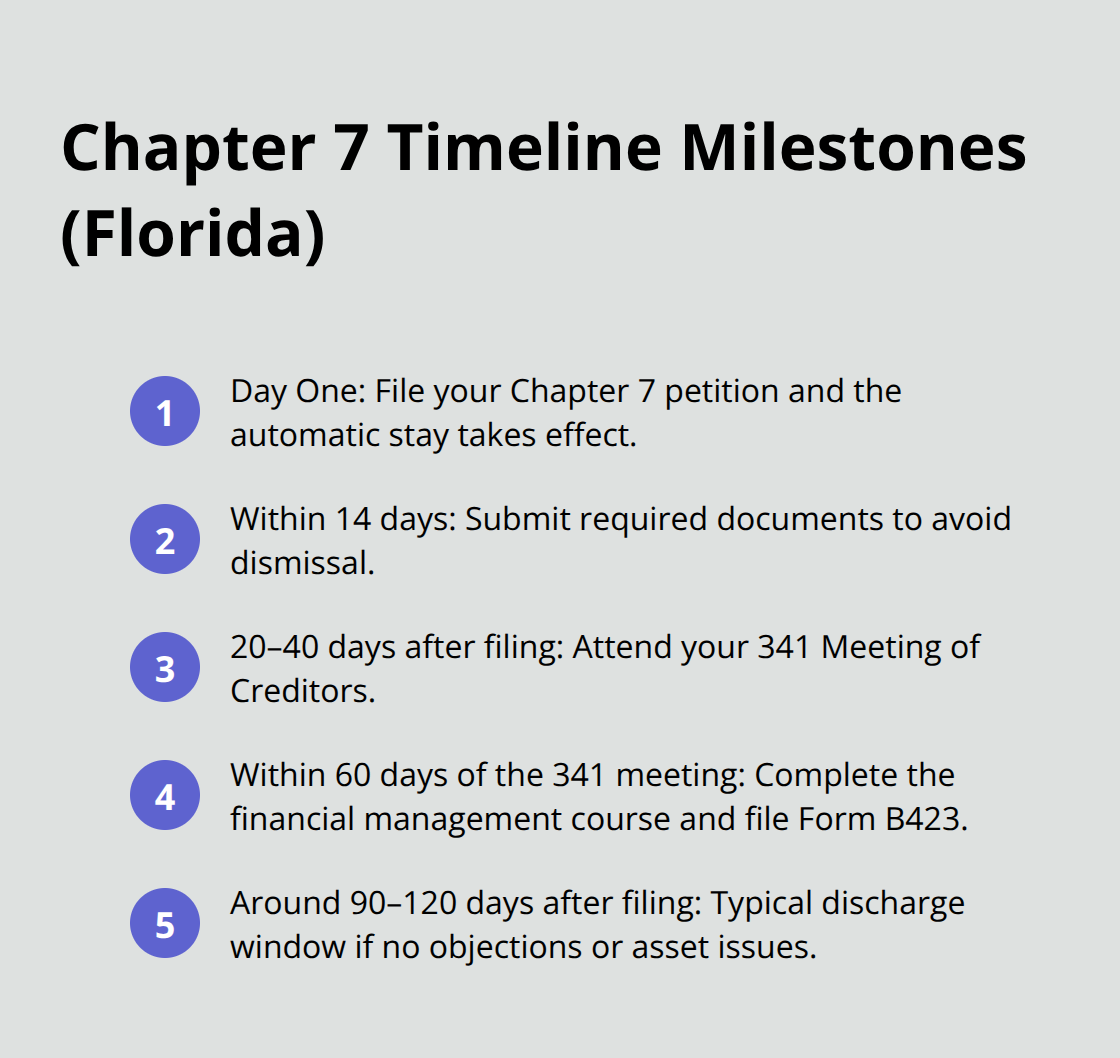
The federal courts publish quarterly bankruptcy data showing that Chapter 7 cases in Florida typically move from filing to discharge in ninety to one hundred twenty days, though some cases finish in as little as sixty days while others stretch to six months or longer. The three-to-six-month range you hear often understates what happens in reality: filing day is Day One, but your actual work doesn’t end until you complete the post-petition financial management course within sixty days after your first Meeting of Creditors. That meeting happens roughly twenty to forty days after filing, which means you face a compressed timeline with multiple absolute deadlines that cannot slip. The filing fee itself is three hundred thirty-eight dollars, and if you cannot pay it upfront, you can request installment payments or apply for a fee waiver through the poverty guidelines. What matters most is understanding that the court’s timeline is fixed, not flexible, and missing even one deadline can trigger case dismissal.
The Critical First Fourteen Days
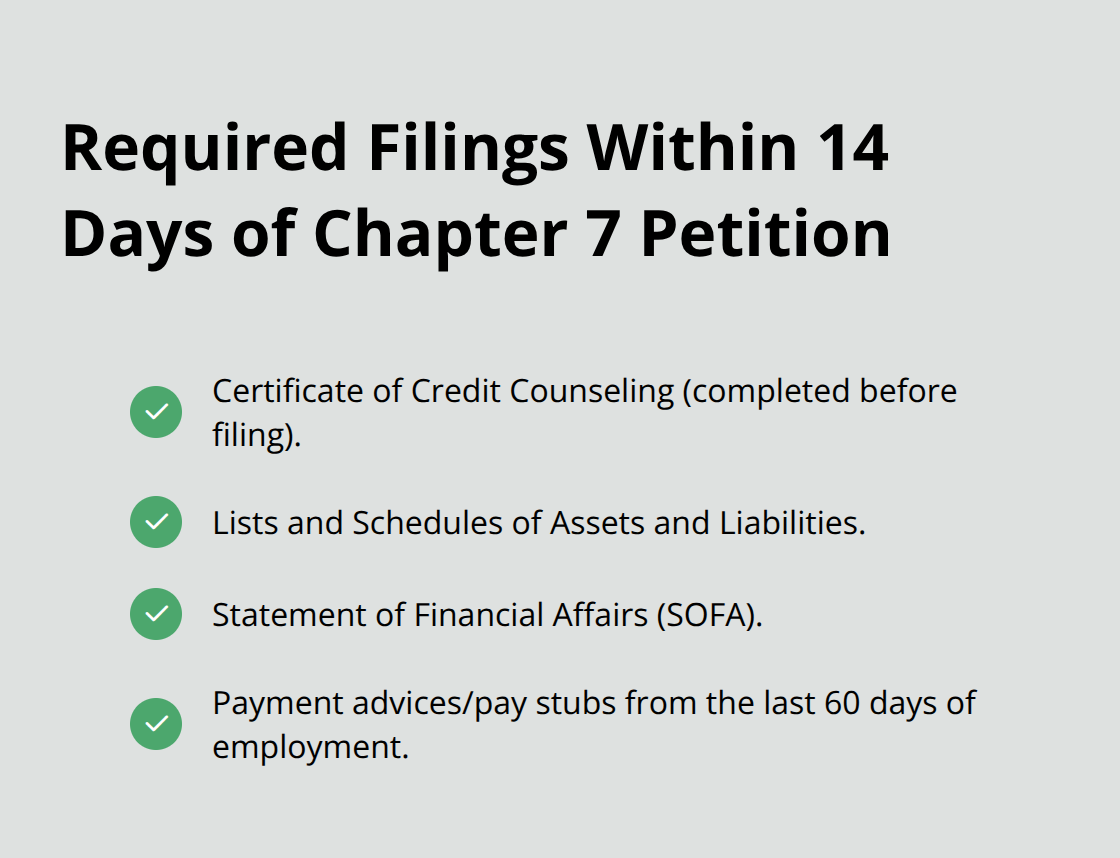
Your first two weeks after filing contain the heaviest burden of requirements. You must file your Certificate of Credit Counseling, complete Lists and Schedules of Assets and Liabilities, provide your Statement of Financial Affairs, and submit payment advices from your last sixty days of employment. Many people stumble here because they underestimate how much documentation the court demands, and the bankruptcy trustee assigned to your case will immediately request anything missing. The U.S. Trustee’s office maintains a list of approved credit counseling agencies, and you must use one of these before filing to avoid automatic dismissal.
What Slows Cases Down
Incomplete paperwork stands as the number-one reason Florida Chapter 7 cases take longer than expected. Missing tax returns, incorrect creditor addresses on your matrix, or inaccurate asset valuations force the trustee to send you back for corrections, which adds weeks to your timeline. Creditor objections and disputes over which debts you can discharge also extend the process, particularly if creditors challenge your income calculations or claim you have non-exempt assets worth recovering. Trustee investigations into your assets (especially if you own real estate or recently received an inheritance) can push your case well past the four-month mark.
How to Stay on Schedule
You can avoid most delays by arriving at your first filing appointment with every document organized and accurate. The trustee’s job is to liquidate assets and close the case efficiently-not to wait for you to gather paperwork months later. Organizing your financial records, tax returns, and creditor information upfront removes friction from the process. The court system moves forward on its own schedule, and your preparation determines whether you move with it or fall behind.
What Happens During Each Stage of Chapter 7 in Florida
Initial Filing and the Automatic Stay
Filing your Chapter 7 petition on Day One triggers the automatic stay, a court order that immediately stops creditor calls, wage garnishments, lawsuits, and collection letters. The stay remains in effect throughout your case, giving you breathing room while the trustee works through your finances. Within fourteen days of filing, you must submit your Certificate of Credit Counseling (completed before filing), Lists and Schedules of Assets and Liabilities, Statement of Financial Affairs, and payment advices from your last sixty days of employment. The court does not grant extensions on these deadlines-missing them results in dismissal. The U.S. Department of Justice U.S. Trustee Program requires this documentation upfront because the trustee needs complete financial visibility to liquidate non-exempt assets and distribute proceeds to creditors fairly.
Organizing Your Documents Before Day One
Incomplete filings waste time and money, so organize everything before Day One to avoid the most common pitfall that delays cases. Gather your tax returns, creditor contact information, asset valuations, and employment records in one place. This preparation removes friction from the process and signals to the trustee that you take your obligations seriously.
The 341 Meeting of Creditors
Your Meeting of Creditors, formally called the 341 meeting, occurs roughly twenty to forty days after filing and is not a court hearing despite its serious nature. You appear under oath, bring a current government-issued photo ID and your filed schedules, and answer questions from the trustee and any creditors who attend. The trustee focuses on verifying your income, assets, debts, and whether you have property they can sell to pay creditors. Creditors rarely show up in Chapter 7 cases, but when they do, they typically challenge your income calculations or claim you concealed assets.
Post-Meeting Obligations and the Discharge Timeline
After the 341 meeting, you have thirty days to complete what you pledged in your Statement of Intent-either surrender or keep collateral tied to secured debts like cars or furniture. Within sixty days of the first date set for your 341 meeting, you must complete the post-petition Financial Management Training course through an approved provider listed on the U.S. Trustee’s website and file Form B423 or have the agency notify the court directly. This compressed timeline means you cannot procrastinate; the court moves forward regardless of your readiness. The discharge typically arrives ninety to one hundred twenty days after filing, once the trustee confirms all assets have been liquidated, all required courses are complete, and no creditor objections remain unresolved. Some cases discharge faster if you have no non-exempt assets to liquidate, while others extend beyond six months if the trustee investigates asset valuations or creditors file formal objections to discharge.
Understanding these stages prepares you for what lies ahead, but knowing the timeline is only half the battle-many cases hit unexpected roadblocks that push them past the standard four-month window.
Common Delays in Florida Chapter 7 Cases
Missing or Incomplete Documentation
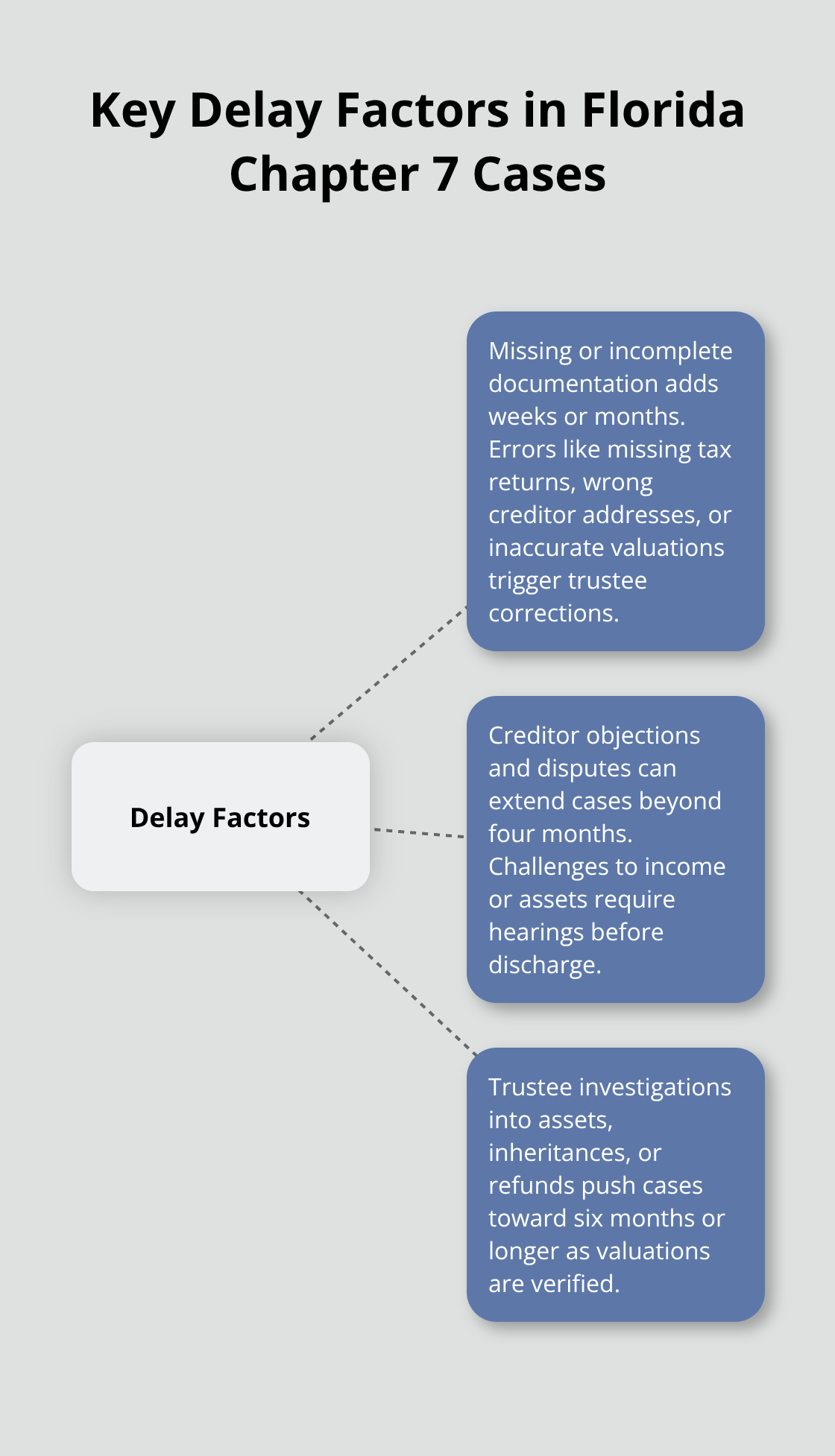
Missing or incomplete documentation stands as the primary reason Florida Chapter 7 cases stall. The U.S. Trustee requires your Certificate of Credit Counseling, complete Lists and Schedules of Assets and Liabilities, Statement of Financial Affairs, and sixty days of pay stubs within fourteen days of filing. A single missing document forces the trustee to request corrections, adding weeks or months to your timeline. Tax returns prove especially critical-you must provide your most recent federal return to the trustee at least seven days before your 341 meeting, and if you file jointly, both spouses need documentation. Courts process cases on fixed schedules, not around your document gathering.
Creditor Objections and Disputes
Creditor objections and disputes create the second major delay factor. When creditors challenge your income calculations or claim you concealed assets, the court must schedule hearings to resolve disputes before granting discharge. These objections typically extend cases beyond the standard four-month window. Creditors file formal challenges when they believe you have income or assets that could pay them, and the court takes these disputes seriously enough to halt your discharge timeline until resolution occurs.
Trustee Investigations and Asset Issues
The trustee’s investigation into your assets represents the third significant delay factor, particularly if you own real estate, received an inheritance within the past two years, or have tax refunds pending. Trustee investigations can push cases from ninety days to six months or longer as they verify asset valuations and determine what property qualifies as non-exempt and available for liquidation. The trustee’s role requires thorough verification before closing your case, and this diligence protects both creditors and the integrity of the bankruptcy process.
Preparation Strategies That Prevent Delays
Aggressive preparation before Day One removes most obstacles that slow cases. Organize your financial records, verify every creditor address for accuracy on your creditor matrix, and confirm asset valuations match court requirements. Courts reject filings with incorrect creditor information, forcing resubmission and delays. If creditors are likely to object (such as when you have significant income or recently received an inheritance), anticipate additional timeline extensions and prepare documentation to support your positions. A bankruptcy attorney who understands local Florida court practices removes guesswork from the process and helps prevent creditor objections through thorough case analysis.
Final Thoughts
Chapter 7 filing duration in Florida spans three to six months from petition to discharge, but the real challenge lies in meeting absolute deadlines and organizing documentation correctly. Missing even one deadline or submitting incomplete paperwork triggers dismissal, forcing you to start over and pay filing fees again. Creditor objections and trustee investigations add unpredictable delays, particularly if you own assets or have income that creditors believe could satisfy their claims.
We at Harnage Law, PLLC understand how overwhelming the Chapter 7 process feels when creditor calls, wage garnishments, and lawsuits pile up. Our role is to guide you through every stage, prevent common mistakes that extend timelines, and help you discharge qualifying debts so you can rebuild your financial future. The automatic stay stops creditor harassment immediately, and we protect your assets from liquidation where the law allows.
Contact Harnage Law, PLLC for a free consultation to discuss your specific situation and understand what your Chapter 7 filing duration will look like. We’ll review your finances, answer your questions about the process, and explain exactly what to expect at each stage. Visit our website to schedule your consultation and take control of your financial future today.