
Wage garnishment can take hundreds of dollars from your paycheck every month, leaving you struggling to cover basic expenses. If creditors are seizing your wages in Florida, you have a powerful option that stops the seizures immediately.
Chapter 7 bankruptcy activates what’s called an automatic stay, which halts all collection activities the moment you file. We at Harnage Law, PLLC help clients reclaim their paychecks and eliminate the debts driving these garnishments.
How Wage Garnishment Works in Florida
Wage garnishment in Florida starts when a creditor wins a judgment against you in court, then files a separate wage garnishment order with your employer. Your employer must withhold money from your paycheck and send it to the creditor. The process moves fast-creditors need minimal notice, and the IRS and Florida Department of Revenue can skip the court step entirely and garnish wages directly for tax debts. Once the order reaches your employer, the seizure typically begins within days.
Legal Limits on Garnishment Amounts
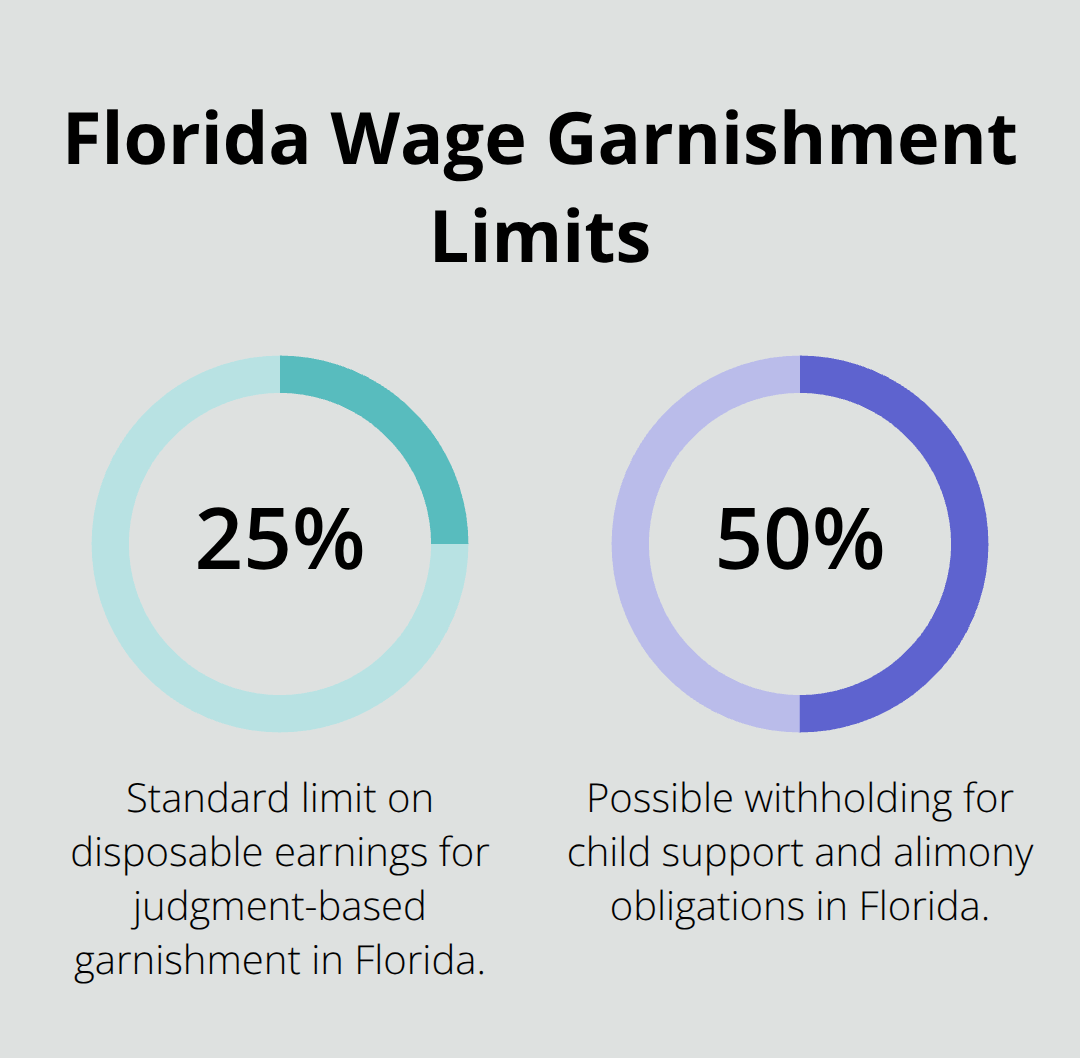
Florida law caps garnishment at 25 percent of your disposable earnings on judgments, though child support and alimony can reach 50 percent. The IRS enforced roughly 314,000 levy requests in 2024 alone, showing how aggressively wage garnishment is used across the country. If you owe back taxes, sales taxes, or child support, garnishment happens faster and without a court judgment.
Medical debt, credit card debt, personal loans, and utility arrears all qualify for garnishment once a creditor obtains a judgment.
Why Garnishments Continue
Once garnishment starts, it continues every pay period until the debt is paid in full, the judgment expires, or you take legal action to stop it. Each month that passes means hundreds of dollars leave your paycheck before you can pay rent, utilities, or food. The longer you wait, the more money the creditor collects.
Why Standard Negotiations Fail
Most people try to contact the creditor or garnishing agency to work out a payment plan, but this approach rarely stops the garnishment. The creditor has already invested in court proceedings and has no incentive to pause collection while you arrange payments. The Florida Department of Revenue moves even faster and can escalate collection actions within days of issuing an assessment. Negotiating a settlement with the DOR is possible under Florida Statute 213.67, with relief sometimes achievable within 48 hours, but this requires immediate legal action and knowledge of the specific statute. Without professional intervention, most wage earners simply watch their paychecks shrink month after month.
The reality is that wage garnishment traps you in a cycle where creditors control your income. Chapter 7 bankruptcy offers a different path-one that stops the seizures immediately and eliminates the debts behind them.
How Chapter 7 Stops Wage Garnishment in Florida
The Automatic Stay Halts Garnishments Immediately
When you file Chapter 7 bankruptcy, the automatic stay takes effect the moment your case reaches the court. This federal court order freezes wage garnishment instantly-creditors must stop collecting from your paycheck as soon as they receive notice of your filing, typically within days. This is not a request or negotiation; it is a binding legal mandate. The automatic stay also halts lawsuits, bank account levies, and creditor phone calls at the same time.
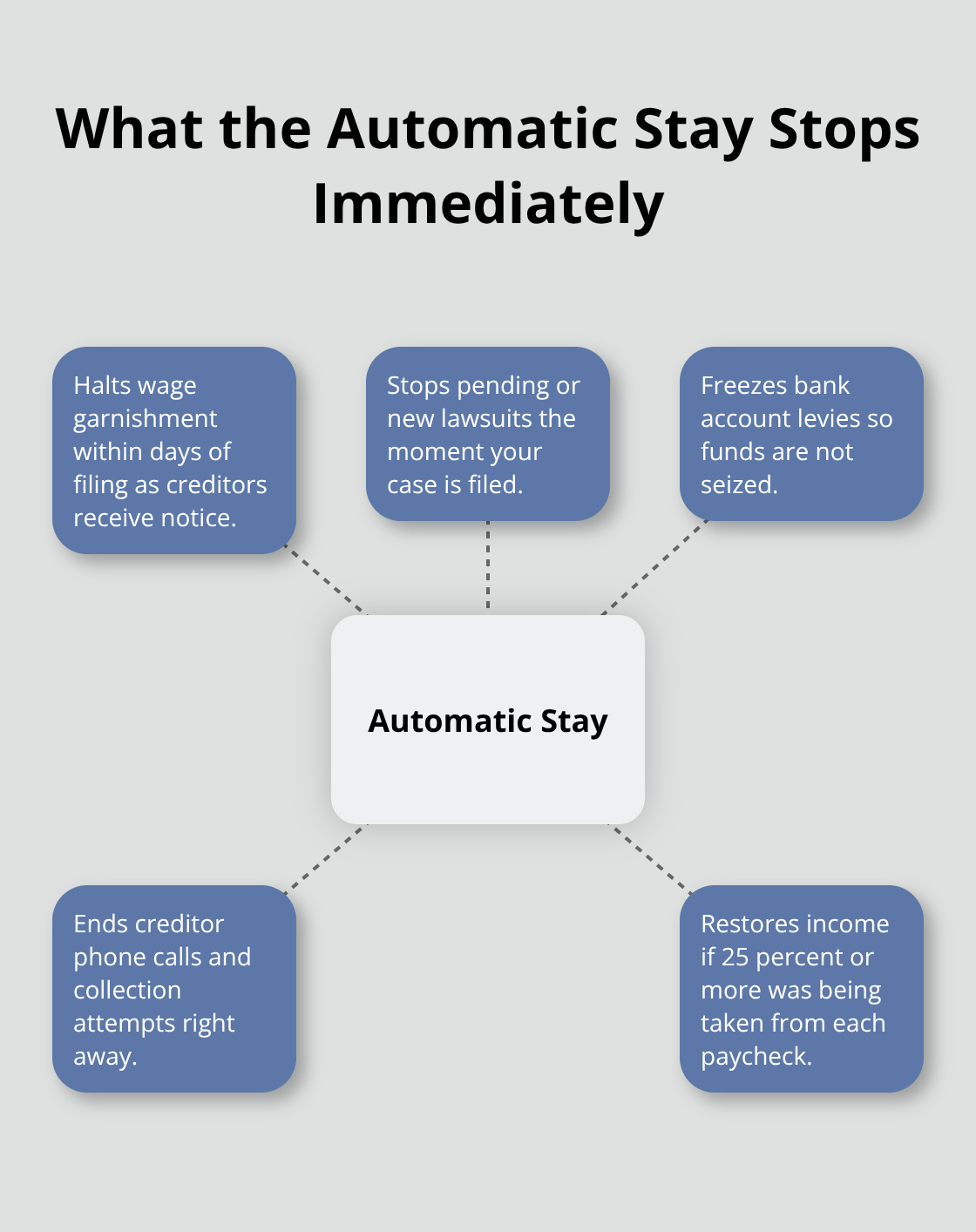
If you are losing 25 percent or more of each paycheck to garnishment, Chapter 7 restores that income to your household within days, giving you breathing room to cover rent, utilities, and food.
Debt Discharge Eliminates the Underlying Obligation
The second layer of relief comes from debt discharge. Chapter 7 eliminates most unsecured debts-credit cards, medical bills, personal loans, and utility arrears-within four to six months from filing. Once these debts are discharged, the underlying obligation vanishes, and the garnishment has no legal basis to continue. Your income is yours to keep, and creditors cannot touch it.
Tax Debts and Special Circumstances
Tax debts are generally nondischargeable, but the automatic stay can halt tax garnishments temporarily. Older tax debts (more than three years old) may be discharged if your returns were filed on time, ending related wage seizures. Child support and alimony cannot be discharged, so garnishments for those obligations may continue. However, Chapter 13 offers an alternative path to restructure these payments into a manageable plan.
Timeline and Protection During Bankruptcy
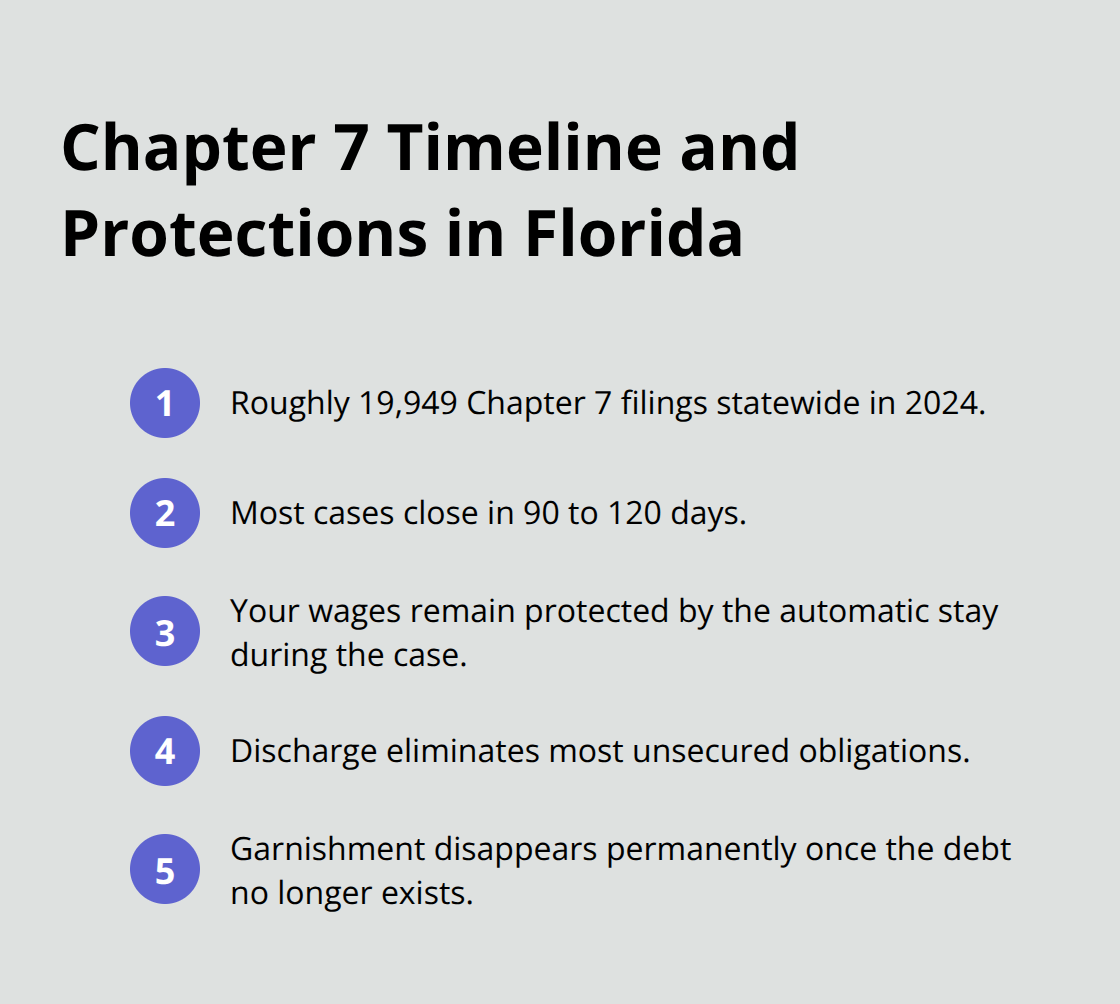
The 2024 Florida bankruptcy statistics show roughly 19,949 Chapter 7 filings statewide, with most cases closing in 90 to 120 days. During this window, your wages remain protected by the stay. Once discharge is entered, you emerge debt-free from most obligations, and the wage garnishment disappears permanently because the debt no longer exists.
The path forward depends on your specific financial situation and the types of debts you carry.
How Chapter 7 Delivers Real Financial Recovery
Medical Debt and Wage Garnishment
Medical debt stands as the leading cause of bankruptcy filings in the United States, and wage garnishment amplifies the financial damage when hospitals and collection agencies pursue court judgments. A client earning $3,500 monthly faced a 25 percent garnishment for $875 per month from a $12,000 hospital bill that insurance initially denied, then partially covered, leaving a balance that grew with collection costs. After the automatic stay took effect, the garnishment stopped within three days of filing Chapter 7. The discharge eliminated the medical debt entirely within 120 days, restoring $875 monthly to the client’s household budget. Without this relief, the client would have paid the creditor roughly $10,500 over the next year while struggling to cover mortgage and utilities.
Credit Card Debt Across Multiple Creditors
Credit card debt creates a different but equally damaging pattern because multiple creditors can pursue separate garnishments against the same paycheck. One client carried $28,000 across five credit cards and faced garnishment orders from three creditors totaling 45 percent of gross income, though Florida caps individual judgments at 25 percent. The overlapping orders created confusion about which creditor received priority, and the client’s take-home pay dropped from $3,200 to $1,760 monthly. Filing Chapter 7 halted all three garnishments immediately and discharged all five credit card balances within 110 days. The client reclaimed nearly $1,400 monthly in income and eliminated the underlying debt, making future garnishment impossible.
Personal Loan Garnishment Resolution
Personal loan garnishments follow the same pattern: a client with a $9,500 unsecured personal loan faced a judgment and wage seizure that would have extended collection efforts across two years. Chapter 7 stopped the garnishment on filing and discharged the loan within four months, permanently ending the creditor’s claim. The speed of Chapter 7 discharge-typically four to six months from filing to completion-means wage earners regain control of their paychecks far faster than negotiating payment plans with creditors or the Florida Department of Revenue.
Why Chapter 7 Outperforms Other Options
These outcomes reflect the core advantage of Chapter 7: the automatic stay halts garnishment immediately while the discharge process eliminates the debt entirely, preventing any future collection attempts. Clients who file typically recover hundreds of dollars monthly in spendable income while debts that would otherwise require years of payment vanish within months.
Final Thoughts
Wage garnishment relief in Florida requires immediate action because every paycheck that passes means more money lost to creditors. Chapter 7 bankruptcy stops this cycle fast-the automatic stay halts garnishments within days of filing, and the discharge process eliminates most unsecured debts within four to six months. Clients who file typically recover hundreds of dollars monthly in spendable income while debts that would otherwise require years of payment disappear entirely.
The speed of Chapter 7 matters because wage earners cannot afford to wait. Negotiating with creditors or the Florida Department of Revenue rarely stops garnishment, and payment plans stretch across years while your paycheck shrinks. Chapter 7 delivers relief on a different timeline, one measured in months rather than years.
Contact Harnage Law, PLLC for a free consultation to discuss your specific situation and determine whether Chapter 7 is the right path forward. The sooner you act, the sooner your paycheck returns to your household.