
The 341 meeting in Florida is a mandatory step in your Chapter 7 bankruptcy case. This hearing gives the trustee assigned to your case a chance to review your financial situation and ask questions about your assets and debts.
We at Harnage Law, PLLC know this meeting can feel intimidating if you’re unprepared. This guide walks you through what happens, what to expect, and how to get ready.
What a 341 Meeting Actually Is
The 341 meeting is a formal hearing required by Section 341 of the Bankruptcy Code where you meet with a bankruptcy trustee assigned to your case. The trustee is not a judge-this is an administrative proceeding, not a courtroom. The trustee’s job involves verifying your identity, reviewing the accuracy of your bankruptcy petition and schedules, and identifying whether you have any non-exempt assets that could be liquidated to pay your creditors. This meeting is called a meeting of creditors because creditors have the legal right to attend and ask questions, though in practice they rarely show up for consumer Chapter 7 cases. Data from the U.S. Courts shows that the vast majority of Chapter 7 filings result in a Report of No Distribution, meaning the trustee finds no assets to recover. You must appear and answer questions under oath. The meeting typically lasts five to ten minutes, though you should budget up to an hour for waiting time and the overall call. Missing this meeting carries serious consequences-the trustee can file a motion to dismiss your case, which means losing the automatic stay that protects you from creditor collection actions.
Understanding the Trustee’s Role
The trustee assigned to your case represents unsecured creditors and the government, not you. Their primary responsibility is to locate assets and liquidate them to pay creditors. The trustee will ask you questions about your financial condition, property ownership, and any transfers you made in recent years. You cannot rely on your attorney to answer these questions for you-you must tell the truth yourself. Testimony at the 341 meeting is recorded and can be used against you in disputes, so accuracy matters.
When Your Meeting Gets Scheduled
The 341 meeting is scheduled approximately 30 to 40 days after you file your bankruptcy petition. The court sends you a notice with the exact date, time, and instructions for joining via Zoom, which is the standard format as of 2026 for most Florida districts. You must have all required financial documents submitted to the trustee at least seven days before the meeting date.
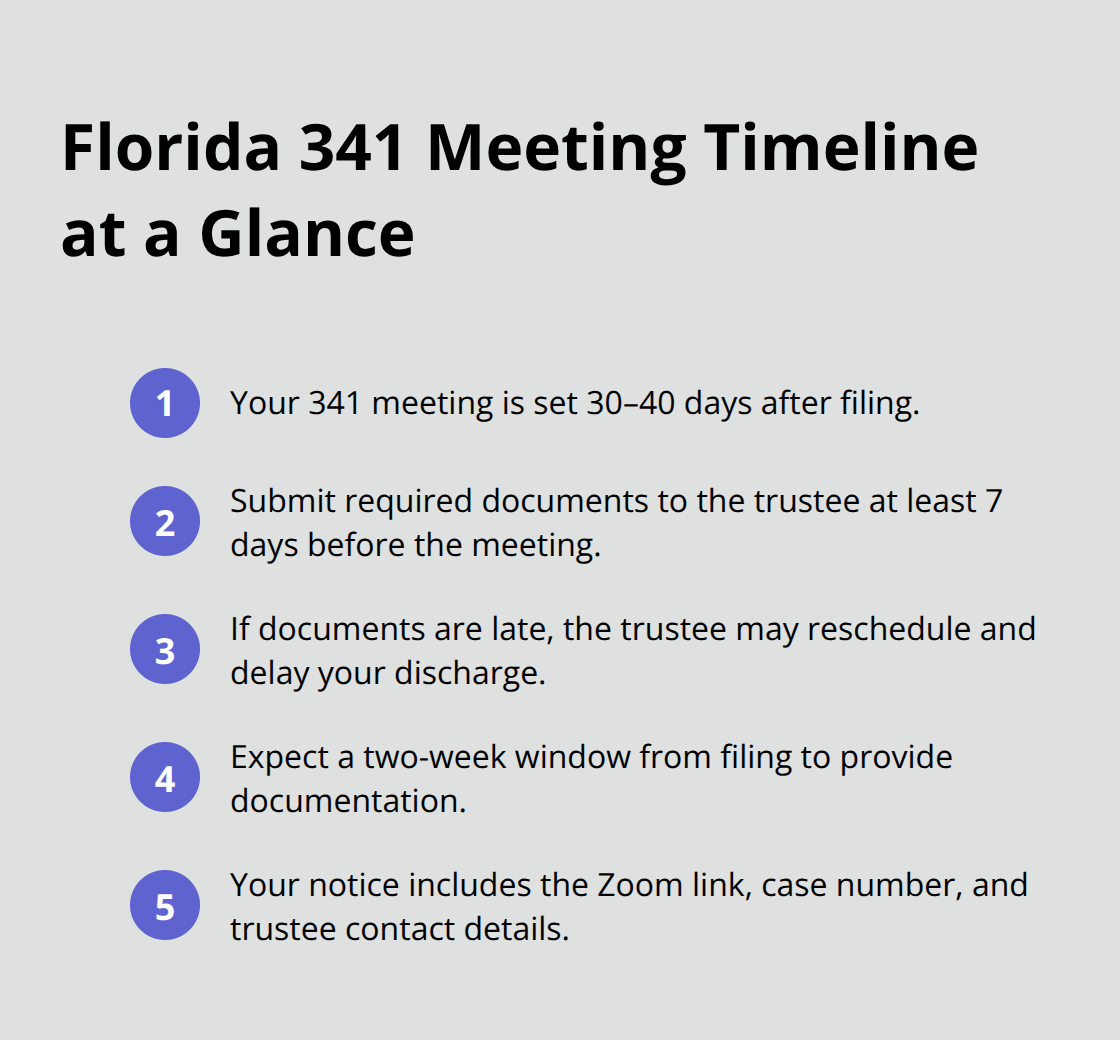
If you fail to provide documents on time, the trustee will reschedule your meeting, which delays your discharge. The trustee’s office typically gives you a two-week window from filing to submit your documentation, so acting immediately after filing is critical. The meeting notice includes your case number, trustee contact information, and the Zoom link you’ll use to attend. You cannot attend from a moving vehicle or public space-you must be in a quiet, private location with a stable internet connection.
What Documents You Must Submit
Before your meeting, you need to submit specific financial documents to the trustee. These include the last two years of federal tax returns, 90 days of bank statements (including the balance on the filing day), and 60 days of pay stubs. You must also provide valid government-issued photo ID and proof of your Social Security number.
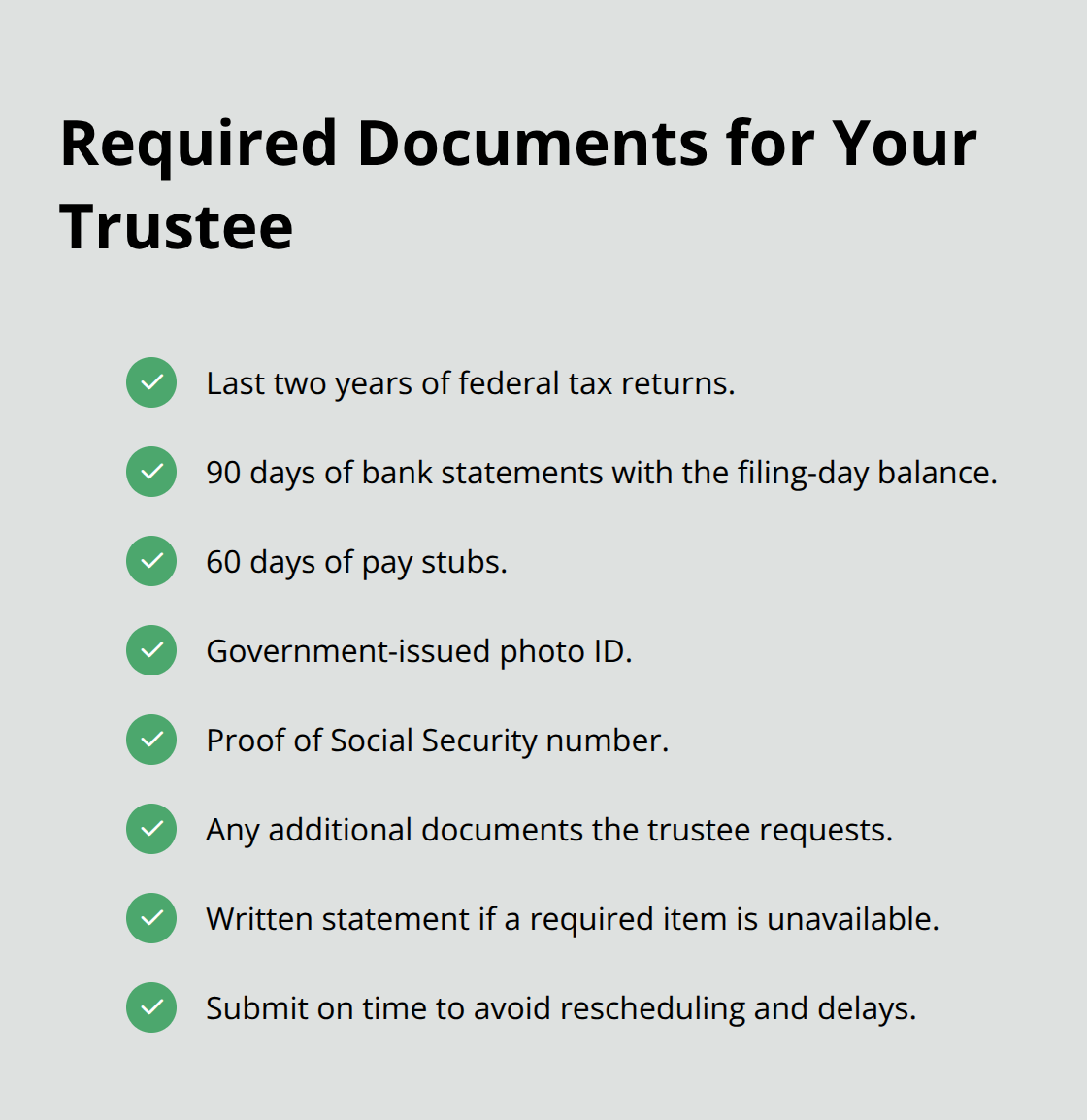
The trustee may request additional documentation depending on your case circumstances (such as documentation of monthly expenses or evidence of recent property transfers). If any required item is unavailable, you can provide a written statement explaining why. Submitting these documents on time prevents delays and shows the trustee you take the process seriously.
Preparing for the Virtual Format
As of 2026, most 341 meetings in Florida occur virtually via Zoom rather than in person at a courthouse. You will receive the Zoom link in your meeting notice along with instructions for joining. Test your internet connection before the meeting date to avoid technical problems. Sit in a quiet, private location where you won’t be interrupted, and avoid any distractions during the call. Dress professionally, just as you would for an in-person hearing. The virtual format makes attendance easier for most people, but it requires the same level of preparation and professionalism as a traditional courtroom appearance. With your documents submitted and your location secured, you’re ready to understand what questions the trustee will ask and how to answer them effectively.
What Happens During Your 341 Meeting
The 341 meeting brings together you, the trustee, and potentially creditors, though creditors rarely attend consumer Chapter 7 cases. The trustee will ask you questions under oath about your financial condition, and your answers will be recorded. The trustee is not your advocate-they represent unsecured creditors and the government. Their job is to identify whether you have non-exempt assets that could be liquidated to pay creditors. You must answer all questions truthfully and directly. Short, honest answers work best; long explanations or evasive responses like “I don’t know” or “I can’t remember” create red flags. The trustee will have reviewed your bankruptcy petition and schedules before the meeting, so they will ask questions that target specific information you provided. The meeting typically lasts only five to ten minutes of actual questioning, though the overall Zoom session may run longer due to other cases being called. If you file jointly with a spouse, both of you must attend and answer questions under oath.
Standard Questions the Trustee Will Ask
The trustee follows a consistent line of questioning in every Chapter 7 case. They will ask whether you signed the bankruptcy petition, whether you read it, and whether all information is truthful and complete. They will confirm your current address and ask whether you have moved since filing. The trustee will inquire about prior bankruptcy filings and whether you have any domestic support obligations like child support or alimony. They will ask about all assets you own and all debts you owe, including whether anyone owes you money. The trustee will question large purchases, sales, or leases in the past twelve months and ask about gifts to family members of $1,000 or more in the past four years. They will ask about transfers or donations of property in the past four years. If you own or owned real estate, expect questions about what happened to that property and what you did with any proceeds. The trustee will ask about mortgage payments and retirement contributions in the past twelve months. They may ask how long you have lived at your current residence and whether you have joint debts with a spouse. Prepare to explain in one sentence why you filed bankruptcy-examples include unemployment, medical problems, or reduced income. The trustee may ask whether you are using or paying on credit cards after filing. These questions verify the accuracy of your schedules and identify any assets or transactions that could affect your case.
How to Answer Trustee Questions Effectively
Your answers must be truthful, brief, and direct. The trustee disfavors vague responses or claims that you cannot recall information. If you genuinely do not know an answer, say so, but try to provide specific details whenever possible.
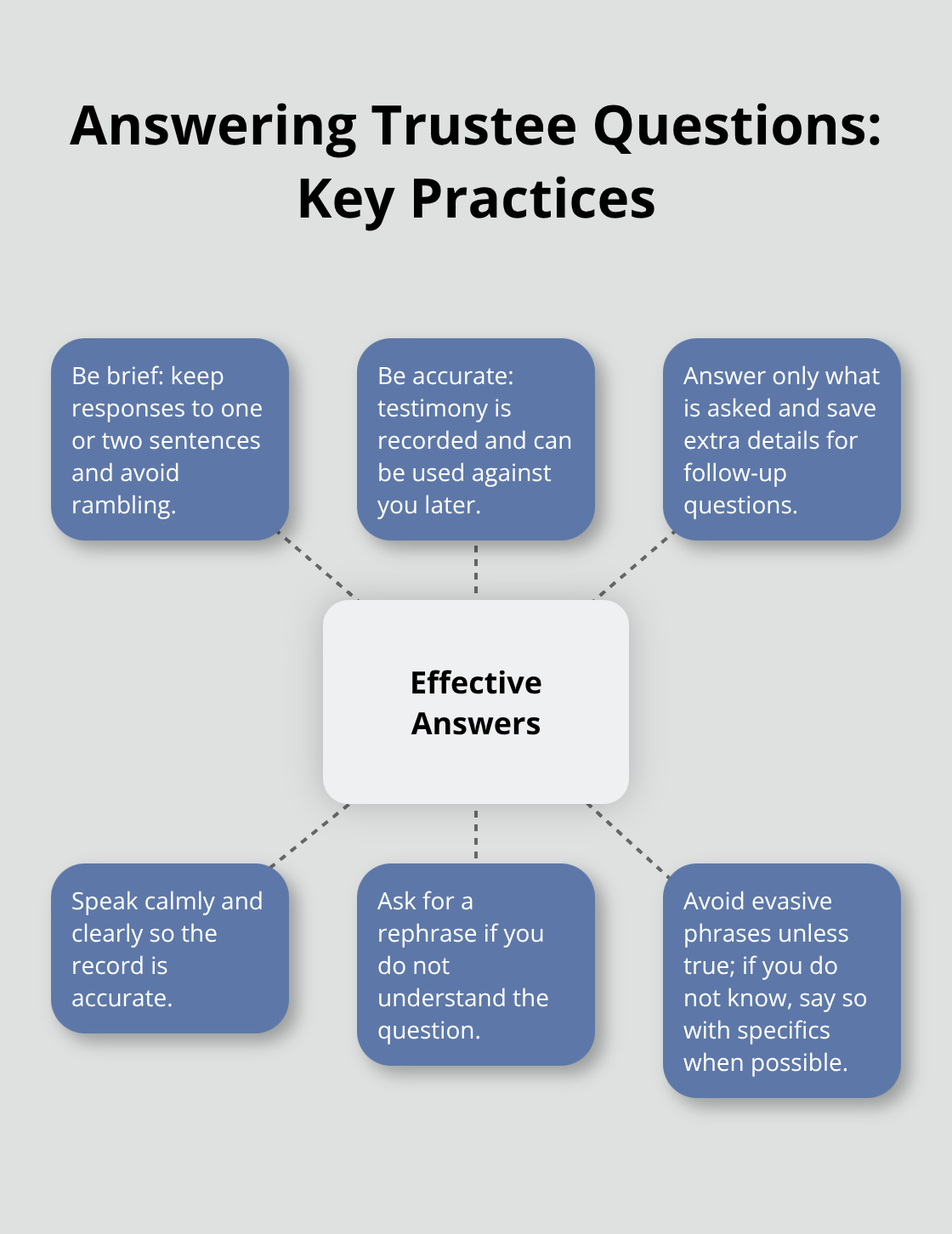
Long explanations or rambling answers confuse the record and may raise suspicion. One or two sentences typically suffice for each response. Testimony at the 341 meeting is recorded and can be used against you in disputes, so accuracy matters far more than elaboration. If the trustee asks a follow-up question, answer that question directly without volunteering additional information. Stay calm and speak clearly so the court reporter captures your words accurately. If you do not understand a question, ask the trustee to rephrase it rather than guessing at what they mean.
Documents to Have Ready During Your Zoom Call
While you submit most documents to the trustee before the meeting, you must have certain items ready during the Zoom call. Bring your valid government-issued photo ID and proof of your Social Security number-acceptable documents include your Social Security card, a W-2, or a 1099 form. Have your bankruptcy petition and schedules available so you can reference them if the trustee asks follow-up questions. The trustee may ask you to confirm specific information from your schedules, so reviewing them thoroughly before the meeting prevents stumbling over answers. If you made any errors or omissions when filing, you can correct them during the meeting, and your attorney can help you file an amended schedule if needed. Do not bring original documents to the Zoom call unless the trustee specifically requests them-digital copies of everything you submitted are sufficient for the virtual meeting. Once the trustee completes their questioning and files their report with the court, you move toward the final stage of your Chapter 7 case: receiving your discharge order.
How to Prepare for Your Florida 341 Meeting
Review Your Bankruptcy Petition and Schedules Thoroughly
The difference between a smooth 341 meeting and a problematic one comes down to preparation. Read your bankruptcy petition and schedules line by line at least three times before your meeting date. Most trustees ask follow-up questions based on specific numbers or statements you made in these documents, so familiarity prevents you from appearing confused or evasive when the trustee asks about a particular asset or debt. Print out a copy and mark any information you want to verify or correct. If you find errors, contact your attorney immediately so they can file amended schedules before the meeting. The trustee will notice if your answers during the meeting contradict what you submitted on paper, and inconsistencies raise red flags that could complicate your case or delay your discharge. Spend at least one hour reviewing these documents, not skimming them. Many people file bankruptcy while stressed and exhausted, so reviewing your own petition often reveals details you forgot you included.
Practice Answering Standard Trustee Questions
Have someone you trust, such as your attorney or a family member, ask you the questions listed in the earlier section of this guide. Answer out loud rather than in your head, because speaking forces you to formulate clear responses and catches awkward phrasing or rambling explanations. Keep your answers to one or two sentences maximum. If the practice questioner asks about a large purchase you made before filing, you should be able to explain it in one sentence: for example, “I purchased a used vehicle for $8,000 in March 2025 because my previous car broke down and I needed reliable transportation for work.” That answer is direct, factual, and shows the trustee you made a reasonable decision. Practice until your answers feel natural and you can deliver them without hesitation. The U.S. Courts and the U.S. Trustee provide a YouTube playlist with common 341 meeting scenarios that show real examples of how trustees conduct meetings and what effective answers sound like. Watching these videos takes 20 to 30 minutes and significantly reduces anxiety because you see the actual format and tone of the meeting.
Dress Professionally and Position Yourself Correctly
On the day of your 341 meeting, wear business casual or business professional clothing, just as you would for a job interview or court appearance. Even though the meeting is virtual via Zoom, your appearance affects how you feel and how you present yourself. Wear a button-up shirt, blouse, or blazer in a neutral color. Avoid graphic t-shirts, tank tops, or clothing with holes or stains. Sit upright in a chair rather than on a bed or couch, and position yourself so your face and shoulders are clearly visible to the camera. Look at the camera when speaking rather than at the screen.
Maintain Composure and Speak Clearly During the Meeting
Maintain a calm, respectful tone throughout the meeting. The trustee is not your enemy, and treating them with courtesy makes the proceeding more efficient. Answer questions directly without becoming defensive or angry. If the trustee asks a question you do not understand, say so and ask them to rephrase it rather than guessing at what they mean. Speak clearly and at a moderate pace so the court reporter captures your words accurately. Short, honest answers work best; long explanations or evasive responses like “I don’t know” or “I can’t remember” create red flags. Testimony at the 341 meeting is recorded and can be used against you in disputes, so accuracy matters far more than elaboration.
Final Thoughts
The 341 meeting Florida process becomes manageable when you prepare thoroughly. You now understand that this meeting is an administrative proceeding where the trustee verifies your identity, reviews your petition accuracy, and identifies any non-exempt assets. The trustee will ask direct questions about your finances, and you must answer truthfully and briefly.
We at Harnage Law, PLLC guide you through every stage of your Chapter 7 case, including thorough preparation for your 341 meeting. Our team handles document organization, schedule accuracy, and trustee communication, allowing you to focus on moving forward. If you have questions about your upcoming 341 meeting or need guidance on your Chapter 7 case, contact Harnage Law, PLLC for a consultation.
After your 341 meeting concludes and the trustee files their report, your case moves toward the final discharge order. This discharge eliminates your qualifying debts and gives you the fresh financial start you deserve. Stay in contact with your attorney during this final phase to address any remaining trustee requests and ensure your discharge arrives on schedule.
