Losing your home in bankruptcy isn’t inevitable. Florida law offers powerful protections that can help you keep your residence even while filing Chapter 7.
We at Harnage Law, PLLC have guided hundreds of Florida residents through keep home bankruptcy strategies that actually work. This guide walks you through six concrete approaches to protect your property.
Why Florida’s Homestead Stands Apart
Florida offers what most states cannot: unlimited homestead protection for your primary residence. While other states cap homestead exemptions at $50,000 to $500,000, Florida allows you to shield your entire home value from creditors in Chapter 7 bankruptcy, regardless of how much equity you’ve built. This protection applies only to your primary residence where you actually live, not vacation homes or investment properties. You must have owned the home for at least 1,215 days before filing bankruptcy, and the property must stay within acreage limits. For homes inside city limits, the protection covers up to half an acre; outside municipalities, you can protect up to 160 acres.
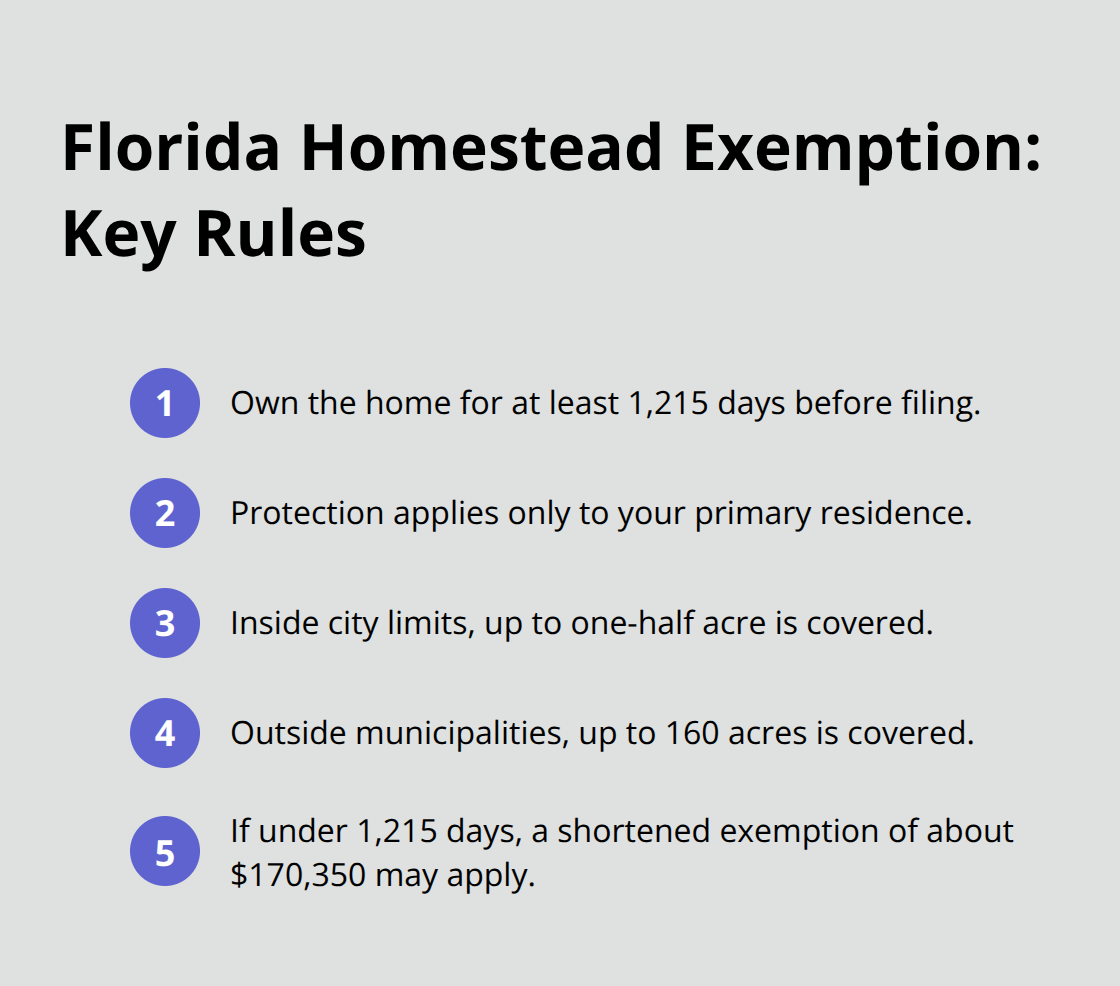
If you haven’t met the 1,215-day ownership requirement, Florida still protects approximately $170,350 in home equity through its shortened homestead exemption. This amount covers most mortgages in Florida, meaning even newer homeowners frequently keep their residences through Chapter 7. States like California and Texas have similar unlimited exemptions, but Florida’s straightforward statute under Section 222.01 makes the process clearer for filers. Your home equity calculation matters most: take your current home value from Realtor.com or Zillow, subtract all liens including your mortgage and any home equity lines of credit, and that remaining number gets protected by Florida’s homestead exemption in Chapter 7.
Understanding your exact equity position sets the stage for the next critical step: documenting your primary residence status before filing.
Strategy 1: Document Your Primary Residence Status Before Filing
Florida’s 1,215-day ownership requirement isn’t flexible, and proving you meet it takes real documentation. Start gathering utility bills from the past three years, voter registration records, and property tax statements immediately. These documents form the backbone of your residency claim and show the trustee you’ve maintained continuous occupancy. Your driver’s license, lease agreements if you rented before purchasing, and insurance policies all strengthen your timeline. The Florida Department of State’s voter registration database provides a clear ownership history that trustees respect, so verify your registration matches your filing address and ownership dates.
The trustee will scrutinize your timeline because courts have seen people artificially time homestead exemptions to avoid creditors. Fraudulent conveyance claims arise when someone transfers property shortly before filing, so maintain a clean ownership record going back at least 1,215 days. If you purchased your home within that window, you still retain approximately $170,350 in protection, which covers most Florida mortgages. Tax deed records and title insurance documents prove acquisition dates better than memory-pull these from your county clerk’s office or title company now. Missing or inconsistent documentation forces trustees to dig deeper into your finances, and this scrutiny potentially uncovers issues you’d rather keep private. Your next step involves calculating exactly how much home equity you can shield through Florida’s exemption limits.
Strategy 2: Calculate Your Home Equity Against Exemption Limits
Your home equity is the only number that matters in Chapter 7 protection-everything else flows from this single calculation. Take your current home value from Zillow or Realtor.com, then subtract every dollar you owe against the property. This includes your primary mortgage, home equity lines of credit, second mortgages, property tax liens, and HOA liens. If you own the home with a spouse as tenants by the entirety, Florida law may shield the entire property from individual creditor claims even if only one spouse files bankruptcy, provided the other spouse doesn’t file. Joint ownership as tenants in common splits the exemption: married couples can claim up to $340,700 in combined homestead protection if both spouses meet the 1,215-day rule, while individual filers get the full unlimited amount for their share.
Property appraisers often overvalue homes, and trustees notice inflated numbers immediately. Use conservative estimates from multiple sources-Zillow’s Zestimate, county property appraiser records, and comparable sales in your neighborhood all provide realistic ranges. If your equity sits below the homestead exemption limit, Chapter 7 poses no threat to your home; the trustee has no reason to sell property that’s fully protected. Second mortgages and HELOCs create additional complications because they function as liens that survive Chapter 7 discharge unless you reaffirm them with the lender. If your HELOC balance exceeds your available equity after subtracting the primary mortgage, that junior lien holder has no recoverable value, and Chapter 7 simply passes through without forcing liquidation.
These equity calculations set the stage for the next critical consideration: navigating the federal means test while protecting your home.
Strategy 3: Navigate the Means Test While Protecting Your Home
The federal means test determines whether your income qualifies you for Chapter 7 in Florida, and mortgage payments directly reduce the income figure the trustee examines. The U.S. Trustee Program requires you to file Form B122A-1 (Statement of Your Current Monthly Income) for all individual Chapter 7 filers, using current monthly income data from Census Bureau averages and IRS figures specific to Florida counties. Your mortgage payment-principal, interest, taxes, and insurance combined-gets deducted from your gross income before the trustee calculates whether you have disposable income available to repay unsecured debts. Florida’s median income thresholds vary by household size: a single filer with income below the state median faces less scrutiny than someone above it, though exceeding median income doesn’t automatically disqualify you from Chapter 7.
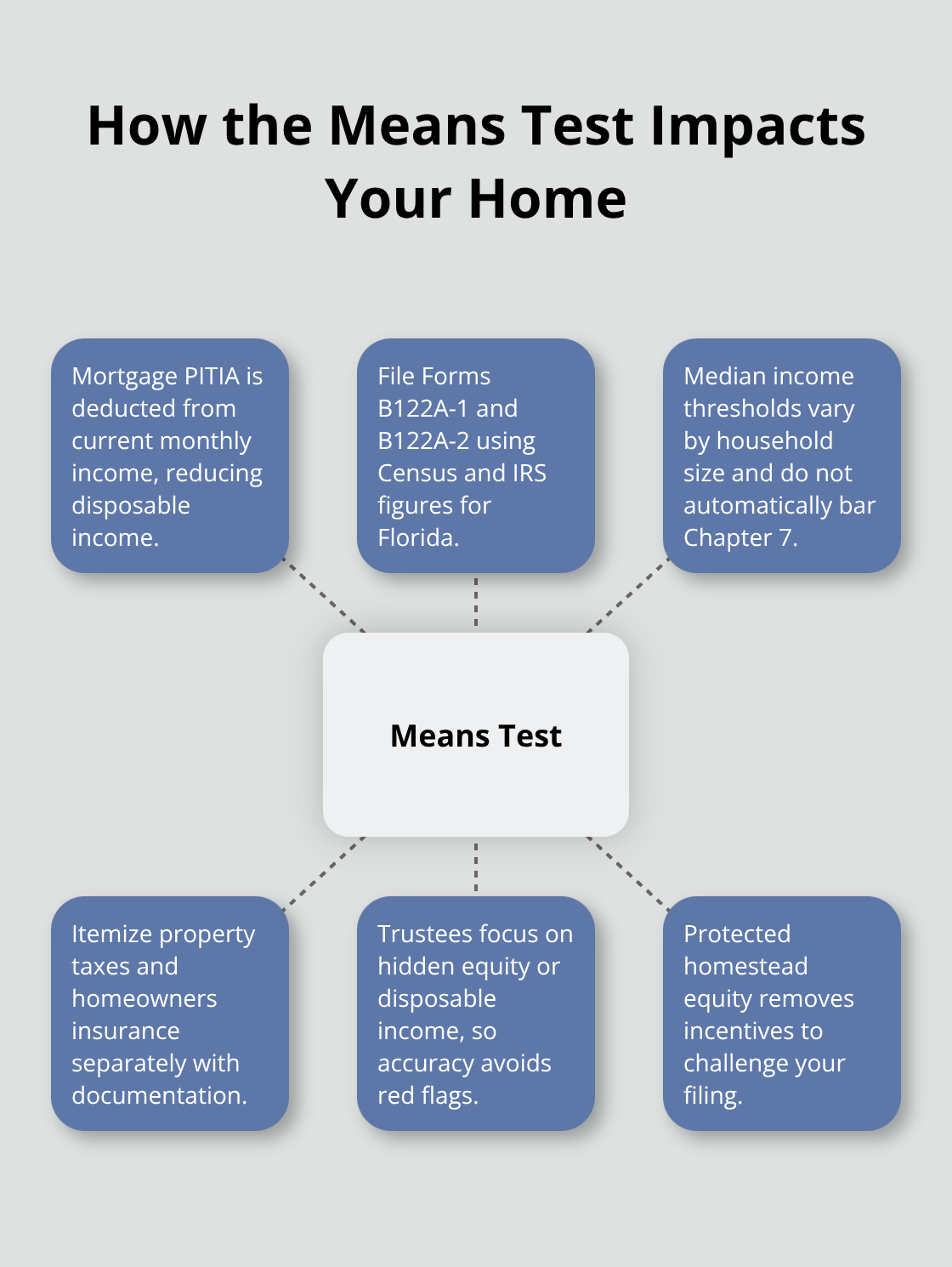
The trustee’s primary concern involves whether you’re hiding equity or disposable income that should fund a Chapter 13 plan instead, so accurate mortgage documentation prevents false red flags during your case.
Property taxes and homeowners insurance require separate itemization on your means test filing, not lumped into a general mortgage payment figure. The Form B122A-2 (Means Test Calculation) has specific lines for these expenses, and trustees expect documentation showing actual monthly costs from your insurance declarations and tax assessment notices. If your home equity sits fully protected under Florida’s homestead exemption, the trustee has zero incentive to challenge your Chapter 7 filing or question your home’s value. Overestimating these housing expenses raises trustee suspicion and invites deeper financial review, while underestimating them suggests you’re hiding disposable income. Accurate housing cost reporting prevents unnecessary complications and moves your case toward discharge, setting the stage for the next strategic consideration: timing your bankruptcy filing to maximize home protection.
Strategy 4: Time Your Filing to Maximize Protection
Property purchases within 1,215 days of your filing date create immediate complications because you won’t qualify for unlimited homestead protection yet. If you bought your home less than four years ago, Florida still shields approximately $170,350 in equity, which covers most mortgages, but waiting those extra months until you cross the 1,215-day threshold eliminates trustee arguments about timing and removes any question about fraudulent conveyance. Home improvements completed shortly before filing raise red flags because trustees investigate whether you artificially inflated equity to avoid creditors. If you renovated your kitchen or added a room within six months of planning bankruptcy, the trustee will demand receipts, contractor invoices, and proof the work actually increased property value rather than serving as a last-minute asset protection scheme.
Foreclosure timelines demand strategic coordination because filing Chapter 7 triggers an automatic stay that halts foreclosure proceedings immediately, but this protection lasts only while your case remains active. If your lender has already filed a foreclosure action, filing bankruptcy before the sale date preserves your opportunity to reaffirm the mortgage and catch up payments through a potential Chapter 13 conversion later. Seasonal property valuations fluctuate based on market conditions, and winter months typically show lower values in Florida than spring, so filing during slower market periods provides conservative equity calculations that trustees accept without challenge. Zillow and Realtor.com update valuations quarterly, and checking these sites before filing gives you a realistic baseline that matches what the trustee will independently verify. The timing between your filing date and any property transfers, improvements, or refinancing matters significantly because trustees examine the 180 days before filing most closely, so you should avoid major financial moves during this critical window.
Liens and junior mortgages add another layer of complexity that requires proactive attention before you file. Understanding Chapter 7 bankruptcy costs helps you budget for filing fees and trustee expenses, which range from $338 in court costs plus additional professional fees depending on your situation. These expenses factor into your overall financial strategy and should be calculated before you commit to a filing date.
Strategy 5: Address Liens and Junior Mortgages Proactively
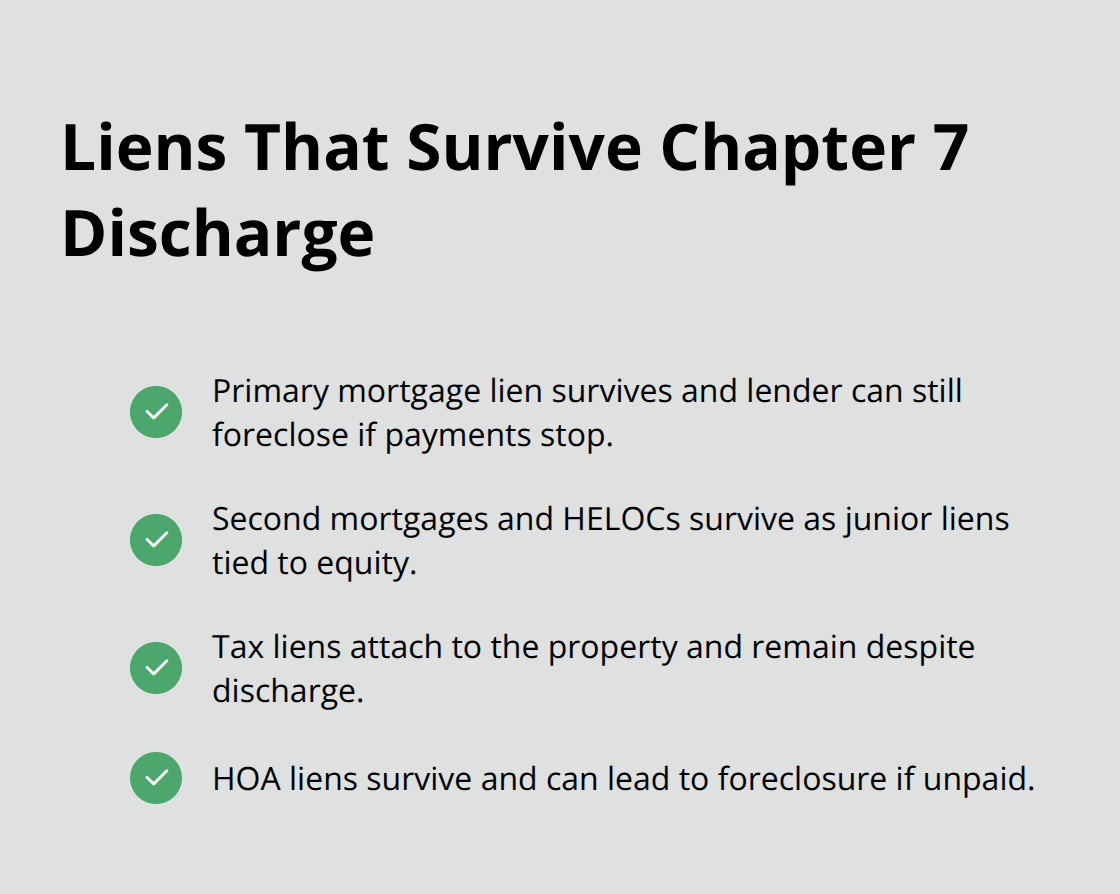
Chapter 7 treats different liens very differently, and understanding these distinctions prevents nasty surprises after discharge. Your primary mortgage lien survives Chapter 7 discharge under 11 U.S.C. § 362, meaning the lender can still foreclose if you stop paying, even though you’ve discharged personal liability for the debt. Second mortgages and home equity lines of credit function as junior liens that also survive discharge, but their value depends entirely on your home equity position. Tax liens from unpaid state or federal income taxes attach to your property and survive discharge as well, though Florida’s homestead exemption may shield the equity underneath. HOA liens for unpaid assessments and special fees behave like mortgage liens and survive discharge, allowing the HOA to foreclose if amounts remain unpaid after your case closes.
You’ll need reaffirmation agreements with your primary mortgage lender to keep your home post-discharge. Reaffirmation requires a written agreement acknowledging the debt survives bankruptcy, and federal law under 11 U.S.C. § 524(c) mandates court approval before it becomes binding. Most mortgage servicers automatically offer reaffirmation if you’re current on payments, but some require you to initiate the request yourself. For junior liens and HOA obligations, reaffirmation is optional, and many Chapter 7 filers skip it entirely if the lien holder has no recoverable equity. If you’re behind on mortgage payments, Chapter 7 won’t cure arrearages, making Chapter 13 the better option to catch up missed payments over three to five years and actually keep the home through a structured repayment plan.
Understanding trustee scrutiny of your documentation and exemption claims becomes the next critical step in protecting your home through Chapter 7.
Strategy 6: Prepare for Trustee Scrutiny
Trustees flag several patterns that trigger deeper investigations into your finances and exemption claims. Missing or inconsistent documentation about your ownership timeline, sudden property transfers within six months of filing, and equity calculations that seem inflated compared to public records all raise red flags immediately. If you’ve transferred property to family members, refinanced recently, or made large cash withdrawals before filing, the trustee will demand explanations and supporting documents. Organize your deed records, title insurance policy, mortgage statements, and property tax assessments now to prevent scrambling during your case. Keep originals of your purchase agreement, closing disclosure, and any title company correspondence because these establish your ownership date and protect you against fraudulent conveyance accusations.
When the trustee requests asset information through formal interrogatories and document demands, respond completely and promptly rather than delaying or providing partial answers. Trustees notice when filers undervalue their homes on schedules compared to county appraiser records or Zillow estimates, and this discrepancy invites professional appraisals that cost time and money. If your equity genuinely sits below the homestead exemption limit, trustees rarely challenge your exemption claims because they have no financial incentive to investigate further. Conversely, if your calculations show nonexempt equity, trustees will scrutinize every detail of your ownership history and valuation methods. Accurate, well-documented responses to all trustee inquiries move your case toward discharge faster than defensive or incomplete answers that force follow-up investigations and delay your financial recovery.
Final Thoughts
Chapter 7 discharge arrives within four to six months of filing, and that’s when your financial recovery truly begins. The automatic stay that halted creditor calls and collection lawsuits expires once your case closes, but the discharge itself eliminates personal liability for most unsecured debts. Your mortgage obligation remains because you reaffirmed it, and staying current on those payments rebuilds your credit score faster than almost any other action you can take.
Florida legal aid organizations provide free credit counseling and financial planning resources after discharge, helping you avoid the spending patterns that created your original debt crisis. Organizations like Florida’s Community Legal Services offer post-bankruptcy financial literacy courses that teach budgeting, emergency fund building, and responsible credit use without charging fees. These resources exist specifically for people rebuilding after bankruptcy, and using them demonstrates to future lenders that you’ve learned from your financial challenges.
Your path to keeping your home through keep home bankruptcy requires accurate documentation, strategic timing, and professional guidance that accounts for Florida’s unique homestead protections. Contact Harnage Law, PLLC to discuss your specific situation and learn how we can help you protect your residence while achieving financial recovery.