Chapter 7 bankruptcy offers Florida residents a path to eliminate overwhelming debt and start fresh financially. This Florida Chapter Seven guide walks you through the entire process, from eligibility requirements to life after discharge.
We at Harnage Law, PLLC help people understand what they’ll protect, what debts disappear, and how long recovery takes. You’ll learn concrete steps to rebuild your financial foundation.
How Chapter 7 Bankruptcy Unfolds in Florida
The Automatic Stay and Initial Filing
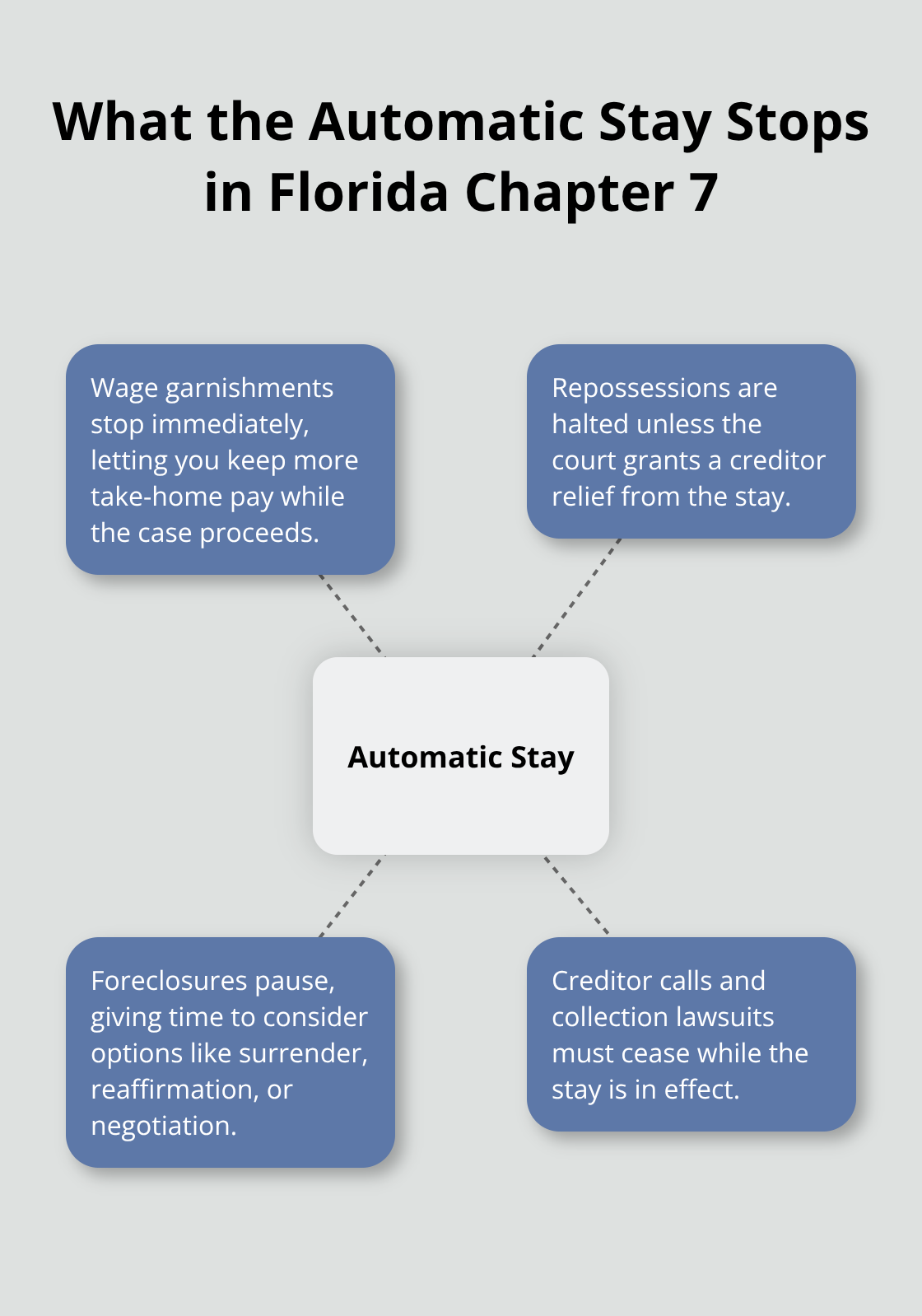
Chapter 7 bankruptcy starts the moment you file your petition with the court, and an automatic stay takes effect almost immediately. This stay halts wage garnishments, repossessions, foreclosures, and creditor calls-giving you breathing room while the process moves forward. You submit detailed financial documents including your income, assets, debts, expenses, and recent financial transactions to the court.
Income Testing and Eligibility
The U.S. Trustee Program examines your current monthly income against Florida’s median income for your household size to determine eligibility. If your income falls at or below the median, you generally qualify without further scrutiny. Even if your income exceeds the median, the means test considers your necessary monthly expenses like housing, transportation, food, and utilities. The U.S. Trustee Program’s Means Testing Information resource uses Census Bureau data and IRS expense multipliers to establish allowable deductions for this calculation.
The 341 Meeting and Discharge
Within roughly 3 to 6 months, you attend a brief 341 Meeting of Creditors where the trustee and occasionally creditors ask questions about your finances. Most people find this meeting straightforward and less intimidating than expected. After the trustee confirms your eligibility and no creditor objections arise, the court issues a discharge order that eliminates most of your unsecured debts.
Debts That Disappear and Those That Remain
Credit card balances, medical bills, personal loans, and most collection accounts vanish under Chapter 7 discharge. Unsecured debts like these have no collateral backing them, making them prime candidates for elimination. However, certain debts survive bankruptcy and remain your responsibility: student loans, child support, alimony, most recent tax debts, criminal fines, and any debt incurred after filing. Co-signers on your accounts may still face liability even after your discharge, since the bankruptcy only affects your personal responsibility.
Costs and Required Courses
The filing fee stands at $338, though you can request installment payments or a fee waiver if you meet poverty guidelines using Official Bankruptcy Form 103B. Before filing, Florida law requires you to complete a credit counseling course from an agency approved by the U.S. Trustee. Additionally, you must file a Personal Financial Management Course certificate within 60 days after the first date set for your 341 meeting to finalize your discharge. These requirements help you understand debt management and receive guidance on rebuilding your financial life. Chapter 7 moves quickly compared to Chapter 13 (which involves a 3 to 5 year repayment plan), making it the fastest route to debt elimination for those who qualify. Understanding what assets you can protect under Florida law becomes your next priority as you move through the filing process.
What You Keep and What Disappears in Florida Chapter 7
Florida’s Homestead and Vehicle Protections
Florida’s exemption laws rank among the strongest in the nation, and this matters enormously for your Chapter 7 filing. Your primary residence receives unlimited protection under Florida’s homestead exemption, provided you own the property for at least 1,215 days before filing and the home sits on no more than 0.5 acre in a municipality or 160 acres elsewhere. If you haven’t met the 1,215-day ownership requirement, a federal cap of $214,000 applies instead, according to 11 U.S.C. § 522(p).
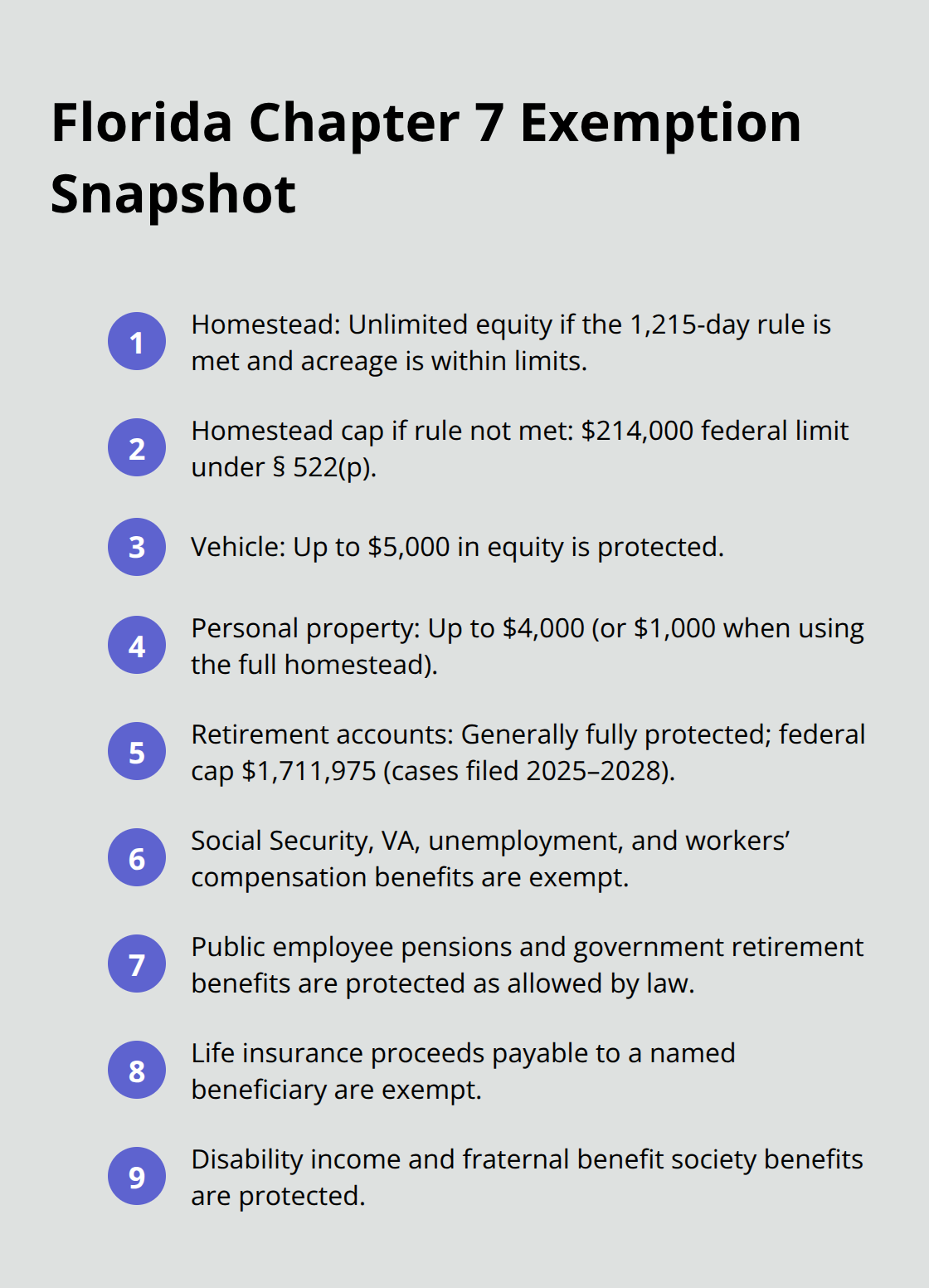
You can shield up to $5,000 in equity in one motor vehicle, protecting either a financed car or one you own outright.
Personal Property and Retirement Account Exemptions
Personal property exemptions allow you to protect up to $4,000 in household items and other belongings, or $1,000 if you’re using the full homestead exemption. Most tax-qualified retirement accounts receive complete protection, with a federal cap of $1,711,975 per person for cases filed between April 1, 2025 and March 31, 2028. Social Security benefits, veterans benefits, unemployment assistance, and workers’ compensation remain untouchable in bankruptcy. Public employee pensions and state or local retirement benefits stay protected to the extent allowed by law. Life insurance proceeds payable to a named beneficiary cannot be touched, nor can disability income benefits or fraternal benefit society benefits.
Debts That Chapter 7 Eliminates
Chapter 7 wipes away credit card balances, medical bills, personal loans, collection accounts, and most other unsecured debts that lack collateral backing them. These eliminations happen through the discharge order issued after your 341 meeting, typically within 3 to 6 months from filing. The court’s discharge order removes your personal liability for these debts, stopping collection efforts and creditor harassment permanently.
Debts That Survive Bankruptcy
Certain debts stubbornly survive the discharge process and remain your legal obligation: federal and most state income taxes from recent years, student loans unless you can prove undue hardship, child support and alimony obligations, criminal fines and restitution orders, and any debt you incur after filing. Co-signers on your accounts remain fully liable even after your discharge takes effect, since bankruptcy only eliminates your personal responsibility, not theirs. Mortgage arrears and car loans require you to decide whether to surrender the collateral or reaffirm the debt to keep the asset. Understanding exactly which of your debts qualify for elimination and which ones will follow you beyond discharge sets the stage for the financial timeline ahead.
How Long Chapter 7 Takes and What It Costs
Timeline From Filing to Discharge
Chapter 7 bankruptcy typically wraps up between three and six months from the filing date, making it significantly faster than Chapter 13, which stretches across three to five years. The timeline begins when you file your petition and submit all required documents to the court. Within weeks, you’ll attend your 341 Meeting of Creditors, a brief session where the trustee reviews your finances and asks straightforward questions about your income, assets, and debts. Most people complete this meeting in under thirty minutes.
After the meeting concludes and no creditor objections surface, the court issues your discharge order, which eliminates qualifying debts and marks the end of the active bankruptcy process. This compressed timeline means you stop creditor calls, wage garnishments, and collection lawsuits far more quickly than other bankruptcy options.
Court Fees and Payment Options
The federal filing fee is $338, which you must pay at filing or within fourteen days if filing electronically via cashier’s check or money order in the exact amount payable to the Clerk of the U.S. Court. If cash is tight, Florida law allows you to request installment payments through Local Form Application for Individuals to Pay the Filing Fee in Installments, requiring a minimum initial payment of half the fee.
Alternatively, you can apply to waive the filing fee entirely using Official Bankruptcy Form 103B if your income falls below the federal poverty guidelines. This option removes a significant barrier for those with limited resources.
Attorney Costs and Required Courses
Attorney costs typically range from fifteen hundred to twenty-five hundred dollars depending on your case complexity and local market rates, though Chapter 7 attorneys generally require payment before filing rather than installment arrangements. You must also budget for credit counseling and financial management courses, both mandatory under federal law, though these typically cost between fifty and three hundred dollars combined through U.S. Trustee-approved agencies.
The investment in Chapter 7 costs itself back quickly through eliminated monthly debt payments and restored financial breathing room. After discharge arrives, your debts vanish and collection efforts stop permanently, but your financial obligations don’t end entirely since certain debts like student loans, child support, and recent taxes survive the process.
Moving Forward After Your Florida Chapter 7 Discharge
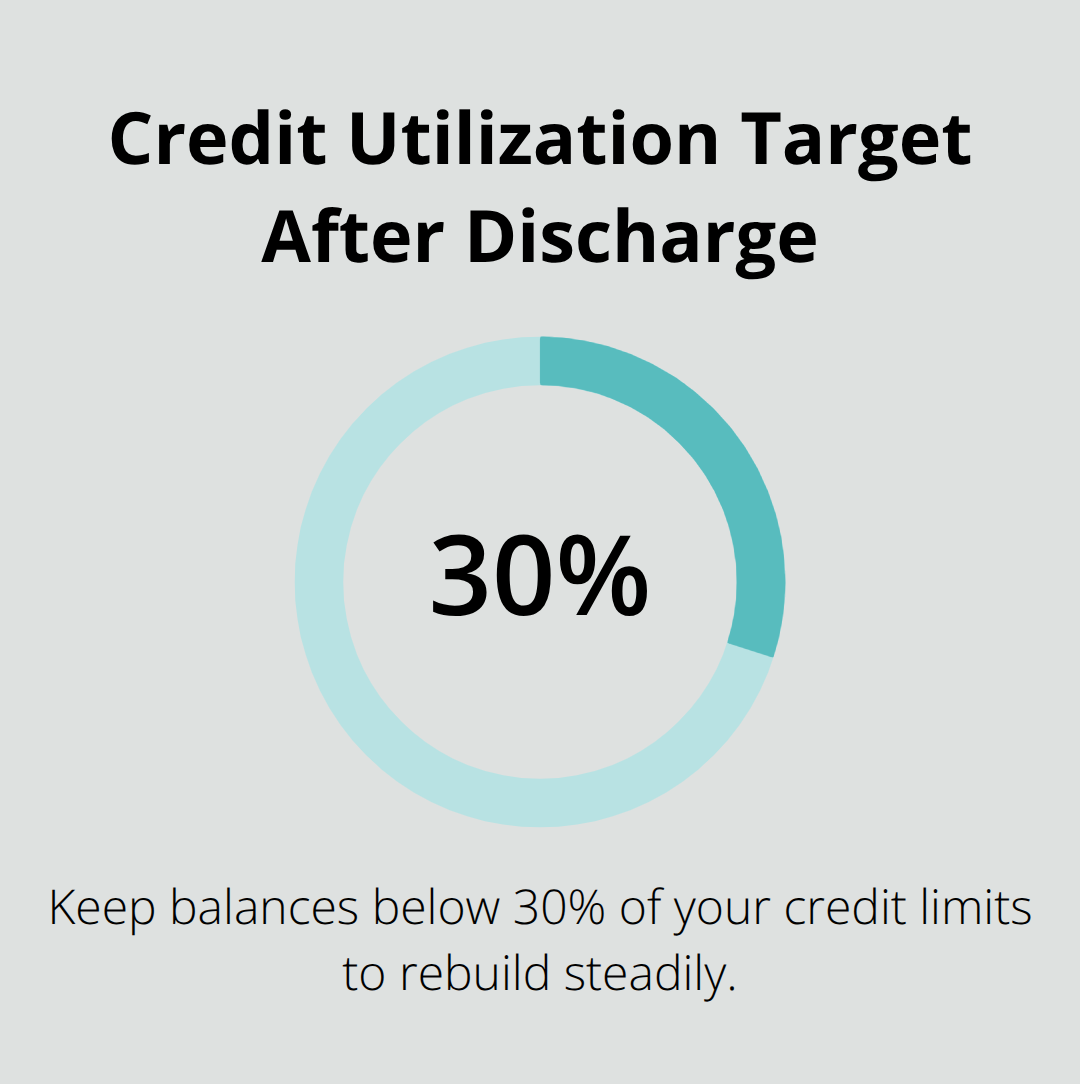
Your discharge order marks a turning point, not an ending. Credit scores typically drop immediately after filing, but they recover faster than most people expect-Experian data shows filers who manage new credit responsibly often see scores improve by 100 points or more within two years of discharge. Start with a secured credit card within three to six months after discharge, pay every bill on time, and keep credit card balances below 30 percent of your limits to rebuild your credit profile steadily.
Preventing future financial problems means addressing the root causes that led to bankruptcy in the first place. Create a realistic monthly budget that accounts for essential expenses like housing, food, transportation, and insurance before discretionary spending. Build an emergency fund of at least one thousand dollars to cover unexpected costs without returning to credit cards.
We at Harnage Law, PLLC help you understand what happens after discharge and answer questions about rebuilding your financial life. Contact us at 386-252-3061 or visit our Florida Chapter Seven guide to explore whether Chapter 7 fits your situation and start your fresh financial start.